

The Conversation (1)
Jul. 29, 2026 01:55PM PST
|Fact CheckedThis article has been reviewed and updated according to INN's rigorous fact-checking process. Our staff editors verify all articles against information and data from primary sources, reputable publishers and experts.
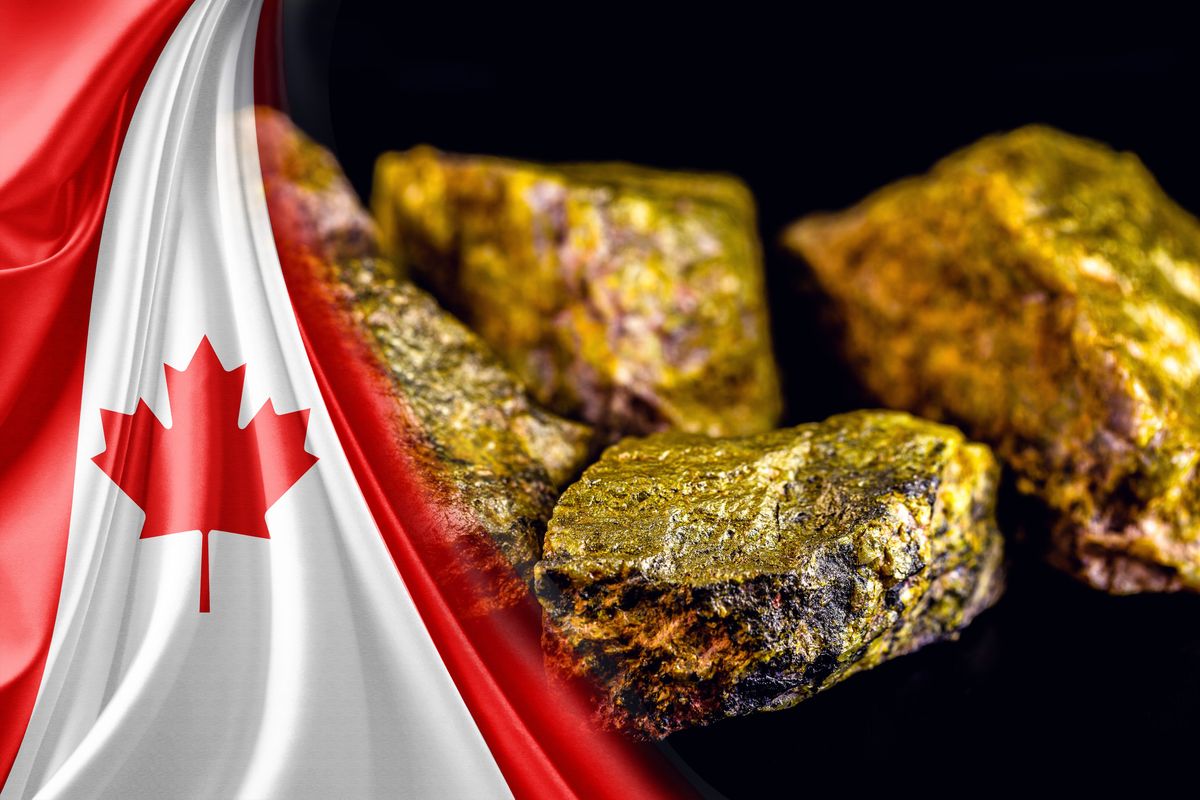
What are the top Canadian uranium stocks? Learn about the best-performing Canadian uranium companies and what's moving their share prices.
RHJPhtotos, patrice6000 / Shutterstock
Uranium prices pulled back during the second quarter of 2026 as the market entered a period of consolidation following a powerful rally that carried the commodity above US$100 per pound in January.
Although the spot price eased to around US$85 per pound by the end of June, the sector's long-term outlook remained supported by strengthening fundamentals.
While the spot market softened, long-term uranium prices continued to climb, reaching US$94 per pound in June as utilities remained active in securing future supply through long-term contracts. At the same time, supply concerns persisted, with production challenges at major producer Kazatomprom and broader uncertainty surrounding sulfur availability highlighting the fragility of the global uranium supply chain.
On the demand side, the continued buildout of artificial intelligence infrastructure and data centers reinforced the case for nuclear power as a reliable source of baseload electricity. Technology companies continued to announce nuclear power agreements during the quarter, adding to a growing pipeline of demand catalysts alongside ongoing reactor construction and life-extension projects worldwide.
Against this backdrop, uranium equities remained in focus as investors looked to position for what many analysts see as a structurally undersupplied market.
Read on to learn about the top Canadian uranium stocks in 2026, including what factors have been moving their share prices. All data was obtained on July 15, 2026, using TradingView’s stock screener. Uranium companies on the TSX, TSXV and CSE with market caps above C$10 million at that time were considered.
1. ATHA Energy (TSXV:SASK)
Year-to-date gain: 64.06 percent
Market cap: C$332.37 million
Share price: C$1.05
ATHA Energy is a uranium exploration company focused on advancing its flagship Angilak project in Southern Nunavut, Canada, where it holds a 100 percent interest in the Angikuni Basin.
The company controls what it describes as the largest cumulative prospective exploration land package in Canada's most prominent uranium-bearing basins, totaling approximately 6.8 million acres. In addition to its directly held properties, ATHA maintains a 10 percent carried interest in select Athabasca Basin exploration projects operated by NexGen Energy (TSX:NXE,NYSE:NXE) and IsoEnergy (TSX:ISO,NYSEAMERICAN:ISOU).
ATHA Energy spent much of the second quarter of 2026 advancing an exploration program at Angilak, including diamond drilling across three corridors that began in May. The program was funded by a C$63 million financing.
Although it hadn't released news during the month, shares of the company spiked to C$1.23 on June 18, a year-to-date high. The move came alongside broader positivity in the uranium market.
On July 8, ATHA announced a uranium discovery approximately 4 kilometers along strike from the project's Lac 50 deposit. One drill hole at the Lac 50 Northwest discovery intersected 7 meters of continuous uranium mineralization, which a downhole gamma probe determined averaged 7,974 counts per second (CPS). Within that, a 1.6 meter high-grade interval returned maximum radioactivity of 40,162 CPS.
The next day, the company reported its "widest intersection to date" at the RIB North discovery, with six of the initial eight diamond drill holes intersecting uranium mineralization.
On July 16, ATHA Energy shared it amended its royalty and participation agreement with the New Saskatchewan Syndicate as part of its long-term greenfield exploration strategy. The amendment allows ATHA to terminate or choose not to renew properties related to their agreement with NSS, with NSS agreeing to waive its rights for the property in question.
2. Forsys Metals (TSX:FSY)
Year-to-date gain: 41.94 percent
Market cap: C$107.68 million
Share price: C$0.44
Forsys Metals is a uranium development company advancing its wholly owned Norasa uranium project in Namibia, Africa. The Norasa project includes the Valencia uranium deposit and the nearby Namibplaas uranium deposit.
In January, Forsys released additional results from its extension and exploration drilling program at the Valencia deposit that began last August. The program aims to expand mineral resources within and adjacent to the Valencia main pit.
Since its last update in September, the company has logged and processed 960 meters of downhole gamma survey results and 8,519 inductively coupled plasma (ICP) assay results. Highlights results include a 64 meter interval from surface grading 333 parts per million uranium oxide (U3O8) at the main pit.
On June 15, the company appointed John Borshoff as CEO, president and director. Borshoff has a long history in the uranium sector, previously working at Paladin Energy (ASX:PDN,OTCQX:PALAF) and Deep Yellow (ASX:DYL,OTCQX:DYLLF). He was chosen to implement a global growth strategy, including advancing Norasa towards development and evaluating merger and acquisition options to add development and production stage projects to its pipeline.
If shareholders approve the appointment, he will officially take the roles following the company's July 31 annual meeting, until which time he is serving as interim president.
Forsys Metals' shares received a large boost following Borshoff's appointment, rising to a year-to-date high of C$0.53 on June 18.
3. Myriad Uranium (CSE:M)
Year-to-date gain: 31.43 percent
Market cap: C$50.22 million
Share price: C$0.46
Exploration company Myriad Uranium is focused on US-based uranium projects, primarily its Copper Mountain uranium project in Wyoming.
It currently holds a 75 percent interest in Copper Mountain, which it obtained through an earn-in agreement with Rush Rare Metals (CSE:RSH). The project hosts multiple historic deposits and past-producing mines, including the Arrowhead mine, and benefited from extensive exploration by Union Pacific (NYSE:UNP) in the late 1970s.
In January, Myriad began the process of merging Rush into its business. Under the definitive agreement announced February 13, Myriad will gain the outstanding 25 percent interest in Copper Mountain. Rush plans to spin out its Boxi niobium project in Québec, Canada, into a new company.
Shares of Myriad rose in the weeks following the news to a year-to-date high of C$0.63 on February 25.
In March, Myriad nearly doubled its land position at the Copper Mountain uranium project through a staking program based on survey data. The additions increase its holdings from about 9,439 to 18,351 acres.
On May 19, Myriad closed the sale of its wholly owned Red Basin uranium project in New Mexico to private company Subatomic for US$2.5 million. Myriad will retain a 10 percent free carried interest in the project, which features near-surface mineralization with expansion potential. The company highlighted its cash return on the project, which it acquired for C$525,000 about 15 months earlier.
Myriad and Subatomic will also form a strategic alliance regarding the exploration and development of other projects beyond Red Basin.
Two days later, Myriad announced a Phase 2 diamond drill program at the Copper Mountain project. Drilling commenced in July.
On June 9, Myriad Uranium acquired 15 state mineral leases and eight split-estate claims covering 5,600 acres in the Arizona Strip of Northern Arizona, with two additional lease awards pending.
The properties host 23 breccia pipe targets, including the Wate Pipe, which has a historical resource estimate of 1.12 million pounds U3O8 equivalent from 71,000 metric tons of ore grading 0.79 percent U3O8 equivalent.
All targets have been optioned to Wedgemount Resources (CSE:WDGY,OTCQB:WDGRF) through an earn-in agreement that allows Wedgemount to acquire up to a 75 percent interest.
In correlation with broader market positivity, shares of Myriad rallied to a Q2 high of C$0.62 on June 19, 2026.
The most recent update on its Rush acquisition came on July 13, when Rush announced that its annual general meeting will take place August 17, with shareholders set to vote on the deal at the meeting.
4. Denison Mines (TSX:DML)
Year-to-date gain: 15.38 percent
Market cap: C$3.94 billion
Share price: C$4.35
Denison Mines is a uranium development company focused on Canada's Athabasca Basin in Northern Saskatchewan. The company's flagship asset is its 95 percent owned Wheeler River project, which hosts the Phoenix and Gryphon deposits.
It is complemented by significant interests in several other deposits and a 22.5 percent interest in the McClean Lake uranium mill. Denison holds direct ownership across approximately 457,000 hectares in the region, plus additional project stakes through its 50 percent ownership of JCU, a uranium exploration company with several assets in the Basin.
The company is currently advancing its Phoenix project located on the Wheeler River property. On February 24, the company announced it made a final investment decision for the asset, saying it was ready to commence construction.
The news that Phoenix will be the first uranium mine in nearly two decades to enter construction in Canada sent shares of Denison upward, reaching a year-to-date high of C$5.97 on March 1, 2026.
In May, the company released a Q1 operations update highlighting its progress at the Phoenix project, noting it anticipates construction to last about two years.
Denison plans to support financing with proceeds from selling uranium. It currently holds commitments from customers, including North American utilities, for nearly 8 million pounds of U3O8 and is negotiating terms for an additional 8 million pounds. The contracts will be supplied by existing U3O8 stockpiles and future production.
Weeks later, shares of Denison rose to a Q2 high of C$5.05 on June 2.
In early July, Denison secured formal backing from the Peter Ballantyne Cree Nation for its Wheeler River uranium project after the First Nation withdrew a lawsuit challenging the development. The November 2025 legal challenge claimed the six-week review period for Denison's environmental impact statement was insufficient and lacked adequate capacity funding.
5. IsoEnergy (TSX:ISO)
Year-to-date gains: 13.86 percent
Market cap: C$918.29 million
Share price: C$14.13
IsoEnergy is a uranium exploration and development company with projects in Canada, the US and Australia. Its flagship Larocque East project in Saskatchewan's Athabasca Basin hosts the Hurricane deposit, which the company states hosts the world's highest-grade published indicated uranium resource.
In the same district, IsoEnergy is advancing the 98,000 hectare Dorado uranium project through a 50/50 joint venture with Purepoint Uranium (TSXV:PTU,OTCQB:PTUUF). The company also owns a portfolio of permitted past-producing uranium and vanadium mines in Utah, US, positioning it to potentially restart production as market conditions improve.
In its first quarter report, IsoEnergy highlighted exploration progress across its portfolio, including completion of a 17 hole, 6,804 meter diamond drill program at its Larocque East project. The company also expanded mineralization at the Dorado project through its joint venture with a nine hole drill program, and prepared to begin drilling at its Flatiron project in Utah.
In addition, IsoEnergy completed a bulk sample mining program at its fully permitted Tony M mine in Utah to support future production studies. To strengthen its balance sheet, the company raised approximately C$82.5 million through a bought-deal financing and concurrent private placement.
IsoEnergy shares hit a year-to-date high of C$18.27 on May 11, the day before an announcement confirming high-grade uranium mineralization at the Hurricane South Trend. The assay results came from the winter drill program at Larocque East.
Weeks later, on June 11, the company began a 8,000 meter summer drill program at Larocque East. Although the summer exploration was halted in late June due to wildfires in the area, activity resumed at the site on July 8.
Additionally, IsoEnergy expanded its project portfolio in June by completing its acquisition of Australia's Toro Energy (ASX:TOE). The all-share transaction added Toro's Australian uranium assets to IsoEnergy's portfolio, including the scoping study stage Wiluna project in Western Australia, further diversifying the company's presence across major uranium jurisdictions.
FAQs for investing in uranium
What is uranium used for?
Uranium is primarily used for the production of nuclear energy, a form of clean energy created in nuclear power plants. In fact, 99 percent of uranium is used for this purpose. As of 2022, there were 439 active nuclear reactors, as per the International Atomic Energy Agency. In 2023, 9 percent of US power came from nuclear energy.
The commodity is also used in the defense industry as a component of nuclear weaponry, among other uses. However, there are safeguards in effect to keep this to a minimum. To create weapons-grade uranium, the material has to be enriched significantly — above 90 percent — to the point that to achieve just 5.6 kilograms of weapons-grade uranium, it would require 1 metric ton of uranium pre-enrichment.
Because of this necessity, uranium enrichment facilities are closely monitored under international agreements. Uranium used for nuclear power production only needs to be enriched to 5 percent; nuclear enrichment facilities need special licenses to enrich above that point for uses such as research at 20 percent enrichment.
The metal is also used in the medical field for applications such as transmission electron microscopy. Before uranium was discovered to be radioactive, it was used to impart a yellow color to ceramic glazes and glass.
Where is uranium found?
The country with the greatest uranium reserves by far is Australia — the island nation holds 28 percent of the world’s uranium reserves. Rounding out the top three are Kazakhstan with 15 percent and Canada with 9 percent.
Although Australia has the highest reserves, it holds uranium as a low priority and is only fourth overall for production. All its uranium output is exported, with none used for domestic nuclear energy production.
Kazakhstan is the world’s largest producer of the metal, with production of 23,270 metric tons in 2024. The country’s national uranium company, Kazatomprom, is the world’s largest producer.
Canada’s uranium reserves are found primarily in its Athabasca Basin, and the region is a top producer of the metal as well.
Why should I buy uranium stocks?
Investors should always do their own due diligence when looking at any commodity so that they can decide whether it fits into their investment plans. With that being said, many experts are convinced that uranium has entered into a significant bull market, meaning that uranium stocks could be a good buy. We explore options for how to invest in uranium here.
A slew of factors have led to this bull market. Discourse has been building around the metal's use as a source of clean energy, which is important for countries looking to reach climate goals, and interest in nuclear power to fuel artificial intelligence energy demand has increased significantly as well.
Nations are now prioritizing a mix of clean energies such as solar and wind energy alongside nuclear. Significantly, in August 2022, Japan announced it is looking into restarting its idled nuclear power plants and commissioning new ones.
Uranium prices are very important to uranium miners, and levels had not been high enough for production to be economic. However, prices have climbed significantly in recent years, and spiked from US$58 per pound in August 2023 to a high of US$106 per pound in February 2024. It has since consolidated above US$80 in 2026.
Don’t forget to follow us @INN_Resource for real-time updates!
Securities Disclosure: I, Georgia Williams, hold no direct investment interest in any company mentioned in this article.
TSXV:NSU
https://x.com/INN_Resource
https://www.linkedin.com/in/georgia-williams-15845447/
gwilliams@investingnews.com
Originally from Calgary, Georgia has been right at home in Toronto for more than two decades. Graduating from the University of Toronto with an honors BA in journalism, she is passionate about writing on diverse topics, including resources, arts, politics and social issues.
At INN Georgia covers a wide range of topics, including energy, battery and critical metals and diamonds. In her spare time, Georgia enjoys watching documentaries and experiencing Toronto's vibrant food, arts and cultural scene.
At INN Georgia covers a wide range of topics, including energy, battery and critical metals and diamonds. In her spare time, Georgia enjoys watching documentaries and experiencing Toronto's vibrant food, arts and cultural scene.
INN Article Notification
Latest News
Outlook Reports world
Featured Uranium Investing Stocks
Browse Companies
MARKETS
COMMODITIES
CURRENCIES
Originally from Calgary, Georgia has been right at home in Toronto for more than two decades. Graduating from the University of Toronto with an honors BA in journalism, she is passionate about writing on diverse topics, including resources, arts, politics and social issues.
At INN Georgia covers a wide range of topics, including energy, battery and critical metals and diamonds. In her spare time, Georgia enjoys watching documentaries and experiencing Toronto's vibrant food, arts and cultural scene.
Learn about our editorial policies.