With uranium demand forecast to rise by 28 percent by 2030, Canada is positioning itself to become the leading global supplier.
The country is currently the second largest uranium producer, driven by ongoing development and discovery in Saskatchewan’s Athabasca Basin.
The Athabasca Basin hosts some of the highest-grade uranium reserves in the world, with ore grades reaching up to 16.36 percent triuranium octoxide. Covering roughly 100,000 square kilometers across Northern Saskatchewan and Alberta, the basin accounts for approximately 15 percent of global annual uranium production and contains 10 of the 15 highest-grade uranium deposits globally.
Major operations in the region, including Cameco’s (TSX:CCO,NYSE:CCJ) Cigar Lake and McArthur River mines, highlight the basin’s significance to global supply. At the same time, new discoveries and development-stage projects are reinforcing its long-term production outlook.
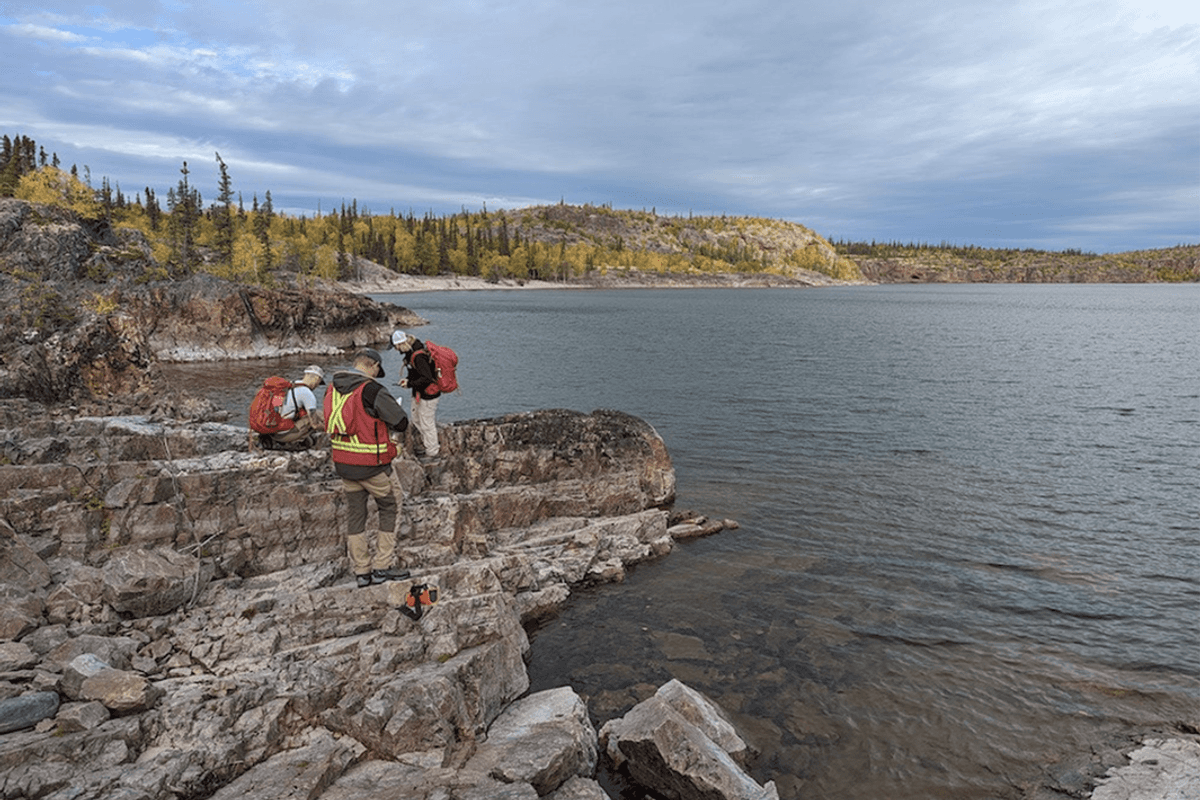
Within this prolific region, exploration-focused Standard Uranium (TSXV:STND,OTCQB:STTDF) is advancing a portfolio of projects in the Athabasca Basin, including its flagship Davidson River project in the Southwest Athabasca region. The project is located in the Patterson Lake uranium district, a rapidly emerging area known for major high-grade discoveries.
Davidson River is positioned along the same structural corridors that host NexGen Energy’s (TSX:NXE,NYSE:NXE) Arrow deposit at the Rook I Project and Paladin Energy’s (ASX:PDC,OTCQX:PALAF) Triple R deposit at Patterson Lake, two of the most significant uranium discoveries in the basin in recent years. Together, these deposits represent more than 430 million pounds of high-grade uranium, underscoring the geological potential of the region.
Standard Uranium’s land package at Davidson River spans 30,737 hectares and includes over 70 kilometers of conductive trends across four key structural corridors: Warrior, Bronco, Thunderbird and Saint.
“All four geophysical corridors contain multiple target areas favorable for high-grade basement hosted uranium mineralization,” shared President and Vice President of Exploration Sean Hillacre.
As exploration continues to unlock new zones, the Southwest Athabasca Basin is emerging as a critical contributor to future uranium supply, supporting Canada’s trajectory toward global production leadership.
In fact, Fraser Institute’s 2025 Annual Survey of Mining Companies recorded Saskatchewan as the third best overall jurisdiction globally, scoring 89.66 for investment attractiveness and ranking fourth in terms of policy perception.
Athabasca gains momentum as supply tightens
Global uranium demand continues to rise, while mine supply has struggled to keep pace, bringing the long-anticipated supply deficit into sharper focus. Analysts agree that additional uranium will need to be mined, converted and enriched to meet growing demand, particularly as nuclear energy expands worldwide.
This tightening supply/demand dynamic is driving renewed exploration activity across Canada’s Athabasca Basin, with a particular focus on the Southwest Athabasca region. Companies like Standard Uranium have expanded their presence in the area, advancing multiple projects through geophysics, permitting and drill targeting.
Standard Uranium now holds more than 200,000 acres of prospective uranium claims across Northern Saskatchewan, including its flagship Davidson River project.
Since 2020, the company has completed 16,561 metres of diamond drilling across 39 drill holes at Davidson River, refining its exploration strategy and identifying targets for high-grade, basement-hosted uranium mineralization.
In 2025, the company successfully completed the first ExoSphere Multiphysics surveys in the project, outlining multiple highly prospective target areas across Warrior, Bronco and Thunderbird.
The company said that its location also places it within a proven uranium corridor in the Patterson Lake district, where recent discoveries continue to demonstrate the basin’s exploration upside.
Major players in the region
Development-stage projects in the region are also expected to play a major role in future supply. NexGen Energy’s Rook I project, regarded as the largest development-stage uranium project in Canada, is expected to significantly increase both Canadian and global uranium output once operational, with the potential to produce up to 30 million pounds annually.
Despite these advancements, supply growth may still lag behind demand.
Energy Intelligence has noted that even with new projects coming online, production levels may fall short of projected requirements in the early 2030s if developers are unable to meet their targets. Denison Mines’ (TSX:DML,NYSEAMERICAN:DNN) Phoenix deposit, part of the Wheeler River project, is expected to begin production in 2028 with an estimated annual output of 6 million pounds, further contributing to future supply.
The combination of high-grade resources, active exploration and a strong development pipeline positions Saskatchewan’s Athabasca Basin as central to closing the looming uranium supply gap.
Nuclear growth reinforces uranium demand outlook
Nuclear energy is playing an increasingly important role in global decarbonization efforts, reinforcing long-term demand for uranium. At the 2023 COP28 United Nations Climate Change Conference, more than 20 countries — including the US and Canada — pledged to triple global nuclear capacity by 2050. Thirty-eight countries had joined the initiative as of March 2026.
“When we speak about electrification, digitalization and artificial intelligence (AI) … we will need reliable and predictable answers. Nuclear energy is one of those answers,” said International Atomic Energy Agency Director General Rafael Mariano Grossi during the summit.
Global generation of nuclear power reached 2,667 terawatt-hours in 2024, surpassing the highest record in 2006. Demand is expected to rise by 28 percent by 2030 and over 50 percent by 2040, exceeding 150,000 metric tons annually. However, output from existing uranium mines is expected to drop by roughly 50 percent after 2030, increasing the need for new projects and discoveries.
Generally, global uranium production is expected to increase in 2026 to 70.4 kilotonnes, up 10.1 percent over 2025. Kazakhstan and the US are expected to lead, followed by Canada, Niger, Namibia and Australia. Combined production from these countries is predicted to rise from 53.8 kilotonnes in 2025 to 59.9 kilotonnes in 2026.
Uranium supply and the US nuclear energy revival
The United States remains heavily reliant on imported uranium, with 98 percent mainly sourced from Canada and Kazakhstan. The current geopolitical landscape, especially the war in Iran, serves as a reminder of the value of energy security. Oil prices have risen to peaks globally, highlighting the importance of nations controlling their own energy.
The Trump administration is seeking to achieve nuclear energy dominance, with goals including the expansion of US nuclear capacity from roughly 100 gigawatts now to about 400 gigawatts by 2050.
In line with this, the Department of Energy has developed a clear framework focused on driving state-led efforts to reestablish the full nuclear fuel cycle at home and revitalize the American nuclear industry.
Called the Nuclear Lifecycle Innovation Campus, the concept proposes state hubs that align local and federal resources to expand regional industrial capacity, drive economic growth and restore technological leadership in the nuclear field. US President Donald Trump had backed the proposal as of March 2026.
Earlier in March, Trump called tech companies to the White House and asked them to commit to developing their own power generation alongside the electricity-intensive sites.
Meta Platforms (NASDAQ:META) announced in January that it will extend and expand the operation of three nuclear power plants, assisting in “clean, reliable energy to electric grids, preserve continued investment in operating nuclear power plants, and support the nuclear fuel supply chain, American jobs, and AI innovation.”
Canada’s uranium advantage
As governments prioritize energy security alongside decarbonization, stable domestic uranium supply has taken on renewed strategic importance, reinforcing the significance of high-grade jurisdictions such as Saskatchewan’s Athabasca Basin.
Canada’s established nuclear sector and resource base further support its trajectory toward global uranium leadership. Nuclear power already plays a meaningful role in the country’s energy mix, particularly in Ontario and New Brunswick, where it accounts for a 15 percent share of electricity generation.
At the same time, Canada is investing in the future of nuclear energy through the development of small modular reactor (SMR) technology, including the Darlington New Nuclear project, which is projected to have a total output of 1,200 megawatts. This means enough electricity to reliably and safely power about 1.2 million homes, helping the community meet increasing demand from electrification.
Planned initiatives in Saskatchewan like SaskPower are also expected to support growing electricity demand while reinforcing the domestic nuclear fuel cycle. A final investment decision to build an SMR facility is expected by 2029 and that the search for a site has been narrowed to the City of Estevan. Data suggests that one SMR can provide power to 300,000 homes 24 hours a day, all year long.
The country is also strengthening its position in the global uranium market through international partnerships. A recently signed 10 year nuclear energy agreement with India includes long-term uranium supply commitments, alongside collaboration on emerging technologies such as SMRs.
Natural Resources Canada has said some new SMR designs could come online “in the near term,” while other designs currently under development may be deployed within the next 15 years. The market for SMRs in Canada is estimated to reach C$5.3 billion between 2025 and 2040. In addition to domestic energy production, Canada is looking past its own borders to become a leader in the SMR global market, which could potentially reach C$150 billion.
Investor takeaway
Nuclear energy has a role to play in the transition to a clean energy future and the North American nuclear energy industry has a lot to gain from the push to lower global carbon emissions.
With strong global demand, tightening supply and continued exploration success in Saskatchewan, Canada is well positioned to lead the next phase of uranium production growth, supported by emerging projects like Standard Uranium’s Davidson River and the broader development of the Athabasca Basin.
This INNspired article is sponsored by Standard Uranium (TSXV:STND,OTCQB:STTDF,FWB:9SU0). This INNspired article provides information which was sourced by the Investing News Network (INN) and approved by Standard Uranium in order to help investors learn more about the company. Standard Uranium is a client of INN. The company’s campaign fees pay for INN to create and update this INNspired article.
This INNspired article was written according to INN editorial standards to educate investors.
INN does not provide investment advice and the information on this profile should not be considered a recommendation to buy or sell any security. INN does not endorse or recommend the business, products, services or securities of any company profiled.
The information contained here is for information purposes only and is not to be construed as an offer or solicitation for the sale or purchase of securities. Readers should conduct their own research for all information publicly available concerning the company. Prior to making any investment decision, it is recommended that readers consult directly with Standard Uranium and seek advice from a qualified investment advisor.