The Conversation (3)
- WORLD EDITIONAustraliaNorth AmericaWorld
Jun. 19, 2026 02:00PM PST
|Fact CheckedThis article has been reviewed and updated according to INN's rigorous fact-checking process. Our staff editors verify all articles against information and data from primary sources, reputable publishers and experts.
Explore the week's best-performing Canadian mining stocks on the TSX, TSXV and CSE, and dive into the Canadian and US news affecting commodities prices and stock markets.
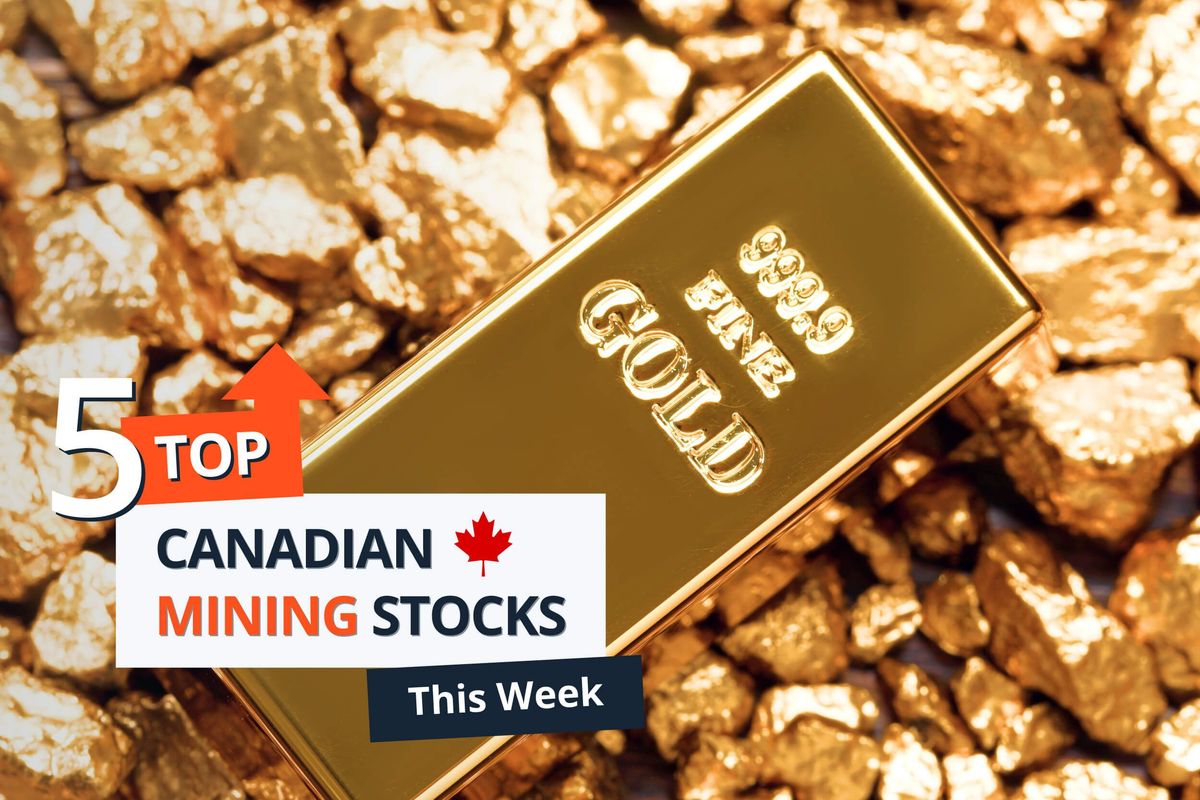
Welcome to the Investing News Network's weekly look at the best-performing Canadian mining stocks on the TSX, TSXV and CSE, starting with a round-up of Canadian and US news impacting the resource sector.
Reuters reported on Friday (June 19) that a Panamanian government-led audit of First Quantum Minerals' (TSX:FM,OTCPL:FQVLF) Cobre Panama copper mine rated it broadly compliant with environmental regulations.
According to the report, the operation scored 88 percent, meaning it still fell short of the more stringent optimized category. Some of the issues that caused it to fall short were tied to ecological restoration, reforestation and biodiversity protections.
The audit was part of a government investigation necessary for its decision on a potential restart of operations at the mine. The mine is an important part of the Panamanian economy, accounting for 5 percent of its gross domestic product, but was closed by the government in 2023 following mass protests.
In the US, the Federal Reserve issued its first rate decision since Kevin Warsh assumed the role of Fed Chairman in May. On Wednesday (June 17) the Federal Open Market Committee agreed to hold the current range at 3.5 to 3.75 percent.
Warsh was favored by US President Donald Trump for his stance on lowering rates; however, with rising inflation and bond yields, the central bank has little room to do so.
While there hasn’t been a shift in rate policy at the Fed, the tone of Warsh’s first presser was decidedly different, and much more straightforward than that of his predecessor, Jerome Powell.
“Persistently high prices are a burden for the American people, but the recent past need not be prologue,” Warsh said. “I am pleased to report that members of the FOMC are unambiguous and unanimous: This Committee will deliver price stability.”
While President Trump may still desire a cut, the Federal Reserve may not be able to deliver it. With inflation still remaining well above the bank’s target 2 percent, odds of an increase at the next meeting have risen to 38.5 percent, according to the CME Group's (NASDAQ:CME) FedWatch tool.
In Canada, Statistics Canada released April’s mineral production survey on Friday.
The data showed production decreases across the board for copper and gold, with only silver being positive, while shipments decreased across the board.
Copper output fell to 36.7 million kilograms, from 37.17 million the previous month; meanwhile, gold decreased to 16,122 kilograms from 16,862 kilograms in March. On the other hand, silver production increased significantly to 25,440 kilograms from 21,151.
For shipments, copper decreased to 37.64 million kilograms from 39.2 million kilograms, while gold shipments fell to 14,572 kilograms from 20,467 kilograms. Silver slipped to 25,356 kilograms from 25,866 kilograms in March.
For more on what’s moving markets this week, check out our top market news round-up.
Markets and commodities react
Canadian equity markets were mixed this week.
The S&P/TSX Composite Index (INDEXTSI:OSPTX) gained 0.35 percent over the week to close Friday at 34,857.34, while the S&P/TSX Venture Composite Index (INDEXTSI:JX) fell 0.17 percent to 954.71.
The CSE Composite Index (CSE:CSECOMP) lost 2.32 percent to 173.6.
Gold and silver both pulled back further over the week. The gold price fell 1.27 percent to close at US$4,155.57 per ounce on Friday at 4:00 p.m. EDT. The silver price closed the week down 3.83 percent at US$64.83 on Friday.
In base metals, the Comex copper price recorded a 0.8 percent decline this week to US$6.34.
The S&P Goldman Sachs Commodities Index (INDEXSP:SPGSCI) shed 5.1 percent to end Friday at 642.19.
Top Canadian mining stocks this week
How did mining stocks perform against this backdrop?
Take a look at this week’s five best-performing Canadian mining stocks below.
Stocks data for this article was retrieved at 4:00 p.m. EDT on Friday using TradingView's stock screener. Only companies trading on the TSX, TSXV and CSE with market caps greater than C$10 million are included. Mineral companies within the non-energy minerals, energy minerals, process industry and producer manufacturing sectors were considered.
1. Lighthouse Gold (CSE:LGHT)
Weekly gain: 77.78 percent
Market cap: C$41.18 million
Share price: C$0.24
Lighthouse Gold is an exploration and development company focused on projects in Guyana.
On February 3, the company announced that it entered into a definitive option agreement to acquire the Aurora NW project in Guyana. The property consists of four prospecting permits covering a total area of 4,799 acres in the country's Cuyuni-Mazaruni region, and is located 7 kilometers from Zijin Mining Group's (HKEX:2899,SHA:601899,OTCPL:ZIJMF) Aurora gold mine.
Two weeks after the acquisition, Lighthouse shared details a Phase 1 exploration program designed to evaluate the gold potential, with planned activities including the review and reinterpretation of historical data, geological mapping, rock and stream geochemical surveys, and sampling of priority targets.
On April 21, the company announced that it had begun exploration of the property, and hired Reshud Mc Lennan as the company’s exploration manager. He previously worked with Reunion Gold (TSXV:RGD) during the discovery of the Oko West project, and with Greenheart Gold (TSXV:GHRT), with which he led exploration programs in Guyana.
The most recent news from the company came on Monday (June 15) when it announced it had entered into a binding letter of intent to wholly acquire the Mariwa/Sardine Hill - Lower Cuyuni gold property in Guyana's Oko Gold District. The property is located 31 kilometers from the Oko West project, now owned by G Mining Ventures (TSX:GMIN,OTCQX:GMINF).
The property consists of three mining permits covering 3,240 acres and has a history of exploration dating back to 1994.
Lighthouse stated that it will launch a technical review of the district, including digitization of historical data, the reconstruction of databases and an evaluation of exploration targets. It will also pursue further acquisitions to increase the size of its portfolio in the district.
2. Euromax Resources (TSXV:EOX)
Weekly gain: 63.64 percent
Market cap: C$70.30 million
Share price: C$0.09
Euromax Resources is a development and exploration company working to advance its Ilovica-Shtuka copper project in the southeast of North Macedonia, Europe.
The advanced stage project is composed of two concession agreements that cover 17.1 square kilometers and hosts mineralized deposits of copper and gold.
The most recent feasibility study for the Ilovica-Shtuka project, released in 2016, demonstrated a proven and probable mineral reserve of 2.01 million ounces of gold and 898.9 million pounds of copper.
On June 4, the company announced that the Higher Administrative Court of the Republic of North Macedonia had restored the merger of two exploration licenses.
The merger between Ilovica 6 and Ilovica 11 was initially approved, but the Government of North Macedonia withdrew the approval in late July 2023, in a decision that Euromax said contained no explanation.
The decision to merge the properties came after previous attempts by the government to annul the Ilovica 6 concession and would allow the company to develop both concessions under a single exploitation license.
Then, on Monday, Euromax announced that Tim Morgan-Wynne had resigned from the board of directors and as CEO, and that Gage Jull was appointed executive chairman and interim CEO. Jull joined the board as an independent director last November.
3. Emperor Metals (CSE:AUOZ)
Weekly gain: 62.16 percent
Market cap: C$58.46 million
Share price: C$0.30
Emperor Metals is a gold exploration company focused on its flagship Duquesne West project in the Abitibi Greenstone Belt of Québec, Canada, near the province's border with Ontario.
Duquesne West is currently a 50/50 joint venture with a subsidiary of Globex Mining (TSX:GMX), with Emperor having the option of acquiring 100 percent. An August 2025 technical report estimated it holds a total inferred resource of 1.46 million ounces of gold from 26.9 million metric tons of ore grading 1.69 grams per metric ton (g/t).
The company is advancing the project using machine learning software to reanalyze historical data. It has continued to explore the property through the first half of 2026, with its 2026 exploration program adding 15,000 meters of new drilling data to its analysis.
Its most recent update came on Tuesday, when it reported visible gold in its latest drill core, located within a broad halo of low-grade mineralization. Emperor highlighted results of 61.5 g/t gold over 15 meters, including an intersection of 369.6 g/t gold over 2.4 meters.
“Importantly, these results represent only the beginning of our current exploration campaign, with considerable opportunity remaining to further expand and strengthen the deposit,” Emperor CEO John Florek said.
4. Copper Quest Exploration (CSE:CQX)
Weekly gain: 60 percent
Market cap: C$13.26 million
Share price: C$0.12
Copper Quest Exploration is building a portfolio of prospective copper properties in North America, including the Kitimat copper project in British Columbia, Canada.
The property lies within the Skeena Mining Division of Northwest BC and has a history of exploration dating back to the 1960s.
On Tuesday, Copper Quest reported it more than doubled its project size after it was granted an additional 3,847.41 hectares contiguous to Kitimat, bringing the landholding to 6,801.41 hectares.
The company staked the area after an AI-driven geological analysis of a large catalogue of historic data identified a conductive anomaly spanning 1.5 kilometers by 1.5 kilometers and extending to a depth of 1 kilometer.
“The size and location of the anomaly support our geological interpretation that these previously drilled copper-gold intercepts may represent the outer expression of a much larger porphyry system, potentially centered on the target identified through our AI-assisted analysis,” Copper Quest CEO Brian Thurston said.
Its landholdings now surround its historic Bowbyes target and much of the new discovery.
5. AnorTech (TSXV:ANOR)
Weekly gain: 56.25 percent
Market cap: C$25.43 million
Share price: C$0.125
AnorTech is a company focused commercializing sustainable materials from its Gronne Bjerg anorthosite project in Greenland.
The property is located approximately 80 kilometers from the capital of Nuuk and hosts significant deposits of anorthosite, a calcium-rich feldspar containing 50 percent silicon, 31 percent aluminum and 15 percent calcium.
The company is advancing product lines such as zero-waste smelter-grade alumina, as well as alumina-based catalysts for carbon dioxide capture, advanced 3D-printable cement and lunar construction materials.
On Tuesday, the company announced that it entered into a strategic partnership through a share exchange agreement with Greenland Mines (NASDAQ:GRML).
In May, Greenland Mines added the Sarfartoq rare earth project, which AnorTech had owned until 2023, to its Greenland critical minerals portfolio.
In the release, AnorTech President Jim Cambon said, “AnorTech will contribute its 24 years of expertise in the exploration and development of Sarfartoq and other projects in Greenland, and will provide Greenland Mines with exposure to our leading edge alumina technologies that we are developing through our Gronne Bjerg anorthosite project.”
Under the terms of the deal, Greenland Mines will acquire an initial 9.9 percent stake in AnorTech in exchange for US$3.72 million in Greenland Mines shares. Additionally, Greenland Mines will have the option to increase its stake to a maximum of 19.9 percent over the next six months at a price per share of C$0.30 or AnorTech's last closing price when the option is exercised, whichever is higher.
FAQs for Canadian mining stocks
What is the difference between the TSX and TSXV?
The TSX, or Toronto Stock Exchange, is used by senior companies with larger market caps, and the TSXV, or TSX Venture Exchange, is used by smaller-cap companies. Companies listed on the TSXV can graduate to the senior exchange.
How many mining companies are listed on the TSX and TSXV?
As of March 2026, 906 mining companies and 71 oil and gas companies are listed on the TSXV, combining for 64 percent of the 1,524 total companies listed on the exchange.
The TSX is home to 176 mining companies and 50 oil and gas companies. The exchange has 2,149 companies listed on it in total.
Together, the TSX and TSXV host around 40 percent of the world’s public mining companies.
How much does it cost to list on the TSXV?
There are a variety of different fees that companies must pay to list on the TSXV, and according to the exchange, they can vary based on the transaction’s nature and complexity.
As of April 2026, the listing fee alone will most likely cost between C$10,000 to C$70,000, and accounting and auditing fees could rack up between C$25,000 and C$100,000. Legal fees are expected to be over C$75,000 and an underwriters’ commission may hit up to 12 percent.
The exchange lists a handful of other fees and expenses companies can expect, including but not limited to security commission and transfer agency fees, investor relations costs and director and officer liability insurance.
These are all just for the initial listing, of course. There are ongoing expenses once companies are trading, such as sustaining fees and additional listing fees, plus the costs associated with filing regular reports.
How do you trade on the TSXV?
Investors can trade on the TSXV the way they would trade stocks on any exchange. This means they can use a stock broker or an individual investment account to buy and sell shares of TSXV-listed companies during the exchange's trading hours.
Don't forget to follow us @INN_Resource for real-time updates!
Securities Disclosure: I, Dean Belder, hold no direct investment interest in any company mentioned in this article.
Editorial Disclosure: Copper Quest Exploration is a client of the Investing News Network. This article is not paid-for content.
https://x.com/INN_Resource
https://www.linkedin.com/in/deanbelder
dbelder@investingnews.com

Dean has been writing in one form or another since penning stage plays in his youth. He is a graduate of both Emily Carr University and Simon Fraser University, with a BFA in photography and a BA in communications.
As a writer, Dean has traveled throughout BC and the Pacific Northwest covering cultural events, interviewing small business owners and working alongside fellow writers and photographers from publications like Rolling Stone Magazine, Spin and the Georgia Straight.
Dean has a keen interest in investing, and enjoys learning about the mining industry and better understanding the technical aspects of trading. In his spare time, Dean is an avid home chef, ponders the space-time continuum and makes his own cider. On weekends he can be found cycling the Seawall, exploring farmers markets or sampling the city’s local craft breweries.
As a writer, Dean has traveled throughout BC and the Pacific Northwest covering cultural events, interviewing small business owners and working alongside fellow writers and photographers from publications like Rolling Stone Magazine, Spin and the Georgia Straight.
Dean has a keen interest in investing, and enjoys learning about the mining industry and better understanding the technical aspects of trading. In his spare time, Dean is an avid home chef, ponders the space-time continuum and makes his own cider. On weekends he can be found cycling the Seawall, exploring farmers markets or sampling the city’s local craft breweries.
INN Article Notification
Latest News
Outlook Reports
Featured Gold Investing Stocks
Browse Companies
MARKETS
COMMODITIES
CURRENCIES
Dean has been writing in one form or another since penning stage plays in his youth. He is a graduate of both Emily Carr University and Simon Fraser University, with a BFA in photography and a BA in communications.
As a writer, Dean has traveled throughout BC and the Pacific Northwest covering cultural events, interviewing small business owners and working alongside fellow writers and photographers from publications like Rolling Stone Magazine, Spin and the Georgia Straight.
Dean has a keen interest in investing, and enjoys learning about the mining industry and better understanding the technical aspects of trading. In his spare time, Dean is an avid home chef, ponders the space-time continuum and makes his own cider. On weekends he can be found cycling the Seawall, exploring farmers markets or sampling the city’s local craft breweries.
Learn about our editorial policies.