The Conversation (0)
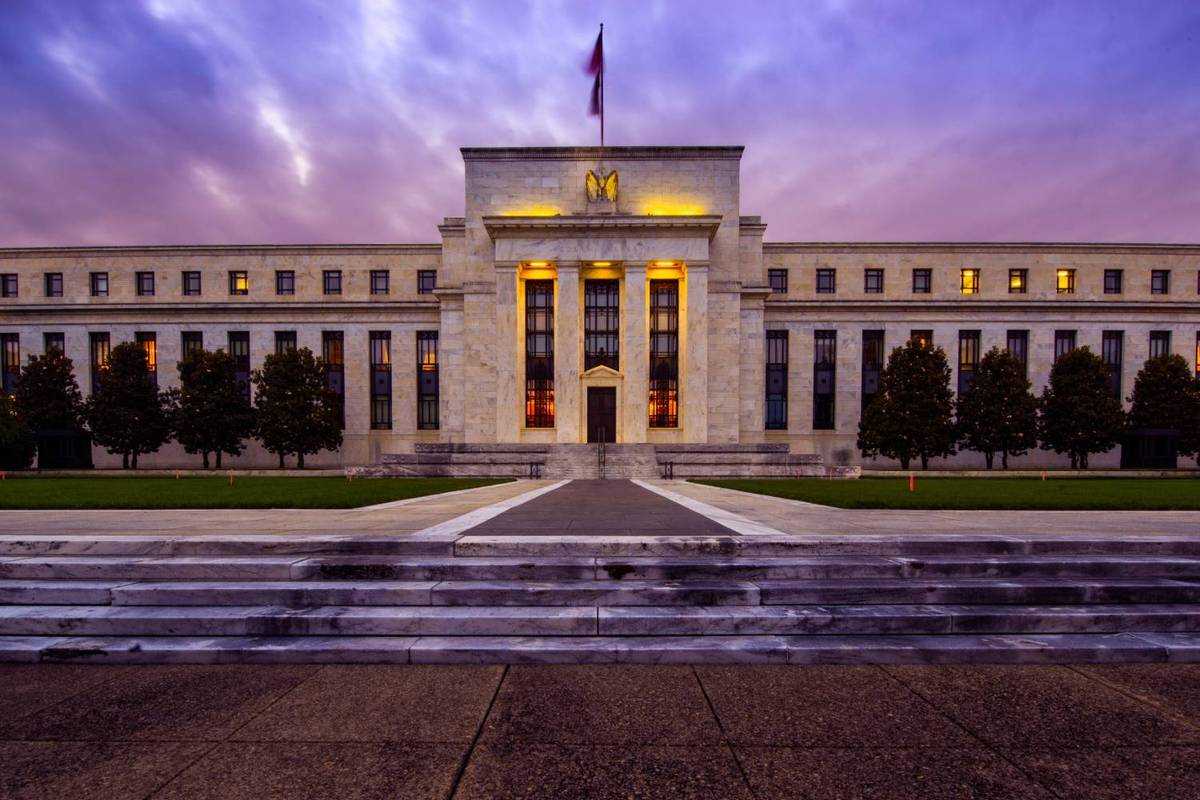
Philip / Adobe Stock
Precious metals prices are facing strong headwinds as the markets respond to the escalating Iran war, a stronger US dollar and this week’s US Federal Reserve interest rate decision.
The conflict in the Middle East continues to dictate prices for precious metals, hamstringing the market forces that had earlier brought about new record highs for gold, silver and platinum.
This week adds another layer of downward pressure on precious metals as the Fed has to factor in higher oil prices and the broader market impact of elevated cost inputs for many sectors.
Let’s take a look at what’s got the precious metals moving over the past week.
Gold price
The gold price has lost more than 5.7 percent over the past seven day period and is down almost 10 percent from the US$5,400 per ounce seen on March 2, when conflict broke out in the Middle East.
The initial rush of safe-haven demand soon gave way to fears that triple-digit oil prices would stoke inflation. On top of that, higher oil prices make for a stronger US dollar — that's because global oil trade is conducted in greenbacks, and the US is the world’s largest oil producer. A stronger US dollar makes gold more expensive for foreign buyers, and those circumstances have taken much of the wind out of the sails for the yellow metal’s price appreciation.
Speaking of inflation, this week’s Fed rate decision has also weighed the gold price down. Investors had anticipated the central bank would sit on current rates for longer, and ultimately that's what happened.
“Alongside this monetary pressure, there is a noticeable escalation in geopolitical risks, particularly in the Middle East, which has driven energy prices higher and reignited concerns over persistent inflation,” said Rania Gule, senior market analyst at XS.com, in market commentary shared with the Investing News Network (INN). “This factor complicates the Fed’s position, making it more difficult to shift toward a new easing cycle amid an unstable inflationary environment.”
On March 12, gold traded at an intraday high of US$5,184.94 before shedding more than US$100 to close at US$5,079.14 as investors liquidated positions to meet margin calls amid a broader selloff in global equities.
Gold recovered back over the US$5,100 level in early morning trading on March 13, only to continue its downward trend to hit US$5,067.28 near the end of the day. The decline came as a downward revision to US GDP for Q4 spooked investors, and as persistent inflationary pressures dampened expectations for rate cuts.
On Monday (March 16), gold kicked off a new week by sinking below the key psychological US$5,000 mark to as low as US$4,977.09 on aggressive selling from retail and institutional investors after the price broke through key technical support levels. The price of gold barely managed to settle the trading day at US$5,006.44.
The gold price continued to see-saw below and above the US$5,000 level the following day, but once again managed to end the trading session barely above the line at US$5,003.08.
At that point, it seemed as if US$5,000 was a new key supportive price point rather than resistance for gold buyers. However, on Wednesday (March 18), anticipation that the Fed would hold rates steady for longer triggered investors to take profits and run. By 11:30 a.m. PST gold was down to US$4,885.30.
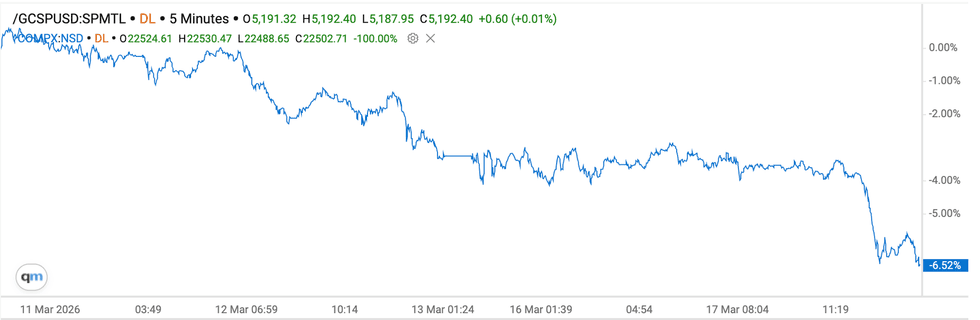
Gold price chart, March 11, 2026 to March 18, 2026.
Chart via the Investing News Network.
Here are the primary drivers for gold this past week:
- Geopolitical conflict in the Middle East has escalated, with Iran attacking Saudi Arabia and the United Arab Emirates, as well as effectively blocking the Strait of Hormuz. US strikes on Kharg Island are also upping the ante. Investors are coming to terms with the damage done to global oil markets.
- Oil prices are up over 10 percent since last week, increasing the threat of inflation and strengthening the US dollar. Meanwhile, the rebounding dollar and elevated 10 year treasury yields are placing downward pressure on the gold price. High oil prices are also raising concerns about sticky inflation.
- Institutional investors are selling gold positions to meet margin calls or cover losses elsewhere in the broader markets. But central bank purchases continue to provide a structural floor for gold.
For more insight into what’s moving the gold market, check out INN's recent interviews:
- Don Hansen: New Gold Price Tailwind, Plus Trade and Tariffs Explained
- Joe Cavatoni: Gold Volatility Picking Up, Price Setting New Floors
In other gold news, Australia’s largest primary-listed gold producer, Northern Star Resources (ASX:NST,OTCPL:NESRF), adjusted its fiscal 2026 gold guidance down to 1.5 million ounces from its previous guidance range of 1.6 million to 1.7 million ounces for the year ending in June. This is due to operational problems at a key processing facility.
Silver price
The price of silver has also come under fire during the raging war in the Middle East, with losses at nearly 11 percent over the past seven days. It has come under pressure from the same macroeconomic factors moving gold.
After starting the morning of March 12 at US$87.43 per ounce, silver fell sharply to an intraday low of US$83.06 in the afternoon session. On March 13, the white metal bounced back to US$84.46 before quickly slipping to US$79.47 in morning trade. Silver managed to close out the day above the US$80 level at US$80.60.
On Monday, silver was back down to an intraday low of US$77.18 in the early morning before rising as high as US$81.45; it finished the session at US$80.73. Silver's industrial side reacted sharply to weak economic data from China. The following day, the white metal declined further to US$78.74 in the morning before closing at US$79.28.
Wednesday's Fed decision brought further pain to silver, which had fallen to US$76.43 by 11:30 a.m. PST.
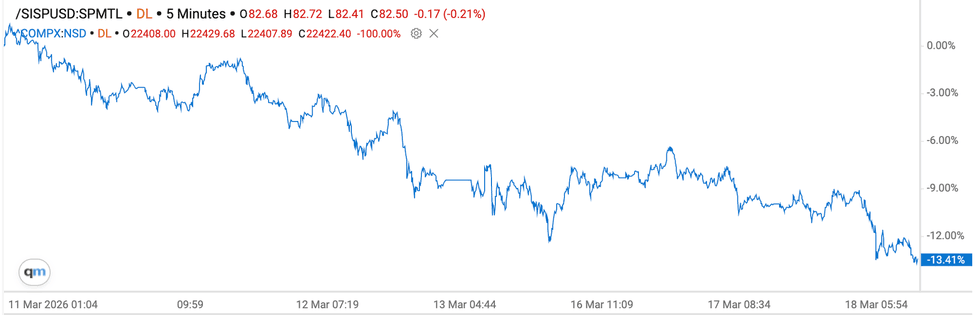
Silver price chart, March 11, 2026 to March 18, 2026.
Chart via the Investing News Network.
The silver price is finding a floor of support in the US$78 to US$80 range due to a persistent structural supply deficit and strong industrial demand. The world’s most electrically and thermally conductive metal, silver is integral in a number of growth sectors such as solar panels, electric vehicles and artificial intelligence technology.
“I believe the most likely short-term scenario is for silver to continue trading within volatile but relatively contained ranges, with a slight downward bias as long as expectations for elevated interest rates persist,” stated Gule.
“Any strong bullish breakout would likely require a clear shift in the Fed’s stance, either through explicit signals of a rate-cutting cycle or a tangible easing of inflationary pressures. Conversely, further geopolitical escalation may help limit downside risks, but alone it is unlikely to drive a sustained upward trend.”
Want more information about today’s silver market? Check out INN’s interviews: Ted Butler: Silver Blow-Off Top Years Away, How to Play Volatility and Alex Ebkarian: Gold, Silver 2026 Price Calls, Key Drivers to Watch Now.
In silver-mining news, Silver Viper Minerals (TSXV:VIPR,OTCQB:VIPRF) has inked a definitive share purchase agreement with Fresnillo (LSE:FRES,OTCPL:FNLPF) and Orex Minerals (TSXV:REX,OTCQB:ORMNF) for the acquisition of the Coneto silver-gold project in Durango, Mexico.
Platinum price
Platinum has held up fairly well these past seven days compared to its precious metal sisters, with the price down by 5.4 percent. Investors are increasingly turning to platinum as a safe-haven asset alongside gold.
The platinum price was trading slightly above the US$2,200 per ounce mark on March 12 before dropping to a low of US$2,120.30 late in the trading day. On March 13, it continued to slide to a low of US$2,016.10.
The price of platinum recovered to US$2,113.70 on Monday as investors bought dip.
The following day brought further upside for the platinum price — it rose as high as US$2,162 in the morning trading session before closing at US$2,124.80. After touching a four week low last week, investors are buying the dip on the belief that platinum is historically undervalued relative to gold.
Following the Fed rate decision, platinum had sunk to US$2,055.50 by 11:30 a.m. PST.
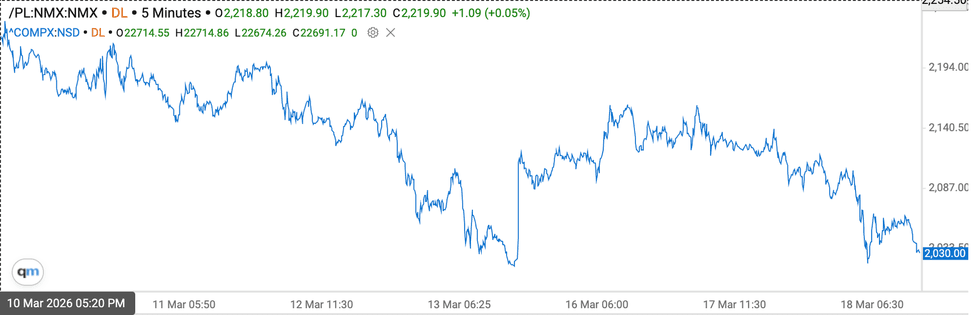
Platinum price chart, March 11, 2026 to March 18, 2026.
Chart via the Investing News Network.
While platinum initially followed the broader selloff in gold and silver, the metal is now outperforming due to its specific industrial and supply-side drivers. Production remains tight as aging mines and power instability continue to plague South Africa’s platinum-mining sector, which accounts for more than 70 percent of global supply.
Depleted aboveground stocks are providing a floor that prevents deep price collapses. The World Platinum Investment Council (WPIC) is forecasting a fourth consecutive annual deficit for 2026 at a projected 240,000 ounces.
On the demand side, automakers continue to use platinum in catalytic converters, anchoring long-term industrial demand. The WPIC is reporting that platinum exchange-traded fund holdings, which increased by 234,000 ounces in 2025, are expected to remain at steady levels in 2026. Additionally, bar and coin investment is forecast to grow by 35 percent in 2026 to reach 725,000 ounces, the highest level recorded in the WPIC's dataset history.
For more on the supply and demand fundamentals shaping the precious metals market, watch INN's interview: Edward Sterck: Platinum Records Biggest Deficit Ever in 2025, What's Next?
Palladium price
Palladium is down 6.7 percent over the past seven days, following the precious metals on their downward slide.
On March 12, palladium slipped from an early morning high of US$1,686.50 per ounce to as low as US$1,628.50 before finishing the day at US$1,636.50. Palladium lost a lot of ground on March 13, starting the morning session at around US$1,616, then falling to US$1,558 again near the closing of the trading day. Palladium was pulled lower alongside gold and silver as investors shifted away from risk-off assets after US GDP data was revised downward.
On Monday, palladium recovered to US$1,607 in the morning and closed at US$1,673.50. However, the following day the price reversed course yet again to track downward from US$1,648 before sliding to close at US$1,617.50. The price of palladium was trading as low as US$1,538.50 as of 11:30 a.m. PST following the Fed’s rate decision.
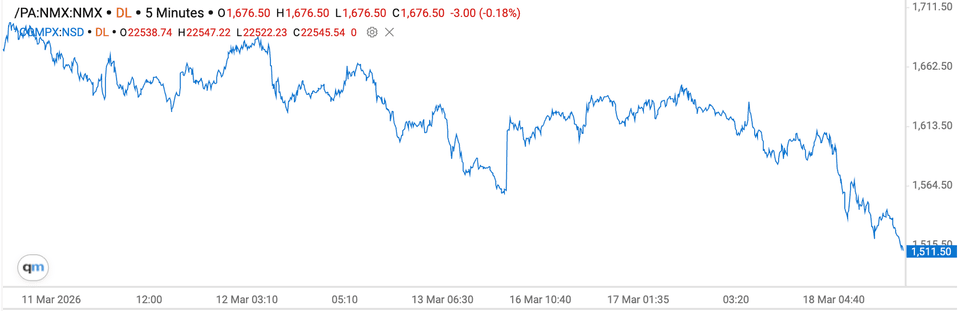
Palladium price chart, March 11, 2026 to March 18, 2026.
Chart via the Investing News Network.
The palladium price is at three month lows, but there is plenty of support for the metal in the US$1,650 to US$1,700 range. That’s due to continued supply constraints and changes to government auto mandates.
Persistent supply issues include production disruptions in South Africa and uncertainty over Russian exports. On the demand side, regulatory changes in Europe extending the time period when gas-powered vehicles can remain on the market means palladium will still be in demand for use in catalytic converters.
Don't forget to follow us @INN_Resource for real-time updates!
Securities Disclosure: I, Melissa Pistilli, hold no direct investment interest in any company mentioned in this article.
Editorial Disclosure: The Investing News Network does not guarantee the accuracy or thoroughness of the information reported in the interviews it conducts. The opinions expressed in these interviews do not reflect the opinions of the Investing News Network and do not constitute investment advice. All readers are encouraged to perform their own due diligence.
From Your Site Articles
- Jaime Carrasco: Gold Going "Much Higher," Silver Force Majeure Inevitable ›
- Gold’s Next Test: WGC Lists 3 Potential Price Scenarios in 2026 Outlook ›
- Gold Price Forecast: Top Trends for Gold in 2026 ›
- Gold Price 2025 Year-End Review ›
- Silver Price Forecast: Top Trends for Silver in 2026 ›
- Silver Price 2025 Year-End Review ›
Related Articles Around the Web
- 2026 Gold Outlook: Analysing the Macro Forces Driving the Path to $6,000 ›
- Gold Outlook 2026: Push ahead or pull back | World Gold Council ›
- Every major analyst's gold price forecast for 2026 - Yahoo Finance ›
- Gold price predictions from J.P. Morgan Global Research ›
- Why Gold's Rally Is Likely to Go On - Morgan Stanley ›
https://twitter.com/INN_Resource
https://www.linkedin.com/in/melissa-pistilli-865271a9/
mpistilli@investingnews.com