

The Conversation (12)
May. 21, 2026 01:50PM PST
|Fact CheckedThis article has been reviewed and updated according to INN's rigorous fact-checking process. Our staff editors verify all articles against information and data from primary sources, reputable publishers and experts.
Interested in lithium-mining companies? We break down operations and news from the world's largest lithium producers by market cap.
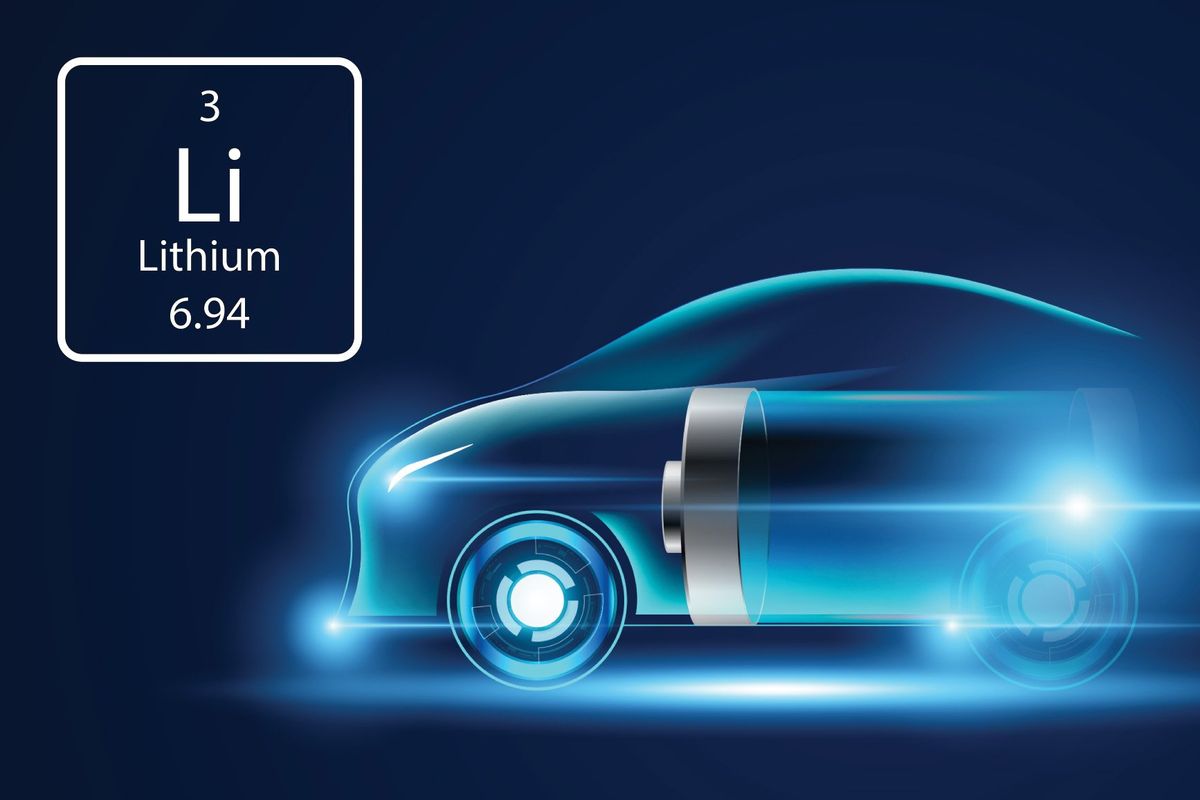
Ruslan Maiborodin, Tex vector / Shutterstock
For a long time, most of the world's lithium was produced by an oligopoly of US-listed producers. However, the sector has transformed significantly in recent years.
While Australia has long been a top-producing country when it comes to lithium, China has risen quickly to become not only the top lithium processor and refiner, but also a major miner of the commodity. In fact, China was the second largest lithium-producing country in 2025 in terms of mine production, passing Chile and behind only Australia.
Chinese companies are mining in other countries as well, including in top producer Australia, where a few are part of major lithium joint ventures. For example, Australia’s largest lithium mine, Greenbushes, is owned and operated by Talison Lithium, which is 51 percent controlled by Tianqi Lithium Energy Australia, a joint venture between China’s Tianqi Lithium (SZSE:002466,HKEX:9696) and Australia’s IGO (ASX:IGO,OTCPL:IPGDF). The remaining 49 percent stake in Talison is owned by Albemarle (NYSE:ALB).
Many lithium mines and projects today are operated through joint ventures, which can offer investors different ways to get exposure to mines and jurisdictions. We offer a breakdown of recent mergers and acquisitions below.
All in all, lithium investors have a lot to keep an eye on as the space continues to shift. Read on for an overview of the current top lithium-producing firms by market cap. Data was current as of May 13, 2026.
In this article
Lithium M&A trends in 2026
While the lithium market has since turned around in 2026, spurring new lithium deals discussed below, the prior weak market in recent years led to subdued lithium sector dealmaking in 2025. Between November 2024 and December 2025, only seven lithium-focused transactions were announced, with a combined value of roughly US$1.06 billion tied to more than 4.1 million metric tons of lithium in acquired reserves and resources.
Despite the slowdown in overall activity, several high-profile transactions highlighted a growing preference for tier-one assets and established low-cost operations. Four deals announced in 2025 accounted for roughly 75 percent of the total transaction value during the period.
Among the largest was the US$765 million partnership between POSCO Holdings (NYSE:PKX,KRX:005490) and Mineral Resources (ASX:MIN,OTCPL:MALRF) announced in November 2025. Through a newly established joint venture, POSCO agreed to acquire a 30 percent stake in the Wodgina and Mount Marion hard rock lithium operations in Western Australia.
Consolidation also continued in North America. In August 2025, Sayona Mining (ASX:SYA,OTCPL:ASXFF) completed its acquisition of Piedmont Lithium, unifying ownership of the North American Lithium mine in Québec, Canada, under the newly formed Elevra Lithium.
Meanwhile, Rio Tinto (ASX:RIO,NYSE:RIO,LSE:RIO) finalized its acquisition of Arcadium Lithium in March 2025, marking one of the largest lithium transactions on record and reinforcing the view that major mining companies are using the sector downturn to secure scale and future supply.
Government-backed investment also emerged as a defining theme. In October 2025, the US government announced it had taken a 5 percent stake in Lithium Americas (TSX:LAC,NYSE:LAC) and its Thacker Pass project in Nevada via warrants, underscoring lithium’s growing strategic importance within domestic energy and critical minerals policy.
Lithium sector dealmaking accelerated in early 2026 as producers and strategic investors moved to secure long-term supply amid recovering prices and growing concerns over future deficits.
Chinese groups remained particularly active. In May, Zhejiang Huayou Cobalt (SZSE:603799) agreed to acquire Atlantic Lithium (ASX:A11) in a roughly US$210 million all-cash deal, strengthening its foothold in Africa’s emerging lithium sector through the Ewoyaa project in Ghana.
Elsewhere, Critical Metals (NASDAQ:CRML) closed its takeover of European Lithium (ASX:EUR,OTCQB:EULIF), while Global Lithium Resources (ASX:GL1,OTCPL:GBLRF) secured a strategic investment and offtake agreement with China’s Lopal Tech Group (SZSE:603906). CleanTech Lithium (AIM:CTL) also gained attention after permitting progress in Chile improved the outlook for its brine assets.
Biggest lithium-mining stocks
1. Rio Tinto (ASX:RIO,NYSE:RIO,LSE:RIO)
Market cap: US$191.17 billion
Share price: AU$191.97
Rio Tinto, a global powerhouse in the resource sector for decades, is mostly known for its iron and copper production. However, in recent years, the mining giant has been expanding its position in the world’s lithium market.
Rio Tinto significantly expanded its lithium footprint in 2025 through a series of major acquisitions and joint ventures aimed at building one of the world’s largest lithium portfolios.
In March 2025 the company completed its US$6.7 billion all-cash acquisition of Arcadium Lithium, consolidating the company’s assets into a new Rio Tinto Lithium division. Rio Tinto said the acquisition would lift its lithium carbonate equivalent production capacity above 200,000 metric tons (MT) annually by 2028.
The deal added major brine operations at Salar del Hombre Muerto and Olaroz in Argentina, the Mount Cattlin hard-rock mine in Australia and lithium hydroxide capacity across the US, Japan and China. Mount Cattlin was placed on care and maintenance in March 2025.
The expansion followed Rio Tinto’s earlier acquisition of the Rincon lithium project in Argentina, where a 3,000 MT per year pilot battery-grade lithium carbonate plant entered production in late 2024. In March 2026, the company secured US$1.18 billion in financing to develop the Rincon project from four international banks.
In May of last year, Rio Tinto deepened its South American presence through a joint venture with Codelco to develop the Salar de Maricunga lithium project in Chile. The agreement gives Rio Tinto a 49.99 percent stake in exchange for up to US$900 million in staged investments.
Two months later, the miner signed another lithium deal in Chile’s Atacama Region with state-owned ENAMI for the Salares Altoandinos project. Rio Tinto will hold a 51 percent stake and invest up to US$425 million, including contributions tied to its direct lithium extraction (DLE) technology.
The Arcadium acquisition also gave Rio Tinto a 50 percent stake in Nemaska Lithium, which owns the under-construction Whabouchi spodumene mine and a lithium hydroxide plant in Québec, Canada. Early in 2026, Rio Tinto bolstered its interest in Nemaska Lithium to 53.9 percent, assuming management of the company, with the Québec government owning the remaining 46.1 percent.
The partners are focused on completing the lithium hydroxide plant located in Bécancour. After a review of the plant plans, Rio Tinto announced in March it would “slow the pace” of construction at the 70 percent complete site so the partners could optimize the project.
Rio Tinto reported total lithium production of 12,700 MT of lithium carbonate equivalent (LCE) for the first quarter of 2026, representing a year-over-year decline compared to Arcadium's production due to the loss of production from Mount Cattlin and weather-related headwinds at Rio Tinto's lithium brine operations in Argentina. The Olaroz facility was impacted by heavy rainfall in early 2026, followed by persistently low evaporation rates — a key factor in brine concentration.
The company expects its Sal de Vida and Fenix 1B expansion projects in Catamarca, Argentina, to enter commercial production and first production in the second half of 2026.
2. SQM (NYSE:SQM)
Market cap: US$24.47 billion
Share price: US$91.62
SQM has five business areas, ranging from lithium to potassium to specialty plant nutrition. Its primary lithium operations are in Chile, where it is a longtime producer, and it is now also producing lithium in Australia.
In Chile, SQM sources brine from the Salar de Atacama; it then processes lithium chloride from the brine into lithium carbonate and hydroxide at its Salar del Carmen lithium plants located near Antofagasta.
Chile's aforementioned National Lithium Strategy had created some uncertainty for SQM, but the government has stated that it will respect its current contracts, which run through 2030. In May 2024, state-owned Codelco and SQM formed a joint venture in which Codelco will hold a 50 percent stake plus one share to give it majority control. The joint venture, named NovaAndino Litio, officially formed in December 2025. In 2031, the state will begin receiving 85 percent of the operating margin of the new production from SQM’s operations.
In January 2026, SQM signed a collaboration and exploration agreement with Ivanhoe Electric (NYSE AMERICAN:IE,TSX:IE) to explore 2,002 square kilometers of SQM's mining properties in Northern Chile for copper.
Outside South America, SQM operates the Mount Holland lithium mine and concentrator in Australia through Covalent Lithium, a 50/50 joint venture with Wesfarmers (ASX:WES,OTCPL:WFAFF). In July 2025, Covalent Lithium produced its first battery-grade lithium hydroxide at its Kwinana refinery, and expects to reach nameplate capacity of 50,000 MT per year by the end of 2026.
SQM has a long-term supply deal with Hyundai (KRX:005380) and Kia (KRX:000270) to provide lithium hydroxide for electric vehicle batteries from its future lithium hydroxide supply. SQM also has supply agreements with Ford Motor Company (NYSE:F) and LG Energy (KRX:373220).
3. Ganfeng Lithium (HKEX:1772,SZSE:002460,OTCPL:GNENF)
Market cap: US$23.91 billion
Share price: US$10.30
Founded in 2000 and listed in 2010, Ganfeng Lithium has operations across the entire electric vehicle battery supply chain.
Even though it is relatively new compared to some companies on the list, Ganfeng has become one of the world’s largest producers of both lithium metals and lithium hydroxide thanks to its strategy of investing heavily in overseas projects to secure long-term lithium resources, with its first such investment in 2014.
Ganfeng Lithium holds a global lithium portfolio including operations in Argentina, Australia, China, Mexico and Mali.
Its operations in Argentina cover multiple provinces. In Jujuy, Ganfeng has a 51 percent stake in the Caucharí-Olaroz lithium brine operation with Lithium Argentina (TSX:LAR,NYSE:LAR), which has production capacity of 40,000 MT of lithium carbonate equivalent (LCE) per year.
In March 2026, Lithium Argentina reported an updated resource and reserve estimate for the operation supporting a planned Stage 2 expansion that would add a further 45,000 MT LCE per year of production capacity. Measured and indicated resources increased 42 percent to 28.1 million MT of LCE at an average grade of 562 milligrams per liter (mg/L) lithium, while inferred resources rose 104 percent to 9.6 million MT LCE at 567 mg/L.
Ganfeng brought its US$790 million Mariana project in Salta, Argentina, into production in February 2025. The Mariana mine is situated on the Llullaillaco salt flat, and has the capacity to produce 20,000 MT of lithium chloride per year. The company also owns LitheA, which controls two lithium salt lakes in the Salta province.
In August 2025, Ganfeng executed a 67/33 joint venture with Lithium Argentina that will consolidate Ganfeng’s Pozuelos-Pastos Grandes project with Lithium Argentina’s Pastos Grandes and Sal de la Puna projects. The merged operation, representing US$1.8 billion in existing investments, aims to produce up to 150,000 MT per year of LCE through a three phase development approach that will employ DLE and solar evaporation.
In Mali, Ganfeng operates the Goulamina lithium mine, which entered production in December 2024. Goulamina has a mine capacity of 506,000 MT of spodumene per year, and Ganfeng's goal is to double that capacity to 1 million MT per year. The Malian government holds a 35 percent stake in Goulamina and Ganfeng holds the remaining 65 percent after purchasing joint venture partner Leo Lithium's (ASX:LLL) interest.
Ganfeng has a controlling interest in Bacanora Lithium and its Sonora lithium project in Mexico, as well as a 49 percent stake in a salt lake project in China owned by China Minmetals. It also holds a non-operating 50 percent interest in the Mount Marion mine in Western Australia through its 50/50 joint venture with Mineral Resources.
On the sales side, Ganfeng has supply deals with companies such as Tesla (NASDAQ:TSLA), BMW (OTC Pink:BMWYY,ETR:BMW), Korean battery maker LG Chem (KRX:051910), Volkswagen (OTCPK:VLKAF,FWB:VOW) and Hyundai (KRX:005380).
4. Albemarle (NYSE:ALB)
Market cap: US$23.7 billion
Share price: US$200.94
North Carolina-based Albemarle is divided into two primary business units, one of which — the Albemarle Energy Storage unit — is focused wholly on the lithium-ion battery and energy transition markets. It includes the firm's lithium carbonate, hydroxide and metal production.
Albemarle has a broad portfolio of lithium mines and facilities, with extraction in Chile, Australia and the US, as well as lithium carbonate and hydroxide facilities in China and Taiwan.
Looking first at Chile, Albemarle produces lithium carbonate at its La Negra lithium conversion plants, which process brine from the Salar de Atacama, the country’s largest salt flat. Albemarle is aiming to implement DLE technology at the salt flat to reduce water usage.
Albemarle’s Australian assets include the 50/50 MARBL joint venture with Mineral Resources, which owns and operates the Wodgina hard-rock lithium mine in Western Australia. Albemarle wholly owns the on-site Kemerton lithium hydroxide facility. In February, Albemarle placed the remaining lithium hydroxide train at Kemerton into care and maintenance, following earlier cuts to expansion plans in a move aimed at improving financial flexibility as lithium market conditions continued to challenge Western conversion operations.
The company’s other Australian joint venture is the Greenbushes mine, the world's largest hard rock lithium mine, in which it holds a 49 percent interest alongside Tianqi Lithium and IGO. Greenbushes entered production in 1985 and now has spodumene concentrate production capacity of 1.5 million MT per year.
The joint venture updated the total mineral resources at Greenbushes last year to 440 million MT at an average grade of 1.5 percent lithium oxide, and its total ore reserve estimate to 172 million MT grading 1.9 percent lithium oxide.
As for the US, Albemarle owns the Silver Peak lithium brine operations in Nevada's Clayton Valley, which is currently the country’s only source of lithium production. In its home state of North Carolina, Albemarle is planning to bring its past-producing Kings Mountain lithium mine back online, subject to permitting approval and a final investment decision. The mine is expected to produce around 420,000 MT of lithium-bearing spodumene concentrate annually.
Albemarle has received US$150 million in funding from the US government to support the building of a commercial-scale lithium concentrator facility on site. The US Department of Defense has given the company a US$90 million critical materials award to boost its domestic lithium production and support the country's burgeoning EV battery supply chain.
In its Q1 2026 results, Albemarle reported gains driven by higher lithium sales volumes and lithium prices, as well as ongoing cost reductions. Net sales climbed 33 percent year-over-year to US$1.4 billion, while adjusted EBITDA surged 148 percent to US$664 million.
5. Tianqi Lithium (SZSE:002466,HKEX:9696,OTCPK:TQLCF)
Market cap: US$17.95 billion
Share price: 70.69 Chinese yuan
Tianqi Lithium, a subsidiary of Chengdu Tianqi Industry Group, is the world’s largest hard-rock lithium producer. The company has assets in Australia, Chile and China. It holds a significant stake in SQM.
In Australia, Tianqi holds a 51 percent stake of the Tianqi Lithium Energy Australia joint venture with IGO. The joint venture has a 51 percent interest in the Greenbushes mine alongside Albemarle, and wholly owns the Kwinana lithium hydroxide plant. Greenbushes, the world's largest hard rock mine, has production capacity of 1.5 million MT of spodumene concentrate per year.
The Kwinana lithium hydroxide plant processes lithium spodumene feedstock from Greenbushes. The refinery has struggled to reach its nameplate capacity of 24,000 MT due to technical issues, high costs and more.
Construction work for the Phase 2 expansion at Kwinana, which would have doubled its capacity, was terminated in January 2025 due to the then low-price environment for lithium making it economically unviable. In the first quarter of 2026, Kwinana produced 3,047 MT of lithium hydroxide, up from 2,120 MT over the prior quarter.
In January 2026, Tianqi Lithium’s wholly owned subsidiary, Tianqi Grand Vision Energy, signed a strategic cooperation agreement with Envision Greenwise Holdings to recycle end-of-life lithium batteries in Hong Kong.
The partnership focuses on three core areas: jointly advancing recycling technology research to improve recovery of high-value materials like black mass; strengthening capital ties to expand overseas battery recycling operations using Hong Kong as a global hub; and building a resource-closed-loop advantage, with Envision supplying qualified black mass materials to Tianqi Grand from Hong Kong’s first lithium battery black mass production line.
Tianqi Lithium also became the first company to have its lithium carbonate approved as a registered brand for lithium carbonate futures on the Guangzhou Futures Exchange in January.
6. PLS (ASX:PLS,OTCPL:PILBF)
Market cap: US$15.05 billion
Share price: AU$6.38
PLS, formerly named Pilbara Minerals, operates its 100 percent owned Pilgangoora lithium-tantalum asset in Western Australia.
The operation entered commercial production in 2019 and consists of two processing plants: the Pilgan plant, located on the northern side of the Pilgangoora area, which produces a spodumene concentrate and a tantalite concentrate; and the Ngungaju plant, located to the south, which produces a spodumene concentrate.
PLS has completed a few critical expansion projects at Pilgangoora in recent years. In August 2024, it completed the P680 expansion, a primary rejection facility and a crushing and ore-sorting facility. By the end of 2025, the company had completed the ramp up of its P1000 expansion, increasing its spodumene production capacity to 1 million MT per year.
PLS and its joint venture partner Calix are developing a midstream demonstration plant at Pilgangoora using Calix's electric kiln technology to reduce the carbon footprint of spodumene processing. In April 2026, PLS secured government funding of up to AU$38.1 million for the plant and executed an off-take agreement for its production of lithium phosphate. The company expects first production in Q3 of this year.
The company expanded its footprint in Brazil in August 2024 with the AU$560 million acquisition of Latin Resources and its Salinas lithium project. Salinas's resource estimate, which covers the Colina and Fog's Block deposits, stands at 77.7 million MT at 1.24 percent lithium oxide.
PLS and joint venture partner POSCO launched South Korea's first lithium hydroxide processing plant in late 2024, which is supplied with spodumene from Pilgangoora.
As for 2026, PLS reported record quarterly spodumene production of 232,400 MT in Q1. The company ended the quarter with AU$1.46 billion in cash, strengthened by higher lithium prices and lower operating costs, as well as a US$100 million prepayment from Canmax Technologies related to a newly signed offtake agreement.
Operationally, the company is preparing for the July restart of the Ngungaju processing plant, which is expected to ramp up through the September quarter. PLS also continued advancing its P2000 expansion feasibility study, which targets increasing Pilgangoora concentrate production capacity to approximately 2 million MT per annum. Study outcomes are expected in the December quarter of 2026.
PLS also has offtake agreements with companies such as Ganfeng and Chengxin Lithium Group.
7. Mineral Resources (ASX:MIN,OTCPL:MALRF)
Market cap: US$10.5 billion
Share price: AU$70.16
Australia-based Mineral Resources (MinRes) is a commodities company that mines lithium and iron ore in the country.
Two of MinRes’ lithium mines are joint ventures with other companies on this list. MinRes's Wodgina mine in Western Australia is operated by the 50/50 MARBL joint venture with Albemarle. MinRes also owns 50 percent of the Mount Marion lithium operation through a joint venture with Ganfeng Lithium.
Production of lithium concentrate began at Mount Marion in 2017, and all mining is managed by MinRes, which also has a 51 percent share of the output from the spodumene concentrator at the site. MinRes completed the expansion of Mount Marion's spodumene processing plant in 2023. Currently, the plant has an annual production capacity of 600,000 MT spodumene concentrate equivalent.
In August 2024, in light of lithium's low price environment, MinRes decided to lower production at Mount Marion and Wodgina for the fiscal 2025 year, focusing on improving performance and reducing stripping ratios. Production at Mount Marion ultimately decreased by 21 percent to 514,000 dry metric tons (dmt) of spodumene concentrate in its fiscal year 2025. On the other hand, it increased by 18 percent to 502,000 dmt at Wodgina.
MinRes also operates the Bald Hill lithium mine in Western Australia, which it acquired in 2023. The company announced in May 2026 that it will restart the mine thanks to stronger lithium prices, after placing it on care and maintenance in November 2024. The company released an updated mineral resource estimate for the mine in November 2024, reporting 58.1 million MT at 0.94 percent lithium oxide, up 168 percent from the prior June 2018 estimate.
In May 2026, Mineral Resources finalized a deal with South Korea’s POSCO Holdings for the sale of a 30 percent stake in its operational lithium business through a newly incorporated joint venture. The joint venture will hold MinRes’ existing 50 percent interests in the Wodgina and Mount Marion lithium mines.
For the most recent quarter, Mineral Resources reported attributable production from the Wodgina and Mount Marion mines of 127,000 dmt spodumene concentrate, with sales totaling 115,000 dmt. The company has started tendering for an underground mining contractor at Mount Marion and expects to complete its underground mining study expected in Q4.
More large lithium mining companies to watch
Aside from the world’s top lithium producers profiled above, a number of other large lithium companies are producing this key electric vehicle raw material, including:
FAQs for investing in lithium
Is lithium a metal?
Lithium is a soft, silver-white metal used in pharmaceuticals, ceramics, grease, lubricants and heat-resistant glass. It’s also used in lithium-ion batteries, which power everything from cell phones to laptops to electric vehicles.
How much lithium is there on Earth?
Lithium is the 33rd most abundant element in nature. According to the US Geological Survey, due to continuing exploration, identified lithium resources have increased to about 115 million metric tons worldwide. Global lithium reserves stand at 37 million MT, with production reaching 290,000 MT in 2025.
How is lithium produced?
Lithium is found in hard-rock deposits, evaporated brines and clay deposits. The largest hard-rock mine is Greenbushes in Australia, and most lithium brine output comes from salars in Chile and Argentina.
There are various types of lithium products, and many different applications for the mineral. After lithium is extracted from a deposit, it is often processed into lithium carbonate, lithium hydroxide or lithium metal. Battery-grade lithium carbonate and lithium hydroxide can be used to make cathode material for lithium-ion batteries.
What country produces the most lithium?
The latest data from the US Geological Survey shows that the world’s top lithium-producing countries are Australia, China and Chile, with production reaching 92,000 metric tons, 62,000 metric tons and 56,000 metric tons, respectively.
Global lithium production reached 290,000 metric tons of lithium in 2025, up from 240,000 MT in 2024, according to the US Geological Survey. About 87 percent of the lithium produced currently goes toward battery production, but other industries also consume the metal. For example, 5 percent is used in ceramics and glass, while 2 percent goes to lubricating greases.
Who is the largest miner of lithium?
The world's largest lithium-producing mine is Talison Lithium and Albemarle's Greenbushes hard-rock mine in Australia, which produced 1.38 million metric tons of spodumene concentrate in its fiscal year 2024. The top-producing lithium brine operation was SQM's Salar de Atacama operations in Chile, with 2024 production of 201,000 metric tons of lithium carbonate equivalent.
Who are the top lithium consumers?
The top lithium-importing country is China by a long shot, and second place South Korea is another significant importer. China is also the top country for lithium processing, and both are home to many companies producing lithium-ion batteries.
Why is lithium so hard to mine?
The different types of lithium deposits come with their own challenges.
For example, mining pegmatite lithium from hard-rock ore is known for being expensive, while extracting lithium from brines requires vast amounts of water and processing times that can sometimes be as long as 12 months. Lithium mining also comes with the difficulties associated with mining other minerals, such as long exploration and permitting periods.
What are the negative effects of lithium?
Both major forms of lithium mining can have negative effects on the environment. When it comes to hard-rock lithium mining, there have been incidents of chemicals leaking into the water supply and damaging the local ecosystems; in addition, these operations tend to have a large environmental footprint.
As mentioned, lithium brine extraction requires a lot of water for the evaporation process, but it's hard to understand the scope without numbers. It's estimated that approximately 2.2 million liters of water are required to produce 1 metric ton of lithium, and that can sometimes mean diverting water from communities that are experiencing drought conditions. This form of lithium extraction also affects the condition of the soil and air.
Will lithium run out?
Although future demand for lithium is expected to keep rising due to its role in green energy, the metal shouldn't run out any time soon, as companies are continuing to discover new lithium reserves and are developing more advanced extraction technologies. Additionally, there are companies working on technology to recycle battery metals, which will eventually allow lithium from lithium-ion batteries to re-enter the supply chain.
What technology will replace lithium?
Researchers have been working on developing and testing a variety of lithium alternatives for batteries. Some of these options include hydrogen batteries, liquid batteries that could be pumped into vehicles, batteries that replace lithium with sodium or magnesium and even batteries powered by sea water. While nothing looks ready to replace lithium-ion batteries right now, there is potential for more efficient or more environmentally friendly options to grow in popularity in the future.
How to buy a lithium stock?
Investors are paying attention to the green energy transition and the raw materials that will enable it, making investing in lithium a compelling option.
Investors interested in lithium stocks could consider companies listed on US, Canadian and Australian stock exchanges. They can also check out our guide on what to look for in lithium stocks today.
When it comes to choosing a stock to invest in, understanding lithium supply and demand dynamics is key, as there are unique factors to watch for in lithium stocks. The main demand driver for lithium is what happens in the electric vehicle industry, which is expected to keep growing, as well as the energy storage space. Analysts remain optimistic about the future of lithium, with many predicting the market will be tight for some time.
This is an updated version of an article first published by the Investing News Network in 2016.
Don’t forget to follow us @INN_Resource for real-time news updates!
Securities Disclosure: I, Georgia Williams, hold no direct investment interest in any company mentioned in this article.
From Your Site Articles
- 9 Best-performing Global Lithium Stocks of 2026 ›
- Top 5 Canadian Lithium Stocks in 2026 ›
- Which Lithium Juniors Have Supply Deals With EV Makers? ›
- Where Does Tesla Get its Lithium? ›
- Top 9 Lithium-producing Countries ›
Related Articles Around the Web
https://x.com/INN_Resource
https://www.linkedin.com/in/georgia-williams-15845447/
gwilliams@investingnews.com
Originally from Calgary, Georgia has been right at home in Toronto for more than two decades. Graduating from the University of Toronto with an honors BA in journalism, she is passionate about writing on diverse topics, including resources, arts, politics and social issues.
At INN Georgia covers a wide range of topics, including energy, battery and critical metals and diamonds. In her spare time, Georgia enjoys watching documentaries and experiencing Toronto's vibrant food, arts and cultural scene.
At INN Georgia covers a wide range of topics, including energy, battery and critical metals and diamonds. In her spare time, Georgia enjoys watching documentaries and experiencing Toronto's vibrant food, arts and cultural scene.
INN Article Notification
Latest News
Outlook Reports world
Featured Lithium Investing Stocks
Browse Companies
MARKETS
COMMODITIES
CURRENCIES
Originally from Calgary, Georgia has been right at home in Toronto for more than two decades. Graduating from the University of Toronto with an honors BA in journalism, she is passionate about writing on diverse topics, including resources, arts, politics and social issues.
At INN Georgia covers a wide range of topics, including energy, battery and critical metals and diamonds. In her spare time, Georgia enjoys watching documentaries and experiencing Toronto's vibrant food, arts and cultural scene.
Learn about our editorial policies.