

The Conversation (0)
- NORTH AMERICA EDITIONAustraliaNorth AmericaWorld
Sep. 23, 2026 09:07AM PST
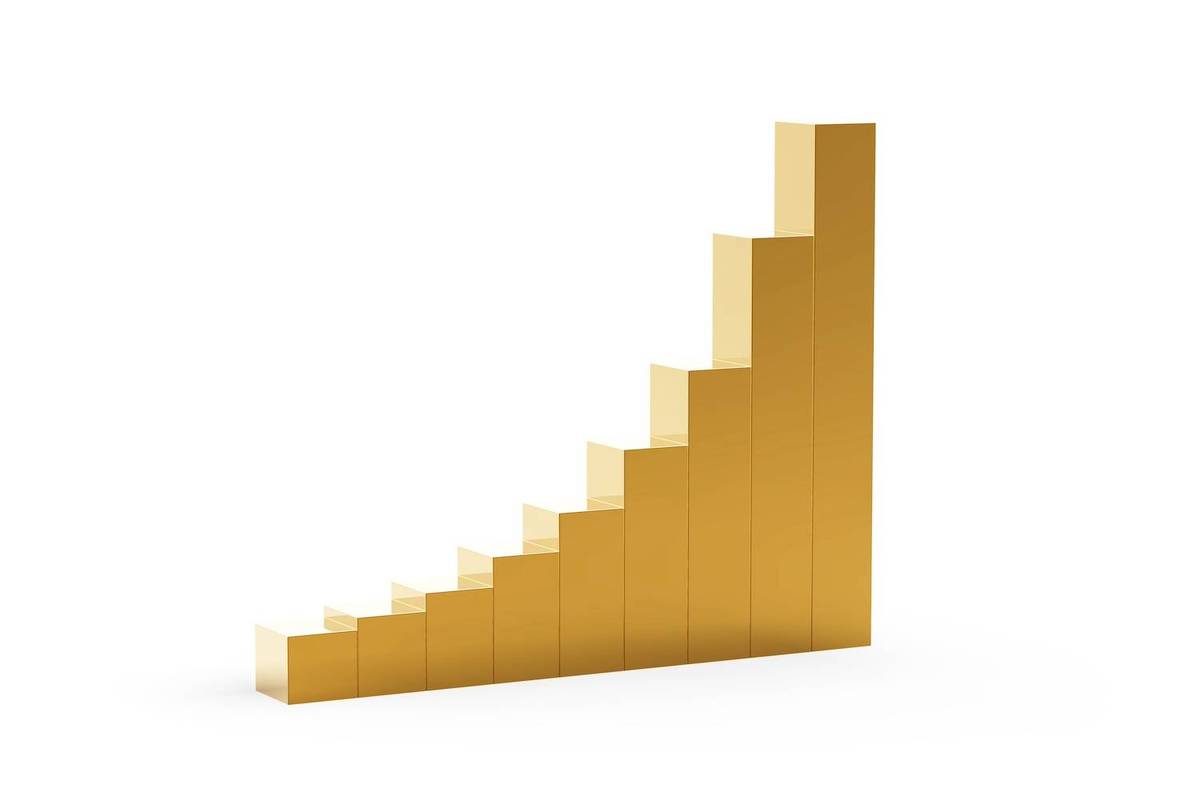
With gold, silver and copper trading near all time highs, producers are cash positive, and more investment capital is making its way to the juniors.
luchschenF / Adobe Stock
Gold, silver and copper have all hit record highs in 2026 as geopolitical tension, supply chain disruptions and mounting government debt push investors toward hard assets.
Gold led the charge, peaking at US$5,589.38 per ounce on January 28 as investor uncertainty reached levels not seen in decades. Silver followed, hitting an all-time high of US$121.62 per ounce in January, and copper has since set fresh records of its own.
The pressures behind the rally haven't eased.
US national debt reached US$40.05 trillion on August 18, according to the Treasury Department's daily financial report. Despite President Donald Trump's repeated calls for lower rates, the Federal Reserve raised its benchmark rate by a quarter point at its September meeting, lifting the target range to 3.75 to 4 percent, its first hike since July 2023. Higher rates mean a higher bill to service that debt.
Normally, higher rates would correlate with a sell-off in the gold market, but instead it's remained relatively stable, holding around the US$4,300 per ounce mark. This has largely been fueled by steady buying by central banks. In August, the People’s Bank of China extended its buying to 22 months after it added 20 metric tons of gold to its reserves, the largest monthly haul in three years.
Silver has also performed well, and although it doesn’t have as much monetary upside as gold, it has strong demand as an industrial metal. In May 2024, silver broke above US$30 for the first time since 2012, then surged to new records above US$100 early in 2026.
Likewise, copper set fresh all-time highs in 2026 amid supply disruptions from mine closures and a tense situation in the Middle East that has caused shortages of sulphuric acid, which is critical to refining, and soaring demand. Tariff uncertainty has added stress, causing shortages in global warehouses as traders try to stockpile metal in the United States.
What does this mean for the sector and its investors, and what insights can be gleaned from previous cycles?
Commodity cycle enters the junior mining stage
In his presentation at September’s Metals Investor Forum in Vancouver on September 18, Robert Sinn of Goldfinger Capital broke down the commodity investment cycle into five stages.
The first stage starts with metals, with prices for gold, silver and copper moving first.
“They start to gradually make higher lows and higher highs, and we saw that in 2024, we saw gold start to bust out above US$2,000, above US$2,100,” he said.
Next, the cycle moves to producers, who start to see profitability from higher commodity prices.
“The big mining companies like Newmont (NYSE:NEM,ASX:NEM), Barrick Mining (TSX:ABX,NYSE:B) and Agnico Eagle Mines (TSX:AEM,NYSE:AEM) started making larger and larger profit margins. Their balance sheet started to fill with cash,” Sinn continued.
The third stage is developers. This is where the majors start looking at projects that stalled during the end of the last cycle in 2013 due to weak prices.
“Well, if gold isn’t US$1,500 anymore, if it’s US$2,000, or US$3,000 this project really works well. There started to be some love for that feasibility and permitting stage assets and companies in the middle of the market,” Sinn explained
After this, the money trickles down to the discovery stage as producers and developers look to fill project pipelines.
Sinn described the final stage as mania, this is when he suggests the market becomes unhinged. With money thrown around into higher-risk projects that often won’t pay off.
He explained this is what happened in the late 70s when the Hunt brothers tried to corner the silver market, and the floor fell out beneath them. It happened again in 1997 when Bre-X committed the gold sector’s biggest fraud.
However, Sinn said the market isn’t there yet; it’s closer to the start of the fourth stage.
“You know what’s really interesting about this is that we’re nowhere near a mania, and actually, just now, we're starting to see money flow into the juniors,” he said.
Sinn compared today’s market to the sector in 2006, noting that producers’ balance sheets are overflowing with cash and that they’ve moved to a net cash-positive position for the first time in more than 20 years.
That money has been flowing down into the juniors for the last two or three quarters. He pointed to Snowline Gold (CSE:SGD), which raised C$150 million in financing, or JPMorgan (NYSE:JPM) investing US$75 million in Perpetua Resources, which is at the permitting stage for its Stibnite gold and antimony project in Idaho.
Sinn also pointed to money flowing from majors like Barrick, and Agnico Eagle into juniors with advanced projects like Kingfisher Metals (TSXV:KFR,OTCQB:KGFMF), and Thesis Gold (TSXV:TAU,OTCQX:THSGF).
“The money is starting to flow into the best juniors, the most advanced juniors, the ones with the highest quality assets that the majors really like, but now also the government, both in the US and Canada, and even the EU are investing in mining, which is something we’ve never seen before,” he said.
He sees a massive change on the horizon as governments become more aggressive in their approach to the mining sector and to secure the supply of critical minerals, and the conditions are right for even more growth.
“We have the fundamentals. We have the governments really investing in this sector, and we have the majors starting to write checks to juniors. We have strong prices across the metals,” he said.
Not at the mania stage yet
What Sinn doesn’t see is mania as a driving force in the market yet. He hasn’t seen the kind of “dumb deals” that marked the market top in 2010 and 2011. “Not every company can raise $10 or $20 million at the snap of their fingers,” he said.
At the height of the mania in February 2011, the TSX Venture exchange was above 2,000 points, while today it’s below 1,000. While Sinn acknowledged that many sectors are represented on the exchange, Canada’s junior miners are also well represented.
Sinn explained that the market reached its bottom in 2013 and hasn’t really broken out, “So when that actually resolves higher, that’s going to be your mania phase. That’s going to be when things get silly, and we’re not there yet. In fact, you’ve got an opportunity to buy the dip here; we’re nowhere near the previous peaks in the TSXV.”
However, it's unclear when the mania phase might be. Sinn pointed to the attempt to corner the silver market in 1980, the Bre-X scandal in 1997, and Barrick Mining's (TSX:ABX,NYSE:B) terrible acquisitions at the cycle peak in 2010 and 2011.
Sinn suggested that Barrick paid very high prices for assets that weren’t operational. “When they tried to get them operational, they realized they had overpaid; they had to take big impairment charges, and CEOs were fired,” he said.
Overall, he expects the bull market to continue over the next few months before really taking off in Q1 2027.
However, he also noted that this bull market isn’t like previous bull markets; the world has changed, and it’s become more fractured. It’s shifted from a world where everything was available on a global market; if it wasn’t available locally, you could get it in China or India.
“That’s not really the case anymore, especially when it comes to metals; things like tungsten, rare earths and even copper are becoming scarce, and countries are stockpiling. So this is not something we saw in previous mining bull markets. We never saw countries, sovereigns, actually stockpiling metals,” Sinn said.
Western countries like Canada and the US are looking to build new domestic supply chains and rely less on China. Sinn says the need is providing greater incentive for governments to focus on supply chains, make permitting easier, and to decrease the time it takes to move through development.
“Permitting is very important and countries are sensitive to permitting timelines. That’s huge for the sector. That raises valuations for companies" Sinn said. "That raises the valuation of assets. That raises the valuation of speculative companies that are at a much earlier stage. There’s a lot of factors that make this a really special time to be in this sector."
Don't forget to follow us @INN_Resource for real-time updates!
Securities Disclosure: I, Dean Belder, hold no direct investment interest in any company mentioned in this article.
https://x.com/INN_Resource
https://www.linkedin.com/in/deanbelder
dbelder@investingnews.com
Dean has been writing in one form or another since penning stage plays in his youth. He is a graduate of both Emily Carr University and Simon Fraser University, with a BFA in photography and a BA in communications.
As a writer, Dean has traveled throughout BC and the Pacific Northwest covering cultural events, interviewing small business owners and working alongside fellow writers and photographers from publications like Rolling Stone Magazine, Spin and the Georgia Straight.
Dean has a keen interest in investing, and enjoys learning about the mining industry and better understanding the technical aspects of trading. In his spare time, Dean is an avid home chef, ponders the space-time continuum and makes his own cider. On weekends he can be found cycling the Seawall, exploring farmers markets or sampling the city’s local craft breweries.
As a writer, Dean has traveled throughout BC and the Pacific Northwest covering cultural events, interviewing small business owners and working alongside fellow writers and photographers from publications like Rolling Stone Magazine, Spin and the Georgia Straight.
Dean has a keen interest in investing, and enjoys learning about the mining industry and better understanding the technical aspects of trading. In his spare time, Dean is an avid home chef, ponders the space-time continuum and makes his own cider. On weekends he can be found cycling the Seawall, exploring farmers markets or sampling the city’s local craft breweries.
INN Article Notification
Latest News
Outlook Reports
Featured Resource Investing Stocks


Browse Companies
MARKETS
COMMODITIES
CURRENCIES
Dean has been writing in one form or another since penning stage plays in his youth. He is a graduate of both Emily Carr University and Simon Fraser University, with a BFA in photography and a BA in communications.
As a writer, Dean has traveled throughout BC and the Pacific Northwest covering cultural events, interviewing small business owners and working alongside fellow writers and photographers from publications like Rolling Stone Magazine, Spin and the Georgia Straight.
Dean has a keen interest in investing, and enjoys learning about the mining industry and better understanding the technical aspects of trading. In his spare time, Dean is an avid home chef, ponders the space-time continuum and makes his own cider. On weekends he can be found cycling the Seawall, exploring farmers markets or sampling the city’s local craft breweries.
Learn about our editorial policies.