

The Conversation (0)
- WORLD EDITIONAustraliaNorth AmericaWorld
Klenger / Adobe Stock
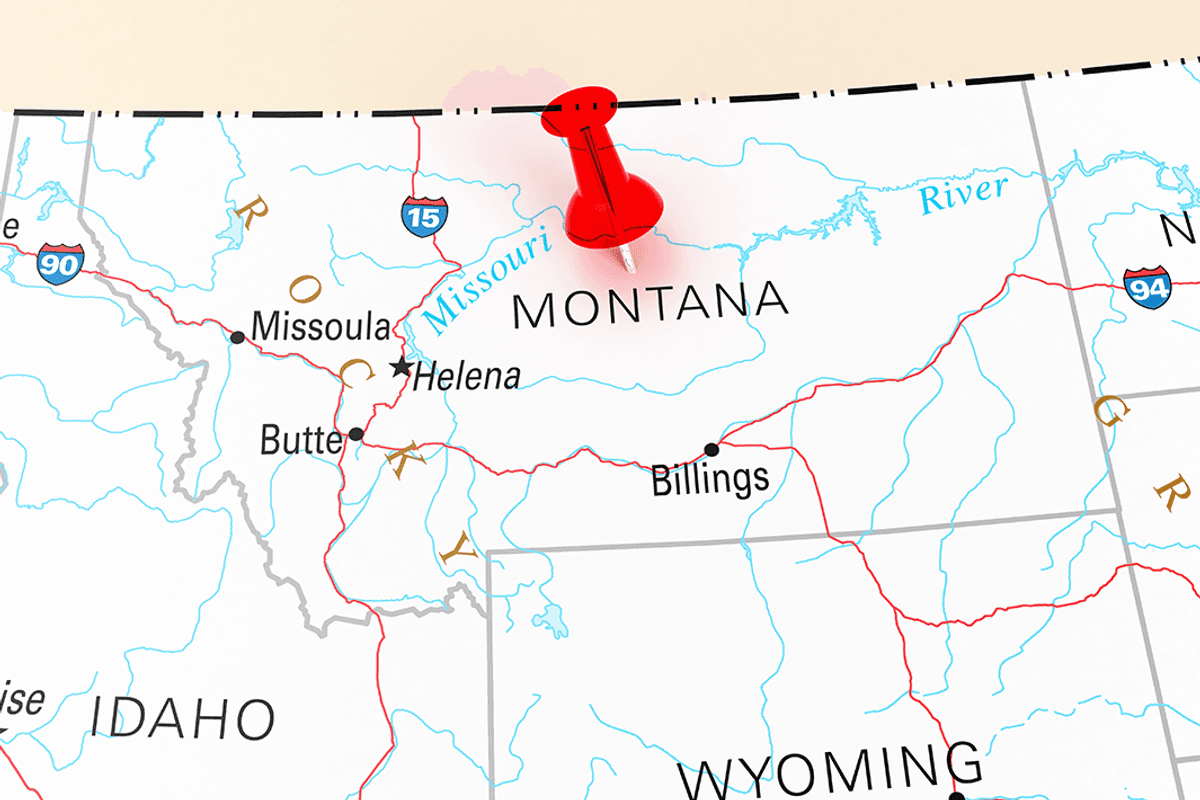
Montana was built on mining, and the state continues to reveal more potential as a world-class copper-mining jurisdiction.
Known as the "Treasure State” because of its vast wealth of mineral reserves, Montana was built on mining, and the industry continues to play an active role in the state’s economy. It is a key contributor to copper mining in the US.
According to the Montana Mining Association, mining accounts for nearly 18,472 permanent jobs and US$7.3 billion of economic output in the state. Copper production in Montana is estimated at approximately 64 million pounds annually, accounting for 4 percent of overall US production.
Montana’s rich mining history
The first gold discovery in what was known as the Montana territory occurred in 1852 at Gold Creek, near present-day Garrison. Major discoveries of silver, copper and coal would soon follow.
By 1862, the region was in the throes of its first gold rush following a big strike at Grasshopper Creek, which two years later would lead to the birth of Bannack, the first territorial capital city.
Soon pilgrim prospectors from as far away as Europe were flooding into the gold-mining camps of Western Montana, including Virginia City and Helena. The territory’s growing population and economy (gold production reached into the hundreds of millions) would earn it statehood in 1889 with Helena as the permanent capital.
Over the next decade, copper would dethrone gold as the predominantly mined metal in the Treasure State. Copper mining centered on the prolific Butte mining district, which would grow to become a city with more than 100,000 inhabitants. Butte’s significant silver deposits and enormous copper deposits would earn it the distinction of being “the Richest Hill on Earth.”
By 1896, this “rich hill” was responsible for at least 210 million pounds of copper production — more than half of US supply and more than a quarter of the world’s copper supply at that time. By-product gold and silver production would have been worth approximately US$500 million today. Past-producing mines in the region include the Revenue mine, the Broadway gold mine and the Green Campbell mine.
Montana’s regulatory and policy environment
Montana’s regulatory regime is structured to ensure that permitted mining projects operate in a socially and environmentally responsible manner before, during and after the development of a mine.
In February 2026, US Secretary of the Interior Doug Burgum joined Representative Ryan Zinke for a tour of Montana Technological Institute in Butte, where school faculty shared their latest mining and engineering tech with the federal officials.
Burgum underlined the Trump administration’s push for mining innovation and permitting reform and the opportunities it presents for legacy mining hubs like Butte. He added that the current US mining environment proves to be beneficial, highlighting that activities should be happening in places like Montana: “We do it cleaner, better, smarter, safer and with newer technology and greater concern for humanity than any place on the planet.”
A May 2026 NPR conversation discussed that Montana could soon ease restrictions on mining precious metals. “A lot of people here would like to see Montana return to the days when extractive industries like mining and timber harvesting dominated the economy,” said Ellis Juhlin of Montana Public Radio.
Derf Johnson of the Montana Environmental Information Center told NPR that people in the state remain aware of the effects previous activity left behind. He called for proper procedure moving forward to avoid “water pollution, air pollution and all the negative consequences that come with mining.”
The state’s mining policy is also changing. In September 2026, the Montana Department of Environmental Quality (DEQ) reported that it had completed the rule-making process for the Metal Mine Reclamation Act.
The package contains one new rule, nine amendments and one repeal. It implements House Bill 69 of 2025, which revised hard rock mining and exploration fees, and clarifies which reprocessed material remains subject to permitting.
The DEQ said the changes create a clearer fee structure and more predictable requirements for operators.
Copper in Montana
Montana has three tectonic provinces with the right geology for copper exploration, known as the Great Falls Tectonic Zone, the Montana Lineament and the Absaroka Volcanic Belt. All the past gold and copper discoveries and operating mines in the state are located in these three tectonic provinces, said Stan Korzeb, economic geologist for the Montana Bureau of Mines and Geology, and a research professor at Montana Tech.
“Porphyry copper-gold deposits are known to be centered on intrusions, skarn, carbonate-replacement and sediment-hosted gold deposits in peripheral locations and related to high- and intermediate-sulfidation epithermal deposits,” said Korzeb. “The three tectonic zones are known to have these types of deposits, making them geologically favorable for future copper and gold exploration.”
At least two dozen known porphyry deposits are recorded in Montana, half of which are copper porphyry. These types of deposits are the world’s most important source of copper and are typically large-scale, amenable to low-cost mining with decades-long mine lives. The landmark Butte copper mine is an excellent example of this type of deposit; the Butte mining district reportedly produced 24 billion pounds of copper and three million pounds of gold over the course of a century.
Montana’s modern mining industry is alive and well. Montana Resources owns and operates a portion of the Butte system known as the Continental Pit mine, a 1,500 hectare copper and molybdenum operation processing 15.7 million tonnes of ore annually.
Exploration is also growing with assets like Falcon Copper’s Blue Copper. Located west of Helena, the project is targeting copper, tungsten, gold, zinc, gallium and germanium. It was included under FAST-41, or infrastructure projects directed by the US Permitting Council to be posted in the interest of transparency.
Domestic Metals and the Smart Creek project
Canada-based Domestic Metals (TSXV:DMCU,OTCQB:DMCUF,FWB:03E0) is advancing its Smart Creek project, an 8,000 hectare copper porphyry property also prospective for copper-gold-silver carbonate replacement deposits. Located 50 kilometers northwest of the Butte mine complex, it shares the “same trend, geological age and rock types.”
Domestic Metals acquired the project in August 2024 and holds it as a joint venture with mining giant Rio Tinto (ASX:RIO,NYSE:RIO,LSE:RIO), which owns 40 percent. Rio Tinto previously drilled 26 out of 40 permitted sites at Smart Creek over 2.5 years, with its best hole returning 109 meters at 0.75 percent copper. Domestic Metals has since combined geological mapping, surface sampling, historical data compilation and an IP geophysical survey.
In September 2026, a 9,000 meter diamond drill program comprising six to eight holes commenced, focused on the Smart Creek and Sunrise mine targets.
CEO Gordon Neal shared that drilling started “after nearly two years of systematic exploration” and that the company is expecting visual observations from core and assay results in the coming months.
Investor takeaway
Montana holds a deep mining tradition, favorable geology and evolving permitting framework.
It is a place where investors and operators can look for new domestic supply, especially as demand for US critical minerals like copper continues to rise.
With its Smart Creek porphyry project, Domestic Metals is tapping into this opportunity. The company offers a view of how a historical mining state’s improved regulatory environment could support the next phase of US copper exploration.
This INNspired article is sponsored by Domestic Metals (TSXV:DMCU,OTCQB:DMCUF,FWB:03E). This INNspired article provides information which was sourced by the Investing News Network (INN) and approved by Domestic Metals in order to help investors learn more about the company. Domestic Metals is a client of INN. The company’s campaign fees pay for INN to create and update this INNspired article.
This INNspired article was written according to INN editorial standards to educate investors.
INN does not provide investment advice and the information on this profile should not be considered a recommendation to buy or sell any security. INN does not endorse or recommend the business, products, services or securities of any company profiled.
This INNspired article contains forward-looking information, including statements regarding planned activities, timelines, business objectives, and market conditions. Forward-looking information is based on assumptions and is subject to known and unknown risks and uncertainties that may cause actual results to differ materially from those anticipated. Readers should not place undue reliance on forward-looking information, which reflects the views of the profiled company as of the date of this profile and is not updated by INN.
The information contained here is for information purposes only and is not to be construed as an offer or solicitation for the sale or purchase of securities. Readers should conduct their own research for all information publicly available concerning the company. Prior to making any investment decision, it is recommended that readers consult directly with Domestic Metals and seek advice from a qualified investment advisor.
DMCU:CC
Alert Options
No alert set
INN Article Notification
Alert Option
You will be notified when this event occurs. No additional settings needed.
Latest News
Outlook Reports
Featured Copper Investing Stocks

Browse Companies
MARKETS
COMMODITIES
CURRENCIES