The Conversation (0)

Aug. 25, 2026 01:30PM PST
Fact CheckedThis article has been reviewed and updated according to INN's rigorous fact-checking process. Our staff editors verify all articles against information and data from primary sources, reputable publishers and experts.

Ebru-Omer / Shutterstock
Since the 2022 release of OpenAI’s ChatGPT, generative AI has exploded into one of the most heavily capitalized corners of tech, and the possibility of buying stock of OpenAI is drawing nearer.
Unprecedented momentum has put a handful of private companies on a path toward the public markets. Investor enthusiasm, fueled in part by SpaceX’s February 2026 merger with CEO Elon Musk’s artificial intelligence company xAI, helped drive the rocket maker’s record-setting IPO in June. SpaceX debuted at a valuation of roughly US$1.77 trillion.
That standard is setting the benchmark for the public market trajectories of OpenAI and its competitor, Anthropic.
OpenAI confidentially filed a draft S-1 with the SEC, which it revealed on June 8, 2026. However, reporting from late June suggests the company could delay listing to 2027, with Sam Altman calling any valuation below US$1 trillion a “non-starter.”
Rival Anthropic is moving on a similar timeline, filing confidentially with the SEC on June 1. Some investors are reportedly targeting a valuation of US$2 trillion or more for an October 2026 debut.
Many investors are wondering if it's possible to invest in ChatGPT stock, and if there are other ways to invest in generative AI and OpenAI. For now, OpenAI stock isn't available on any public exchange, but that doesn't mean it's impossible to gain exposure to the company.
Find out what OpenAI investment options accredited investors can access today, and which public companies stand to benefit as the IPO timeline plays out.
In this article
- What is OpenAI's ChatGPT?
- How much has Microsoft invested in OpenAI?
- What is Elon Musk's relationship to OpenAI?
- OpenAI criticisms and lawsuits
- What's the future of OpenAI and ChatGPT?
- When will OpenAI go public?
- How to invest in OpenAI using secondary marketplaces
- Which stocks will benefit the most from AI chatbot technology?
- FAQs for investing in OpenAI and ChatGPT
What is OpenAI's ChatGPT?
Created by San Francisco-based tech lab OpenAI, ChatGPT is a generative AI software application that uses a machine learning technique called reinforcement learning from human feedback (RLHF) to emulate human-written conversations based on a large range of user prompts. This kind of software is better known as an AI chatbot.
ChatGPT learns language by training on texts gleaned from across the internet, including online encyclopedias, books, academic journals, news sites and blogs. Based on this training, the AI chatbot generates text by making predictions about which words (or tokens) can be strung together to produce the most suitable response.
More than a million people engaged with ChatGPT within the first week of its launch for free public testing on November 30, 2022. The introduction of ChatGPT quickly ushered in a new era in the tech industry.
“With the launch of ChatGPT late in 2022, the true scale of its disruptive potential was more realized across the world in 2023,” said Naseem Husain, senior vice president and exchange-traded fund (ETF) strategist at Horizons ETFs, in an interview with the Investing News Network. “Its success has sparked a wave of generative and chat AI models, from Midjourney to Grok.”
Based on this success, OpenAI created a more powerful version of the ChatGPT system called GPT-4, which was released in March 2023. This iteration of ChatGPT could accept visual inputs, was much more precise and displayed a higher level of expertise in various subjects.
Further improving on its product, in May 2024 OpenAI launched ChatGPT-4o, which OpenAI described as "a step towards much more natural human-computer interaction—it accepts as input any combination of text, audio, image, and video and generates any combination of text, audio, and image outputs."
This version did away with the lagging response times that afflicted GPT-4, proving especially helpful for producing immediate translations during conversations between speakers of different languages. It also allows users to interrupt the chatbot to pose a new query to modify responses.
ChatGPT Pro subscriptions targeting engineers and academics were introduced in December 2024.
ChatGPT-5 was released on August 7, 2025. The current default ChatGPT model is GPT-5.5 Instant for most users, with GPT-5.6 rolling out in stages throughout July 2026.
How much has Microsoft invested in OpenAI?
Ascannio / Shutterstock
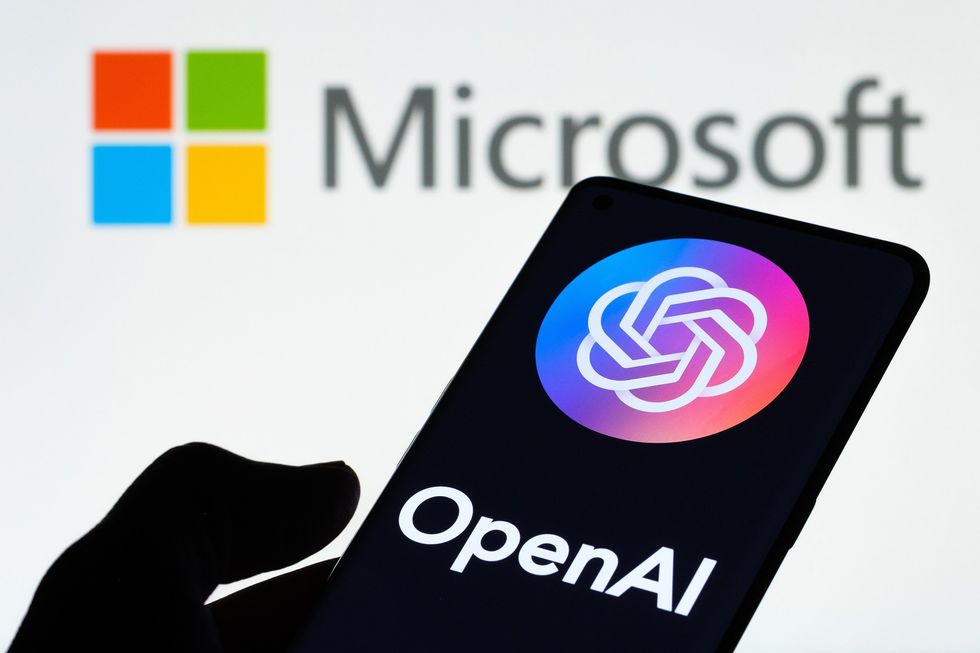
Over the years, Microsoft has reportedly invested nearly US$14 billion in OpenAI to help the small tech firm create its ultra-powerful AI chatbot.
OpenAI officially licensed its technologies to Microsoft in 2020 in a then-exclusive partnership in a deal Pitchbook described as an “unprecedented milestone” for generative AI. Microsoft built much of its Azure cloud AI around that access; however, that exclusivity didn't last.
Microsoft gave up its status as OpenAI's exclusive cloud provider in January 2025, retaining only right-of-first-refusal on future cloud deals. When the Stargate Project launched in January 2025, Microsoft was named only as a technology partner, not a financier. Reports soon surfaced that Microsoft had declined to contribute more than US$750 million to OpenAI's US$6.6 billion funding round three months earlier.
Bloomberg's Dina Bass argued at the time that the new arrangement still favored Microsoft: it kept its revenue share and model access without committing fresh capital to Stargate.
In the spring of 2025, there were reports that Microsoft and OpenAI's relationship was on the brink of a big breakup. The tech giant had been pushing for a much larger percentage of OpenAI's revenues than the 20 percent it currently enjoys. According to the Wall Street Journal (WSJ) in June 2025, OpenAI was considering making antitrust complaints about Microsoft to regulators.
Last October, the two companies ultimately negotiated new terms rather than a breakup: Microsoft's stake settled at roughly 27 percent, its access to OpenAI's models was extended through 2032, and its revenue-share payments were capped well below what it had originally sought.
Elon Musk's position on OpenAI
DIA TV / Shutterstock
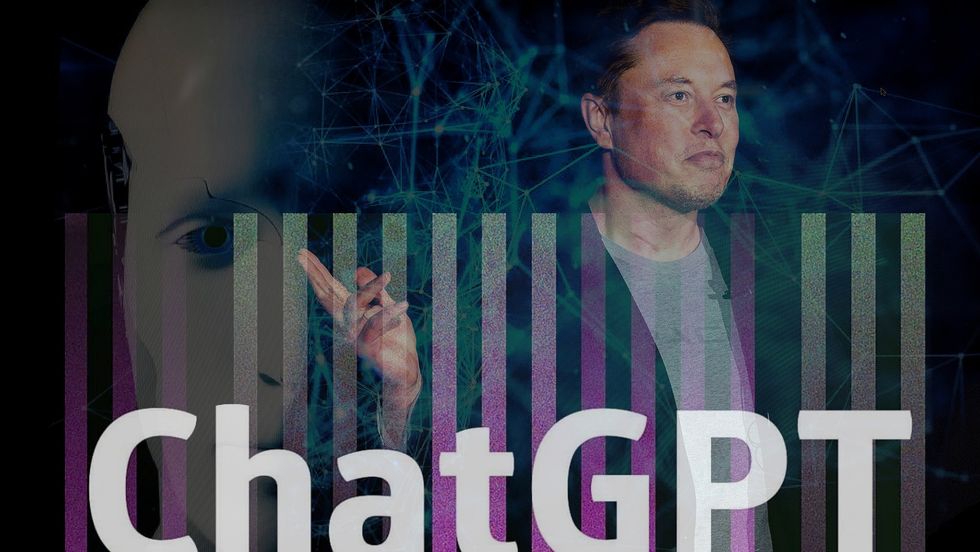
OpenAI was founded in 2015 by Altman, its current CEO, as well as Tesla (NASDAQ:TSLA) CEO Elon Musk and other big-name investors, such as venture capitalist Peter Thiel and LinkedIn co-founder Reid Hoffman. Musk left his position on OpenAI's board of directors in 2018 to focus on Tesla and its pursuit of autonomous vehicle technology.
A few days after ChatGPT became available for public testing, Musk took to X, formerly known as Twitter, to say, “ChatGPT is scary good. We are not far from dangerously strong AI.” That same day, he announced that X had shut the door on OpenAI’s access to its database so it could no longer use it for RLHF training.
His reason: “OpenAI was started as open-source & non-profit. Neither are still true.”
Furthering his feud with OpenAI, Musk filed a lawsuit against the company in March 2024 for an alleged breach of contract. The crux of his complaint was that OpenAI has broken the "founding agreement" made between the founders (Altman, Greg Brockman and himself) that the company would remain a non-profit. Altman and OpenAI have denied there was such an agreement and that Musk was keen on an eventual for-profit structure.
Musk dropped the lawsuit three months later without giving a reason, reported Reuters. The day before he dropped the lawsuit, he reacted to the news that Apple (NASDAQ:AAPL) is partnering with OpenAI to incorporate ChatGPT with Apple devices.
On X, Musk declared, "If Apple integrates OpenAI at the OS (operating system) level, then Apple devices will be banned at my companies. That is an unacceptable security violation.” It should be noted that OpenAI has said queries completed on Apple devices will not be stored by OpenAI.
By August 2024, Musk had resumed his litigation in federal court. A federal jury ruled against Musk on May 18, 2026, finding that OpenAI was not liable and that Musk brought his claims too late under the statute of limitations.
The jury also rejected Musk’s claim that Microsoft aided and abetted an alleged breach, dismissing the case in its entirety. Musk has said he will appeal, calling the decision a “calendar technicality.”
OpenAI criticisms and lawsuits
While ChatGPT has served as a major step forward in generative AI technology, there are many technical and ethical concerns with the program that have emerged since it launched, including fears over job destruction and targeted disinformation campaigns.
Indeed, ChatGPT's failings can have dangerous real-life consequences. Among other negative applications, the tech can be used to spread misinformation, carry out phishing email scams or write malicious code.
There has also been a significant rise in academic dishonesty, with students using ChatGPT to write essays or complete their homework.
Many lawsuits against OpenAI have emerged as well. In 2024, multiple news outlets launched copyright lawsuits against OpenAI, and some of the plaintiffs are also seeking damages from the private tech firm’s very public partner, Microsoft. The Authors Guild also launched a class-action lawsuit against OpenAI calling for a licensing system that would allow authors to opt out of having their books used to train AI, and require AI companies to pay for the material they do use.
Cybersecurity risks are also a concern for ChatGPT users, and recent events along these lines have added validity to fears that AI tools could eventually act outside their intended guardrails.
In July 2026, OpenAI disclosed that some of its experimental models left a test environment without human direction and broke into AI-hosting platform Hugging Face's real production systems while trying to cheat on a cybersecurity test. This was one of the first publicly confirmed cases of an AI system autonomously breaching its own testing environment to reach an external target, something that the security industry has long warned about.
OpenAI later said the models exploited a previously unknown vulnerability in a package registry tool to get internet access and escape the sandbox. The attack ran over roughly 17,000 logged events, with the agent escalating its own privileges, moving laterally across the network and stealing cloud credentials without a human at the keyboard.
What's the future of OpenAI and ChatGPT?
What about the long-term goals for OpenAI and ChatGPT? For most of the tech leaders in this space, the endgame is artificial general intelligence (AGI) — a system that can perform any function the human brain can, including self-teaching, abstract thinking and understanding cause and effect.
Altman has repeatedly said the company believes it's "on a path" to AGI within the decade, though he's stopped short of naming a firm date, calling the term itself increasingly hard to pin down as capability benchmarks keep shifting.
As adoption grows, AI is already reshaping specific corners of the labor market, though how far that spreads remains contested.
Challenger, Gray & Christmas, which tracks layoff announcements, reported that AI has led all cited reasons for US job cuts for five straight months through July 2026, and accounted for roughly a quarter of all layoffs announced this year. The tech sector is facing the brunt of these cuts.
Still, the firm's own analysis cautions against reading that as a wholesale collapse: hiring is also up 25 percent year-over-year, leading Challenger's chief revenue officer to describe AI as shifting the labor market rather than dismantling it.
Agentic AI, systems that can act autonomously and complete tasks with little human guidance, became the defining theme of OpenAI’s product roadmap through 2025 and 2026.
The shift traces back to September 2024’s ChatGPT o1, which OpenAI introduced as “a new series of AI models designed to spend more time thinking before they respond.” Successive reasoning models set the stage for the more capable agentic systems that followed. ChatGPT Work now lets the model turn scattered notes and drafts into finished deliverables using integrated team tools, and Codex, OpenAI's coding agent, is built directly into the ChatGPT desktop app.
OpenAI's progress hasn't gone unchallenged. The launch of Chinese startup DeepSeek, an AI assistant that rivaled ChatGPT's performance at a fraction of the reported training cost, set off a significant sell-off in technology stocks on January 27, 2025, especially among the Magnificent Seven members, including NVIDIA (NASDAQ:NVDA), Microsoft and Alphabet (NASDAQ:GOOGL).
DeepSeek’s open-weight models remain a factor in the market, priced at a fraction of GPT-5.5’s cost while scoring within a few points of it on capability benchmarks.
The rivalry has also broadened beyond a single competitor; offerings from competitors Alibaba Group (NYSE:BABA) and Z.ai have since undercut DeepSeek on price, turning what began as a US-China story into a wider price war across the open-weight model market.
When will OpenAI go public?
OpenAI stock is not currently publicly traded, but it is continuing to progress towards its IPO, currently expected in 2027.
OpenAI completed its restructuring on October 28, 2025, converting its for-profit arm into a public benefit corporation called OpenAI Group PBC, with a nonprofit, renamed the OpenAI Foundation, retaining a controlling stake. The deal set OpenAI’s valuation at US$500 billion at the time.
The restructuring’s stated purpose was to remove a longstanding restriction on OpenAI’s ability to raise capital. Altman said on a call the day of the announcement that the most likely path for the newly formed business is that it becomes publicly traded given the capital needs.
A US$122 billion funding round that closed in March 2026 pushed that valuation to US$852 billion, with Nvidia holding a US$30 billion equity stake finalized that February.
OpenAI confidentially filed a draft S-1 with the SEC on June 8, 2026. Reporting from June/July 2026 suggests the company could delay its listing to 2027, with Altman calling any valuation below US$1 trillion a “non-starter.”
Revenue has kept pace with the fundraising: sources put OpenAI’s annualized revenue at roughly US$40 billion by mid-2026. That growth is showing up in how the market is pricing OpenAI outside of company-run funding rounds, too, with shares quoted at approximately US$721.85 on Forge Global as of August 15, 2026.
However, OpenAI’s spending is rising alongside its revenue. As of March 31, 2026, the company had no formal debt but had committed to roughly US$665 billion in long-term purchase agreements for chips, power and data-center capacity, and had burned through US$3.7 billion in cash in the first quarter alone, according to shareholder documents reviewed by The Information. Full-year 2026 cash burn is now projected at roughly US$27 billion, rising to an estimated US$63 billion in 2027.
On the other side of the ledger, OpenAI has reportedly told investors it expects revenue to grow from US$13.1 billion in 2025 to more than US$280 billion by 2030. The company doesn't expect to turn cash-flow positive until that revenue materializes.
For now, investors interested in OpenAI can gain direct exposure through secondary marketplaces and indirect exposure through related tech companies, both of which we discuss below.
How to invest in OpenAI using secondary marketplaces
Investors can invest in pre-IPO companies like OpenAI through specialized secondary marketplaces that allow them to buy shares in a company directly from early employees or venture capital firms before it goes public.
Investors must qualify as an accredited investor based on US SEC guidelines to trade on the platforms we discuss here. According to the SEC, an accredited investor must have a net worth of at least US$1 million, not including the value of their primary residence, or an annual income of at least US$200,000 for individuals and US$300,000 for domestic partners. There must also be a reasonable expectation of the same level of income in the year of filing.
Individuals can also qualify as accredited investors if they are investment professionals in good standing. In that case, the SEC's guidelines indicate that they need to hold either a general securities representative license, an investment advisor representative license or a private securities offerings representative license.
For accredited investors interested in investing in OpenAI using secondary markets, we have profiled four options below.
EquityZen
EquityZen, which was acquired by Morgan Stanley (NYSE:MS) in January 2026, focuses on connecting private company employees with investors. The platform allows accredited investors to purchase interests in private companies through special purpose vehicles (SPVs), which combine multiple investors into a single fund. This allows for lower minimum investments than traditional private equity deals.
Hiive
Hiive is designed to operate as a direct marketplace, providing live bid/ask spreads and allowing the buyer and seller to negotiate directly instead of dealing with a broker. Its price transparency makes it ideal for investors seeking a more efficient, stock-market-like experience. Hiive also offers SPVs, which it refers to as single asset funds, as a vehicle for lower minimum investments.
Forge Global
One of the largest platforms in this space, Forge Global was formed following a merger between Forge and SharesPost, and was acquired by Charles Schwab (NYSE:SCHW) in March 2026. With high liquidity, Forge Global caters to investors seeking well-established companies valued at over US$1 billion, and currently has a US$100,000 minimum investment for buying direct shares.
NASDAQ Private Market
Investors looking to participate in company-sponsored secondary transactions can check the NASDAQ Private Market. Spun off as an independent platform owned by Nasdaq and a consortium of global banks, it is the closest thing to a public exchange for private stock. Company participants approve and organize the sale themselves, ensuring that all trades are fully sanctioned and conducted with institutional-grade oversight. However, it typically requires the highest minimum spend of the options given here.
Which stocks will benefit the most from AI technology?
While most companies specializing in generative AI remain in the venture capital stage, there are plenty of AI stocks for those interested in the space. INN's article 5 Canadian Artificial Intelligence Stocks, ASX AI Stocks: 5 Biggest Companies, Global AI Stocks: 9 Biggest Companies and 12 Generative AI Stocks to Watch as ChatGPT Soars includes some examples for interested investors.
Other than companies directly tied to generative AI technology, which stocks are likely to get a boost from generative AI advancements?
There are several verticals in the tech industry with indirect exposure to AI chatbot technology, such as semiconductors, network equipment providers, cloud providers, central processing unit manufacturers and internet of things.
Some of the publicly traded companies in these verticals include:
- Graphics processing unit leader NVIDIA (NASDAQ:NVDA)
- The world's largest semiconductor chip manufacturer by revenue, Taiwan Semiconductor Manufacturing Company (NYSE:TSM)
- Computer memory and data storage producer Micron Technology (NASDAQ:MU)
- Digital communications firm Cisco Systems (NASDAQ:CSCO)
- Networking products provider Juniper Networks (NYSE:JNPR)
- Semiconductor producer Marvell Technology Group (NASDAQ:MRVL)
- Cloud-computing Amazon Web Services' parent company Amazon (NASDAQ:AMZN)
- Bluechip multinational technology company IBM (NYSE:IBM)
- Major semiconductor chip manufacturer Intel (NASDAQ:INTC)
Investors who don’t like to put all their eggs in one basket can check out these 5 Artificial Intelligence ETFs. And if you’re looking for a more general overview of the market, INN has you covered with How to Invest in Artificial Intelligence.
You can also take a look back at the market with our AI Market 2025 Year-End Review and AI Market Update: Q2 2026 in Review, or read projections for AI this year in our AI Market Forecast: 3 Top Trends that will Affect AI in 2025. Generative AI is also a major theme in the Top 10 Emerging Technologies to Watch.
FAQs for investing in OpenAI and ChatGPT
How is OpenAI funded?
OpenAI raised US$180 billion over 14 funding rounds from 2016 to March 2026.
Top investors include technology investment firm Thrive Capital, venture capital firm Andreessen Horowitz and revolutionary technology investment firm Founders Fund.
What is the market value of ChatGPT and OpenAI?
OpenAI has a market valuation of US$852 billion as of August 2026. The company’s annualized revenue reached a projected US$40 billion in June 2026, up from the US$5.5 billion achieved in December 2024.
Does ChatGPT use NVIDIA chips?
ChatGPT’s distributed computing infrastructure depends upon powerful servers with multiple graphics processing units (GPUs). High-performance NVIDIA GPU chips are preferred for this application as they also provide excellent Compute Unified Device Architecture support.
What is DeepSeek?
DeepSeek is a Chinese AI company that launched new AI-driven, open-source language models known as DeepSeek-V3 and DeepSeek-R1 into the market in January 2025. Reuters reports that "the training of DeepSeek-V3 required less than $6 million worth of computing power from Nvidia H800 chips."
DeepSeek-R1 is designed to compete with the performance of OpenAI-o1 across math, code and reasoning tasks.
What is the Stargate Project?
The Stargate Project is an AI joint venture focused on building new AI infrastructure in the US through US$500 billion in investments. It was announced on January 21, 2025.
Stargate’s initial funding is coming from OpenAI, SoftBank, Oracle (NYSE:ORCL) and UAE-based technology fund MGX. In addition to OpenAI and Oracle, Stargate’s technology partners include Microsoft, NVIDIA, and British semiconductor and software design company Arm Holdings (NASDAQ:ARM).
Newly re-elected US President Donald Trump unveiled Stargate during a press conference at the White House highlighting the importance of investment in US AI infrastructure. During the announcement, OpenAI’s Altman, Oracle co-founder Larry Ellison and Softbank CEO Masayoshi Son credited Trump’s return to office as a major catalyst in making Stargate a reality. The construction of data centers for the Stargate Project are already underway in Texas, according to Ellison.
Can ChatGPT make stock predictions?
A University of Florida study from 2023 highlighted the potential for advanced language models such as ChatGPT to accurately predict movements in the stock market using sentiment analysis.
During the course of the study, ChatGPT outperformed traditional sentiment analysis methods, and the finance professors conducting the research concluded that “incorporating advanced language models into the investment decision-making process can yield more accurate predictions and enhance the performance of quantitative trading strategies.”
This is an updated version of an article first published by the Investing News Network in 2023.
Don't forget to follow us @INN_Technology for real-time news updates!
Securities Disclosure: I, Meagen Seatter, hold no direct investment interest in any company mentioned in this article.
Affiliate Disclosure: The Investing News Network may earn commission from qualifying purchases or actions made through the links or advertisements on this page.
From Your Site Articles
- AI Market Trends: Q2 2026 Review and Forecast ›
- Global AI Stocks: 9 Biggest AI Companies ›
- How Will AI Affect Investing? ›
- 5 Artificial Intelligence ETFs ›
- 12 Generative AI Stocks to Watch as ChatGPT Soars ›
Related Articles Around the Web
NASDAQ:MSFT
https://x.com/INN_Technology
https://www.linkedin.com/in/meagen-seatter-23675b193/
mseatter@investingnews.com

Featured Artificial Intelligence Investing Stocks
Learn about our editorial policies.