

The Conversation (0)
Jul. 28, 2026 01:50PM PST
|Fact CheckedThis article has been reviewed and updated according to INN's rigorous fact-checking process. Our staff editors verify all articles against information and data from primary sources, reputable publishers and experts.
As lithium prices begin to recover in 2026, these five ASX lithium companies have seen significant gains.
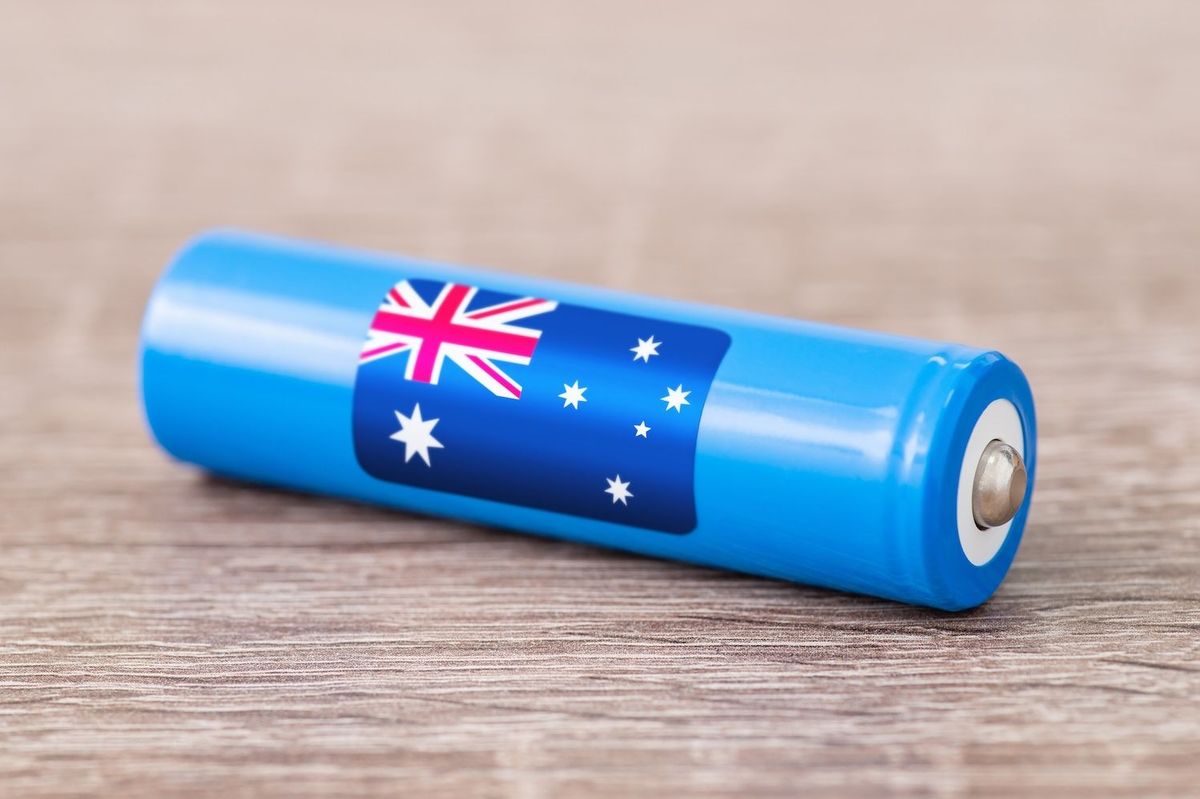
Vitalii Stock / Shutterstock
Global demand for lithium presents a significant opportunity for Australia and Australian lithium companies.
Australia remains the world’s largest lithium miner, supplying 31 percent of global output in 2025, though its dominance is easing as other lithium-producing countries such as China, Zimbabwe and Chile scale up production.
Lithium prices have staged a sharp recovery from the lows of the previous cycle, but Fastmarkets' Paul Lusty says the market is entering a fundamentally different phase — one increasingly shaped by energy storage, constrained supply growth and a more volatile price environment.
Speaking at the 2026 Fastmarkets Global Lithium, Battery and Critical Materials Conference, Lusty said global lithium demand is being reshaped as energy storage systems emerge as the fastest-growing source of consumption alongside electric vehicles.
Fastmarkets expects lithium demand to grow at approximately 12 percent annually over the next decade, with storage demand supported by the expansion of renewable power, energy security concerns and rising electricity consumption from artificial intelligence data centers.
“We’re entering an energy storage-led lithium demand cycle,” Lusty said.
At the same time, the supply response remains constrained by the legacy of two years of low prices, with delayed investment and a slow-moving greenfield project pipeline limiting the pace at which new production can come online. Lusty said the market is likely to remain constructive through 2027 and 2028, with prices potentially reaching around US$30 per kilogram before new supply triggers a cyclical correction.
For investors eyeing the top ASX lithium stocks, the Investing News Network looks at the top four Australian lithium companies by year-to-date gains in 2026. The list below was generated using TradingView’s stock screener on July 21, 2026, and ASX lithium companies with market caps above AU$10 million at that time were considered for inclusion.
1. Patagonia Lithium (ASX:PL3)
Year-to-date gain: 103.39 percent
Market cap: AU$28.93 million
Share price: AU$0.12
Patagonia Lithium is a South America-focused exploration company with lithium and rare earth assets.
The company holds two major lithium brine projects located in Northern Argentina: the Formentera/Cilon projects in Salar de Jama, in Jujuy province, covering 19,500 hectares, and Tomas III at Incahuasi Salar in the Salta province, covering 580 hectares.
In Brazil, the company has been granted five exploration concession packages totaling 41,746 hectares, where it is exploring for ionic rare earth element clays, niobium, antimony and lithium in pegmatites.
In July 2025, Patagonia significantly increased the JORC resource at its Formentera project. The site now hosts inferred and indicated lithium carbonate equivalent (LCE) resources of 551,400 tonnes contained in brine with an average grade of 294 milligrams per litre of lithium.
In January 2026, Patagonia penned a strategic partnership agreement with resource investment firm AMEEREX (OTCID:HIRU), which will act as a capital sponsor and receive a 10 percent equity stake. Ameerex cited the economic potential of the Formentera asset as a catalyst for the deal.
Patagonia spent the bulk of Q1 2026 focused on ongoing work at its Formentera lithium brine project, including pump testing and multiple surveys.
It is also submitting its application for a 1,000 tonne capacity direct lithium extraction demonstration plant using Ekosolve technology. Pilot plant tests achieved recovery rates above 92 percent.
On April 7, Patagonia reported porosity results from testing at its JAM 25-05 well. Executive Chairman Phillip Thomas said the results indicate a larger aquifer, which could expand the project’s mineral resource estimate.
Two days later, the company released results from its BMR gamma survey at well 6, with porosity averaging 22 percent across 462 metres, with a peak of 39 percent, and specific yield averaging 8 percent with a peak of 31 percent.
Shares of Patagonia rose to a year-to-date high of AU$0.23 on March 31 coinciding with a widespread uptick in lithium prices.
In early May, Patagonia submitted the environmental assessment for the Formentera/Cilon project. Over the rest of the month, the company provided several updates on the brine extraction and porosity testwork underway at Formentera.
On June 11, the company secured firm commitments to raise AU$3.4 million through a private placement of up to 34 million shares at AU$0.10 per share. The funds will support drilling Well 8 on the Cilon concession, an updated mineral resource estimate, a scoping study and planning for a 1,000 tonne lithium carbonate demonstration plant.
On June 30, Patagonia Lithium reported a 58 percent increase in the pumping rate from Well 2 after retesting it with a larger pipe and higher-capacity pump. The company tested it along with Wells 3 and 6 using a 1 inch pipe instead of a 3/4 inch pipe and achieved increases at all three. Patagonia was also preparing to pump test Well 7 and was actively drilling Well 8 at Cilon.
2. European Lithium (ASX:EUR)
Year-to-date gain: 74.19 percent
Market cap: AU$491.81 million
Share price: AU$0.27
European Lithium is an Australia-based lithium exploration and development company. The company also holds several earlier-stage lithium exploration projects across Austria and a 100 percent interest in the Leinster lithium project in Ireland.
European Lithium is also pursuing 20 year special permits for the extraction and production of lithium at the Shevchenkivske project and Dobra project in Ukraine.
In addition, European Lithium owns a significant equity stake in Critical Metals (NASDAQ:CRML), which it spun out in 2024 to operate the Wolfsberg lithium project in Austria. Wolfsberg benefits from established road and rail infrastructure and is supported by a mining license and a broad package of exploration permits.
Critical Metals has since acquired a stake in the Tanbreez rare earth project in Greenland, giving European Lithium exposure to both lithium and rare earth development in Europe. In April of this year, Critical Metals received Greenland government approval to acquire the remaining 50.5 percent interest in the Tanbreez project. This transaction increases Critical Metals' ownership of the project to 92.5 percent, while European Lithium maintains a 7.5 percent minority stake.
The company sold portions of its holding in Critical Metals during 2025 to raise funds as Critical Metals' share price rose. European Lithium started 2026 with the sale of an additional 5 million ordinary shares of Critical Metals for net proceeds of approximately AU$124 million.
At the end of March, European Lithium initiated a share buy-back that will run from April 15 to October 15, 2026.
On April 27, Critical Metals made a US$835 million merger offer for European Lithium that would consolidate Tanbreez under one company. Once the deal is complete, European Lithium shareholders are expected to own 41 percent of the combined company. The deal is expected to close later this year.
Shares of European Lithium rallied on the news and continued upwards to AU$0.48 on May 7. Its shares remained elevated during the month, and hit a year-to-date high of AU$0.485 on May 29.
The pair issued an update on the merger on July 3, in which they noted that shareholders of European Lithium will now receive shares of Critical Metals instead of CHESS depository interests. Additionally, those with holdings of less than 50,000 shares can choose to have their new Critical Metals shares sold on market by an agent for proceeds instead of needing to access the NASDAQ-listed shares through a brokerage.
3. Atlantic Lithium (ASX:A11)
Year-to-date gain: 31.11 percent
Market cap: AU$238.39 million
Share price: AU$0.29
Atlantic Lithium is currently advancing the Ewoyaa lithium project in Ghana toward production.
The company completed a definitive feasibility study in July 2023, with the project subsequently receiving a mining lease, environmental permit and mine operating permit between 2023 and 2024. Ewoyaa is being developed under an earn-in agreement with Elevra Lithium (ASX:ELV,OTCPL:SYAXF), previously named Sayona Mining, which holds rights to a 22.5 percent interest in Atlantic Lithium’s Ghana portfolio.
Aside from Ewoyaa, Atlantic Lithium holds a broader portfolio of prospective licences across Ghana and Côte d’Ivoire, covering more than 1,200 square kilometres.
In Q1, speculation on whether the Ghanian parliament would ratify the mining lease for Ewoyaa drove its share performance. The parliament’s Committee on Lands and Natural Resources held a meeting focused on the decision on February 12. Although a decision was not made public at the time, Atlantic's shares rose over the days that followed before a significant spike February 19 led the ASX to temporarily halt trading.
In response to the market activity, on February 23, Atlantic Lithium said it had not yet received confirmation on the parliament's decision, but remained confident approval would be granted. The company also revealed it turned down an acquisition proposal following discussions due to the proposal's value "not fully encompass(ing) the true potential of the Company."
When shares resumed trading after the news, they continued upwards to a year-to-date high close of AU$0.40 on February 23, before pulling back.
Atlantic Lithium ended Q1 2026 announcing on March 20 that Ghana’s parliament ratified the Ewoyaa mining lease, formally approving development of the mine and processing plant. The approval allows the company to advance financing discussions and move toward a final investment decision.
A few days earlier, Atlantic Lithium shared that it secured access to up to US$16.4 million in funding to support ongoing project development as it advances its Ewoyaa lithium project toward production.
The financing includes a potential US$11 million strategic investment from a group of Ghanaian pension funds, increasing Ghanaian ownership in the project, alongside a US$5.4 million placement with Long State Investments.
While Atlantic rejected a previous acquisition proposal, in May, the company entered into a binding agreement to be wholly acquired by Zhejiang Huayou Cobalt (SHA:603799) through an Australian scheme of arrangement.
The all-cash transaction values Atlantic Lithium at approximately US$210 million and offers shareholders US$0.255, equivalent to AU$0.354, per share.
Following the merger news, Atlantic Lithium consented to earn-in partner Elevra Lithium selling its rights and interests for the Ewoyaa project to Zhejiang Huayou Cobalt, after which Huayou will begin funding Ewoyaa on its own. Elevra currently holds rights to a 22.5 percent interest in Atlantic Lithium’s Ghana portfolio, including Ewoyaa and associated spodumene concentrate offtake rights. The sale is not reliant on whether Huayou's acquisition of Atlantic closes.
4. Rio Tinto (ASX:RIO,NYSE:RIO,LSE:RIO)
Year-to-date gain: 7.62 percent
Market cap: AU$222.35 billion
Share price: AU$157.99
Rio Tinto, a global powerhouse in the resource sector for decades, is mostly known for its iron and copper production. However, in recent years, the mining giant has become a major player in the world’s lithium market.
In March 2025, the company cemented its position as one of the biggest lithium-producing companies in the world with the US$6.7 billion all-cash acquisition of Arcadium Lithium, the lithium giant formed after the US$10.6 billion merger of lithium majors Allkem and Livent.
Rio Tinto is consolidating Arcadium’s assets with its own under a new unit called Rio Tinto Lithium, adding brine operations at Salar del Hombre Muerto and Olaroz in Argentina, as well as the Mount Cattlin hard-rock mine in Australia that is now on care and maintenance.
Rio Tinto started 2026 securing a US$1.175 billion financing package from four international lenders to support development of its US$2.5 billion Rincon lithium project in Argentina’s Salta province, specifically the International Finance Corporation, IDB Invest, Export Finance Australia and the Japan Bank for International Cooperation.
Currently under construction, Rincon is targeting annual production of approximately 60,000 tonnes of battery-grade lithium carbonate, with first production expected in 2028 followed by a three-year ramp-up to full capacity.
The Arcadium acquisition also gave Rio Tinto a 50 percent stake in Nemaska Lithium, which owns the under-construction Whabouchi spodumene mine and a lithium hydroxide plant in Québec, Canada. In February 2026, Rio Tinto bolstered its interest in Nemaska Lithium to 53.9 percent, assuming management of the company, with the Québec government owning the remaining 46.1 percent.
Once month later, on March 13, Rio Tinto announced it would slow construction at the Nemaska Lithium Bécancour lithium hydroxide conversion project as it reviews and optimizes the project’s execution plan. At the time, engineering was finished and construction was over 70 percent complete.
The company said the decision follows an in-depth review conducted since it assumed direct management in February and is intended to strengthen the project’s long-term execution. Rio Tinto said it remains committed to the project and Québec, with plans to invest more than US$300 million in its Québec lithium business in 2026.
On July 15, in its Q2 operational update, Rio Tinto reported it acheived first lithium production ahead of schedule at its Sal de Vida and Fénix 1B brine operations in Argentina's Salar del Hombre Muerto.
Across the company’s lithium portfolio, lithium production was up 20 percent year-over-year supported by those assets entering production and the ramp-up of the Rincon starter plant.
After climbing through Q2, shares of Rio Tinto registered a year-to-date high of AU$157.99 on June 3, just days after the company announced it began commissioning its US$1.5 billion aluminum smelter expansion at Complexe Arvida in Québec, with ramp-up expected to be complete by the end of the year.
FAQs for investing in lithium
What is lithium?
Lithium is the lightest metal on the periodic table, and it is used in a wide variety of applications, including lithium-ion batteries, pharmaceuticals and industrial applications like glass and steel.
How do lithium-ion batteries work?
Rechargeable lithium-ion batteries work by using the flow of lithium ions in the battery's cell to power a device.
A lithium-ion battery has one or more cells, depending on the amount of energy storage it is capable of, and each cell has a positive electrode and negative electrode with an electrolyte separating them. When the battery is in use, lithium ions flow from the negative electrode to the positive electrode, running out of power once all have transferred. When the battery is charging, ions flow the opposite way.
Where is lithium mined?
Lithium is mined from two types of deposits, hard rock and evaporated brines. Most of the world's lithium production comes out of Australia, which hosts the Greenbushes hard-rock lithium mine. The next-largest producing country is Chile, which like Argentina and Bolivia is located in South America's Lithium Triangle.
Lithium in this famed area comes from evaporated brines, including the Salar de Atacama. Lithium can also be found in sedimentary deposits, but currently none are producing.
Where is lithium found in Australia?
Australia's lithium mines are all located in Western Australia except for one, Core Lithium’s (ASX:CXO,OTC Pink:CXOXF) Finniss mine in the Northern Territory.
Who owns lithium mines in Australia?
Several companies own lithium mines in Australia, including some of the biggest ASX lithium stocks. In addition to the entities discussed above, others include: Pilbara Minerals (ASX:PLS,OTC Pink:PILBF) with its Pilgangoora operations; Jiangxi Ganfeng Lithium (HKEX:0358), which owns the Mount Marion mine alongside Mineral Resources (ASX:MIN); and Tianqi Lithium (SZSE:002466), which is a partial owner of Greenbushes via its stake in operator Talison Lithium.
Who is Australia’s largest lithium producer?
Australia’s largest lithium producer is Albemarle (NYSE:ALB), which has interests in both the Greenbushes and Wodgina hard-rock lithium mines. Greenbushes is the world’s largest lithium mine, and Albemarle holds a 49 percent interest in the mine through the Talison Lithium joint venture.
Albermarle also has 50 percent ownership in the Wodgina mine alongside operator Mineral Resources, and wholly owns the Kemerton lithium hydroxide production facility.
Don’t forget to follow us @INN_Australia for real-time updates!
Securities Disclosure: I, Georgia Williams, hold no direct investment interest in any company mentioned in this article.
Editorial Disclosure: Atlantic Lithium is a client of the Investing News Network. This article is not paid-for content.
https://x.com/INN_Resource
https://www.linkedin.com/in/georgia-williams-15845447/
gwilliams@investingnews.com
Originally from Calgary, Georgia has been right at home in Toronto for more than two decades. Graduating from the University of Toronto with an honors BA in journalism, she is passionate about writing on diverse topics, including resources, arts, politics and social issues.
At INN Georgia covers a wide range of topics, including energy, battery and critical metals and diamonds. In her spare time, Georgia enjoys watching documentaries and experiencing Toronto's vibrant food, arts and cultural scene.
At INN Georgia covers a wide range of topics, including energy, battery and critical metals and diamonds. In her spare time, Georgia enjoys watching documentaries and experiencing Toronto's vibrant food, arts and cultural scene.
INN Article Notification
Outlook Reports world
Featured Lithium Investing Stocks
Browse Companies
MARKETS
COMMODITIES
CURRENCIES
Originally from Calgary, Georgia has been right at home in Toronto for more than two decades. Graduating from the University of Toronto with an honors BA in journalism, she is passionate about writing on diverse topics, including resources, arts, politics and social issues.
At INN Georgia covers a wide range of topics, including energy, battery and critical metals and diamonds. In her spare time, Georgia enjoys watching documentaries and experiencing Toronto's vibrant food, arts and cultural scene.
Learn about our editorial policies.