The Conversation (0)
When Will Silver Stocks Catch Up to the Silver Price?
Feb. 02, 2026 01:45PM PST
Even after a dramatic pullback, the silver price is trading at historic highs as silver stocks lag behind the metal. Experts see potential for a catch-up trade as hedges expire and valuations adjust.
Maxx-Studio / Shutterstock
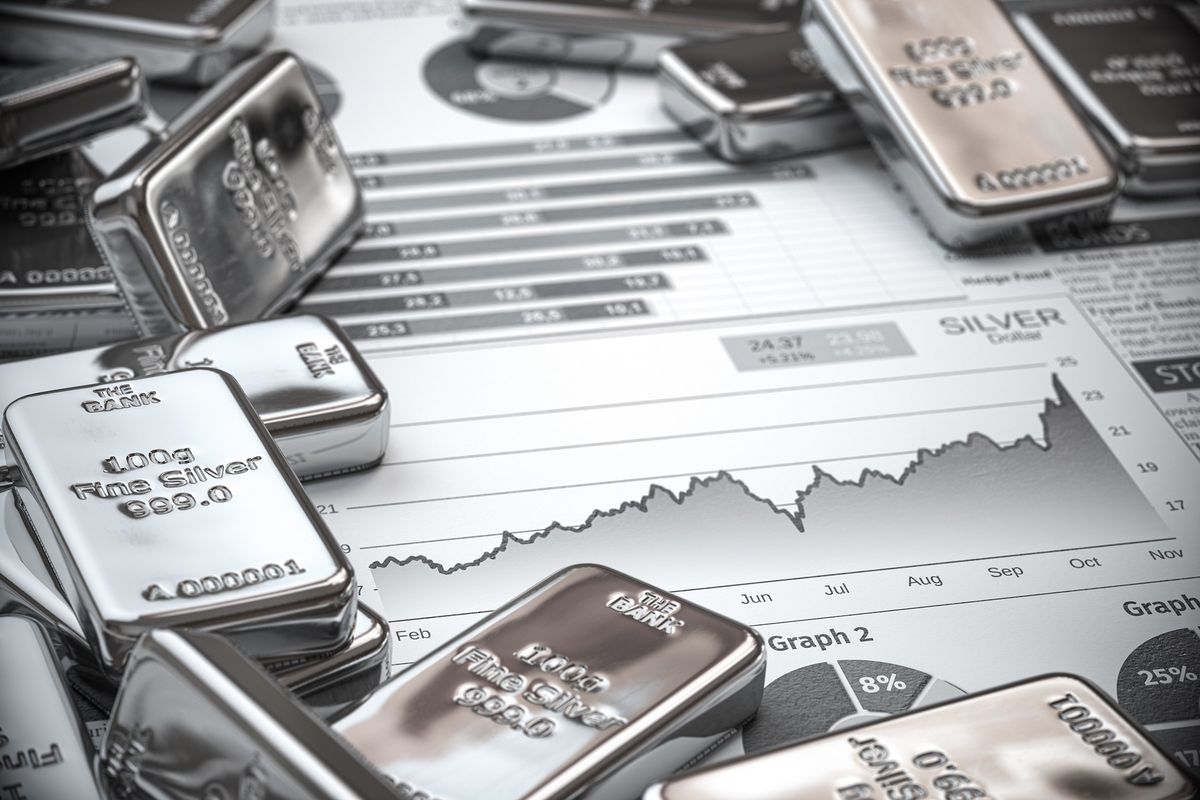
The silver price remains historically high despite a recent pullback, and many silver stocks haven't kept pace.
Silver's strong performance over the past year is the result of a perfect storm of factors, including an entrenched supply deficit, growing industrial demand, a weakening US dollar and deepening geopolitical and economic uncertainty.
For these reasons, investors are flocking to the white metal for both its safe-haven status and its developing role as a critical mineral used in energy, artificial intelligence and defense technologies.
As of early February, the silver price was trading in a range of US$70 to US$80 per ounce, while the Amplify Junior Silver Miners ETF (ARCA:SILJ) was trading between about US$31 to US$32 per share.
SILJ tracks small-cap and mid-cap producers, developers and explorers that derive most of their revenue from silver. The profit margins of this segment of the silver-mining industry are the most sensitive to a rising silver price, which is why SILJ tends to outperform the price of physical silver during bull markets.
With silver stocks clearly lagging behind the price performance of the metal itself, there may be an opportunity for investors to position ahead of the next stage of the silver bull market. That's the investment strategy of many of the precious metals experts the Investing News Network (INN) has spoken with in recent weeks.
Why is there a lag between the silver price and silver stocks?
During a presentation at the Vancouver Resource Investment Conference (VRIC), held from January 25 to 26, Peter Krauth, editor of Silver Stock Investor and Silver Advisor, looked at the performance of silver stocks relative to the price of physical silver, honing in on silver-focused exchange-traded funds.
“Over the last five years, silver has actually doubled the return of the silver stocks. Normally they should be doubling the silver price," he elaborated to INN on the sidelines of the conference.
"So we actually have had negative leverage in silver stocks versus silver. If you look back over one year, two years, we're essentially even. You've gotten no reward for taking on additional risk by being in the silver stocks."
Why are silver stocks, particularly those on the SILJ, lagging behind the performance of the physical metal?
Krauth explained that valuation models for these stocks are still factoring in silver prices at US$25 to US$30, even though last quarter the price was averaging around US$70 per ounce. “They essentially almost all need to be revalued because silver is so much higher, and that hasn't happened yet,” he said.
Steve Barton, host of In It To Win It, agrees with that assessment. “A lot of analysts are still using silver prices sub-US$50 to do their calculations for the next quarter. This is such a tiny market — this is our whole world, but this is just a blip on the screen of a lot of Wall Street guys, right?” he said in a January interview with INN.
“I think they're going to have to redo their calculations for gold and silver miners.”
In another INN interview that same month, Steve Penny, founder of SilverChartist.com, shared that many silver-mining companies hedge their production, meaning they use financial contracts to secure a set price for their future mined silver. This allows companies to protect their profit margins in case the silver price suddenly drops. Many are probably locked in at silver prices that are now much lower than the current spot price for the metal
“That caps their earnings. Well, the good news for speculators, investors and mining stocks is that those hedges expire,” said Penny, who believes that the relative outperformance of silver stocks to the silver price will “kick in soon."
When will silver stocks catch up to the silver price?
Penny is looking for those hedges to expire over the first few quarters of the year.
“Then that's where these mining stocks, the profits are just going to go through the roof. I mean, even if we pull back to the mid US$60s — not expecting that — but even if that were to happen, these mining stocks are not pricing in US$60 silver. They're still pricing in sub-US$50 silver. So a lot of upside potential here for the mining stocks,” he said.
Barton is also looking for a move sooner rather than later, especially with earning calls coming up.
“I think we have a catch-up trade coming. I think it's coming soon. So if no one has taken advantage of this yet, I think you need to act, like now,” said Barton, who later added, “Assuming the silver price could stay above, you know, US$75 an ounce or so, that should blow out expectations. And I think it'll be a really nice trade. I really do.”
But that won’t be the end of the party for silver. Krauth sees strong potential over the next two or three years for a “dramatic run” for the silver sector. And like his peers, he sees that run starting soon.
“I think what we're going to see is over the next few quarters, as those projects, producers, cashflows, get revalued at higher input prices, we're going to see the profit margins really explode and expand,” he said. “We're going to see when those numbers get reported, the market is going to start to appreciate that and start to rerate a lot of these stocks.”
Rick’s Rules for silver sector profits
Rick Rule, investment guru and proprietor at Rule Investment Media, is already making plays in this latest silver bull market, leveraging the profits he’s made in physical silver to better position himself for the next stage.
Speaking with Rule at VRIC, INN asked about his decision to sell 80 percent of his physical silver and where he invested his profits. First, he invested close to half of the money in very high-quality silver stocks.
“My reasoning being as follows: if silver goes nowhere for a year, if it stays rangebound, the best silver producers are discounting US$45 silver a year from now. If the price is at US$75 or US$80 they'll be discounting US$75 or US$80 silver, which means the stock will be up 50, 60, 70 percent,” he explained.
“The speculative outlook for the silver stocks seemed to be better than the speculative outcome for silver. If silver stays flat for a year, by definition silver won't give me any return. But if it stays flat, the silver stocks would give me 50 or 60 percent. So it was a better speculative outcome," Rule added.
What did he do with the rest of his gains from his physical silver investment? He parked 25 percent in physical gold. “That's how I save. I maintain liquidity in US currency, and I save in gold,” said Rule.
The other 25 percent went into oil and gas stocks. “As you know, my motto is that I buy hate and I sell love. Silver was loved, so I sold it. Oil and gas were hated, so I bought it.”
Both Krauth and Barton are on board with Rick’s Rules for silver investment.
“(Rule) has had for a long time a significant position in physical silver, and has sold a good portion of that because he is looking for value all the time and not sitting still. And he decided that those proceeds were going to go to where he saw value,” said Krauth. “And that's part of my thesis going forward as well — that the value, or the unrealized value, in the silver space is now especially in the miners.”
Barton also sees value in this strategy. “I have been selling some physical silver, and I've been putting it into oil stocks, and I've been putting it into gold and silver miners because they have not played that catch-up trade, right?,” he said. “Spot gold and silver are relatively expensive compared to very good silver and very good gold miners. So that could be a place where you could take some profits and rotate into the next leg up.”
Which silver-mining stocks are favored by the experts? Check out INN’s full January interviews with Penny and Barton, and our VRIC interviews with Rule, Krauth and others.
Don’t forget to follow us @INN_Resource for real-time news updates!
Securities Disclosure: I, Melissa Pistilli, hold no direct investment interest in any company mentioned in this article.
Editorial Disclosure: The Investing News Network does not guarantee the accuracy or thoroughness of the information reported in the interviews it conducts. The opinions expressed in these interviews do not reflect the opinions of the Investing News Network and do not constitute investment advice. All readers are encouraged to perform their own due diligence.
https://twitter.com/INN_Resource
https://www.linkedin.com/in/melissa-pistilli-865271a9/
mpistilli@investingnews.com