

The Conversation (0)
Aug. 10, 2026 09:20AM PST
|Fact CheckedThis article has been reviewed and updated according to INN's rigorous fact-checking process. Our staff editors verify all articles against information and data from primary sources, reputable publishers and experts.
The investigation follows allegations that thousands of metric tons of undeclared uranium has left the country embedded in cobalt exports, raising fresh concerns over nuclear oversight, environmental risks and the security of a critical global supply chain.
Robert / Adobe Stock
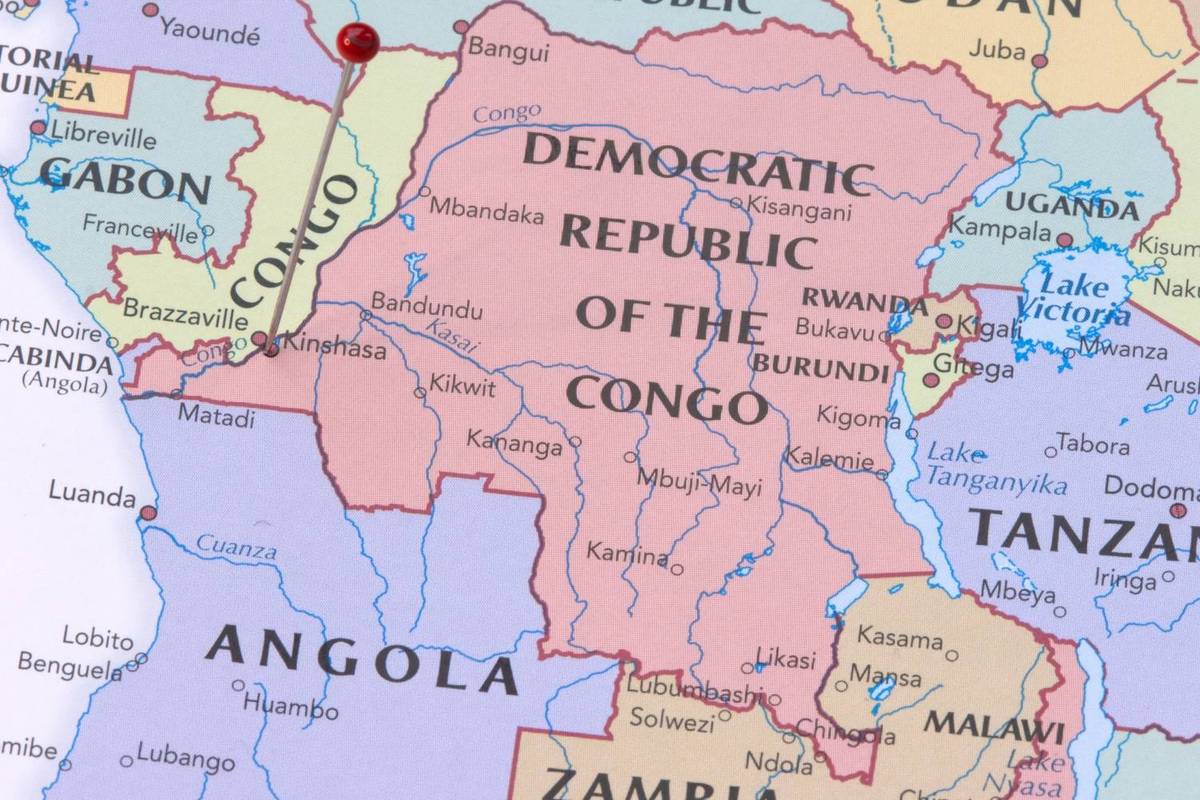
The Democratic Republic of Congo (DRC) announced it is launching a formal investigation into massive quantities of undeclared uranium contaminating its cobalt exports.
Officials said they will test cobalt hydroxide shipments bound for China and establish a working group to review recent findings produced in investigations by the Financial Times, Lighthouse Reports and Le Monde.
The Congolese government also plans to consult the International Atomic Energy Agency (IAEA) to arrange a technical support mission.
The controversy centers on the DRC's copper belt, where uranium naturally co-occurs with cobalt and copper.
While Kinshasa bans domestic uranium production today, researchers estimate that between 2,000 and 5,000 metric tons of natural uranium embedded in cobalt-hydroxide shipments exited the country between 2000 and 2024.
Sébastien Philippe, a nuclear security expert and co-author of a recently published "Nature Communications" study, noted that the undeclared exports present severe nuclear accounting blind spots. Because less than 10 percent of the material was publicly declared to the IAEA, no regulatory oversight tracks its final destination or end use.
“This quantity of undeclared uranium could be used to produce fissile material for roughly 600 to 1,500 nuclear weapons or fuel a standard light-water nuclear reactor for 10 to 25 years, so it’s quite a large amount,” Philippe said. “It could end up in a civilian nuclear energy program or in a military program, because nobody is going to ask where this uranium is going.”
According to the research, unless specific chemical processes extract it during refining, uranium inherently bonds with the crude cobalt hydroxide. The vast majority of these exports flow to China, which processes approximately 95 percent of global cobalt.
Once the crude material is refined into pure cobalt metal, the uranium is stripped out and could be recovered as a byproduct.
The IAEA, which tracks global uranium production, stated through an expert that the agency had no indications the DRC was failing to meet its safeguarding obligations. Low-grade uranium-bearing cobalt exports do not require reporting if they are for non-nuclear purposes.
Congolese officials disputed the study's methodology, arguing the estimates relied on broad modeling rather than direct measurements of exported shipments.
Despite questioning the numbers, Kinshasa announced several measures it would take to investigate the matter, with findings to be made public.
These include the analysis of cobalt hydroxide samples led by the DRC’s nuclear safety and energy agencies, working with both national and international laboratories. It would also establish a group focused on verifying the allegations, assessing the health and environmental risks of the contamination, and determining appropriate measures, with a report expected within 60 days. Lastly, it plans to consult with the IAEA.
Additionally, the government mandated the installation of radiation detectors for trucks crossing its borders.
The investigation also places intense scrutiny on operators such as CMOC Group (OTCPL:CMCLF,SHA:603993,HKEX:3993). Internal documents reviewed by the journalism consortium recorded uranium-rich cobalt samples at the site, including a peak concentration of 1,100 parts per million in December 2016, roughly 15 times the export limit cited by the investigation.
Further documents indicated significant uranium concentrations remained in the site's cobalt production as late as June 2021.
CMOC categorically disputed the findings in a response to the Lighthouse study, stating that the uranium content level in its cobalt hydroxide complies with Congolese regulations and the standards of downstream customers. The company also denied extracting or separating uranium in either the DRC or China.
While the Congolese government didn't address the accusations against the mining companies, it defended the country's historical track record, asserting that it has safely overseen the natural overlap of uranium and cobalt for over a century of industrial mining.
Don’t forget to follow us @INN_Resource for real-time news updates!
Securities Disclosure: I, Giann Liguid, hold no direct investment interest in any company mentioned in this article.
https://x.com/giannliguid
https://www.linkedin.com/in/giannliguid/
Giann Liguid is a graduate of Ateneo De Manila University with an AB in Interdisciplinary Studies. With a diverse writing background, Giann has written content for the security, food and business industries. He also has expertise in both the public and private sectors, having worked in the government specializing in local government units and administrative dynamics.
When he is not chasing the next market headline, Giann can most likely be found thrift shopping for his dogs.
When he is not chasing the next market headline, Giann can most likely be found thrift shopping for his dogs.
INN Article Notification
Latest News
Outlook Reports world
Featured Uranium Investing Stocks



Browse Companies
MARKETS
COMMODITIES
CURRENCIES
Giann Liguid is a graduate of Ateneo De Manila University with an AB in Interdisciplinary Studies. With a diverse writing background, Giann has written content for the security, food and business industries. He also has expertise in both the public and private sectors, having worked in the government specializing in local government units and administrative dynamics.
When he is not chasing the next market headline, Giann can most likely be found thrift shopping for his dogs.
Learn about our editorial policies.