

The Conversation (3)
Sep. 11, 2026 02:00PM PST
|Fact CheckedThis article has been reviewed and updated according to INN's rigorous fact-checking process. Our staff editors verify all articles against information and data from primary sources, reputable publishers and experts.
Explore the week's best-performing Canadian mining stocks on the TSX, TSXV and CSE, and dive into the Canadian news affecting commodities prices and stock markets.
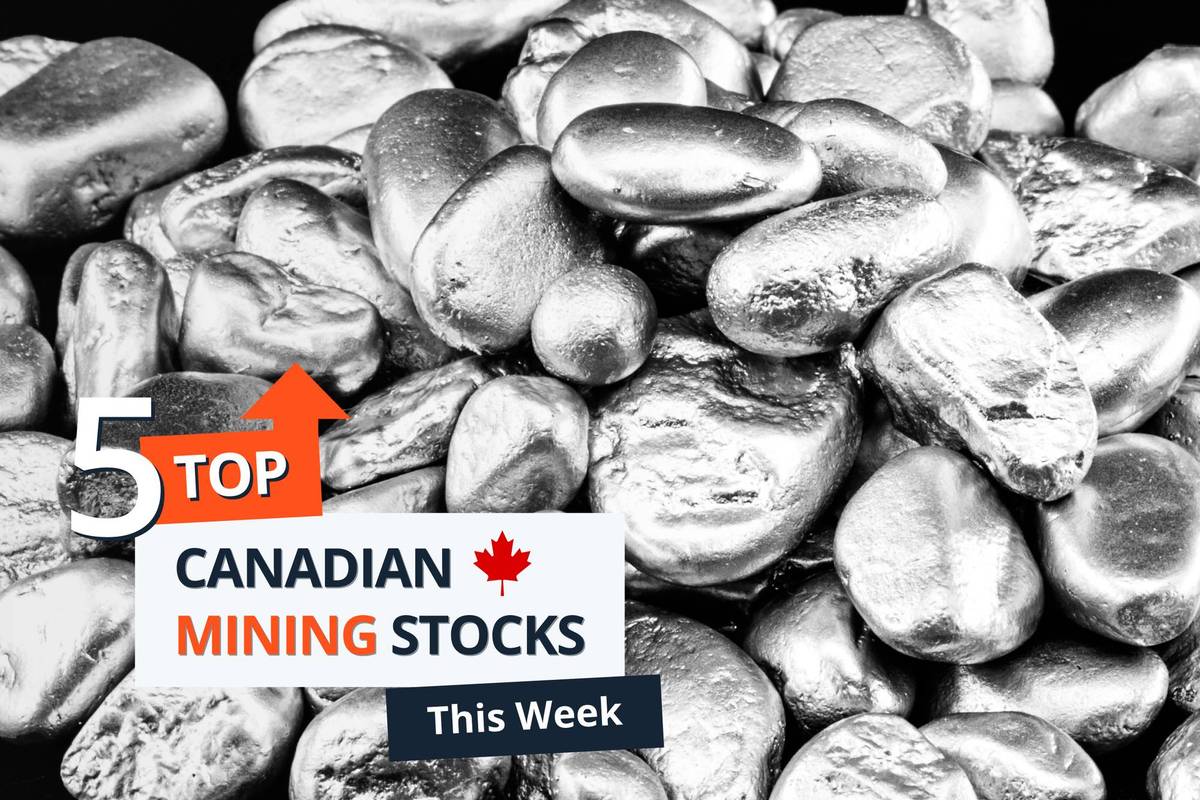
Welcome to the Investing News Network's weekly look at the best-performing Canadian mining stocks on the TSX, TSXV and CSE, starting with a round-up of Canadian news impacting the resource sector.
Copper prices reached new record highs on both the COMEX and the London Metal Exchange (LME).
On the COMEX, the price topped out at US$6.89 per pound during intraday trading on Wednesday (September 9). On the LME, the copper price reached as high as US$14,858 per metric ton that same day.
The price rise came alongside tightening stockpiles at warehouses outside the United States as US traders began accumulating refined copper inventories ahead of a new 15 percent tariff set to take effect on January 1, 2027.
While stockpiles in the United States have risen to record levels, LME and Shanghai warehouses have fallen, tightening the availability of physical copper overseas.
However, by the end of the week, copper prices began to retreat on speculation that the US Trump administration may not proceed with the planned implementation of phased copper tariffs, as it weighed higher manufacturing costs from elevated copper prices against stimulating domestic copper production.
Gold prices trended downward this week as speculation of an interest rate hike grew. Gold started trading at US$4,428 per ounce on Monday (September 7) and pulled back to near the US$4,300 mark in the early hours of trading Friday (September 11) morning.
Prices briefly spiked to over US$4,400 on the release of August’s consumer price index (CPI) data on Friday morning by the US Bureau of Labor Statistics.
The figures show all-item inflation rose 0.4 percent on a monthly basis and 3.4 percent year over year, roughly matching analysts' expectations.
However, even excluding volatile energy and food prices, core CPI came in hotter than expected on a monthly basis, climbing 0.3 percent in August, while analysts expected 0.2 percent. On an annual basis, the increase stood at 2.4 percent, matching predictions.
The Federal Open Market Committee will use the data when it meets next week to decide on the benchmark Federal Funds Rate. Odds of a rate hike have risen from just under 50 percent on August 11 to more than 85 percent on Friday, according to the CME FedWatch tool.
A rate hike could put the Fed at odds with the White House, as President Donald Trump has once again been calling for rate cuts. Federal Reserve Chair Kevin Warsh has largely been quiet about future committee moves; however, at the Jackson Hole Symposium in August, he appeared more hawkish and more open to future rate increases.
For more on what’s moving markets this week, check out our top market news round-up.
Markets and commodities react
Canadian equity markets were mixed this week.
The S&P/TSX Composite Index (INDEXTSI:OSPTX) fell 2.23 percent over the week to close Friday at 35,697.49, while the S&P/TSX Venture Composite Index (INDEXTSI:JX) slipped 3.81 percent to 927.86.
The CSE Composite Index (CSE:CSECOMP) on the other hand gained 3.75 percent to 174.83.
Precious metals prices also pulled back over the course of the week. The gold price lost 2.75 percent to close at US$4,350.04 per ounce on Friday at 4:00 p.m. EDT. The silver price fell 3.92 percent at US$64.39.
In base metals, the Comex copper price recorded a 1.8 percent decrease this week to US$6.55, although it hit a new record high during the period.
The S&P Goldman Sachs Commodities Index (INDEXSP:SPGSCI) was up 2.03 percent to end Friday at 752.08.
Top Canadian mining stocks this week
How did mining stocks perform against this backdrop?
Take a look at this week’s five best-performing Canadian mining stocks below.
Stocks data for this article was retrieved at 4:00 p.m. EDT on Friday using TradingView's stock screener. Only companies trading on the TSX, TSXV and CSE with market caps greater than C$10 million are included. Mineral companies within the non-energy minerals, energy minerals, process industry and producer manufacturing sectors were considered.
1. Perseverance Metals (TSXV:PMI)
Weekly gain: 53.19 percent
Market cap: C$28.96 million
Share price: C$0.72
Perseverance Metals is an exploration company advancing a portfolio of polymetallic projects in Canada and the United States.
Its 2026 exploration work has focused on its 17,000 hectare Lac Gayot project in Québec, Canada, and its 67,988 hectare Voyageur project in Michigan, US.
Exploration at the Lac Gayot project has centered on the Venus volcano-sedimentary belt, which covers an area 30 kilometers long and 10 kilometers wide and hosts mineralization containing nickel, copper, cobalt and platinum group metals. The company has also encountered lithium in spodumene-bearing pegmatites.
The most recent news from the project came on July 22, when Perseverance announced the launch of its summer 2026 exploration program, which is designed to follow up on targets identified in 2025.
As for its Voyageur project, historic exploration between 1996 and 2015 was largely limited to geophysical surveys and field mapping, with only 16 holes drilled. A 2024 program carried out by Perseverance focused on reprocessing the historic data.
On September 9, the company announced initial results for four diamond drill holes that tested a blind geophysical target as part of its 2026 exploration program. Perseverance reported discovering a mafic-ultramafic intrusion bearing nickel and copper at the Osprey target. According to Perseverance, the intrusion resembles the deposits at Talon Metals’ Eagle mine and Tamarack deposits, which lie east and west of Voyageur, respectively.
The company said the next steps are to move the rig to the project's second target while technical teams complete surveys and geochemical studies to follow up on the discovery. Assay results for the four holes are pending.
2. ATERRA Metals (CSE:ATC)
Weekly gain: 37.5 percent
Market cap: C$15.83 million
Share price: C$0.055
ATERRA Metals is an exploration company focused on its Totora copper-gold project in Chile.
The company finalized the option agreements in February for the three core properties that make up Totora — Frontera, Clinton and Taruca — as well as a fourth, Sevilla, which was added under the Clinton agreement at no additional cost. The area also hosts the Algarrobilla porphyry target, which lies south of the Totora porphyry.
Historical exploration of Frontera produced a historic indicated resource of 16 million metric tons of ore at average grades of 0.38 percent copper and 0.22 grams per metric ton (g/t) gold, with an additional inferred resource of 34 million metric tons grading 0.36 percent copper and 0.22 g/t gold.
While the other sites don't have historic resources, ATERRA highlighted historical drill results from Clinton, including a 166 meter interval at average grades of 0.23 percent copper and 0.31 g/t gold, and from Totora, including 142 meters grading 0.47 percent copper and 0.17 g/t gold.
The company has been actively exploring Totora since acquiring the property.
On July 16, ATERRA released exploration results from the Phase 1 drill program at the project, highlighting a grade of 0.41 percent copper and 0.27 grams per metric ton (g/t) over 284 meters from the surface, with one intersection of 0.56 percent copper and 0.32 g/t gold over 70 meters.
Shares in ATERRA were up this week, although the company has not released any news. However, the company announced on August 6 that it had begun work on the maiden mineral resource estimate for Totora, with expectations that it would be completed before the end of September 2026.
3. Talon Metals (TSX:TLO)
Weekly gain: 36.48 percent
Market cap: C$1.81 billion
Share price: C$10.40
Talon Metals is a development and mining company that owns the Eagle Mine in Michigan and the Tamarack project in Minnesota.
Its recent focus has been on its Tamarack property, which lies about 90 kilometers west of Duluth and consists of two separate packages, Tamarack North and Tamarack South. The two properties host 18 kilometers of strike across more than 31,000 acres, with Talon's main focus directed at Tamarack North, which hosts the primary deposit.
According to a November 2022 technical report, Tamarack North hosts an indicated resource of 8.56 million metric tons of ore with grades of 1.73 percent nickel, 0.92 percent copper, 0.05 percent cobalt, 0.34 g/t platinum, 0.21 g/t palladium and 0.17 g/t gold.
The project is being explored under an earn-in agreement between Talon Metals and Rio Tinto (ASX:RIO,NYSE:RIO,LSE:RIO) subsidiary Kennecott Exploration.
Talon currently owns a 51 percent stake in the property, but can earn up to 60 percent once it completes a feasibility study and makes a US$10 million cash payment to Kennecott before March 14, 2027.
Talon shares gained this week after it released results showing a record intercept at its Tamarack project in Minnesota, US, on Wednesday (September 9).
The drill hole, 25TK0562A, returned grades of 13.37 percent nickel, 16.54 percent copper, 0.1 percent cobalt, 7.85 grams per metric ton (g/t) palladium, 14.49 g/t platinum and 8.56 g/t gold over 46.43 meters at a depth of 752.97 meters.
It includes a 26.22 meter interval with 14.95 percent nickel, 17.85 percent copper, 0.11 percent cobalt, 8.53 g/t palladium, 16.79 g/t platinum and 9.13 g/t gold starting at 758 meters.
“Any one of these grades will get your attention, but to see nickel, copper, cobalt, platinum, palladium, and gold all concentrated at these levels in the same rock is particularly significant and one of the many reasons polymetallic deposits like Tamarack are so exciting,” Chief Exploration Officer Brian Goldner said.
The hole extends mineralization from the Vault zone by 50 meters to the southwest. Talon initially discovered the zone in May 2025 using a borehole electromagnetic (BHEM) survey to target deeper anomalies.
Additionally, the company announced on Thursday (September 10) that it would no longer advance the construction of the proposed Beulah Mineral Processing Facility in North Dakota, but instead chose the existing Humboldt Mill in Michigan as the destination for material from Tamarack.
The company acquired the mill in January from Lundin Mining (TSX:LUN,OTCPL:LUNMF) in the same agreement as the Eagle Mine.
4. Wescan Goldfields (TSXV:WGF)
Weekly gain: 35.48 percent
Market cap: C$15.42 million
Share price: C$0.21
Wescan Goldfields is an exploration company focused on gold projects in Saskatchewan, Canada. All of the company’s projects are in the La Ronge region, north of Prince Albert.
The company’s properties consist of the 198 hectare Jojay project, located 7 kilometers from the Jolu gold mill; the 6,513 hectare Fork Lake property, which hosts the historic Jasper mine; and the 2,480 hectare Munro Lake property, which has seen limited exploration. The company also owns the 1,852 hectare Lindsay Lake gold project, which it staked in July 2026.
The most recent announcement from Wescan came on August 27 when it reported that it had mobilized for Phase 1 of the 2026 diamond drill program at Munro Lake, which will feature up to 2,000 meters of helicopter-supported drilling.
The program is designed to follow up on high-grade gold intercepts that were encountered during a drill program in 2013, as well as on surface grab samples along a prospective 7 kilometers of strike.
5. Nordique Critical Metals (TSXV:NQC)
Weekly gain: 33.33 percent
Market cap: C$43.75 million
Share price: C$0.08
Formerly Consolidated Lithium Metals, Nordique Critical Metals is an exploration and development company advancing a portfolio of critical mineral properties in Québec, Canada.
The company’s primary focus has been at the Kwyjibo rare earth project in the Côte-Nord region of the province.
In November 2025, Nordique signed a binding definitive agreement with the Government of Québec-owned SOQUEM to earn up to an 80 percent stake in the Kwyjibo in exchange for a cash payment and meeting investment and project advancement milestones.
The most recent news came on July 2, when Nordique announced the results of an updated preliminary economic assessment for Kwyjibo, citing a post-tax net present value of C$1.4 billion, an internal rate of return of 35.4 percent and a payback period of two years.
On June 30, the company announced its name change from Consolidated Lithium Metals to Nordique Critical Metals to better align with its focus on critical minerals. Additionally, the company announced it was moving its headquarters from Toronto to Montreal.
FAQs for Canadian mining stocks
What is the difference between the TSX and TSXV?
The TSX, or Toronto Stock Exchange, is used by senior companies with larger market caps, and the TSXV, or TSX Venture Exchange, is used by smaller-cap companies. Companies listed on the TSXV can graduate to the senior exchange.
How many mining companies are listed on the TSX and TSXV?
As of March 2026, 906 mining companies and 71 oil and gas companies are listed on the TSXV, combining for 64 percent of the 1,524 total companies listed on the exchange.
The TSX is home to 176 mining companies and 50 oil and gas companies. The exchange has 2,149 companies listed on it in total.
Together, the TSX and TSXV host around 40 percent of the world’s public mining companies.
How much does it cost to list on the TSXV?
There are a variety of different fees that companies must pay to list on the TSXV, and according to the exchange, they can vary based on the transaction’s nature and complexity.
As of April 2026, the listing fee alone will most likely cost between C$10,000 to C$70,000, and accounting and auditing fees could rack up between C$25,000 and C$100,000. Legal fees are expected to be over C$75,000 and an underwriters’ commission may hit up to 12 percent.
The exchange lists a handful of other fees and expenses companies can expect, including but not limited to security commission and transfer agency fees, investor relations costs and director and officer liability insurance.
These are all just for the initial listing, of course. There are ongoing expenses once companies are trading, such as sustaining fees and additional listing fees, plus the costs associated with filing regular reports.
How do you trade on the TSXV?
Investors can trade on the TSXV the way they would trade stocks on any exchange. This means they can use a stock broker or an individual investment account to buy and sell shares of TSXV-listed companies during the exchange's trading hours.
Don't forget to follow us @INN_Resource for real-time updates!
Securities Disclosure: I, Dean Belder, hold no direct investment interest in any company mentioned in this article.
From Your Site Articles
- Top 3 Canadian Lithium Stocks in 2026 ›
- 5 Best-performing Gold Stocks on the TSX ›
- 5 Best-performing Canadian Uranium Stocks ›
- Top 5 Junior Gold Mining Stocks on the TSXV ›
- 5 Best-performing Copper Stocks on the TSX ›
Related Articles Around the Web
https://x.com/INN_Resource
https://www.linkedin.com/in/deanbelder
dbelder@investingnews.com
Dean has been writing in one form or another since penning stage plays in his youth. He is a graduate of both Emily Carr University and Simon Fraser University, with a BFA in photography and a BA in communications.
As a writer, Dean has traveled throughout BC and the Pacific Northwest covering cultural events, interviewing small business owners and working alongside fellow writers and photographers from publications like Rolling Stone Magazine, Spin and the Georgia Straight.
Dean has a keen interest in investing, and enjoys learning about the mining industry and better understanding the technical aspects of trading. In his spare time, Dean is an avid home chef, ponders the space-time continuum and makes his own cider. On weekends he can be found cycling the Seawall, exploring farmers markets or sampling the city’s local craft breweries.
As a writer, Dean has traveled throughout BC and the Pacific Northwest covering cultural events, interviewing small business owners and working alongside fellow writers and photographers from publications like Rolling Stone Magazine, Spin and the Georgia Straight.
Dean has a keen interest in investing, and enjoys learning about the mining industry and better understanding the technical aspects of trading. In his spare time, Dean is an avid home chef, ponders the space-time continuum and makes his own cider. On weekends he can be found cycling the Seawall, exploring farmers markets or sampling the city’s local craft breweries.
INN Article Notification
Latest News
Outlook Reports world
Featured Nickel Investing Stocks



Browse Companies
MARKETS
COMMODITIES
CURRENCIES
Dean has been writing in one form or another since penning stage plays in his youth. He is a graduate of both Emily Carr University and Simon Fraser University, with a BFA in photography and a BA in communications.
As a writer, Dean has traveled throughout BC and the Pacific Northwest covering cultural events, interviewing small business owners and working alongside fellow writers and photographers from publications like Rolling Stone Magazine, Spin and the Georgia Straight.
Dean has a keen interest in investing, and enjoys learning about the mining industry and better understanding the technical aspects of trading. In his spare time, Dean is an avid home chef, ponders the space-time continuum and makes his own cider. On weekends he can be found cycling the Seawall, exploring farmers markets or sampling the city’s local craft breweries.
Learn about our editorial policies.