

The Conversation (6)
Aug. 04, 2026 01:40PM PST
|Fact CheckedThis article has been reviewed and updated according to INN's rigorous fact-checking process. Our staff editors verify all articles against information and data from primary sources, reputable publishers and experts.
What are the top Canadian cobalt stocks? Learn what's driving the best performing TSX- and TSXV-listed cobalt companies this year.
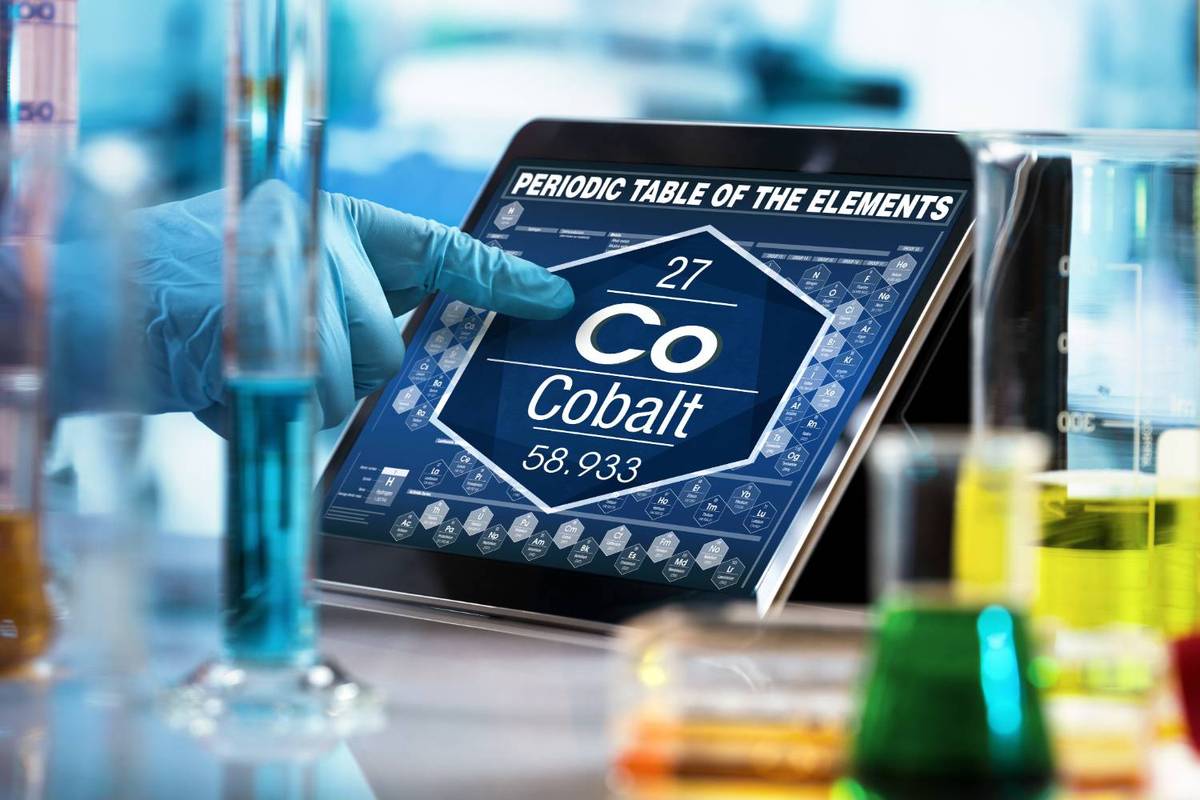
angellodeco / Adobe Stock
Cobalt prices extended their recovery through the second quarter of 2026, supported by ongoing export restrictions in the Democratic Republic of the Congo (DRC) that have tightened global supply and squeezed feedstock availability for Chinese refiners.
The DRC, which accounts for roughly three-quarters of global cobalt production, first suspended exports in February 2025 after a prolonged period of oversupply drove prices to multiyear lows.
Then, in October, the country transitioned the ban to a producer-specific quota system that limited quarterly exports of cobalt hydroxide and metal.
The quota system was further complicated in July 2026 when the DRC announced that left over export quota tally would be reclaimed by the government.
Combined with logistical bottlenecks and qualification delays, the restrictions have kept shipments below historical levels, underpinning a sharp price rebound.
During a presentation at the 2026 Fastmarkets Lithium, Battery and Critical Minerals conference in Las Vegas, Fastmarkets' senior analyst Rob Searle explained that standard-grade cobalt hydroxide prices surged about 167 percent between January 2025 and June 2026, extending gains that began with the DRC's intervention.
Cobalt’s price positivity is part of a larger uptrend in battery metals as lithium and nickel prices are also rebounding. Fastmarkets CEO Raju Daswani argued that this wider trend is signaling the end of the prolonged downturn across battery raw materials markets.
Below the Investing News Network looks at the three top cobalt stocks on the TSX and TSXV by share price performance for the last year. The list includes companies with secondary exposure to cobalt.
All share price and performance data was obtained on July 28, 2026, using TradingView’s stock screener. Companies with market caps above C$10 million at that time were considered.
1. Nickel 28 Capital (TSXV:NKL)
Year-to-date gain: 37.8 percent
Market cap: C$97.24 million
Share price: C$1.13
Nickel 28 Capital is a mining investment company with an 8.56 percent joint-venture interest in the Ramu nickel-cobalt operation in Papua New Guinea. The majority owner, with an 85 percent interest, is Metallurgical Corporation of China (MCC) (HKEX:1618), and local stakeholders own the remaining 6.44 percent.
Nickel 28 is incrementally paying off its construction debt; once paid off, its ownership in Ramu will increase to 11.3 percent, and it will gain the option to acquire an additional stake at market price to bring its ownership to 20.55 percent.
Nickel 28 also manages a portfolio of 10 nickel and cobalt royalties spanning development, pre-feasibility and exploration-stage projects in Canada, Australia and Papua New Guinea.
In the Q4 and full year 2025 overview, Nickel 28 Capital reported higher cobalt production at Ramu, with full-year output rising to 3,099 metric tons of contained cobalt in mixed hydroxide precipitate (MHP), up from 2,625 metric tons in 2024.
On April 15, Nickel 28 Capital announced that MCC proposed a US$1.6 billion Phase 2 expansion for Ramu. If approved, the expansion would roughly double its production capacity.
Driven by the announcement and rising nickel prices, Nickel 28 shares jumped 18.7 percent from C$1.07 on April 13 to C$1.27 on April 20. The stock achieved a year-to-date high of C$1.28 on May 1, retesting that peak multiple times during the month.
In mid-May, Nickel 28 confirmed a H2 2025 cash distribution of approximately US$2.1 million from its 8.56 percent interest in the Ramu project. Additionally, the company repaid US$4 million in construction debt, reducing its attributable balance to US$31.9 million.
Days later, the company updated its mineral reserve and resource estimates for the Ramu operation, showing a rise in average nickel grades from 0.81 percent to 0.87 percent in its reserves, and a 16 percent increase in measured and indicated mineral resource tonnage.
For Q1 2026, Nickel 28 reported a 32 percent year-on-year increase in cobalt production from Ramu, reaching 855 metric tons of contained cobalt in MHP. Cobalt sales rose 47 percent to 838 metric tons, while the average cobalt price surged 130 percent to US$25.47 per pound. The company’s 8.56 percent interest in Ramu contributed US$4 million in operating profit.
2. Leading Edge Materials (TSXV:LEM)
Year-to-date gain: 16.33 percent
Market cap: C$73.4 million
Share price: C$0.285
Leading Edge Materials is developing critical materials projects in Europe. The company's projects include its wholly owned Woxna graphite mine and Norra Kärr heavy rare earths project, both in Sweden.
It also holds a 90 percent interest in the Bihor Sud nickel-cobalt exploration alliance in Romania, which it increased from 51 percent in May. Historical mining and exploration at the Avram Iancu mine area resulted in hundreds of kilometres of underground workings, according to the company.
Leading Edge closed last year by joining EIT Raw Materials as a project partner, strengthening its access to Europe’s leading critical minerals innovation network and potential funding channels.
While Norra Kärr has been a significant priority for the company, Leading Edge also performed an exploration program at Bihor Sud last year. In its 2025 annual report, Leading Edge highlighted that a competent person report (CPR) was underway for the Romania-based project. It also said it was assessing financing options to fund its work at defining a large-scale polymetallic resource, including following up on cobalt-nickel-gold mineralization identified at the G7 gallery and zinc-lead-copper-silver potential at G2.
In early February, it shared findings from its 2025 exploration at Bihor Sud, highlighting extensive mineralization identified through its 2025 exploration campaign, including uranium oxide, as well as copper, cobalt, nickel, lead and zinc mineralization.
The report points to potential continuity between the Valea Leucii, Dibarz and Avram Iancu areas, which could form a mineralized zone spanning roughly 6 kilometers both east to west and north to south.
Shares of Leading Edge reached a year-to-date high of C$0.40 on March 10, the same day the company said Sweden’s Mining Inspectorate referred its application for an exploitation concession at the Norra Kärr project to the Swedish government for a final decision.
Leading Edge announced it filed the CPR for the Bihor Sud project on March 18. CEO Kurt Budge commented, "The CPR completion is designed to serve a clear purpose: providing the credible foundation needed to attract new investment directly into the project."
In May, Leading Edge raised its stake in the Bihor Sud joint venture from 51 percent to 90 percent following eight years of investment. The company also announced plans for an underground exploration program at its Avram Iancu area, targeting a 2 kilometer by 300 meter zone with polymetallic and cobalt-nickel mineralization.
More recently, on the rare earth side, Leading Edge was granted a 25 year mining lease for the Norra Kärr project in June, and advanced work on its mid-stream processing strategy in July.
3. Battery Mineral Resources (TSXV:BMR)
Year-to-date gain: 11.54 percent
Market cap: C$51.71 million
Share price: C$0.145
Battery Mineral Resources is focused on developing into a mid-tier copper producer, and recently restarted mine and mill operations at the Punitaqui mining complex in Chile.
In Canada, the company holds the largest land position in Ontario’s historic Cobalt district, one of the country’s most productive past silver-cobalt districts, where it is exploring high-grade cobalt deposits at McAra, Gowganda and Elk Lake. Its portfolio also includes energy services in North America, along with graphite projects in South Korea.
In late October 2025, Battery Mineral Resources said it was evaluating strategic options for four mining leases covering 225 hectares at its 9,542 hectare Gowganda asset. These leases, referred to as the Gowganda silver tailings project, host four former mines and associated tailings historically estimated to contain 2.96 million ounces of silver.
At the start of 2026, Battery Mineral Resources revealed its decision to sell 100 percent of its interest in the Gowganda mining leases to Nord Precious Metals (TSXV:NTH,OTCQB:CCWOF).
Company shares rallied in early January and reached a year-to-date high of C$0.20 on January 22.
At the end of March, Battery Mineral Resources completed the sale of the Gowganda silver tailing leases, in exchange for C$1 million in cash, 4.4 million Nord shares valued at C$1.25 million, a 3 percent net smelter returns royalty and C$3.75 million in deferred payments over three years.
At the beginning of Q2, Battery Mineral Resources provided an overview of its Ontario cobalt and nickel assets, which host several high-priority silver-cobalt targets across four projects, and noted third-party interest.
"Given the current focus on precious and critical minerals, further exploration of the Ontario assets represents an opportunity to generate additional value," Battery Mineral Resources CEO Laz Nikeas said. "We have received various expressions of interest on these properties from several third parties, and BMR will continue to review alternatives to maximize value to our shareholders."
As the company considers a possible sale, it pointed to potential next steps for exploration work at McAra, Gowganda, Shining Tree and Wilder, including drilling and modern geophysical work to test silver-cobalt mineralization.
FAQs for cobalt
What is cobalt?
Cobalt is a silver-gray metal that is often produced as a by-product of nickel and copper mining. It does not occur as a separate metal anywhere in the world, and must be produced by reductive smelting, or from the metallic ore cobaltite, which is made of cobalt, sulfur and arsenic.
What is cobalt used for?
Historically, cobalt oxides were used to impart a blue pigment to glass, porcelain and paints, hence the still-used cobalt blue paint. The metal is also used to produce superalloys, as cobalt imparts qualities such as corrosion and wear resistance, which are useful in applications such as airplanes, orthopedics and prosthetics.
Today cobalt is most famously used in the rechargeable lithium-ion batteries that run everything from smartphones to EVs and energy storage systems.
Where is cobalt mined?
The majority of cobalt production comes out of the DRC, which was responsible for producing 230,000 metric tons of cobalt in 2025. For perspective, the second largest cobalt-producing country, Indonesia produced 44,000 metric tons the same year, while third place Russia produced 7,700 metric tons.
As the lithium-ion battery and EV supply chains garner global attention, companies are trying to limit their exposure to cobalt produced from the DRC, which is known for human rights abuses and sometimes child labor in its mining industry.
In response to this trend, many countries with cobalt are attempting to create domestic cobalt and EV supply chains in the hope of attracting companies looking to avoid DRC-sourced cobalt. This can be seen in the up-and-coming battery corridor in Ontario, Canada, as well as in the US-based Idaho cobalt belt.
Don’t forget to follow us @INN_Resource for real-time news updates!
Securities Disclosure: I, Georgia Williams, hold no direct investment interest in any company mentioned in this article.
From Your Site Articles
- Top 3 ASX Cobalt Stocks (Updated January 2026) ›
- Cobalt Market 2025 Year-End Review ›
- 5 Largest Cobalt Mines in the World ›
- Cobalt Stocks: 5 Biggest Producers ›
- ASX Cobalt Stocks: 5 Biggest Companies ›
Related Articles Around the Web
https://x.com/INN_Resource
https://www.linkedin.com/in/georgia-williams-15845447/
gwilliams@investingnews.com
Originally from Calgary, Georgia has been right at home in Toronto for more than two decades. Graduating from the University of Toronto with an honors BA in journalism, she is passionate about writing on diverse topics, including resources, arts, politics and social issues.
At INN Georgia covers a wide range of topics, including energy, battery and critical metals and diamonds. In her spare time, Georgia enjoys watching documentaries and experiencing Toronto's vibrant food, arts and cultural scene.
At INN Georgia covers a wide range of topics, including energy, battery and critical metals and diamonds. In her spare time, Georgia enjoys watching documentaries and experiencing Toronto's vibrant food, arts and cultural scene.
INN Article Notification
Latest News
Outlook Reports world
Featured Cobalt Investing Stocks
Browse Companies
MARKETS
COMMODITIES
CURRENCIES
Originally from Calgary, Georgia has been right at home in Toronto for more than two decades. Graduating from the University of Toronto with an honors BA in journalism, she is passionate about writing on diverse topics, including resources, arts, politics and social issues.
At INN Georgia covers a wide range of topics, including energy, battery and critical metals and diamonds. In her spare time, Georgia enjoys watching documentaries and experiencing Toronto's vibrant food, arts and cultural scene.
Learn about our editorial policies.