

The Conversation (0)
May. 26, 2026 11:35AM PST
The US and the EU are currently attempting to build multibillion-dollar stockpiles to act as a buffer for domestic manufacturers.
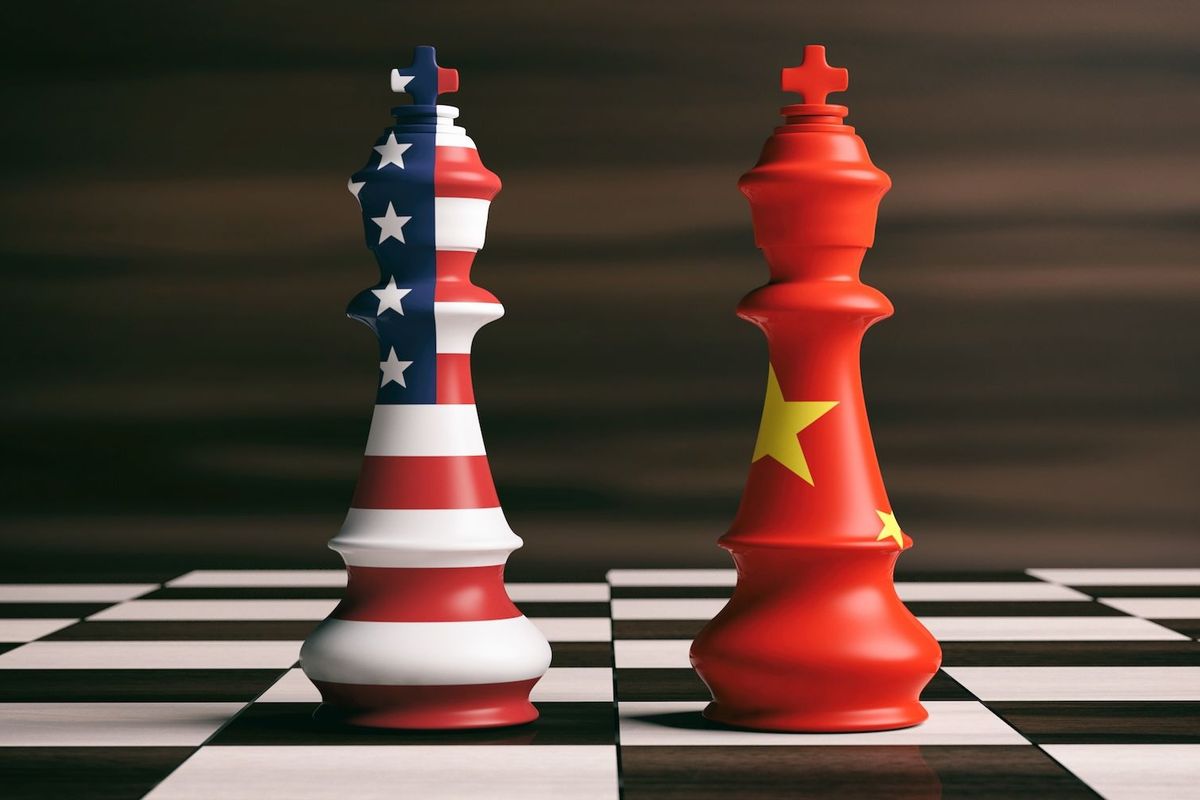
rawf8 / Shutterstock
The US and the European Union (EU) are racing to construct multibillion-dollar emergency stockpiles of critical minerals, seeking to insulate their economies from supply chain weaponization.
But as western governments rush to warehouse everything, they are confronted with a glaring paradox: to build reserves that protect against Chinese leverage, they must first source the materials directly from Beijing.
In its latest Critical Minerals Briefing, S&P Global outlines the structural flaws undermining western efforts to replicate the 20th century strategic petroleum reserve model for the modern energy transition.
Over the past 18 months, China’s implementation of rare earth export controls severely disrupted global production, forcing western automotive and semiconductor plants to scale back operations.
Now, the vice is tightening further. Starting June 15, Beijing will impose sweeping new mining restrictions on strategic minerals. According to government directives, the new rules empower the Chinese state to strictly control total production output, restrict mining entities and conduct intense security reviews of foreign investments.
Simultaneously, China is aggressively accelerating the construction of its own strategic mineral reserve sites, locking up resources with a minimum five year mandate that prohibits unauthorized extraction.
The stockpile strategy
In response, the west is attempting to replicate the 20th century model of strategic petroleum reserves for the 21st century energy transition.
In the US, the Trump administration launched Project Vault in February 2026.
Backed by a historic US$10 billion loan from the US Export-Import Bank (EXIM) and nearly US$2 billion in private sector investment, the public-private partnership aims to store critical minerals essential to the US manufacturing base.
Consuming roughly 10 per cent of EXIM’s outstanding authorization authority, it is the largest financing package the bank has ever authorized.
Unlike the US National Defense Stockpile, Project Vault is uniquely led by demand. Original equipment manufacturers (OEMs) identify the specific grades and volumes of materials they need and pay a commitment fee to secure access.
Participants cover storage and financing expenses, which are capitalized over the duration of the agreement, meaning companies face no immediate cash outflows until they actually draw from the reserve.
Stockpile vs. strategic reserve
Before the Trump administration revealed plans for Project Vault, Howard Klein, co-founder and partner at RK Equity, proposed the idea of a strategic lithium reserve in late 2025.
“The goal of a strategic lithium reserve is to stabilize prices and allow the industry to develop,” Klein told the Investing News Network. “If prices fall too low, the reserve would step in as a buyer. If prices spike too high, it could sell into the market.”
Watch the full interview above.
Broader considerations
Europe is executing a parallel strategy. The EU has shortlisted tungsten, rare earth elements and gallium to seed its first joint stockpile, with magnesium, germanium, and graphite expected to follow.
The bloc is currently negotiating with major maritime hubs, including the Port of Rotterdam, to warehouse the commodities. Ten EU member nations, spearheaded by France, Germany and Italy, are coordinating the initiative, with parallel talks underway to establish a permanent secretariat to manage the reserves.
However, while the stockpile strategy is designed to reduce dependence on China for critical minerals, much of the reserved material will likely originate from Chinese-controlled supply chains. Because the US and Europe severely lack the industrial capacity to refine raw ores, they are forced to stockpile processed, battery-ready materials.
As long as China dominates global refining, the economic leverage remains entirely with Beijing.
China now requires exporters to submit detailed information on the buyer, end-use and material specifications before granting government approval. This effectively hands the Chinese government veto power over sensitive transactions, allowing them to selectively restrict the exact sales the west needs to build its defensive reserves.
Furthermore, stockpiling battery metals is vastly more complex than storing crude oil.
Critical minerals exist on a spectrum of technological complexity.
While raw spodumene ore can sit in a warehouse for years, its low purity requires massive storage capacity and bespoke processing infrastructure that the west does not possess.
Conversely, processed materials like lithium hydroxide are highly hygroscopic, meaning they absorb moisture and degrade rapidly. They require strictly controlled environments for temperature and humidity, drastically inflating warehousing costs.
Additionally, global mineral markets are currently incredibly tight as several materials are trading at multi-year highs. By locking in inventory now, Project Vault risks holding assets worth less than what was paid if prices normalize, exposing taxpayers and OEMs to severe financial risk.
This tightness is being violently exacerbated by the ongoing war in the Middle East. The rapid depletion of munitions has triggered a surge in defense procurement for tungsten, antimony, gallium and rare earths.
S&P Global warns that the US government will inevitably prioritize military supply chains over civilian applications, crowding out automakers and tech firms from the very stockpiles they are funding.
Ultimately, market analysts view strategic stockpiling as a mere bridge. The report maintains that while the above initiatives may absorb short-term supply shocks, they do not address the underlying vulnerabilities.
Unless the west commits massive structural changes to expand domestic mining, refining and recycling capacity, these multibillion-dollar vaults will only serve to safeguard supplies in the short term.
Don't forget to follow us @INN_Resource for real-time updates!
Securities Disclosure: I, Giann Liguid, hold no direct investment interest in any company mentioned in this article.
Editorial Disclosure: The Investing News Network does not guarantee the accuracy or thoroughness of the information reported in the interviews it conducts. The opinions expressed in these interviews do not reflect the opinions of the Investing News Network and do not constitute investment advice. All readers are encouraged to perform their own due diligence.
https://x.com/giannliguid
https://www.linkedin.com/in/giannliguid/
Giann Liguid is a graduate of Ateneo De Manila University with an AB in Interdisciplinary Studies. With a diverse writing background, Giann has written content for the security, food and business industries. He also has expertise in both the public and private sectors, having worked in the government specializing in local government units and administrative dynamics.
When he is not chasing the next market headline, Giann can most likely be found thrift shopping for his dogs.
When he is not chasing the next market headline, Giann can most likely be found thrift shopping for his dogs.
INN Article Notification
Latest News
Outlook Reports world
Featured Critical Minerals Investing Stocks
Browse Companies
MARKETS
COMMODITIES
CURRENCIES
Giann Liguid is a graduate of Ateneo De Manila University with an AB in Interdisciplinary Studies. With a diverse writing background, Giann has written content for the security, food and business industries. He also has expertise in both the public and private sectors, having worked in the government specializing in local government units and administrative dynamics.
When he is not chasing the next market headline, Giann can most likely be found thrift shopping for his dogs.
Learn about our editorial policies.