

The Conversation (0)
Jul. 24, 2026 01:50PM PST
|Fact CheckedThis article has been reviewed and updated according to INN's rigorous fact-checking process. Our staff editors verify all articles against information and data from primary sources, reputable publishers and experts.
The struggle to secure rare earth elements outside of China was front and center again in Q2, with fresh export limitations, geopolitical instability and domestic tensions disrupting the sector.
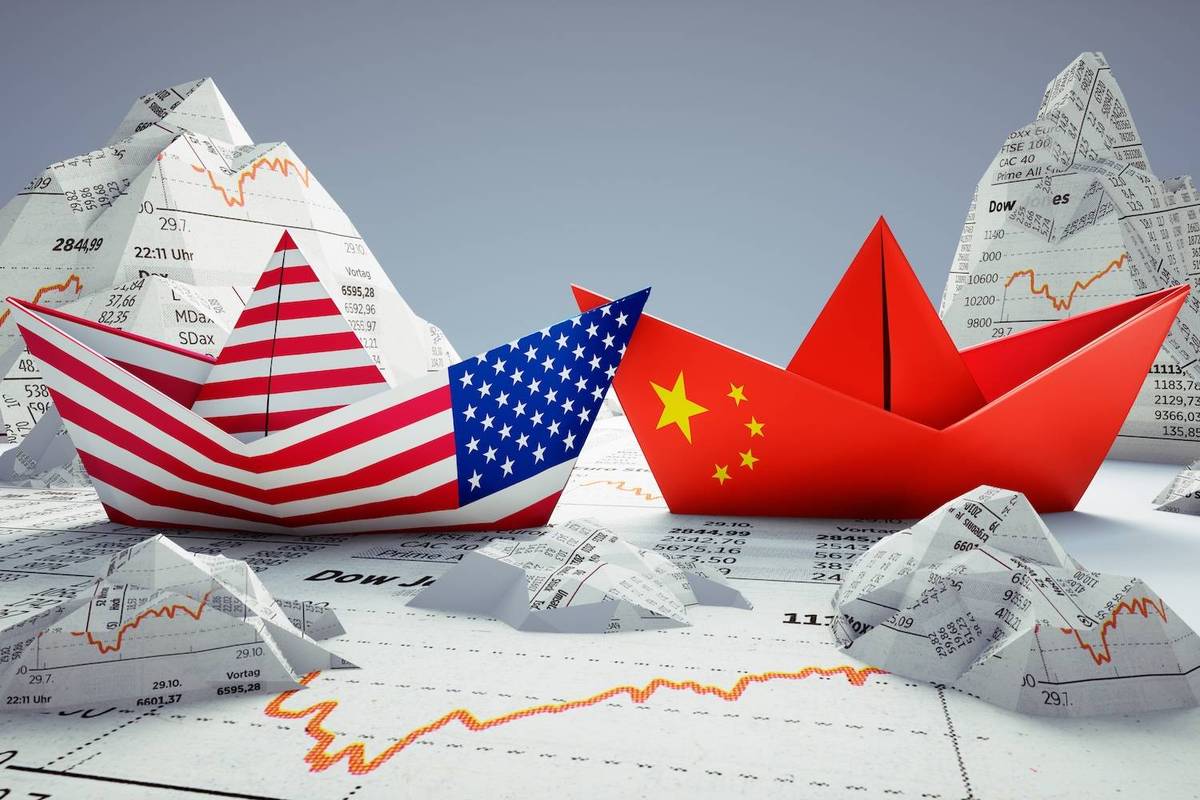
peterschreiber.media / Adobe Stock
The rare earths market entered the second quarter of 2026 in a period of heightened volatility as geopolitical tensions, Chinese export controls and efforts to build alternative supply chains continued to shape the sector.
China’s use of targeted export sanctions on rare earth materials stoked concerns among buyers in the US, Europe and other markets that rely on supply from the Asian nation.
While rare earths are often described as being in short supply, Adrián Godás Della Ripa, senior analyst at Fastmarkets, argues that the underlying issue is more complex. The world has significant rare earth resources, but much of the material is difficult to extract, process and separate economically outside of China.
“The problem is extracting them in an efficient economic way,” he said.
In his view, the rare earths market is no longer primarily driven by supply and demand fundamentals.
Instead, the ability to access material has become a central concern, particularly for rare earths with applications in defense, electric vehicles, wind turbines and other advanced technologies.
The situation has created a growing divide between supply inside China and material available to the rest of the world. While Chinese rare earths prices have remained relatively stable for some materials, prices outside the country have responded sharply to concerns around export restrictions and supply security.
However, Godás expects China could eventually reopen exports.
“If you have a dominant position, you don't overstretch your hand,” he told the Investing News Network (INN), arguing that excessive restrictions could encourage customers to develop alternative supply chains more quickly.
He pointed to the 2010 to 2018 period as a precedent, explaining that restrictions and supply concerns prompted new investment in rare earths outside China before exports eventually resumed.
Today, the result could ultimately be a bifurcated rare earths market in which Chinese material trades at one price, while non-Chinese supply commands a premium for security of supply.
“It is a question for the customers and buyers,” he said.
“We have this very cheap material from China, or we decide to pay a premium in a sense of security.”
That decision is becoming increasingly important for automakers, defense companies and manufacturers that cannot afford disruptions to their supply chains.
Listen to the full interview with Godás to hear more about the rare earths sector and why investors should focus on specific elements rather than the entirety of the market.
Magnet manufacturing and separation emerge as key bottlenecks
The west’s efforts to develop alternative rare earths supply chains have traditionally focused on mining. However, the most significant bottlenecks are further downstream in the magnet manufacturing and separation segment.
Rare earth permanent magnets are highly specialized products, and manufacturing depends heavily on intellectual property and technical expertise. Western companies seeking to build capacity in this arena may therefore need to license technology or acquire existing expertise.
Godás pointed to MP Materials' (NYSE:MP) agreement with Japan’s Hitachi Metals, now known as Proterial, as an example of a strategy that other companies could replicate.
Rare earths separation presents another challenge. China has spent decades developing expertise in the complex processes required to separate individual rare earth elements.
“China has been doing the processing and separation for more than three decades,” he said, adding that this requires detailed knowledge of reagents, flowsheets and plant configurations.
The challenge is that western countries do not have decades to replicate that expertise.
Godás compared the complexity of rare earths separation with lithium hydroxide production, noting that even the latter — a relatively more straightforward process — has proven difficult to scale economically outside China.
“It's a more simple process,” he explained. “(But) even if it was easy on paper, we still need to see those commercial plants ramp up and reach nameplate capacity.”
The implication is that building a mine is only one part of the challenge. Developers must also demonstrate that they can reliably process and separate material at commercial scale and at competitive costs.
In an effort to boost US midstream growth and cut reliance on foreign entities for rare earths, the US Department of War’s Office of Strategic Capital issued a US$500 million conditional loan commitment to Phoenix Tailings in June.
The planned “Freedom Facility,” targeted to begin operations in 2028, aims to address a key midstream bottleneck between mine and recycled feedstocks and downstream magnet manufacturers.
However, the rar earths sector also faces other challenges domestically.
In May, MP Materials filed a lawsuit against rival USA Rare Earth (NASDAQ:USAR), alleging that a former employee shared proprietary “grain boundary diffusion” formulations used in high-performance rare earth magnets.
The lawsuit, filed in Texas, seeks at least US$5 million in damages and comes as both companies compete to establish integrated US rare earths supply chains. USA Rare Earth has denied the allegations, calling the lawsuit without merit.
The economics of diversification
The push to reduce reliance on China has been underway for years, but the economics remain a significant obstacle.
A 2010 fishing boat incident between China and Japan, created supply concerns prompted investment in projects like Lynas Rare Earths' (ASX:LYC,OTCQX:LYSDY) Australian mining operations and its separation facility in Malaysia.
However, as supply conditions improved and Chinese exports resumed, rare earths prices declined. The resulting economics made it difficult for new projects to compete with Chinese material.
This dynamic continues to shape the market in 2026.
Godás said demand for rare earths in the west is growing by more than 6 percent annually, but that pace is not explosive enough to support an unlimited number of competing projects. As more companies seek to build mines, separation facilities and magnet plants, competition for market share could intensify.
“Eventually demand will be filled up,” he said.
This creates a difficult environment for investors. New projects may be strategically important, but their economics can deteriorate rapidly if China increases exports or lowers prices.
Can recycling help fill the rare earths supply gap?
While much of the focus in the rare earths market has been on large-scale mines and separation plants, recycling could become an increasingly important source of supply.
China already recycles more than 20 percent of its rare earths supply, according to Godás, giving it an advantage in an area that has received less attention in the west.
Recycling can also offer a potential shortcut around some of the challenges associated with traditional mining and refining. In some cases, recycled materials may not require the same level of processing as newly mined material, allowing companies to recover rare earth elements more efficiently.
“Recycling will likely help a lot to fill the gap,” he said.
Vertical integration increasingly important
The complexity of the rare earths supply chain has encouraged companies to pursue greater vertical integration.
Unlike in the gold industry, where a miner can generally produce a concentrate and sell it into a global market, rare earths projects need to secure downstream processing and end users.
Godás said the market could eventually produce more mined material than there is available separation capacity.
That would create a significant risk for developers that fail to secure offtake agreements early. “If you don't secure the offtakes early in the development phase, very likely you will be forced to sell at China-related prices,” he said.
Companies with large balance sheets are therefore attempting to control multiple stages of the supply chain.
MP Materials, Lynas and Energy Fuels (TSX:EFR,NYSEAMERICAN:UUUU) are among the companies pursuing strategies that include mining, separation, refining, metals and magnet production.
Smaller developers are increasingly using joint ventures and partnerships to secure access to downstream capacity.
The objective is to ensure that a project is not dependent on a single buyer or processing facility.
Demand growth extends beyond electric vehicles
Electric vehicles (EVs) remain one of the largest sources of future rare earth magnet demand.
However, the market is becoming increasingly diversified. Wind turbines, industrial motors, pumps, elevators and other applications are also driving demand for high-performance permanent magnets.
The appeal of permanent magnets comes from their ability to deliver high performance in relatively small packages.
In industrial applications, more efficient magnets can reduce energy consumption and improve operating economics.
The result is that rare earths demand is not solely dependent on EV adoption. Defense applications are also increasingly important, particularly for materials that provide high-temperature resistance and coercivity.
Speaking with INN at the Fastmarkets Global Lithium, Battery & Critical Materials conference, RK Equity’s Matt Fernley said rare earths is increasingly a demand story, even though the narrative is often overshadowed by geopolitics.
“We have this very, very strong demand event coming through drones, humanoid robots, other industrial robotics, EVs, renewables — they're all major drivers of demand, particularly for magnet rare earths,” explained Fernley.
“And then obviously you have the demand in the heavier rare earths for defense applications as well, so there is a massive demand story coming through, and I think a lot of people have actually forgotten about that … they've actually forgotten at the end of the day we have this very big secular demand event going on," he added.
However, as demand grows broadly, the expert questioned where the supply needed to meet this growth will come from, noting that new projects remain years from production.
While China has changed its approach to production quotas and western governments are moving to support domestic processing, Fernley said the development of an integrated supply chain — including mining, refining and magnet manufacturing — will be essential to reduce reliance on China.
Hear more from Fernley about the lithium and EV markets and the need for integrated processing chains.
Supply chain security comes at a premium
Despite growing global demand and supply chain concerns, the rare earths market remains exposed to the possibility of another boom-and-bust cycle.
If prices rise high enough, new mines and processing facilities may become economically viable. However, if China later increases exports or prices fall, western projects could once again become uncompetitive.
Godás said this dynamic has repeatedly discouraged investment.
In his view, the rare earths market’s central challenge in 2026 is not a lack of resources. It is the difficulty of building a commercially viable supply chain outside China.
The west has the geology, but it must still develop the processing expertise, separation capacity and magnet manufacturing infrastructure required to convert resources into usable products.
Godás expects it could take three to four years for new mines, separation facilities and magnet plants to significantly close the gap in ex-China rare earths supply.
In the meantime, buyers will face a choice between lower-cost Chinese material and more expensive alternative supply.
The market could therefore remain divided, with supply security carrying a premium.
For investors, the rare earths sector offers significant strategic importance, but also substantial risk.
Projects with strong geology, favorable mineralogy, efficient processing, secured offtake agreements and downstream integration may be better positioned to withstand volatility.
The broader lesson is that rare earths supply diversification cannot be solved by mining alone.
As Godás put it, companies need to secure the entire rare earths supply chain, from mine to separation to magnets, if they want to reduce their exposure to China.
Don't forget to follow us @INN_Resource for real-time updates!
Securities Disclosure: I, Georgia Williams, hold no direct investment interest in any company mentioned in this article.
Editorial Disclosure: The Investing News Network does not guarantee the accuracy or thoroughness of the information reported in the interviews it conducts. The opinions expressed in these interviews do not reflect the opinions of the Investing News Network and do not constitute investment advice. All readers are encouraged to perform their own due diligence.
From Your Site Articles
- How to Invest in Rare Earth Metals ›
- Rare Earths Stocks: 9 Biggest Companies in 2025 ›
- Top 10 Countries for Rare Earth Metal Production ›
- Rare Earth Reserves: Top 8 Countries ›
Related Articles Around the Web
NYSE:MP
https://x.com/INN_Resource
https://www.linkedin.com/in/georgia-williams-15845447/
gwilliams@investingnews.com
Originally from Calgary, Georgia has been right at home in Toronto for more than two decades. Graduating from the University of Toronto with an honors BA in journalism, she is passionate about writing on diverse topics, including resources, arts, politics and social issues.
At INN Georgia covers a wide range of topics, including energy, battery and critical metals and diamonds. In her spare time, Georgia enjoys watching documentaries and experiencing Toronto's vibrant food, arts and cultural scene.
At INN Georgia covers a wide range of topics, including energy, battery and critical metals and diamonds. In her spare time, Georgia enjoys watching documentaries and experiencing Toronto's vibrant food, arts and cultural scene.
INN Article Notification
Latest News
Outlook Reports world
Featured Rare Earth Investing Stocks


Browse Companies
MARKETS
COMMODITIES
CURRENCIES
Originally from Calgary, Georgia has been right at home in Toronto for more than two decades. Graduating from the University of Toronto with an honors BA in journalism, she is passionate about writing on diverse topics, including resources, arts, politics and social issues.
At INN Georgia covers a wide range of topics, including energy, battery and critical metals and diamonds. In her spare time, Georgia enjoys watching documentaries and experiencing Toronto's vibrant food, arts and cultural scene.
Learn about our editorial policies.