The Conversation (0)
Global Scramble for Critical Minerals Fuels Diplomatic Frictions
Mar. 27, 2026 08:00AM PST
As diplomacy ramps up in the critical minerals industry, resource-rich countries are also seeking to renegotiate their role in global supply chains.
MAGNIFIER / Adobe Stock
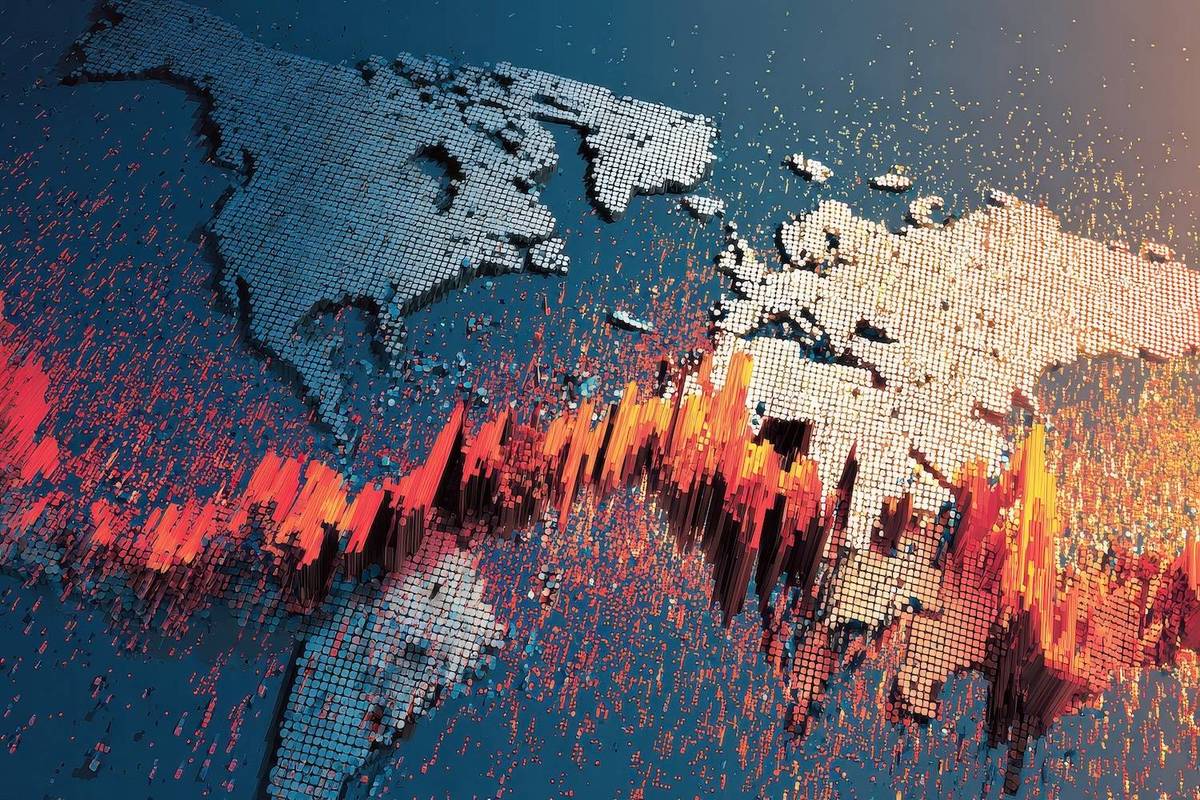
The US is escalating its push to secure access to critical minerals through trade deals and diplomatic pressure as competition with China intensifies, but the strategy is increasingly meeting resistance from resource-rich countries seeking greater control over their reserves.
The latest friction has emerged in Zambia, where more than 90 public health and development organizations urged US Secretary of State Marco Rubio to reject reports that Washington could link HIV and medical aid to negotiations over a critical minerals agreement.
An estimated 1.3 million Zambians receive treatment under the President’s Emergency Plan for AIDS Relief, alongside broader US-funded programs targeting malaria and tuberculosis.
In a March 26 letter, advocacy groups warned that conditioning such assistance on minerals access would be “ethically indefensible” and risk deepening poverty and instability.
Once largely the domain of commercial negotiations, critical minerals are becoming embedded in geopolitical strategy, as governments compete to secure inputs essential for energy systems, defense technologies, and advanced manufacturing.
Washington has accelerated its efforts in recent months. At a critical minerals ministerial in Washington this week, attended by representatives from 54 countries and the European Union, US officials outlined plans to build a preferential trade bloc aimed at countering China’s dominance in supply chains.
The initiative includes coordinated pricing mechanisms, with policymakers seeking to establish reference price floors to prevent what they describe as market distortions caused by subsidized supply.
“We will establish reference prices for critical minerals at each stage of production,” Vice President JD Vance said. “For members of the preferential zone, these reference prices will operate as a floor maintained through adjustable tariffs to uphold pricing integrity.”
Rubio, who hosted the ministerial, also announced the formation of the Forum on Resource Geostrategic Engagement, or FORGE, a platform designed to align policy, financing and project development across partner countries.
“We have a number of countries that have signed on to that, and many more that we hope will do so... the purpose of FORGE is to foster collaboration and to build a network of partners across the world,” Rubio said.
The US has already signed critical minerals agreements with 11 countries and completed negotiations with an additional 17, according to officials.
The push extends beyond diplomacy. President Donald Trump this week unveiled Project Vault, a US$12 billion strategic reserve backed by US $10 billion from the Export-Import Bank and US$2 billion in private funding.
The stockpile is intended to stabilize prices and support domestic manufacturers, and will include materials such as rare earths, lithium and copper.
Yet the US approach is encountering pushback in countries that control key reserves.
In Brazil, which holds between 19 and 23 percent of global rare earth reserves, negotiations over a bilateral minerals agreement have stalled.
US officials have proposed investing billions of dollars and identified at least 50 potential projects, but Brazil has been reluctant to enter into arrangements that would prioritize US access.
Officials in Brasília have instead emphasized the need to retain flexibility over exports and to build domestic processing capacity, allowing the country to move up the value chain.
“They’ve already taken all our silver, our gold, our diamonds, our iron ore,” President Luiz Inácio Lula da Silva said during a recent trip. “What else do they want to take?”
A similar disposition is unfolding in the Democratic Republic of Congo (DRC), which holds some of the world’s largest reserves of cobalt and significant deposits of copper, lithium and other battery metals.
Kinshasa has recently signed a new agreement with China to deepen cooperation in its mining sector, including provisions for geological data sharing, investment protection and the promotion of local processing.
Chinese companies, including Zijin Mining Group (HKEX:2899,SHA:601899,OTCPL:ZIJMF) and CMOC Group (OTC Pink:CMCLF), already dominate much of Congo’s mining industry, while Beijing remains the country’s largest bilateral creditor.
At the same time, Congolese officials have made clear they do not intend to align exclusively with either power.
Don't forget to follow us @INN_Resource for real-time updates!
Securities Disclosure: I, Giann Liguid, hold no direct investment interest in any company mentioned in this article.
https://x.com/giannliguid
https://www.linkedin.com/in/giannliguid/