

The Conversation (0)
Aug. 10, 2026 02:00PM PST
|Fact CheckedThis article has been reviewed and updated according to INN's rigorous fact-checking process. Our staff editors verify all articles against information and data from primary sources, reputable publishers and experts.
Governments are increasingly treating advanced battery technology as a matter of national resilience, driving investment in domestic supply chains and underscoring the strategic importance of graphite, lithium, nickel and cobalt.
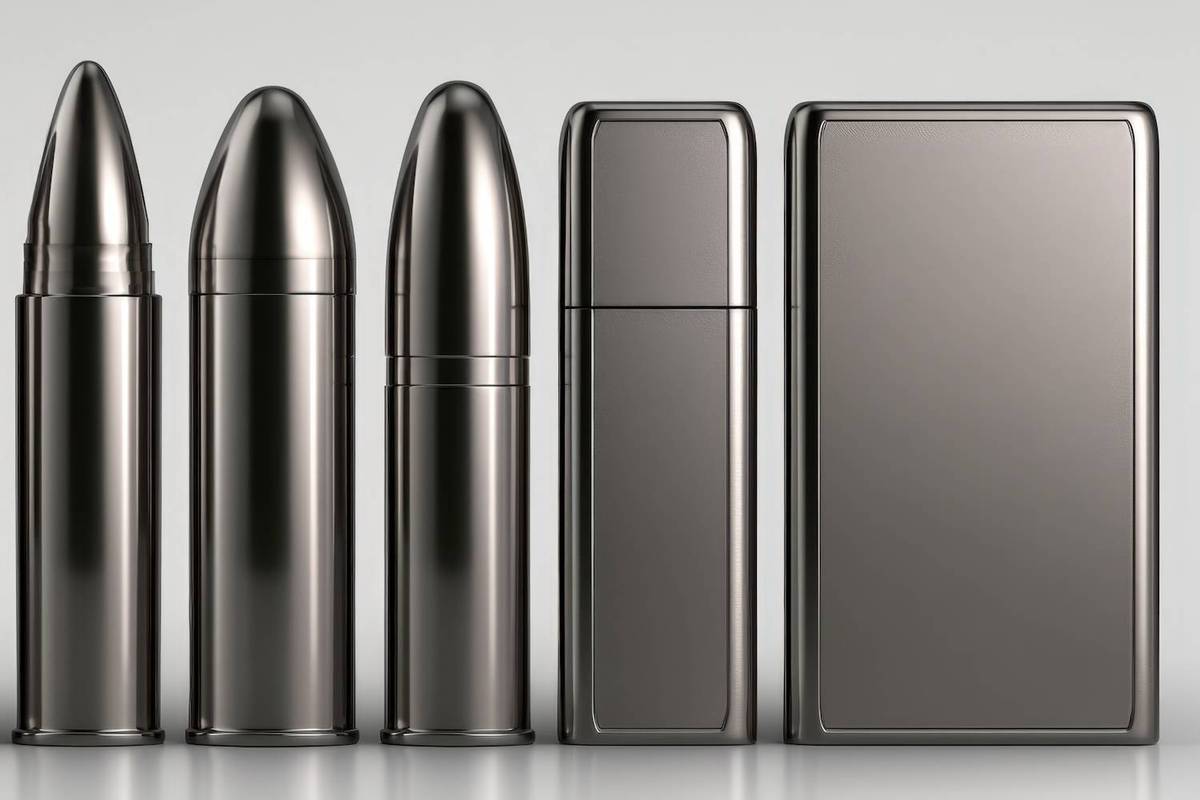
Petr / Adobe Stock
The battery narrative largely focuses on electric vehicles (EVs) and electronics, but batteries also play a pivotal role in defense applications, a segment that is becoming key amid heightened geopolitical tensions.
From emergency response equipment and communications infrastructure to broader government applications, policymakers are increasingly prioritizing domestic battery output in an effort to strengthen industrial resilience.
That shift is creating a new demand driver for battery materials and accelerating investment across the value chain, particularly in North America and Europe, where governments are seeking to reduce dependence on China.
According to a 2023 report, a US soldier deployed for a 72 hour mission carries anywhere from 15 to 20 pounds of batteries, used to operate a variety of equipment, including radios, rifle scopes, night-vision goggles and GPS.
There are roughly 1.32 million active duty members in the US, which theoretically could require 19.8 million pounds of batteries. That does not include the batteries used in drones and other military applications.
Speaking with the Investing News Network (INN), Cormac O'Laoire, managing director of Electrios Consultants, said the conversation around batteries has changed dramatically over the past year, with governments placing greater emphasis on secure domestic supply chains. Previously, they were treated as low-priority commodities similar to household remote control batteries. However, they have recently taken on new life.
“Over the last 12 months, batteries have been classified as munitions, meaning ammunition," he said.
"So batteries are right there next to bullets and missiles. And what does the army need? Munitions. They need a lot of it, but you usually can't buy off your adversary," the expert added.
O'Laoire went on to explain that the US Department of War has introduced programs alongside the National Defense Authorization Act to change how battery cells are sourced, explicitly banning procurement from China.
Unlike the EV industry, which uses terms like "foreign entity of concern," the Department of War directly names China and prohibits sourcing cells or battery systems from the country between now and 2031.
Money is following the mandate. The Department of War's Drone Dominance Program, a roughly US$1.1 billion initiative, aims to field more than 300,000 domestically produced attack drones by 2028 with no Chinese components.
O'Laoire calls it a "cash infusion" the battery sector badly needed. The pricing gap illustrates why — EV battery packs run around US$120 per kilowatt-hour, he noted, while comparable aerospace and defense-grade cells fetch roughly US$11,000 per kilowatt-hour. "Cost is secondary to mission success," he said.
Those drones, along with car-sized unmanned aerial and marine vehicles, as well as the disposable first-person-view attack drones soldiers now fire, mostly run on nickel-manganese-cobalt (NMC) chemistry rather than the lighter, cheaper lithium-iron-phosphate (LFP) cells common in EVs because NMC packs more energy into less weight.
But defense demand is inherently erratic.
"You don't know when there's going to be a war," O'Laoire said. "So you can't really stockpile batteries."
The policy shift reflects a broader recognition that batteries are no longer simply an industrial product, but also an enabling technology that supports a growing range of strategic applications. It has also reinforced the importance of developing domestic manufacturing capacity, particularly for lithium-ion batteries.
While EVs remain the largest source of battery demand, government-backed initiatives could provide an additional catalyst for investment across the sector.
"There's the capital ... that's really going to spur a lot of development in this sector," O'Laoire said, adding that innovations developed through government-supported programs could ultimately find their way into commercial battery technologies over the next decade. The growing emphasis on domestic manufacturing comes as western governments continue to grapple with China's dominance across the battery supply chain.
According to the International Energy Agency and Fastmarkets, China accounts for the majority of global processing capacity for battery materials and cell manufacturing, leaving other regions heavily reliant on imported products.
Building alternative supply chains, however, remains a significant challenge.
O'Laoire said one of the biggest obstacles lies in the battery midstream, where companies process raw materials into cathode and anode materials before cells are manufactured.
"The big problem in getting midstream investment is there's no experience," he explained. "You're taking a chance investing in companies that ... might have modeled their project wrong ... they've never done it before."
Even experienced Asian manufacturers have encountered difficulties establishing processing facilities outside China because of workforce shortages, supply chain constraints and the challenge of sourcing raw materials competitively.
As a result, attracting private investment remains difficult to find despite growing policy support.
Listen to the full interview for O'Laoire's thoughts on the battery metals supply chain, the North American buildout and where the market may be heading.
Graphite: The anode problem nobody priced in
If any single material is likely to keep Pentagon planners up at night, it's graphite.
The anode material is in nearly every lithium-ion battery, and China controls roughly 90 percent of global graphite processing; the US currently has no operating natural graphite mines.
Washington has responded in kind, launching the National Defense Stockpile, which allocated US$2 billion to graphite in 2025 and became the first dedicated "critical mineral reserve" of its kind. China's own graphite export curbs, paused as part of a trade truce, are set to expire in late November 2026.
"That's the first material they want to remove out of the Chinese supply chain," O'Laoire said of defense planners. "I think graphite is really concerning, especially here in the US, because there's no graphite capability."
During her presentation on anode materials at this year's Fastmarkets Global Lithium, Battery & Critical Materials conference, Amy Bennett, principle consultant at Fastmarkets, explained that graphite can account for anywhere between 30 and 50 percent of a battery's total weight.
“So why is so much focus and investment on the cathode active material side rather than the anode active materials?” she posited. “Frankly, it all comes down to cost. Here you can see that anodes only cost for about 7 percent of the total cell, whereas cathode costs are by far the largest component at about 60 percent."
China currently dominates both natural and synthetic graphite processing, making it difficult for western producers to compete on cost. However, O'Laoire believes government procurement policies that prioritize domestic sourcing over price could create opportunities for emerging North American graphite projects.
"For the defense department ... cost isn't the main driver," he said. "The main driver ... is compliance."
As Bennett explained during an interview with INN, China covers “at least 95 percent of the anode market. So that is not a position you want to be in when you know 50 percent of all of these batteries are these anodes."
Because anodes account for up to half of a battery's total weight, the entire western supply chain risks complete collapse if China halts supply.
Despite this vulnerability, low pricing makes the current business case for independent investment very weak.
Bennett suggested that mitigating this risk will require urgent collaboration between government and private investors, potentially through initiatives like Project Vault, though an even faster response may be necessary.
Listen to the full interview for Bennett's thoughts on US battery ambitions and which aspects of the market are most vulnerable.
Investing in future supply
While policy support is strengthening, O'Laoire cautioned that long-term success will ultimately depend on building commercially viable businesses rather than relying solely on government incentives.
He remains optimistic about the outlook for established lithium-ion chemistries, arguing that today's dominant technologies are likely to underpin the market for decades.
"My own personal outlook is that we're going to be using LFP and NMC for the next 40 years," he said. "I think it is a good investment, and they will not be surpassed in the near future."
For investors, the evolving policy landscape suggests the battery story is entering a new phase.
That shift is expected to reinforce demand across the critical minerals value chain, creating new opportunities for companies involved in mining, processing and battery materials manufacturing as North America and Europe work to establish domestic alternatives to China's well-established supply network.
Don’t forget to follow us @INN_Resource for real-time updates!
Securities Disclosure: I, Georgia Williams, hold no direct investment interest in any company mentioned in this article.
Editorial Disclosure: The Investing News Network does not guarantee the accuracy or thoroughness of the information reported in the interviews it conducts. The opinions expressed in these interviews do not reflect the opinions of the Investing News Network and do not constitute investment advice. All readers are encouraged to perform their own due diligence.
https://x.com/INN_Resource
https://www.linkedin.com/in/georgia-williams-15845447/
gwilliams@investingnews.com
Originally from Calgary, Georgia has been right at home in Toronto for more than two decades. Graduating from the University of Toronto with an honors BA in journalism, she is passionate about writing on diverse topics, including resources, arts, politics and social issues.
At INN Georgia covers a wide range of topics, including energy, battery and critical metals and diamonds. In her spare time, Georgia enjoys watching documentaries and experiencing Toronto's vibrant food, arts and cultural scene.
At INN Georgia covers a wide range of topics, including energy, battery and critical metals and diamonds. In her spare time, Georgia enjoys watching documentaries and experiencing Toronto's vibrant food, arts and cultural scene.
INN Article Notification
Latest News
Outlook Reports world
Featured Battery Metals Investing Stocks



Browse Companies
MARKETS
COMMODITIES
CURRENCIES
Originally from Calgary, Georgia has been right at home in Toronto for more than two decades. Graduating from the University of Toronto with an honors BA in journalism, she is passionate about writing on diverse topics, including resources, arts, politics and social issues.
At INN Georgia covers a wide range of topics, including energy, battery and critical metals and diamonds. In her spare time, Georgia enjoys watching documentaries and experiencing Toronto's vibrant food, arts and cultural scene.
Learn about our editorial policies.