

The Conversation (0)
- WORLD EDITIONAustraliaNorth AmericaWorld
Sep. 22, 2026 11:07AM PST
With the SEC's five-year Innovation Exemption, tokenized stocks can now trade on blockchain platforms without traditional exchange registration. Is this a step towards modernizing finance or a potential source of market fragmentation?
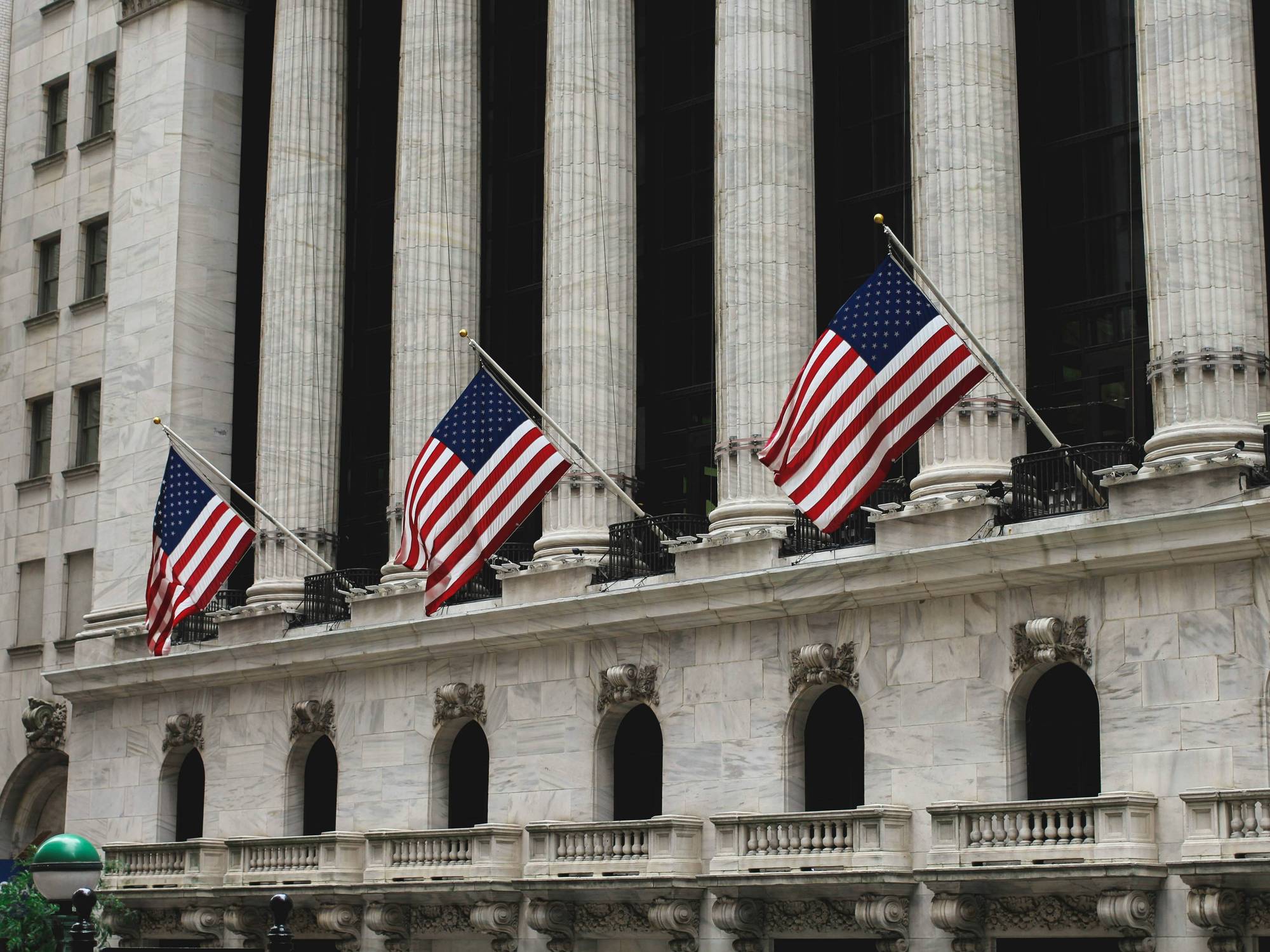
The US Securities and Exchange Commission (SEC) issued a conditional exemption on Thursday (September 17) that allows tokenized versions of US-listed stocks to trade on blockchain-based venues without those venues registering as national securities exchanges.
The measure, dubbed the “Innovation Exemption,” runs for up to five years, the agency framing it as a temporary bridge to permanent rulemaking rather than a final rule.
What the Clarity Act would have done
The move swiftly followed the collapse of the Digital Asset Market Clarity Act in the Senate. A cloture vote on the bill fell short on September 15, with senators voting 49 to 50, 11 votes shy of the 60 needed to advance.
The Clarity Act would have assigned crypto regulatory authority across agencies, including new powers for the Commodity Futures Trading Commission (CFTC) over crypto spot markets. As it currently stands, the CFTC’s reach is limited to anti-fraud and anti-manipulation enforcement on derivatives; the agency has no authority to register or oversee crypto spot trading.
The bill would have given the CFTC exclusive federal jurisdiction over spot-market trading in tokens that qualify as digital commodities, and created three new registration categories:
- digital commodity exchanges
- digital commodity dealers
- digital commodity brokers
Those registrants would have had to meet Commodity Exchange Act-style principles of trade surveillance, minimum capital, public trade reporting, conflict-of-interest controls and cybersecurity standards, as well as segregate customer funds.
Most importantly, digital commodities would have been subject to a mature blockchain test: if a token’s value comes substantially from network use rather than a promoter’s efforts, no single party controls the system or holds special insider privileges, and insiders collectively hold below roughly 20 percent of the supply, a token would fall to CFTC oversight rather than SEC securities oversight.
Tokens that don’t clear that bar would stay under SEC jurisdiction as securities. The bill also would have added a new SEC capital-raising exemption tailored to digital-commodity issuers, with its own disclosure regime.
What the innovation exemption requires
The SEC’s Innovation Exemption, issued two days after the vote, sets its own conditions for tokenized stocks that remain SEC-regulated securities.
Under the exemption, qualifying Tokenized Securities Venues (TSVs) can trade tokens representing real ownership of US-listed stocks without registering as traditional exchanges. Their liquidity providers are also exempt from certain dealer-registration rules.
To qualify, tokens must carry the same economic and governance rights as the shares they represent, including dividends and voting.
Robinhood’s Stock Tokens, Kraken’s xStocks and Ondo Global Markets’ offshore notes all give holders price exposure without shareholder status, so none would qualify as currently structured.
Without that exemption, a platform wanting to run this kind of venue must register as a national securities exchange, or as a broker-dealer operating an alternative trading system, which itself requires broker-dealer registration, FINRA membership and ATS-specific disclosure and fair-access rules.
Liquidity providers - protocols like Uniswap, Aerodrome and Raydium that use pooled funds to algorithmically quote both a buy and sell price at all times - trigger broker-dealer registration under Exchange Act Section 15(a) through that same two-sided quoting, which imposes net capital, recordkeeping, FINRA membership and best-execution requirements designed for discretionary traders rather than automated smart contracts or passive DeFi pools.
Industry reaction
The exemption drew swift reaction from across the industry, with reception split between welcome for the regulatory clarity and skepticism about how much it actually changes for investors.
Ryan VanGrack, Coinbase’s vice chairman and a former SEC adviser, welcomed the decision. “Tokenization is the biggest upgrade to financial infrastructure since Wall Street ditched paper for electronic trading,” VanGrack tweeted, adding, “It’s no longer a question of whether tokenization will reshape finance - it’s a question of where.”
Chris Hayes, executive director of the Coalition for Tokenized Markets, said the issuer-objection requirement helps “curb synthetic tokenization” and gives investors clarity on what they’re actually buying.
Additionally, some observers noted the exemption could put blockchain-based trading venues in more direct competition with traditional exchanges, which remain subject to the fuller exchange-registration regime. “The exemption could allow multiple tokenized versions of US - listed securities to trade in parallel, lightly regulated markets, in ways that could lead to investor confusion and harm, as well as price and liquidity fragmentation,” said Kenneth E. Bentsen Jr., president and CEO of SIFMA, the securities-industry trade group representing exchanges and broker-dealers.
In a statement, Bentsen added that “any innovation exemption should be narrowly drawn, open to all market participants, technology neutral and subject to appropriate guardrails”.
Beyond questions of market structure, others zeroed in on what actually qualifies as a real tokenized stock in the first place. In an email, Bitget Wallet COO Alvin Kan noted the crucial distinction between stock ownership and a token that tracks a stock price. “Putting both on a blockchain doesn’t erase that difference,” he said.
In Kan’s view, investor rights, not 24/7 trading or faster settlement, may become the real dividing line in the tokenized-stock market. “Under the SEC exemption, a tokenized National Market System stock must give holders the same rights and privileges as the equivalent traditional share. Synthetic exposure is explicitly outside the scope of the exemption, and issuers can object when an unaffiliated third party tokenizes their stock.“
That is materially different from many crypto-native tokenized equity products globally, where the token may instead represent price exposure or a contractual claim against an intermediary. For users, the potential improvement is meaningful: self-custody, fractional ownership, around-the-clock trading and near-instantaneous settlement. The SEC itself identifies these as potential benefits.
“But tokenization does not automatically create a better product. If access remains heavily permissioned, liquidity is shallow and users still face multiple intermediaries, blockchain may mainly modernize the back end without materially changing the front-end experience. The real test is whether tokenization reduces settlement, reconciliation and distribution friction, not simply whether the stock has been put onchain.”
Kan also drew a line between statutory and agency-level reform. “The Senate failed to advance Clarity in the September 15 procedural vote, while two days later the SEC used its existing Exchange Act authority to create a narrower pathway for tokenized securities. That means the SEC does not need Congress to resolve every crypto classification issue before experimenting with areas already clearly inside its securities jurisdiction.
“For institutions, however, this is operational clarity rather than permanent legal certainty. The exemption expires five years after publication, remains subject to symbol and volume limits and modification, and is explicitly intended to inform future rulemaking. That is enough clarity to justify pilots, integrations and modular infrastructure today, but long-duration capital will still distinguish between a five-year exemptive order and a framework embedded in final rules or legislation,” Kan said.
The bottom line
Whatever happens with the Innovation Exemption over the next five years, tokenized US stocks are arriving on more than one track at once. The NYSE, which already meets every registration requirement the exemption exists to bypass, has been building its own tokenization capability since April, when the SEC approved a routine rule change letting it trade tokenized shares directly on its existing exchange.
That timeline complicates any narrative that pits crypto-native platforms against Wall Street incumbents. What remains unresolved is which path wins. The exemption gives blockchain venues and their AMM liquidity providers a five-year runway to prove the model works without full exchange or dealer registration, but it’s explicitly a bridge, not a destination.
Meanwhile, Congress’s own attempt to settle these questions legislatively remains stalled, with the Clarity Act’s fate no clearer now than it was before the cloture vote failed.
For now, tokenization of US equities is moving forward on regulatory improvisation rather than a single settled framework, a gap that issuers, venues and investors will be watching the SEC’s forthcoming rulemaking to close.
Don’t forget to follow us @INN_Technology for real-time news updates!
Securities Disclosure: I, Meagen Seatter, hold no direct investment interest in any company mentioned in this article.
From Your Site Articles
- Blockchain Market News and Analysis from a Global Perspective | INN ›
- 5 Biggest Blockchain ETFs for Investors ›
- Bitcoin: A Price History of the First Cryptocurrency ›
- Crypto and Blockchain Stocks: 9 Biggest Companies ›
- How to invest in blockchain on Investing News Network (INN)'s site ›
- Blockchain Investing News, Stocks, Forecasts and Analysis | INN ›
https://x.com/INN_Technology
https://www.linkedin.com/in/meagen-seatter-23675b193/
mseatter@investingnews.com
Meagen moved to Vancouver in 2019 after splitting her time between Australia and Southeast Asia for three years. She worked simultaneously as a freelancer and childcare provider before landing her role as an Investment Market Content Specialist at the Investing News Network.
Meagen has studied marketing, developmental and cognitive psychology and anthropology, and honed her craft of writing at Langara College. She is currently pursuing a degree in psychology and linguistics. Meagen loves writing about the life science, cannabis, tech and psychedelics markets. In her free time, she enjoys gardening, cooking, traveling, doing anything outdoors and reading.
Meagen has studied marketing, developmental and cognitive psychology and anthropology, and honed her craft of writing at Langara College. She is currently pursuing a degree in psychology and linguistics. Meagen loves writing about the life science, cannabis, tech and psychedelics markets. In her free time, she enjoys gardening, cooking, traveling, doing anything outdoors and reading.
INN Article Notification
Latest News
Outlook Reports
Featured Blockchain Investing Stocks






Browse Companies
MARKETS
COMMODITIES
CURRENCIES
Meagen moved to Vancouver in 2019 after splitting her time between Australia and Southeast Asia for three years. She worked simultaneously as a freelancer and childcare provider before landing her role as an Investment Market Content Specialist at the Investing News Network.
Meagen has studied marketing, developmental and cognitive psychology and anthropology, and honed her craft of writing at Langara College. She is currently pursuing a degree in psychology and linguistics. Meagen loves writing about the life science, cannabis, tech and psychedelics markets. In her free time, she enjoys gardening, cooking, traveling, doing anything outdoors and reading.
Learn about our editorial policies.