

The Conversation (0)
Jul. 29, 2026 02:00PM PST
|Fact CheckedThis article has been reviewed and updated according to INN's rigorous fact-checking process. Our staff editors verify all articles against information and data from primary sources, reputable publishers and experts.
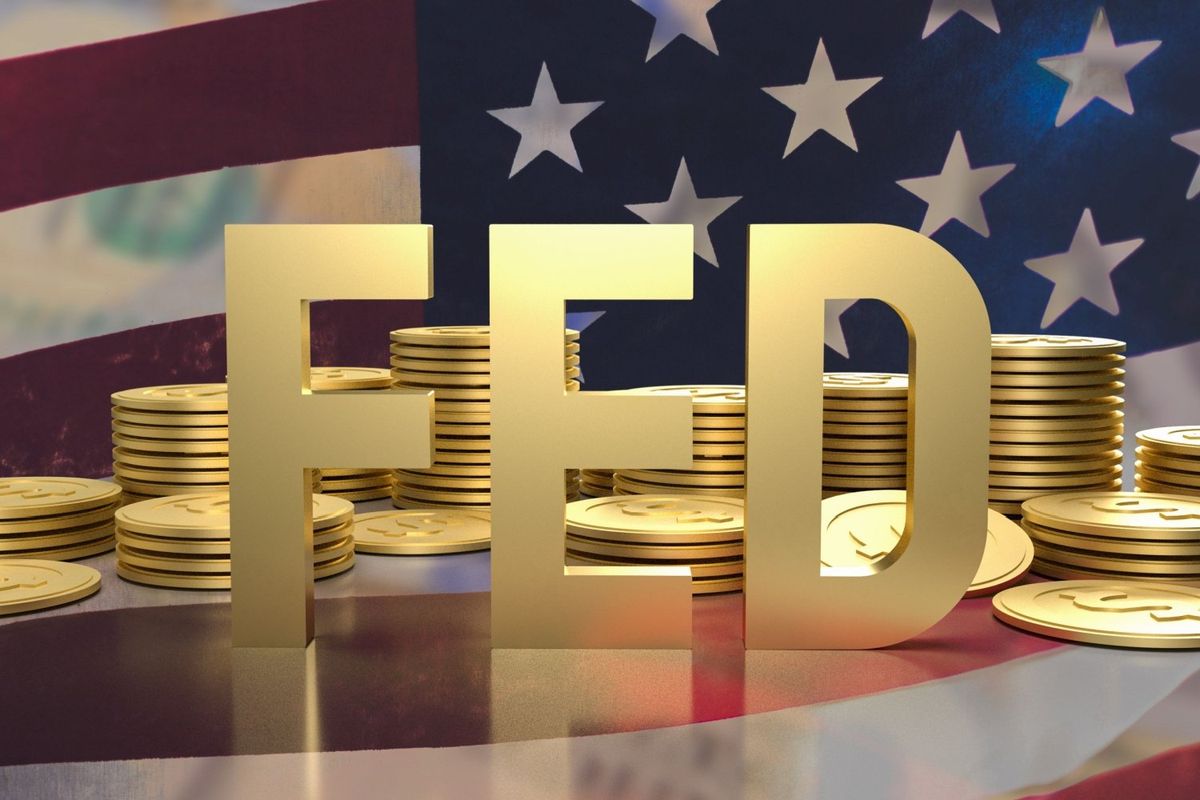
The Fed left rates at the same level they have been since January, with Chair Kevin Warsh vowing to keep sights set on 2 percent inflation.
Niphon Subsri / Shutterstock
The US Federal Reserve held its latest interest rate meeting from Tuesday (July 28) to Wednesday (July 29) as oil prices surged on US-Saudi Arabia strikes against Iran, and alongside persistent inflation in the US economy.
The central bank, headed by Chair Kevin Warsh, held the federal funds rate steady in the 3.5 to 3.75 percent range, as analysts had expected. At least for now, the Fed board seems content to bide its time on any rate changes as economic signals remain mixed and the conflict in the Middle East continues to muddy the waters.
Looking forward, the Iran war’s impact on global energy markets and President Donald Trump’s ongoing love affair with tariffs have deepened sentiment in the financial markets that the Fed will likely raise rates this year.
The expanding Middle East conflict is amplifying energy sector pressure by threatening multiple critical oil transit routes and production sources simultaneously, meaning the Strait of Hormuz is no longer the only chokepoint.
The Bab el Mandeb Strait, which Saudi Arabia is using for a large share of its crude exports, is now under direct threat from Iran-backed Houthis. Saudi Arabia’s oil infrastructure along the Red Sea coast has also come under attack.
With the regional war continuing to rage, global energy prices are proving to be a headache for the Fed's inflation battle. As of Wednesday, CME Group's (NASDAQ:CME) FedWatch tool showed a more than 80 percent chance that a rate hike could come as early as September, while the probability of higher rates by the end of 2026 is over 92 percent.
In contrast, most Wall Street economists share the perspective that the Fed will keep rates on hold for the rest of 2026. A July 17 to 21 Reuters poll of 104 economists from institutions like JPMorgan Chase (NYSE:JPM) and Citi shows three-quarters of respondents believe softening labor data and a cooler consumer price index (CPI) are reasons to wait.
US economic data: Sticky inflation, softer labor market
The June CPI reading shows a 3.5 percent increase over the past 12 months compared to the 4.2 percent jump recorded in May. The drop was primarily driven by lower energy prices under the short-lived Iran war ceasefire; however, given the entrenched nature of the conflict, it's likely a temporary drop.
Core CPI, which excludes the food and energy categories, fell by 0.3 percent for the month, taking the 12 month core rate to 2.6 percent. Most importantly, the inflation rate is still above the Fed's 2 percent target.
Producer price index (PPI) data for June shows a decrease of 0.3 percent from May, helped by falling energy prices; meanwhile, annual headline PPI rose to 5.5 percent.
Core PPI rose 0.2 percent month-on-month and 4.7 percent year-on-year. Since the Fed typically prefers to look beyond volatile shifts in energy prices, core inflation is still too sticky to consider rate cuts.
The rest of the most recent round of US economic data supports the Fed's decision to hold rates steady.
Total retail sales for June increased by 0.2 percent month-on-month, and core sales surged by 6.7 percent year-on-year. The numbers paint a picture of a soft landing in which the consumer is helping to keep the American economy expanding at a steady pace. At the same time, the July Conference Board Consumer Confidence Index shows that consumer confidence is down to 90.8 as the Present Situation Index fell 3.6 points to 114.9 for the month, while the Expectations Index remained stagnant at 74.7, suggesting a less robust economic outlook.
The unemployment rate came in at a highly stable 4.2 percent for June, according to US Bureau of Labor Statistics data, although the numbers also show that hiring has stalled alongside a steep drop of 720,000 workers leaving the labor force entirely. Professional/business services and healthcare added jobs, while leisure and hospitality lost jobs.
Real wage growth for June came in at 3.5 percent year-on-year (adjusted for consumer price inflation), up from 3.4 percent in May. This signals that inflation continues to take up nearly all workers' nominal wage gains.
Dissent returns among Fed members
Unlike June’s meeting, this time around the Federal Open Market Committee (FOMC) decision was not unanimous, with three members voting for a quarter-point increase: Beth Hammack of the Cleveland Fed, Neel Kashkari of the Minneapolis Fed and Lorie Logan of the Dallas Fed. That marks the first time in nearly a decade that three Fed members have dissented in the same direction. It's also worth mentioning that these were the the same three who took issue with the April FOMC policy statement that used language suggesting a rate cut could be likely.
"Taken on its own, today’s decision could be what Fed-watchers call a 'hawkish hold' — policymakers left rates unchanged, but the three dissents could signal rate increases are likely before long," explained Ben Casselman of the New York Times. "But because Warsh is still so new, and because he has said so little about his approach to policy, we don’t yet know how to interpret these signals."
The FOMC policy statement released along with the rate decision was notably brief, in line with Warsh’s plan to rein in overly wordy statements that he feels have hitherto given the market too much with which to speculate.
Two short paragraphs make up the meat of the statement:
“Economic activity is expanding at a solid pace despite elevated uncertainty that owes, in part, to the conflict in the Middle East. Productivity growth and capital investment are strong. Job gains have kept pace with the workforce, and the unemployment rate has changed little.
"Inflation remains elevated relative to the Committee's 2 percent goal, in part reflecting supply shocks that have driven price increases in certain sectors, including energy. The Committee will deliver price stability.”
During his press conference following the rate announcement, Warsh made it clear that under his watch the Fed is laser-focused on meeting its 2 percent target for inflation.
“We have begun a new chapter, and we understand that the five-plus years of inflation above target cannot be cured in nine weeks, or by a single month of modest price decreases,” he said. “This Fed will not waver. Our credibility rests on performing our duties and delivering on our responsibilities.”
He also reiterated his intent to not give any hints as to which way future rate decisions may go.
“I understand the desire for rolling forecasts and commentary from this committee, but for our part, we need to observe market reaction to developments direct and unfiltered,” Warsh said. “I want to stress, of course, that decisions by this committee matter a great deal, and where necessary and appropriate, we will not hesitate to act.”
Gold, silver prices react to Fed decision
The gold price rose from US$4,042.23 per ounce just prior to the Fed's announcement to US$4,104.99 following Warsh's presser. Silver ticked up from US$57.88 per ounce to US$59.04. The precious metals, however, are under significant pressure from calls for higher rates for longer, which would make non-yielding assets less attractive.
Equities did pick up following the rate announcement on Wednesday, but still remained down from their previous day closes, with the S&P 500 (INDEXSP:INX) down 0.3 percent to reach 7,409.62.
Meanwhile, the Nasdaq-100 (INDEXNASDAQ:NDX) shed 0.1 percent to come in at 24,850.33, and the Dow Jones Industrial Average (INDEXDJX:DJI) dropped 1.4 percent, coming to 51,977.12.
The next Fed rate decision will come on September 16, a few weeks after the Jackson Hole Economic Symposium. Global markets will likely focus on the keynote speech delivered by Warsh, as his remarks may provide clues to which way the wind will blow for future monetary policy decisions.
Don't forget to follow us @INN_Resource for real-time updates!
Securities Disclosure: I, Melissa Pistilli, hold no direct investment interest in any company mentioned in this article.
https://x.com/INN_Resource
https://www.linkedin.com/in/melissa-pistilli-865271a9/
mpistilli@investingnews.com
Melissa Pistilli has been reporting on the markets and educating investors since 2006. She has covered a wide variety of industries in the investment space including mining, cannabis, tech and pharmaceuticals. She helps to educate investors about opportunities in a variety of growth markets. Melissa holds a bachelor's degree in English education as well as a master's degree in the teaching of writing, both from Humboldt State University, California.
INN Article Notification
Latest News
Outlook Reports world
Featured Gold Investing Stocks



Browse Companies
MARKETS
COMMODITIES
CURRENCIES
Melissa Pistilli has been reporting on the markets and educating investors since 2006. She has covered a wide variety of industries in the investment space including mining, cannabis, tech and pharmaceuticals. She helps to educate investors about opportunities in a variety of growth markets. Melissa holds a bachelor's degree in English education as well as a master's degree in the teaching of writing, both from Humboldt State University, California.
Learn about our editorial policies.