

The Conversation (3)
Oct. 23, 2026 02:00PM PST
|Fact CheckedThis article has been reviewed and updated according to INN's rigorous fact-checking process. Our staff editors verify all articles against information and data from primary sources, reputable publishers and experts.
Explore the week's best-performing Canadian mining stocks on the TSX, TSXV and CSE, and dive into the Canadian news affecting commodities prices and stock markets.
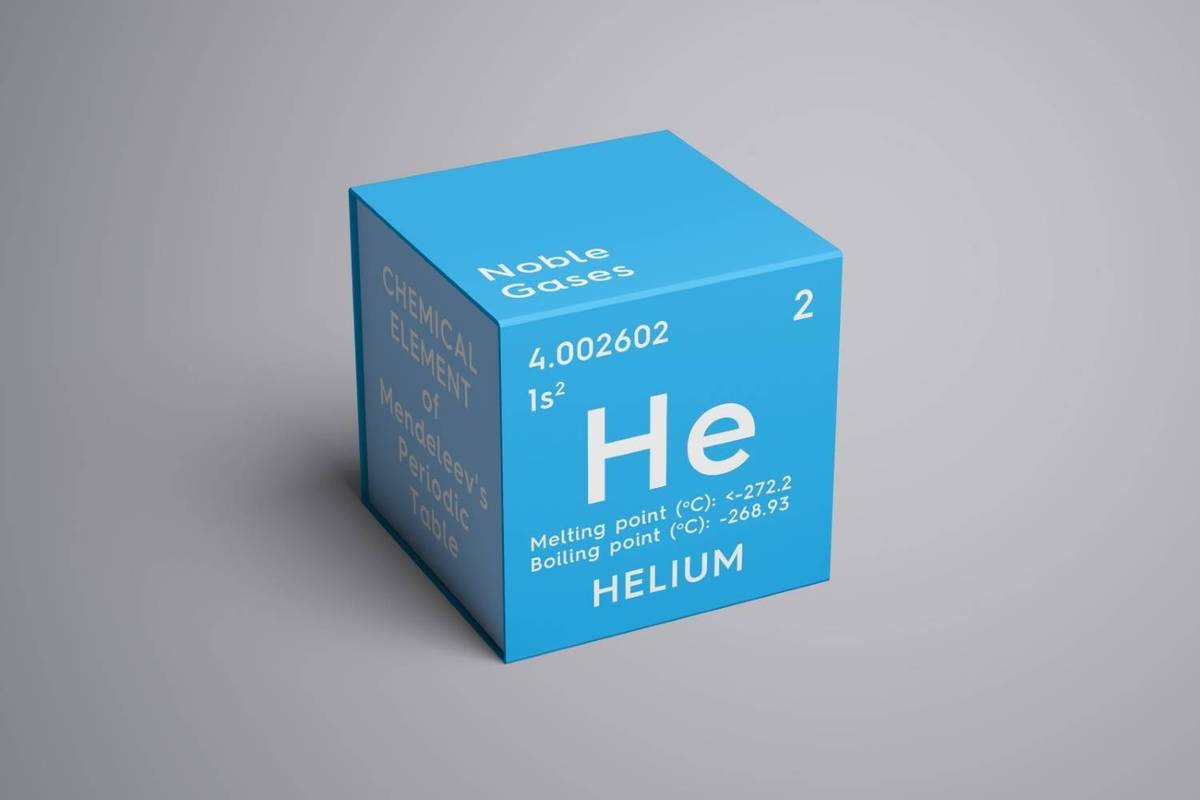
Aleksander / Adobe Stock
Welcome to the Investing News Network's weekly look at the best-performing Canadian mining stocks on the TSX, TSXV and CSE, starting with a round-up of Canadian news impacting the resource sector.
Statistics Canada released September’s consumer price index (CPI) data on Monday (October 19). The figures show CPI rose 3.1 percent from the same period last year and 0.1 percent month to month.
The higher rate shows inflation slightly accelerating after increases of 3 percent in both July and August.
StatsCan attributes the rise to a 19 percent annual increase in energy prices, higher than the 15.4 percent recorded in August, as a result of the ongoing conflict in the Middle East.
On Tuesday, the agency released August’s monthly mineral production survey, which showed that, compared to July, copper recoveries fell while gold and silver production increased, and copper and silver shipments decreased while gold shipments rose.
Copper production fell 6.15 percent to 41.66 million kilograms, while gold production rose 3.03 percent to 17,660 kilograms and silver increased 5.55 percent to 29,779 kilograms.
Shipments were mixed, with copper deliveries down 5.04 percent to 42.9 million kilograms and silver down 2.75 percent to 26,210 kilograms. Gold, by contrast, moved in the opposite direction, rising 14.47 percent to 15,963 kilograms.
On Wednesday (October 21), United Steelworkers, the union representing employees at Teck's (TSX:TECK.A,TSX:TECK.B,NYSE:TECK) Highland Valley mine in British Columbia, Canada, issued a 72 hour strike notice. Teck and the union have been in talks since the last five-year contract ended on September 30.
One of the union’s concerns has been over staffing shortages at the mine, saying that Teck has been unable to hire and retain skilled workers.
“Highland Valley Copper needs to be investing in the workers who keep this operation running, not asking them to give things up,” USW Local 7619 President Kyle Wolff said. “Competitive wages attract skilled workers and strong pensions help keep them.”
Teck presented a revised monetary offer and withdrew one concession on Tuesday, but the new proposal still did not meet members’ expectations.
Workers are set to walk off the job on Saturday (October 24) at 8 a.m. PDT if they can't reach an agreement during the 72 hour period.
For more on what’s moving markets this week, check out our top market news round-up.
Markets and commodities react
Canadian equity markets were negative this week.
The S&P/TSX Composite Index (INDEXTSI:OSPTX) lost 1.03 percent over the week to close Friday (October 23) at 35,788.18, while the S&P/TSX Venture Composite Index (INDEXTSI:JX) fell 3.72 percent to 820.95.
The CSE Composite Index (CSE:CSECOMP) slid 2.35 percent to 136.55.
The gold price shed 4.23 percent over the week to close at US$3,994.75 per ounce on Friday at 4:00 p.m. EDT. The silver price fared worse, closing the week down 6.21 percent at US$53.86.
In base metals, the Comex copper price recorded a 0.96 percent decrease this week to US$6.50.
The S&P Goldman Sachs Commodities Index (INDEXSP:SPGSCI) was up 2.48 percent to end Friday at 762.06.
Top Canadian mining stocks this week
How did mining stocks perform against this backdrop?
Take a look at this week’s five best-performing Canadian mining stocks below.
Stocks data for this article was retrieved at 4:00 p.m. EDT on Friday using TradingView's stock screener. Only companies trading on the TSX, TSXV and CSE with market caps greater than C$10 million are included. Mineral companies within the non-energy minerals, energy minerals, process industry and producer manufacturing sectors were considered.
1. Pulsar Helium (TSXV:PLSR)
Year-to-date gain: 40.63 percent
Market cap: C$260.41 million
Share price: C$1.35
Pulsar Helium is a helium exploration company advancing its Topaz project in Minnesota, US. It also holds the Falcon project in Michigan and the Tunu project in Greenland.
The company has drilled appraisal wells at Topaz and is now planning for production, which remains subject to Minnesota’s rulemaking, environmental review and permitting processes. On October 1, Pulsar accepted a firm proposal from Chart Energy & Chemicals to supply equipment for a helium liquefaction and carbon capture plant, with an aggregate value of US$85.5 million paid in stages as milestones are met.
On October 15, the company said the city council in Two Harbors, Minnesota, approved an agreement for Pulsar to acquire land in the city’s industrial district for US$1 to host the plant as part of a proposed Rare Gas Hub. The city has also agreed to contribute up to US$1 million toward rail construction, extend utilities to the site and reimburse a portion of property taxes for 15 years once the first phase is operating. Pulsar has a year to complete due diligence and secure financing before committing to the project.
“We look forward to working with the City on the financing, engineering, utility arrangements and remaining approvals needed before we commit to construction,” CEO Thomas Abraham-James said.
On Wednesday (October 21), Pulsar reported that President Cliff Cain was interviewed at the Topaz site for a CBS 60 Minutes segment that aired Sunday (October 18). The segment focused on the helium supply shortage due to conflict in the Persian Gulf and the closure of the Strait of Hormuz, which has stranded helium supply from Qatar.
2. Deep Sea Minerals (CSE:SEAS)
Year-to-date gain: 38.46 percent
Market cap: C$41.59 million
Share price: C$0.90
Deep Sea Minerals is a seabed mineral exploration company focused on polymetallic nodules, which can contain a variety of critical minerals.
On June 1, the company announced that the National Oceanic and Atmospheric Administration found its application for an exploration license under the Deep Seabed Hard Mineral Resources Act substantially complied with US regulations.
The application, as outlined in its base shelf prospectus, covers about 147,368 square kilometers of the Clarion-Clipperton Zone in international waters, and hosts polymetallic nodules that could contain manganese, nickel, copper and cobalt.
On Monday, the company highlighted remarks by US Treasury Secretary Scott Bessent in an October 14 statement to the World Bank and International Monetary Fund, in which Bessent stated that the bank could play a “catalytic role” in an emerging deep-sea mining sector. Deep Sea Minerals said it views the comments as a further sign of US policy interest in seabed minerals, though it noted the statement does not include funding, regulatory approval or an endorsement of the company.
“For an emerging sector, building technical knowledge, establishing clear regulatory pathways and developing a sound environmental evidence base are essential. These priorities are directly relevant to our approach as we pursue exploration opportunities through the U.S. regulatory framework and evaluate opportunities in the Cook Islands,” CEO James Deckelman said.
3. Apex Critical Metals (CSE:APXC)
Year-to-date gain: 36.28 percent
Market cap: C$130.15 million
Share price: C$1.54
Apex Critical Metals is an exploration company advancing rare earth element and niobium projects in the US and Canada.
Its main asset is the Rift rare earth project within the Elk Creek Carbonatite Complex in Southeastern Nebraska, US. The property consists of 31 exploration agreements covering an area of 3,957 acres and hosts rare earth element and niobium mineralization.
On Thursday (October 22), the company announced it was approved to list on the Nasdaq Capital Market. Trading began Friday.
The listing includes a US public offering of 400,000 American depositary shares, each consisting of six common shares and priced at US$4.65 per unit. The company expects to raise gross proceeds of US$1.86 million before expenses. Apex said it plans to use the net proceeds for working capital and general corporate purposes, including its ongoing drill program at Rift.
The news follows a series of drill results from Rift’s Trinity zone. On October 5, Apex reported results for step-out holes that extended mineralization by approximately 200 meters to the west. One hole returned 116 meters grading 3.55 percent rare earth oxides, including 22.9 meters at 4.75 percent.
4. HydroGraph Clean Power (CSE:HG)
Year-to-date gain: 29.64 percent
Market cap: C$1.08 billion
Share price: C$3.24
HydroGraph Clean Power produces cost-effective, high-purity graphene-based nanomaterials.
Graphene, a pure carbon material extracted from graphite, has myriad potential applications in industries such as transport, solar cells, medicine, electronics, energy, defense and desalination.
HydroGraph has an exclusive license from Kansas State University to produce graphene via the organization’s patented detonation process. While lower-purity graphene is typically produced using natural graphite, HydroGraph’s patented process produces 99.8 percent pure carbon content graphene using acetylene and oxygen.
On August 25, the company announced that it closed a bought deal public offering, raising gross proceeds of C$70.38 million. The company will use the funds for business development, expansion of US facilities and working capital.
On Wednesday (October 21), the company provided a corporate update saying it has achieved most of its 2026 goals, including US Environmental Protection Agency and UK and EU REACH clearances, and the opening of its Austin, Texas, headquarters with three Hyperion reactors.
The firm also secured a site and a long-term acetylene supply agreement for a planned production facility in Bellville, Texas. That facility is expected to open in the first half of 2027 with initial capacity of about 60 metric tons per year, before increasing to 360 metric tons in its first phase.
HydroGraph said its two remaining goals for the year are to secure its first commercial purchase orders and advance work with the US federal government. Several of its most advanced customer evaluations have moved into commercial negotiations, with the first agreements expected within months, and it is negotiating multiple defense research partnerships that include funding.
“With these milestones in place, we believe that HydroGraph is increasingly positioned to supply high volumes of pristine graphene for industrial-scale applications,” President and CEO Kjirstin Breure said.
5. Halcones Precious Metals (TSXV:HPM)
Year-to-date gain: 25 percent
Market cap: C$13.27 million
Share price: C$0.05
Halcones Precious Metals is an exploration company focused on gold-silver projects in Chile.
Its flagship Polaris project consists of 23 exploration and two mining concessions across a 5,777.5 hectare land package in the Antofagasta region.
The company has an option agreement with Austral Exploraciones through which Halcones can earn a 100 percent interest in the project through exploration milestones.
However, surface access is currently an issue for the project. Halcones began legal proceedings in October 2025 in the civil court of Taltal, Chile, to obtain an easement allowing it to drill Polaris after negotiations with the surface rights holders stalled.
On September 29, the company said a court-appointed expert had submitted a report setting out the compensation payable to those holders, leaving the evidentiary stage substantially complete. Halcones said the absence of other pending procedures is a positive sign and that "looks forward to a decision shortly," although the court has set no timeline. It continues to seek a negotiated agreement with the holders of the surface rights in parallel.
The access issue also affects the company’s option on the project. In August, Halcones amended the agreement to extend its deadline to complete 2,000 meters of drilling by six months, to April 30, 2027, in exchange for a US$50,000 cash payment to Austral.
Halcones’ most recent release came on October 15, when it reported the closing of the first tranche of a non-brokered private placement of up to 20 million units for gross proceeds of up to C$1 million. The first tranche consisted of 11 million units for gross proceeds of C$550,000, with no insiders participating. The company said it expected to close the final tranche this week, although it has not made a further announcement to that end.
Halcones plans to use the proceeds to obtain surface rights to Polaris and continue exploration at the project, as well as for working capital.
FAQs for Canadian mining stocks
What is the difference between the TSX and TSXV?
The TSX, or Toronto Stock Exchange, is used by senior companies with larger market caps, and the TSXV, or TSX Venture Exchange, is used by smaller-cap companies. Companies listed on the TSXV can graduate to the senior exchange.
How many mining companies are listed on the TSX and TSXV?
As of July 2026, 892 mining companies and 68 oil and gas companies are listed on the TSXV, combining for 64 percent of the 1,501 total companies listed on the exchange.
The TSX is home to 182 mining companies and 51 oil and gas companies. The exchange has 2,264 companies listed on it in total.
Together, the TSX and TSXV host around 40 percent of the world’s public mining companies.
How much does it cost to list on the TSXV?
There are a variety of different fees that companies must pay to list on the TSXV, and according to the exchange, they can vary based on the transaction’s nature and complexity.
As of April 2026, the listing fee alone will most likely cost between C$10,000 to C$70,000, and accounting and auditing fees could rack up between C$25,000 and C$100,000. Legal fees are expected to be over C$75,000 and an underwriters’ commission may hit up to 12 percent.
The exchange lists a handful of other fees and expenses companies can expect, including but not limited to security commission and transfer agency fees, investor relations costs and director and officer liability insurance.
These are all just for the initial listing, of course. There are ongoing expenses once companies are trading, such as sustaining fees and additional listing fees, plus the costs associated with filing regular reports.
How do you trade on the TSXV?
Investors can trade on the TSXV the way they would trade stocks on any exchange. This means they can use a stock broker or an individual investment account to buy and sell shares of TSXV-listed companies during the exchange's trading hours.
Don't forget to follow us @INN_Resource for real-time updates!
Securities Disclosure: I, Dean Belder, hold no direct investment interest in any company mentioned in this article.
From Your Site Articles
- Top 3 Canadian Lithium Stocks in 2026 ›
- 5 Best-performing Gold Stocks on the TSX ›
- 5 Best-performing Canadian Uranium Stocks ›
- Top 5 Junior Gold Mining Stocks on the TSXV ›
- 5 Best-performing Copper Stocks on the TSX ›
Related Articles Around the Web
https://x.com/INN_Resource
https://www.linkedin.com/in/deanbelder
dbelder@investingnews.com
Dean has been writing in one form or another since penning stage plays in his youth. He is a graduate of both Emily Carr University and Simon Fraser University, with a BFA in photography and a BA in communications.
As a writer, Dean has traveled throughout BC and the Pacific Northwest covering cultural events, interviewing small business owners and working alongside fellow writers and photographers from publications like Rolling Stone Magazine, Spin and the Georgia Straight.
Dean has a keen interest in investing, and enjoys learning about the mining industry and better understanding the technical aspects of trading. In his spare time, Dean is an avid home chef, ponders the space-time continuum and makes his own cider. On weekends he can be found cycling the Seawall, exploring farmers markets or sampling the city’s local craft breweries.
INN Article Notification
Latest News
Outlook Reports world
Featured Energy Investing Stocks
Browse Companies
MARKETS
COMMODITIES
CURRENCIES
Dean has been writing in one form or another since penning stage plays in his youth. He is a graduate of both Emily Carr University and Simon Fraser University, with a BFA in photography and a BA in communications.
As a writer, Dean has traveled throughout BC and the Pacific Northwest covering cultural events, interviewing small business owners and working alongside fellow writers and photographers from publications like Rolling Stone Magazine, Spin and the Georgia Straight.
Dean has a keen interest in investing, and enjoys learning about the mining industry and better understanding the technical aspects of trading. In his spare time, Dean is an avid home chef, ponders the space-time continuum and makes his own cider. On weekends he can be found cycling the Seawall, exploring farmers markets or sampling the city’s local craft breweries.
Learn about our editorial policies.