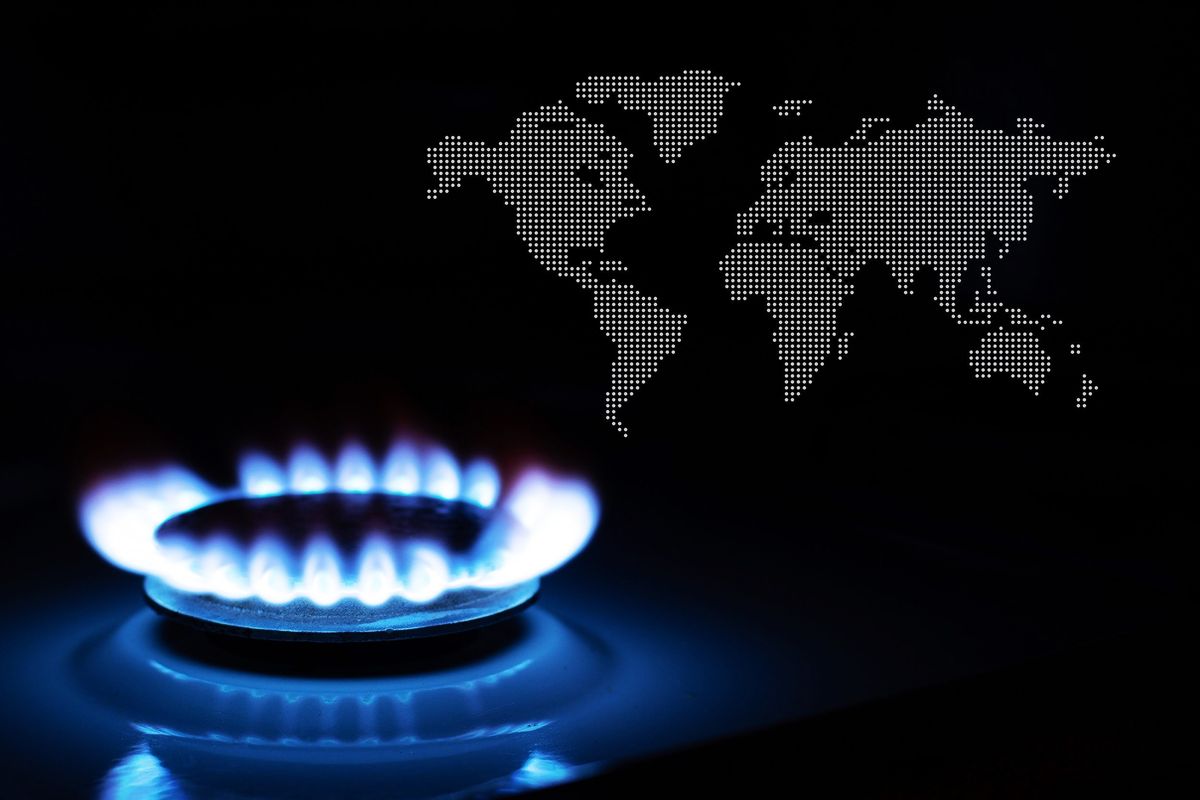
Explore natural gas production by country with a look at the 10 leading gas producers, including the US, Russia and Iran.

Musomo / Shutterstock
Natural gas is an important energy fuel, even as the world transitions to a carbon-free economy. When investing in this industry, it's key to know the ins and outs of natural gas production by country.
Global natural gas production edged up 1.2 percent in 2024 to reach 4.12 trillion cubic meters, led by the United States, Russia, Iran and China, which together supplied more than half the world’s natural gas production, according to data from the Energy Institute.
European production extended its long-term decline, weighed down by lower volumes from Norway, the UK and the Netherlands.
On the consumption side, demand grew 2.5 percent — its fastest pace in years — with Asia Pacific economies such as China, Japan and India driving nearly half the gains, while Europe saw its first demand uptick since 2021.
“Natural gas continued to displace oil and oil products in various sectors, supported by policies, regulations and market dynamics,” the International Energy Agency’s (IEA) Global Energy Review 2025 reads.
Read on for a look at the top 10 natural gas-producing countries in 2024 based on the most recent data from the Energy Institute's annual Statistical Review of World Energy.
1. United States
Production: 1.03 trillion cubic meters
The US is by far the largest producer of natural gas in the world with production of 1.03 trillion cubic meters of natural gas in 2024, representing nearly a quarter of global natural gas production.
Its output has increased by more than 300 billion cubic meters in the past decade owing to the increasing cost of coal and advancements in extraction technology such as horizontal drilling and hydraulic fracturing, also known as fracking.
In addition to being a major natural gas producer, the US is also the biggest consumer of the fuel. In 2024, US demand for natural gas totaled 902.2 billion cubic meters, up from 2023’s 888.4 billion cubic meters, according to the Energy Institute.
In 2024, the US exported a record volume of liquified natural gas (LNG) at 115.2 billion cubic meters, following a 10th consecutive year of record production. While US exports grew just 0.4 percent year-over-year, they have exploded over the last decade from 2015's 700 million cubic meters.
High international demand and steady domestic consumption growth will keep the US a net exporter of petroleum products and natural gas through 2050. Despite the shift to renewable electricity generation, US natural gas production is expected to rise due to increased international demand for liquefied natural gas, according to the US EIA's Annual Energy Outlook 2023.
In early 2025, in response to US tariff threats from new President Donald Trump, China slapped a 15 percent tariff on US LNG imports. According to the Financial Press, the US accounted for about 6 percent of China's LNG consumption in 2024.
Natural gas is expected to play a growing role in the US energy mix through 2050, even as oil and coal consumption decline, according to S&P Global Commodity Insights. Analysts point to coal-to-gas substitution as a key driver of the US transition, while scalability and cost barriers continue to slow a direct leap from coal to renewables.
“By 2050, gas shall be the only fossil fuel with a potential increase in the energy mix for the US, China, and India,” the S&P report notes.
2. Russia
Production: 629.9 billion cubic meters
The second largest exporter and producer of natural gas in the world, Russia produced 629.9 billion cubic meters of natural gas in 2024. The country’s state-owned energy group Gazprom its its largest natural gas producer, with gas company Novatek taking second place.
Russia also holds the largest-known natural gas reserves on the planet, at just under 20 percent as of 2020.
“Historically, production was concentrated in West Siberia, but investment has shifted in the past decade to Yamal and Eastern Siberia and the Far East, as well as the offshore Arctic,” according to the International Energy Agency.
Europe's rejection of Russian natural gas products led to a 41 percent decline in revenues for the country's producers in the first three quarters of 2023, reported Reuters.
While Russia remains the world’s second largest natural gas producer and the second largest exporter of the fuel, the EU is phasing out Russia-sourced natural gas by 2027 due to the country's war on Ukraine. In June 2025 the EU introduced a proposal for a legal framework for accomplishing the 2027 goal.
EU imports of Russian natural gas have plunged by more than two-thirds since 2020, falling from 14.7 to 4.4 billion cubic feet per day in 2024, the EIA reported. Additionally, the EU reported that Russia only supplied 14 percent of its member countries' natural gas requirements in 2023, down from 45 percent in 2021.
Despite the conflict between Russia and Ukraine, the latter has remained a crucial corridor for Russian natural gas into the EU. In September 2024, Russian natural gas exports that traveled through Ukraine totaled 1.26 billion cubic meters.
To offset lost European demand, Russia has pivoted its energy export trade, with China and India propping up its natural gas export market. The country has expanded gas exports eastward via the Power of Siberia 1 pipeline, which has been running near full capacity since China’s segment came online in late 2024. Plans for a second pipeline remain stalled, with Moscow and Beijing yet to agree on terms despite years of negotiations.
Russia is also set to supply Iran with natural gas after it signed a long-term natural gas supply deal in October 2024 in which Gazprom committed to supplying 109 billion cubic meters of gas to Iran annually.
3. Iran
Production: 262.9 billion cubic meters
Iran, the third largest natural gas-producing country and the largest in the Middle East, produced 262.9 billion cubic meters of natural gas in 2024, representing about 6.4 percent of global output. The Middle Eastern nation ranks second in terms of natural gas reserves.
While its natural gas infrastructure is far behind the top two natural gas producers, Iran has increased its natural gas production significantly in the past decade to become the Middle East's largest producer. Iran and Qatar share the world's largest natural gas field. Iran's portion is known as South Pars and Qatar's is North Dome.
Iran plans to boost its production capacity by 30 percent within five years, supported by an US$80 billion investment in its gas fields, according to the nation’s Oil Minister Javad Owji. However, Qatar's expansion of liquefied natural gas production in North Dome poses a challenge to Iran's output ambitions.
In mid-2025, Iran partially suspended gas output at the South Pars field after an Israeli airstrike damaged one of its key processing units (Phase 14). The strike shut down approximately 12 million cubic meters per day of gas production. While production has reportedly resumed, it is unclear if operations are at full capacity.
Turkey and Iraq are major importers of Iranian natural gas, while Turkmenistan and Armenia have swap deals with Iran. Iran signed a long-term deal to import 109 billion cubic meters of gas from Russia annually in late 2024, with Russia paying for construction of the necessary pipeline.
4. China
Production: 248.4 billion cubic meters
China's natural gas production reached 248.4 billion cubic meters in 2024, an all-time record.
In recent years, China’s government has incentivized the transition from coal to natural gas to reduce air pollution and meet emissions targets. In its 14th Five-Year Plan, the government set an annual natural gas production target of 230 billion cubic meters by 2025, a goal the country met two years early in 2023. Between 2014 and 2024, natural gas production in China grew by 89 percent from 131.2 billion cubic meters.
China still relies on imports to meet about half of its demand. Australia, Turkmenistan, the US, Malaysia, Russia and Qatar are some of its biggest providers. However, it has yet to meet its natural gas storage target of 55 billion to 60 billion cubic meters, with only 26.7 billion cubic meters by the end of 2024, S&P Global reports.
Unconventional gas sources such as shale, coal-bed methane and natural gas hydrates accounts for an estimated 43 percent of China’s total gas output.
While domestic production has ticked higher, China's LNG imports are moving the opposite direction. LNG imports fell by more than 20 percent during the first half of 2025. Rising domestic and pipeline supply is helping offset the reduced LNG inflows, with policy and infrastructure efforts aimed at shrinking reliance on imported gas.
Domestic demand has also pulled back slightly, as China’s gas demand declined by roughly 1 percent year-over-year in H1 2025.
5. Canada
Production: 194.2 billion cubic meters
Canada produced 194.2 billion cubic meters of natural gas in 2024, and the country holds 83 trillion cubic feet of proved natural gas reserves. The Western Canadian Sedimentary Basin (WCSB) is the prime source of the majority of Canada’s natural gas production. In addition to the WCSB, offshore fields near Newfoundland and Nova Scotia, the Arctic region and the Pacific coast hold significant natural gas reserves.
Canada is also a top natural gas exporter, relying exclusively on pipelines, with the US as its only trading partner. In 2022, 99 percent of all US natural gas imports came from its neighbor to the north.
In early 2025, US President Trump threatened to place 10 percent tariffs on energy imports from Canada, including natural gas. The move has led to increased calls for cross-Canada pipeline building and expansion of trade partners.
Looking to expand its trade partner list, in late June, LNG Canada shipped its first liquefied natural gas cargo to Asia from its new export facility in Kitimat, British Columbia. The terminal is a joint venture that includes Indigenous, provincial and international partners, and began operations with two liquefaction trains capable of producing 14 million metric tons per annum.
“With LNG Canada’s first shipment to Asia, Canada is exporting its energy to reliable partners, diversifying trade, and reducing global emissions — all in partnership with Indigenous Peoples,” Prime Minister Mark Carney said of the shipment. “By turning aspiration into action, Canada can become the world’s leading energy superpower with the strongest economy in the G7.”
His words reiterated the findings of a May 2025 report from the Fraser Institute that outlined Canada’s ability to contribute to global greenhouse gas emissions reduction through increased LNG production and exports to countries that currently rely on coal.
“As countries like China and India continue to burn coal for power, Canadian LNG offers a lower-emission alternative with the potential for major global impact,” said Elmira Aliakbari, director of natural resource studies at the Fraser Institute and coauthor of the study.
6. Qatar
Production: 179.5 billion cubic meters
Qatar is the sixth largest natural gas producer and hosts the third largest proved natural gas reserves in the world. The majority of its reserves are located in the world’s largest natural gas field, the offshore North Field, which it shares with Iran.
Qatar is the world's second largest LNG exporter with 106.9 billion cubic meters in 2024, just above third-place Australia's 106.8 billion.
In recent years, Qatar has made moves to capitalize further on its resources in an effort to expand its footprint in the international natural gas market. Statista reports that state-owned Qatar Petroleum is looking “to increase its LNG export market to compete with Russian LNG deliveries.”
To fulfil these aspirations Qatar is pushing ahead with expansion plans that are projected to nearly double the country’s LNG output over the next few years, raising production capacity from 77 million metric tons per annum to around 126 million by 2027.
Key to that growth is the North Field East expansion, which is set to begin partial output in mid-2026 as new LNG trains come online.
7. Australia
Production: 150.1 billion cubic meters
Australia produced 150.1 billion cubic meters of natural gas in 2024, an increase of 130 percent compared its 65.3 billion cubic meters to in 2014. Nearly all of Australia’s natural gas resources are located in the North West Shelf, with three of the basins there providing feedstock to the country's largest gas fields, including Greater Gorgon, North West Shelf Venture and Ichthys
Australia’s LNG exports have grown exponentially over the past decade as several new production facilities have come online. The country was the third largest exporter of LNG in 2024 at 106.8 billion cubic meters.
The federal government released its Australia's Future Gas Strategy in May 2024. The initiative focuses on ensuring energy security and supporting the transition to net-zero by 2050 by boosting natural gas production. The government plan highlights the need for new gas supplies to prevent shortages by 2028 on the east coast and 2030 on the west coast.
While supportive of the plan, Australia's energy producers have raised concerns of potential gas supply shortfalls by the end of the decade amid global market volatility. Meg O'Neill, chair of Australian Energy Producers, highlighted that without action, Australia's east and west coasts could face shortages by 2028 and 2030, respectively, which could drive up energy prices.
In March 2025, Exxon Mobil (NYSE:XOM) and Woodside Energy Group (ASX:WDS,NYSE:WDS) announced a US$222 million investment to drill five new wells in the Gippsland Basin’s Turrum and Turrum North fields, aiming to extend Southeastern Australia’s gas output beyond 2030.
The Turrum Phase 3 project underscores efforts to sustain domestic supply from the aging Bass Strait, even as production declines. It follows other recent approvals by the joint venture to bolster Australia’s gas availability amid tightening forecasts.
8. Saudi Arabia
Production: 121.5 billion cubic meters
The eighth largest natural gas-producing country, Saudi Arabia has seen its output increase by 25 percent since 2014, reaching a record 121.5 billion cubic meters in 2024.
Mordor Intelligence reports that this production growth was due in large part to increased development of standalone natural gas wells. State-run Saudi Aramco has awarded contracts to energy companies looking to develop the country’s largest unconventional gas field, Jafurah, located near the Persian Gulf.
Currently the country does not export its natural gas production; however, the government plans to begin natural gas exports by 2030. According to the EIA, Saudi Arabia is working to replace “crude oil, fuel oil, and diesel-powered electric generators with natural gas and renewable energy generation by 2030, which will likely increase domestic natural gas demand.”
In late 2023, Saudi Arabia began investing in the LNG market with Saudi Aramco buying a stake in MidOcean Energy, which is set to acquire interests in four Australian LNG projects. In July 2024, Aramco awarded contracts worth US$12.6 billion to expand production in the Jafurah field.
The Jafurah project is central to Aramco’s goal of boosting gas output by 60 percent by 2030.
This was supported by an August announcement that Aramco signed an US$11 billion deal with a consortium led by Global Infrastructure Partners, part of BlackRock to lease and lease back its Jafurah gas processing facilities for 20 years.
A new subsidiary, Jafurah Midstream Gas Company, will manage the assets, with Aramco retaining a 51 percent stake and exclusive rights to process gas from the field.
9. Norway
Production: 113.2 billion cubic meters
Norway is the world’s ninth largest natural gas producer. Norway's natural gas production reached a record-high of 116 billion cubic meters in 2023, but contracted to 113.2 billion cubic meters in 2024.
The Scandinavian country has understandably replaced Russia as the major supplier to the European natural gas market. In 2023, Norway reportedly accounted for 30.3 percent of natural gas supplied to the EU.
Norway’s natural gas companies have ramped up production in response to increased demand. In mid-2023, the government gave the green light to 19 oil and gas extraction projects in the country.
In early 2024, some concern arose that the industry may face headwinds from a proposal by a climate change committee to temporarily suspend new licenses while the government decides on a climate strategy. However, in May 2024 the government offered licenses for 37 new blocks and emphasized the industry's importance to Norway and Europe.
Near-term gas production is forecasted to contract slightly in 2025 according to the Norwegian Budget Bill released in early October 2024.
In June 2025, Shell (NYSE:SHEL) began operating two sub-sea compressors at the Ormen Lange field in the Norwegian Sea, a move expected to lift gas recovery rates from 75 percent to 85 percent.
Located 120 kilometers offshore on the seabed and linked to the Nyhamna processing plant, the compressors could enable the extraction of an additional 30 billion to 50 billion cubic meters of gas.
10. Algeria
Production: 94.7 billion cubic meters
Rounding out the top 10 natural gas-producing countries is Algeria, which produced 94.7 billion cubic meters of natural gas in 2024. The country’s output decreased year-over-year from 101.5 billion cubic meters in 2023. In 2022, nearly 85 percent of the country's exports went to feed Europe’s natural gas demand.
In late May 2024, Algeria signed two key hydrocarbon deals with US firms, one with ExxonMobil and the other with Baker Hughes (NASDAQ:BKR), to boost its natural gas production and enhance exports to Europe. This comes as European nations seek alternatives to Russian gas amid rising demand.
Despite the year-over-year production contraction, Algeria aims to ramp up its natural gas output to 200 billion cubic meters by 2030, according to Energy and Mines Minister Mohamed Arkab.
Key to reaching this target will be heavy investment with US$36 billion earmarked for exploration and production. The strategy includes expanding infrastructure at the Hassi R’Mel field with new compression stations and leveraging recently discovered fields to boost both domestic supply and export capacity.
Algeria reportedly began discussions with ExxonMobil and Chevron (NYSE:CVX) in August 2025 for a landmark deal to develop its natural gas reserves, including shale resources, in a move seen as part of the country's efforts to attract international investment.
The potential agreement would mark the first time US majors have gained direct access to Algeria’s reserves, introducing advanced fracking techniques to unlock shale gas deposits domestic operators have been unable to access.
FAQs for gas investing
What is natural gas made of and how is it formed?
Natural gas is a mixture of methane and other naturally occurring gases. As fossil fuels, both crude oil and natural gas are formed via the same geological process. It isn't surprising then that the two materials are often found together. Natural gas is the product of ancient decomposed organic matter that mixed with sediment, became buried and was subject to immense pressure and heat over millions of years.
How is natural gas produced?
Natural gas is extracted via wells drilled into subsurface rock formations, or via hydraulic fracturing or "fracking" technology from shale formations. Following extraction, natural gas is separated from other liquids, including oil, hydrocarbon condensate and water. This separated gas then needs to be further processed to meet specific requirements for end-use quality and safe pipeline transmission.
What is natural gas used for?
Natural gas is well known as a fuel for heating, generating electricity and powering vehicles. However, it's also used to manufacture various products, such as vinyl flooring, carpeting, Aspirin and artificial limbs; in addition, it's a key component in the production of ammonia.
Is natural gas a clean energy?
According to the EIA, burning natural gas for power emits fewer greenhouse gas emissions and pollutants than other fossil fuels, since it burns more easily and contains fewer impurities. The EIA also notes that natural gas produces less carbon dioxide per equivalent amount of heat production.
Is natural gas cleaner than coal?
Although natural gas is a fossil fuel and was formed under the same conditions, it is often pegged as a "cleaner" energy option than coal or oil. The EIA states that, "burning natural gas for energy results in fewer emissions of nearly all types of air pollutants and carbon dioxide than burning coal or petroleum products to produce an equal amount of energy."
How much natural gas is left in the world?
Natural gas is not an infinite, renewable resource; however, its hard to determine how many untapped sources are left in the world. According to one estimate, natural gas reserves are sufficient to last another 53 years at current consumption rates. That figure doesn't take into account known natural gas resources under development or those yet to be discovered in underexplored regions.
How did the Ukraine war affect gas?
Russia was a leading supplier of natural gas to Europe prior to the country’s invasion of Ukraine, representing about 40 percent of the region’s supply. As a result of the war, energy prices shot up both in Europe and globally. According to S&P Global, the war has “accelerated” the globalization of the natural gas market as Europe turns to LNG. In the midst of this changing landscape, the US has become the world’s largest exporter of LNG as it stepped up shipments to Europe.
Can Europe survive without Russian gas?
The EU is working to phase out Russian natural gas exports by 2027. The growing global LNG market allows flexibility for European countries looking to source natural gas supply from producers as close to home as Norway (Europe's biggest gas supplier), other major natural gas suppliers in North Africa or from the world’s largest natural gas producer, the US.
Don’t forget to follow us @INN_Resource for real-time news updates!
Securities Disclosure: I, Georgia Williams, hold no direct investment interest in any company mentioned in this article.
From Your Site Articles
- Oil and Gas Price Forecast: Top Trends for Oil and Gas in 2025 ›
- ASX Oil and Gas Stocks: 5 Biggest Companies in 2025 ›
- Oil and Gas Investing in Australia ›
- Hydrogen Stocks: 9 Biggest Companies ›
- How to Invest in Natural Gas ›
- Top 5 Oil and Gas Stocks on the TSX and TSXV ›
- 10 Natural Gas Facts for Investors ›
- Top 10 Oil-producing Countries ›
Related Articles Around the Web
NYSE:XOM
https://x.com/INN_Resource
https://www.linkedin.com/in/georgia-williams-15845447/
gwilliams@investingnews.com
The Conversation (0)

Originally from Calgary, Georgia has been right at home in Toronto for more than two decades. Graduating from the University of Toronto with an honors BA in journalism, she is passionate about writing on diverse topics, including resources, arts, politics and social issues.
At INN Georgia covers a wide range of topics, including energy, battery and critical metals and diamonds. In her spare time, Georgia enjoys watching documentaries and experiencing Toronto's vibrant food, arts and cultural scene.
INN Article Notification
Latest News
Outlook Reports world
Featured Oil and Gas Investing Stocks
Investor Insight
Coelacanth Energy is a pure-play Montney oil and natural gas company advancing one of the largest contiguous land positions in the Montney light oil window of northeastern British Columbia. Supported by a substantial discovered and undiscovered hydrocarbon resource base, growing production, established infrastructure and a management team that has built and sold six successful energy companies, Coelacanth is executing a strategy focused on increasing both near-term cash flow and long-term resource value.
- YouTube
Enjoy the videos and music you love, upload original content, and share it all with friends, family, and the world on YouTube.
Overview
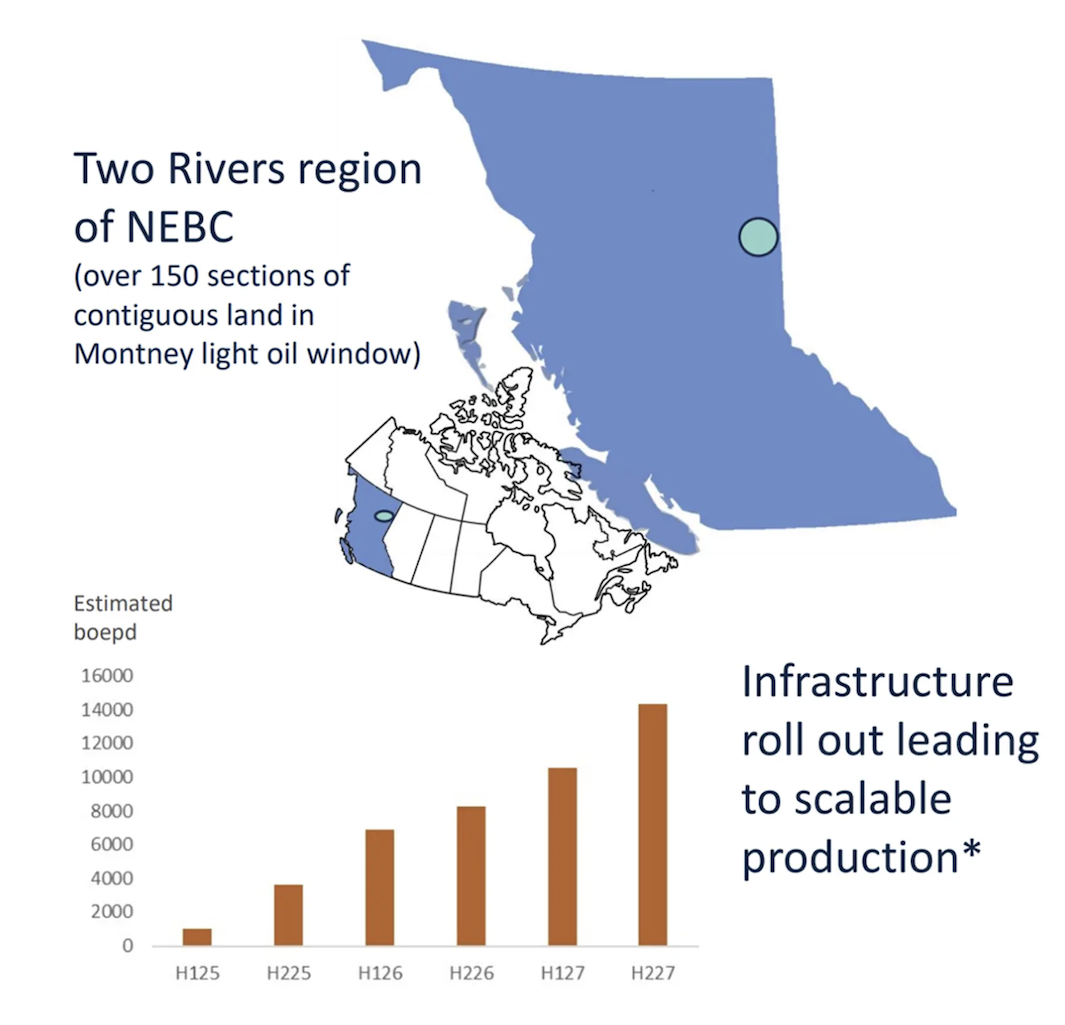
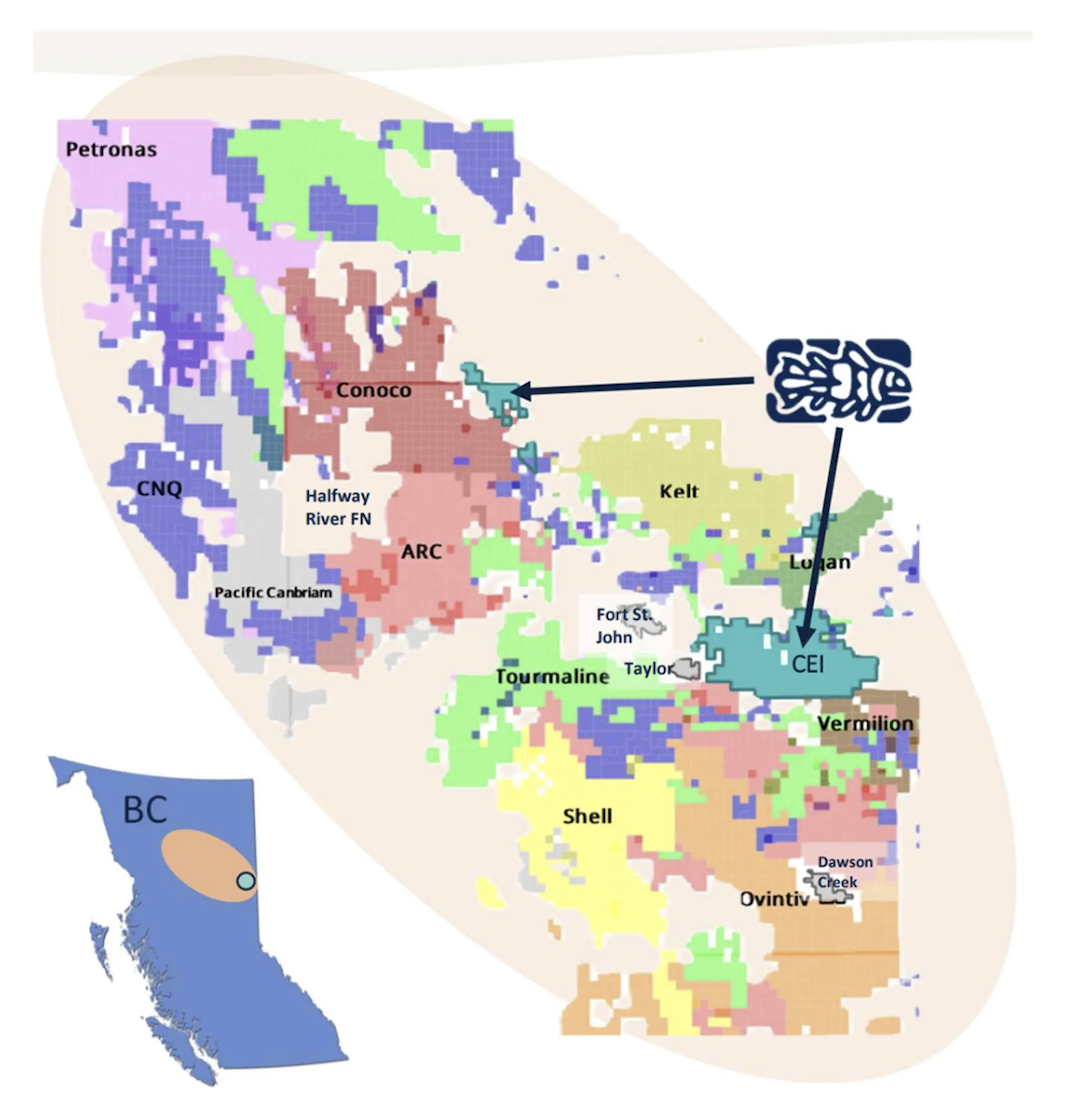
Coelacanth Energy (TSXV:CEI) is a Canadian oil and natural gas exploration and development company focused on the Montney Formation in northeastern British Columbia. The company controls over 150 contiguous sections in the Two Rivers region, a strategically positioned acreage block within the Montney light oil window. As one of the largest landholders in this highly prospective area, Coelacanth has assembled a large-scale resource platform with significant development potential.
The company’s asset base is supported by substantial petroleum initially-in-place estimates prepared by GLJ. These include 6.9 billion barrels of discovered oil PIIP and 8.3 billion barrels of undiscovered oil PIIP, alongside 5.9 Tcf of discovered gas PIIP and 7.1 Tcf of undiscovered gas PIIP. The resource spans multiple Montney intervals, including the Upper, Lower, Basal and Middle Montney, providing extensive opportunities for future development and delineation.
Coelacanth’s strategy combines near-term production growth with long-term resource value creation. The company has secured critical infrastructure, contracted gas takeaway and processing capacity, and advanced development activities across its Two Rivers assets. Average production reached 7,632 boe/d in Q2 2026, reflecting continued progress in transitioning from delineation and infrastructure buildout toward scalable production growth.
A key differentiator for Coelacanth is its leadership team. Management has successfully built and sold six previous public energy companies and has demonstrated an ability to create value through multiple commodity cycles. Supported by deep operational, geological and financial expertise, the team is focused on disciplined execution of the company’s Montney growth strategy.
Company Highlights
- Premier Montney land position: Controls over 150 contiguous sections in the Two Rivers region of northeastern British Columbia, making Coelacanth the largest landholder in the Montney light oil window.
- Substantial hydrocarbons in place: GLJ estimates 6.9 billion barrels of discovered oil PIIP, 8.3 billion barrels of undiscovered oil PIIP, 5.9 Tcf of discovered gas PIIP, and 7.1 Tcf of undiscovered gas PIIP across the company’s Montney acreage.
- Infrastructure-led growth strategy: Key infrastructure, including facilities, pipelines, processing agreements and gas takeaway capacity, has been secured to support scalable production growth.
- Growing production base: Average production reached 7,632 boe/d in Q2 2026, supported by ongoing development at the Two Rivers project.
- Multiple productive Montney horizons: The asset base includes the Upper, Lower, Basal and Middle Montney intervals, providing extensive development opportunities across multiple zones.
- Strong market access: Secured 100 mmcf/d of gas takeaway capacity and up to 60 mmcf/d of processing capacity, with access to major pipeline networks and potential LNG Canada connectivity through Coastal GasLink.
- Proven value-creation team: Management has built and sold six successful energy companies and brings extensive operational, technical and financial expertise to Coelacanth’s development strategy.
Key Project
Two Rivers Montney Development
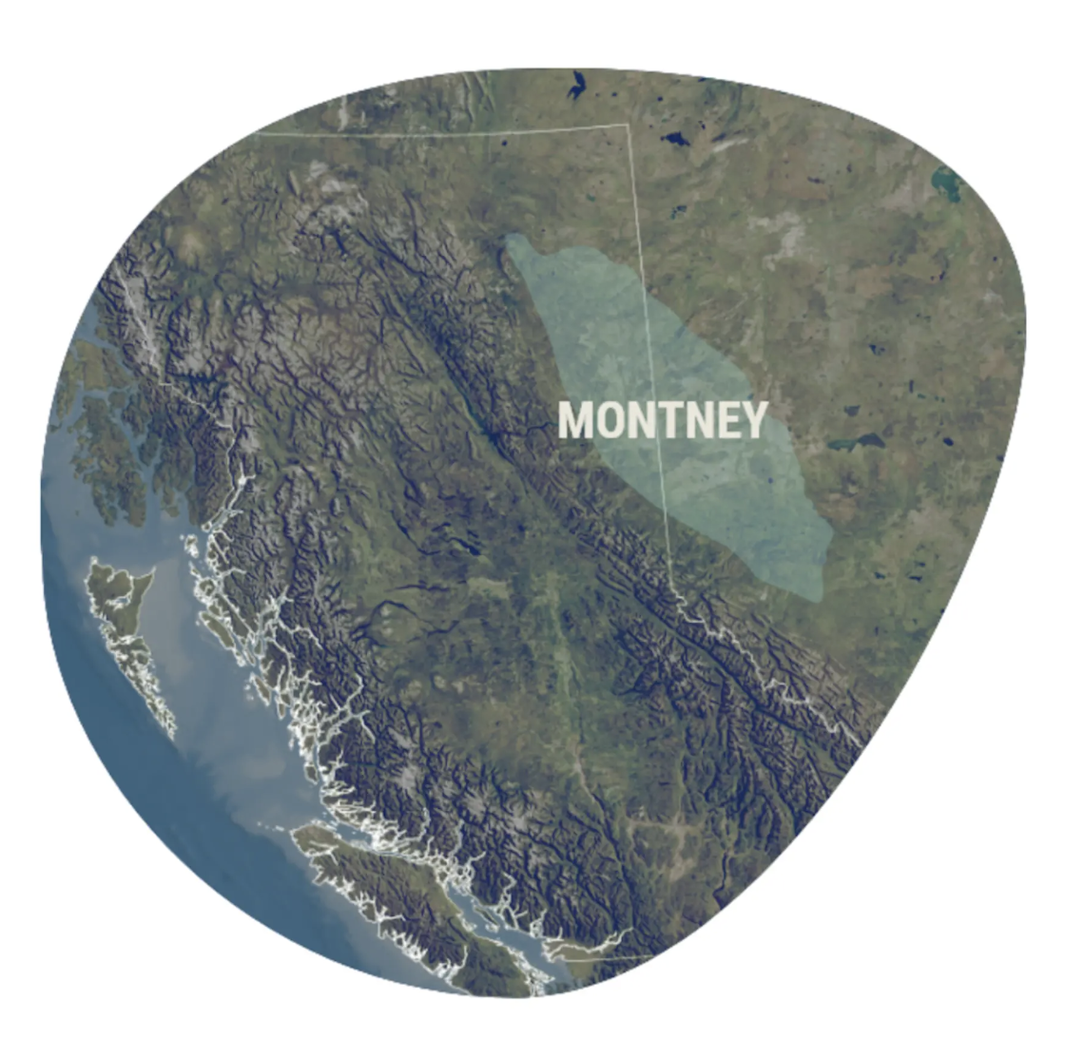
The Two Rivers project forms the cornerstone of Coelacanth’s growth strategy and encompasses the company’s extensive Montney land position in northeastern British Columbia. The project hosts multiple productive horizons, including the Upper, Lower, Basal and Middle Montney intervals, supporting a multi-zone development approach across the acreage. Geological delineation has been completed, providing a strong technical foundation for future drilling and development.
The project has demonstrated commercial productivity through successful drilling and testing programs. Coelacanth established proof of commerciality at both Two Rivers East and Two Rivers West, while development at the 5-19 and 10-08 pads confirmed productivity across multiple Montney benches. All 12 wells on the 5-19 pad were onstream by April 1, 2026, marking a significant milestone in the project’s progression.
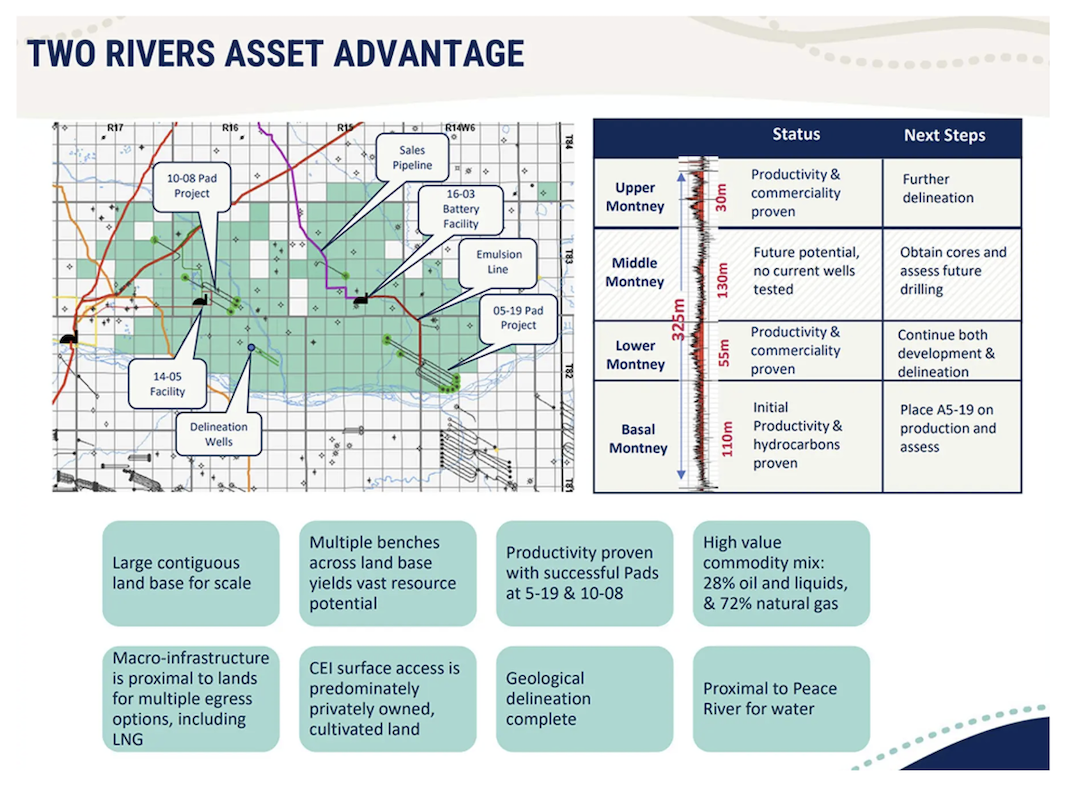
Infrastructure development has been a major focus of the company’s execution strategy. Coelacanth has secured infrastructure financing, completed key facility and pipeline construction, contracted up to 100 mmcf/d of gas takeaway capacity and secured processing capacity of up to 60 mmcf/d. These initiatives establish the infrastructure foundation required to support future production growth.
The Two Rivers asset also benefits from strong market access. The company’s production can access major regional pipeline systems, including NGTL, Westcoast and Alliance, while its acreage is directly connected to LNG Canada through the Coastal GasLink system for potential future delivery. Coelacanth Energy said the long-term view for LNG expansion in British Columbia is very positive for its land, believing that lands with scale and direct access as such will trade at a premium once they are delineated and the resource is proven for development.
Combined with a commodity mix of approximately 31 percent oil and liquids and 72 percent natural gas, the project offers exposure to multiple energy markets.
Management Team
Rob Zakresky – President, CEO and Director
Rob Zakresky is a veteran energy executive who previously served as president and CEO of Leucrotta Exploration, Crocotta Energy, Chamaelo Exploration, Chamaelo Energy, Viracocha Energy and Bellator Exploration. He has a proven track record of building and monetizing public energy companies and leads Coelacanth’s strategic growth and value creation initiatives.
Nolan Chicoine – Vice President of Finance and CFO
Nolan Chicoine previously served as CFO and vice-president finance at Leucrotta Exploration, Crocotta Energy and Chamaelo Exploration, and was controller at Chamaelo Energy and Viracocha Energy. He is responsible for financial strategy, reporting and capital management.
Jody Denis – Vice President of Operations
Jody Denis is a former drilling, engineering and operations engineer at Leucrotta Exploration. His previous experience also includes senior operational and drilling leadership roles with Black Swan Energy, ARC Resources and Birchcliff Energy. He formerly led Coelacanth Energy’s drilling and completions activities.
John Fur – Vice President of Geosciences
John Fur previously served as manager of exploration at Leucrotta Exploration and held senior geophysical positions with Crocotta Energy, Chamaelo Energy, Viracocha Energy, Canadian Natural Resources, Post Energy, Amber Energy and Husky Oil. He oversees geological evaluation and resource delineation across the company’s Montney assets.
Jonathon Hanson — Vice President of Engineering
Jonathon Hanson has 20 years of industry experience. He previously served as manager for exploitation at Spartan Dela Corp, and was a senior exploitation engineer for companies Vermilion Energy, Lynx Energy and Saguaro Resources. He will focus on exploitation and reservoir management for Coelacanth Energy.
Investor Insight
Syntholene Energy is advancing a proprietary synthetic fuel production platform designed to produce high-performance, low-cost synthetic hydrocarbons using renewable electricity, geothermal heat and captured carbon. Following successful prototype-scale validation in 2022, the company is now operating its Iceland demonstration facility as it plans commercial-scale production capable of serving aviation, transportation, industrial energy and other hard-to-abate fuel markets.
Overview
Syntholene Energy ((TSXV:ESAF,FSE:3DD0, OTC:SYNTF) is a synthetic fuel production company company focused on developing high-performance, low-cost synthetic liquid fuels. The company is commercializing its proprietary Hybrid Thermal Production System, which combines renewable electricity, geothermal heat, water and captured carbon to produce synthetic hydrocarbons that can serve as direct replacements for conventional petroleum-derived fuels.
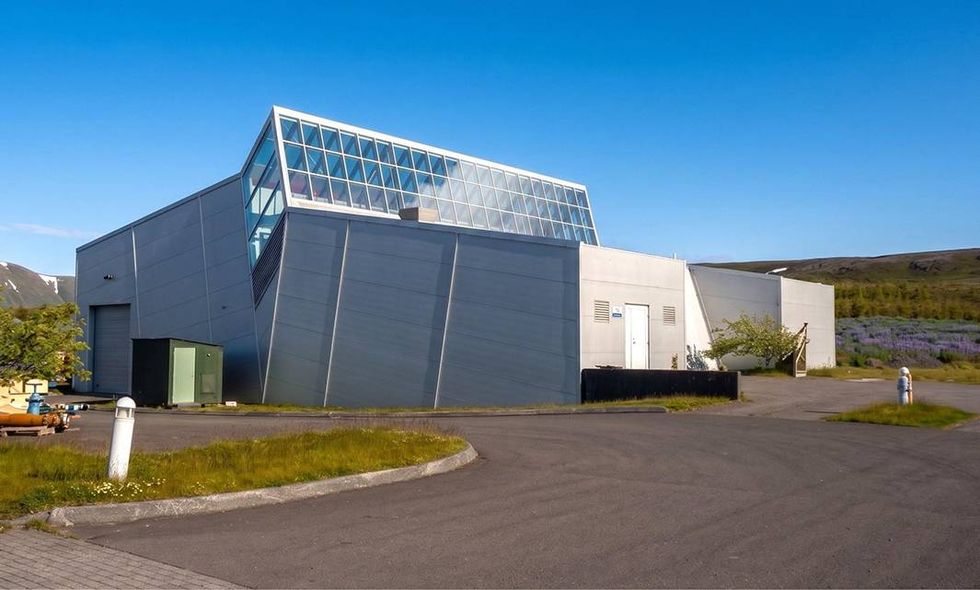
Unlike many alternative energy solutions that require extensive changes to existing infrastructure, synthetic fuels can be transported, stored and utilized through today’s fuel supply chains. The resulting fuels are molecularly pure, free from many contaminants associated with conventional fuels and compatible with existing engines, turbines, storage systems and transportation infrastructure. Produced using renewable electricity, hydrogen and captured carbon, the fuels can deliver over 90 percent lower lifecycle emissions while maintaining the energy density and performance characteristics required across multiple industries.
At the core of the company’s platform is its Hybrid Thermal Production System, which combines high-temperature solid oxide electrolysis with industrially proven fuel synthesis reactors. By incorporating low-cost thermal energy into critical production stages, Syntholene seeks to reduce electricity consumption, the largest cost component for most eFuel producers. This approach underpins the company’s targeted 70 percent cost advantage relative to competing technologies and supports its objective of producing cost-competitive synthetic fuels at commercial scale.
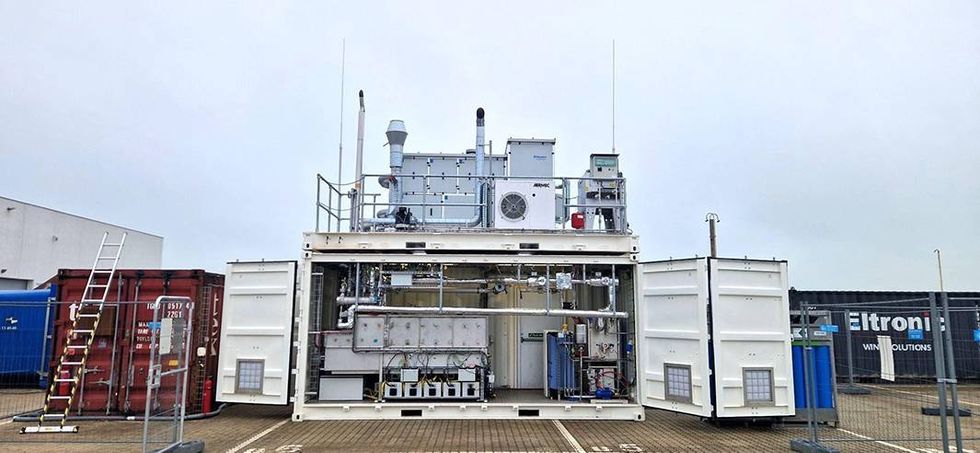
The technology builds upon advancements in high-temperature electrolysis, including work undertaken at Idaho National Laboratory. Following successful prototype-scale validation in 2022, Syntholene is progressing toward field-scale demonstration in Iceland. The company believes a successful demonstration will support future commercial deployment across a range of synthetic fuel applications.
Market demand for low-emission liquid fuels continues to expand across multiple sectors. Sustainable aviation fuel represents Syntholene’s initial commercial focus, supported by increasing airline decarbonization commitments, regulatory mandates, and fuel-blending requirements. Beyond aviation, the broader global eFuel market is projected to grow from US$8.89 billion in 2024 to more than US$215 billion by 2032, creating opportunities across transportation, shipping, industrial energy, and other sectors that depend on liquid hydrocarbon fuels.
Syntholene’s leadership team combines expertise across climate technology, synthetic fuels, industrial engineering, energy infrastructure, project development and resource industries. Recent additions to the advisory board, including former Shell and Suncor executive Marc Mageau and energy industry veteran HY Lee, further strengthen the company’s capabilities as it advances toward commercialization.
Company Highlights
- Addressing a multi-layered growth opportunity: The company is initially targeting sustainable aviation fuel while developing a technology platform capable of serving a substantially larger global liquid fuels market spanning transportation, industrial energy and other hard-to-electrify sectors.
- Proprietary hybrid thermal production system: Syntholene’s technology integrates high-temperature solid oxide electrolysis with industrially proven fuel synthesis reactors, utilizing both electricity and thermal energy to improve efficiency and reduce production costs.
- Targeting a 70 percent cost advantage: By introducing low-cost thermal energy into critical stages of production, the company aims to produce synthetic fuels at 70 percent lower cost than competing eFuel technologies.
- Pathway to cost-competitive synthetic fuels: The company believes its technology provides a credible pathway toward producing synthetic fuels that can compete economically with conventional petroleum-derived fuels at scale.
- High-performance fuel characteristics: Synthetic fuels are molecularly pure and free from many contaminants associated with conventional fuels, including sulfur, nitrogen and heavy metals, while remaining compatible with existing infrastructure.
- Over 90 percent lower lifecycle emissions: Synthetic fuels produced from renewable electricity, hydrogen and captured carbon can deliver over 90 percent lower lifecycle emissions than conventional alternatives.
- Prototype validation completed: The company’s production process was successfully demonstrated at prototype scale in 2022 and is now operating a world-first geothermally-integrated demonstration facility in Husavik, Iceland.
- Demonstration facility advancing ahead of schedule: The Húsavík, Iceland facility is now operating, with efficiency and technoeconomic results expected in Q4 2026.
- Strategic geothermal platform: The Iceland project benefits from low-cost geothermal electricity, thermal energy, industrial infrastructure, deep-water port access and an existing 200 MW+ regional grid expansion permitting framework.
- Scalable commercial development strategy: Following demonstration, the company intends to advance a 20,000-tonne-per-year commercial facility design and subsequently scale production through facilities ranging from tens to hundreds of megawatts.
Flagship Project
Húsavík Demonstration Facility, Iceland
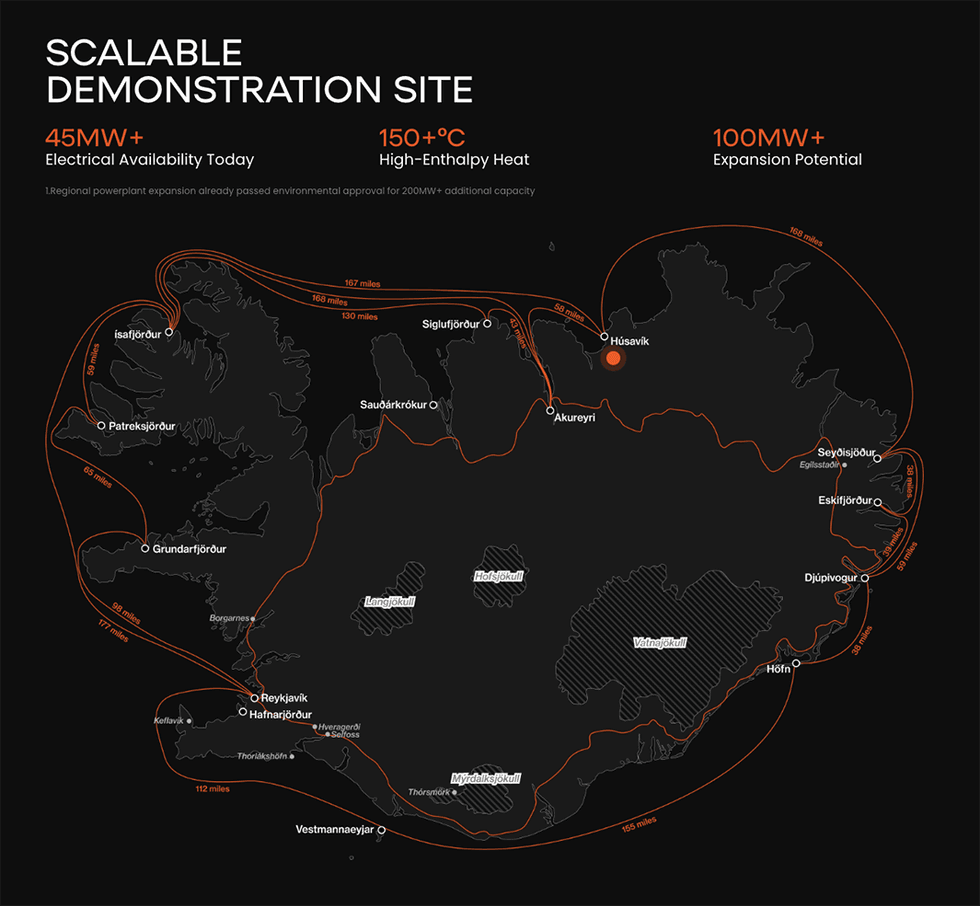
Syntholene’s flagship project is its geothermal-integrated demonstration facility located in Húsavík, northern Iceland. The facility is designed to validate the integration of geothermal heat, high-temperature solid oxide electrolysis and synthetic fuel production technologies under real-world operating conditions. Construction has advanced six months ahead of schedule, with first operations initiated on June 22nd 20266 and efficiency and technoeconomic results expected in Q4 2026.
The project leverages northern Iceland’s abundant geothermal resources, providing access to both low-cost electricity and high-temperature steam. Unlike intermittent renewable energy sources, geothermal energy offers reliable baseload power and thermal energy that can be utilized continuously throughout the fuel production process. The location also benefits from established industrial infrastructure, a skilled workforce, proximity to a deep-water port and a favorable regulatory environment.
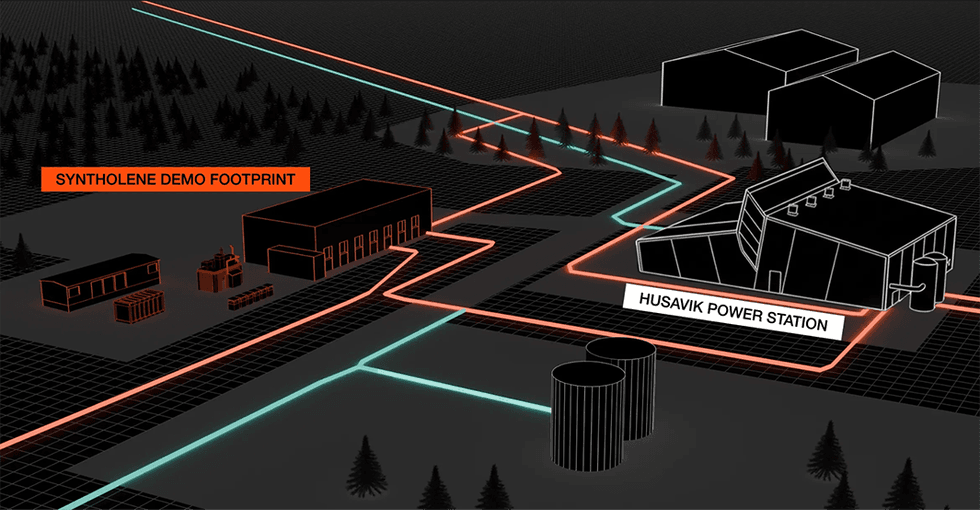
A key objective of the demonstration facility is to validate the company’s thermal integration strategy and confirm that efficiencies achieved during laboratory and prototype testing can be replicated under commercial operating conditions. The facility incorporates Syntholene’s proprietary Thermal Coupling technology, which converts geothermal steam into high-purity industrial steam suitable for use throughout the fuel production process. Management believes this technology is central to achieving the targeted 70 percent cost advantage relative to competing synthetic fuel pathways.
The project also benefits from significant expansion potential. Iceland has completed environmental permitting associated with a 200 MW regional grid expansion, supporting future industrial development in the region. Following a successful demonstration, Syntholene intends to advance a 20,000-tonne-per-year commercial facility design and subsequently scale production through facilities ranging from tens to hundreds of megawatts. Management believes the Húsavík location alone has the potential to support development capable of generating approximately US$500 million in annual revenue.
Management Team
Dan Sutton – Chief Executive Officer
Dan Sutton has spent the last 15 years founding and leading sustainable infrastructure businesses. As founder and CEO of Tantalus Labs, he designed, built and operated SUNLAB, scaled the company to 150 employees and grew annual revenue to approximately US$20 million. His expertise spans infrastructure deployment, project development, government relations, public markets and executive leadership.
Steve Oldham – Director
Steve Oldham is a globally recognized leader in carbon management and climate technology commercialization. As former CEO of Carbon Engineering, he helped establish direct air capture as a commercial industry and led the company through its acquisition by Occidental Petroleum at a US$1.6 billion valuation. He currently serves as CEO of Captura.
Canon Bryan – Director
Canon Bryan is a founder and company builder with more than 25 years of experience across advanced energy and resource development. He co-founded Terrestrial Energy, Uranium Energy and NioCorp and brings expertise in finance, corporate development, economic modelling and strategic planning.
John Kutsch – Chief Engineer
John Kutsch leads the integration and optimization of Syntholene’s fuel production platform. He brings more than 30 years of experience across industrial systems design, chemical processing, advanced energy technologies and reactor development, including work supporting high-temperature synthetic fuel systems.
Jack Williams – Head Engineer
Jack Williams specializes in high-temperature and high-pressure reactor systems and synthetic fuel technologies. His research at the University of Cambridge focused on electrolysis systems, catalytic reactor design, CO₂ capture and synthetic fuel production processes.
Grant Tanaka – Chief Financial Officer
Grant Tanaka has more than 15 years of senior financial leadership experience across the global natural resources sector. His background includes senior finance roles at Teck Resources, New Gold and Copper Mountain Mining, combining financial discipline with operational performance management. He was also appointed Corporate Secretary in May 2026.
Anna Pagliaro – Director
Anna Pagliaro is a senior commercial and risk management executive with extensive experience across the energy and mining sectors. Her career includes leadership positions at Vizsla Silver, Ausenco, NexGen Energy and Integra Gold, where she focused on governance, commercial strategy, negotiations and risk management.
Marc Mageau – Advisory Board Member
Marc Mageau joined the Advisory Board in June 2026. He brings more than three decades of operational leadership experience from Shell and Suncor, including expertise in refining, oil sands operations, logistics, infrastructure development and industrial asset management.
HY Lee – Advisory Board Member
HY Lee joined the Advisory Board in May 2026, adding further industrial, operational and strategic expertise as Syntholene advances toward commercial deployment of its synthetic fuel platform.
Browse Companies
MARKETS
COMMODITIES
CURRENCIES
Originally from Calgary, Georgia has been right at home in Toronto for more than two decades. Graduating from the University of Toronto with an honors BA in journalism, she is passionate about writing on diverse topics, including resources, arts, politics and social issues.
At INN Georgia covers a wide range of topics, including energy, battery and critical metals and diamonds. In her spare time, Georgia enjoys watching documentaries and experiencing Toronto's vibrant food, arts and cultural scene.
Learn about our editorial policies.