

The Conversation (0)
Oct. 28, 2026 01:55PM PST
As Ethereum's Glamsterdam upgrade faces delays, its potential to reshape the network's capabilities stirs intrigue.
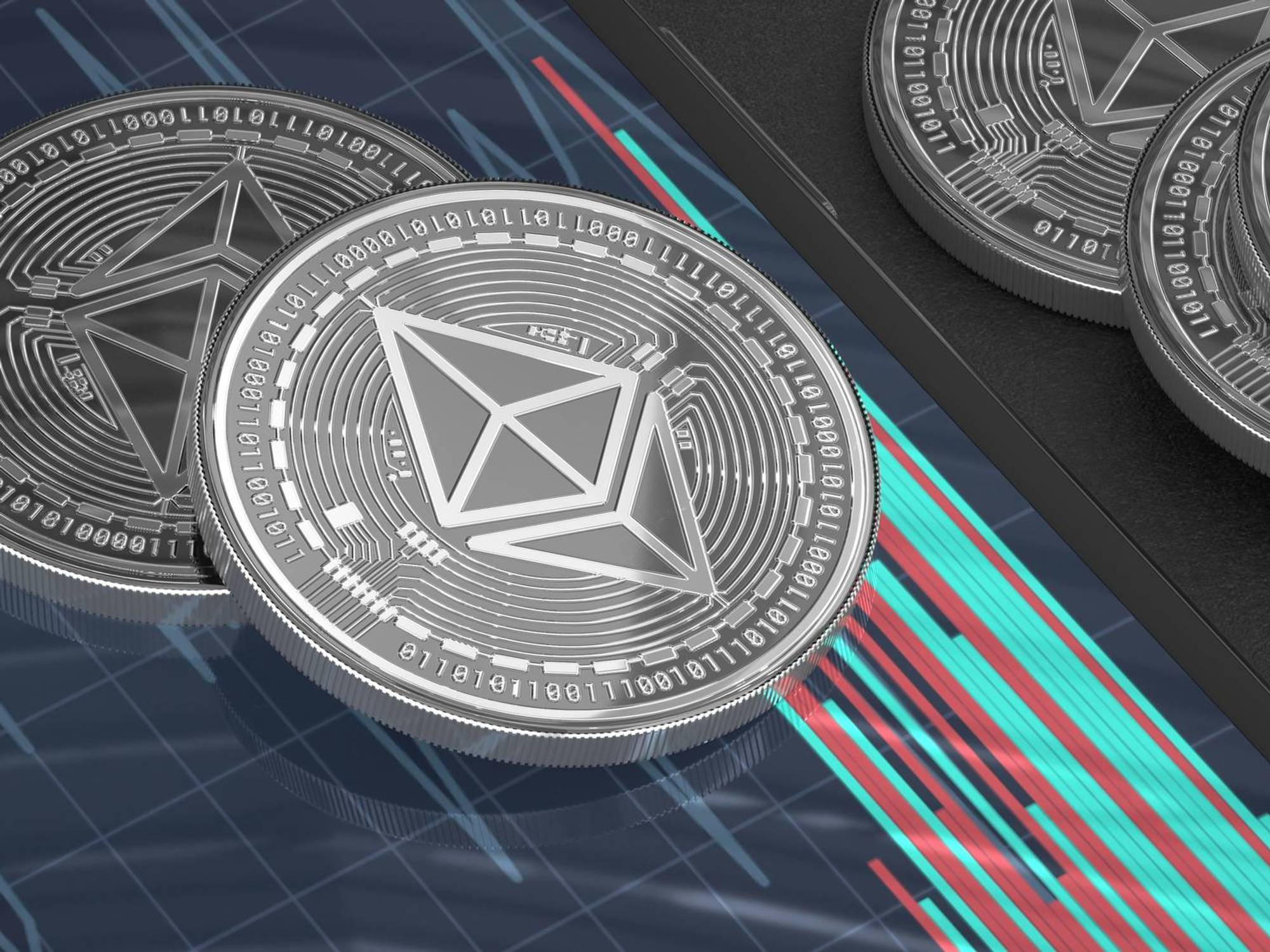
DrawKit Illustrations / Unsplash
Ethereum’s next major upgrade is taking longer than planned. Glamsterdam, named for the two parts of Ethereum’s software it updates, began testing on October 6 on Sepolia, one of the network’s main test networks, as scheduled by the Ethereum Foundation.
A second round of testing, set for October 26, was postponed on October 22 while developers study how one of the upgrade’s fee changes could affect apps already running on Ethereum.
Whereas recent upgrades mostly helped separate networks built on top of Ethereum, such as Arbitrum, Optimism and Base, Glamsterdam is designed to support the main Ethereum network, helping it handle more activity on its own without making it harder for ordinary participants to check the network’s records.
Its effectiveness could shape Ethereum’s utility in the years ahead. For investors holding ETH, that usefulness is one of the key long-term questions.
Read on for a look at what the upgrade is, how Ethereum got here and what developers say comes next.
What Is the Glamsterdam Upgrade?
Ethereum changes through planned upgrades, agreed on by the developers who build the software that runs the network. Each one is tested on practice networks before it reaches the real one.
The biggest change came in September 2022 with the Merge. Ethereum stopped relying on energy-heavy computer mining to secure the network and switched to staking, where participants lock up ETH instead.
In April 2023, the Shapella upgrade let people withdraw that staked ETH.
Since then, the focus has shifted to handling more activity. Dencun, in March 2024, made it much cheaper for layer 2 networks, separate networks that bundle up transactions and settle them on Ethereum, to post their data to Ethereum.
Pectra followed in May 2025, adding features for both stakers and everyday wallets. Fusaka arrived in December 2025, and Glamsterdam builds on it.
Ethereum.org, the network’s official information site, says Glamsterdam changes how the main network does its work so it can safely do more of it. There are three main parts:
- Processing transactions side by side. The computers that run Ethereum currently process a block’s transactions one at a time. Glamsterdam adds a list to each block showing in advance which accounts and stored data each transaction will read or change, so transactions that don’t overlap can be processed at the same time.
- Splitting up the job of building blocks. Specialized outside firms already assemble most blocks, then hand them to the validators who add them to the chain. That handoff currently runs through third-party go-betweens, but Glamsterdam removes the need by building the handoff into Ethereum’s own rules. It also gives the network more time to pass each block around.
- Changing what some actions cost. Fees on Ethereum are paid in “gas,” a measure of how much computing work an action takes. Glamsterdam raises the cost of actions that permanently add new data to the network, such as creating new accounts or deploying new apps. The goal is to make fees reflect the long-term cost of storing that data. This is the part of the upgrade now under review; more on that below. Ethereum.org also lists a lower base fee for simple Ether transfers.
Glamsterdam does not, by itself, raise the cap on how much activity fits in each block. That cap is set by the validators who run the network. On Sepolia, validators can choose to raise it to roughly three times the main network's current level,² but no decision has been made for the main network.
What it could mean for apps and for ETH’s long-term value
For investors, the upgrade matters less for what it does to ETH’s spot price and more for what it could do to the network’s usefulness over time.
Curve Finance, one of the longest-running decentralized finance (DeFi) apps on Ethereum, offered a view, before the delay, of what that could look like for apps built on the network. Curve lets people swap between stablecoins and borrow against their crypto, and it issues its own stablecoin, crvUSD.
“For DeFi on the whole, the main gain from this upgrade is more predictable access to blockspace when activity picks up,” the Curve team said. Blockspace is the room available in each block for transactions. On Curve, the team said, that “could mean tighter prices and better routes through our pools, while borrowers should find it easier to open or unwind positions.”
The team said the real test will come during market turmoil, when falling prices force many loans to be closed out at once. “A higher gas limit on paper means little if transactions still stall during volatility when people need them,” it said.
That matters for ETH holders because of where activity happens. On Ethereum’s main network, part of every fee is permanently destroyed, or “burned,” which reduces the supply of ETH. On the separate networks built on top of Ethereum, transactions are bundled together and posted to the main network as a group, so the main-network fee is shared across many users. If Glamsterdam makes apps like Curve work better on the main network, that activity has more reason to stay there.
In March, Coinbase Institutional researchers David Duong and Colin Basco argued that activity and stablecoin balances had “tilted back toward Ethereum” from those separate networks, and that Glamsterdam “could make that shift durable.”
The money people keep on the network is consistent with that. As of October 28, far more stablecoin money sat on Ethereum’s main network than on Base, Arbitrum and OP Mainnet combined, according to public data tracker DefiLlama.
The Coinbase researchers also noted limits, writing that “the market is increasingly separating ecosystem activity from tokenholder accrual.” In other words, a busier network does not automatically lift ETH’s price. And if the upgrade leads to cheaper transactions, less ETH could be burned each time, unless total activity grows enough to make up for it.
Where testing stands and what comes next
Glamsterdam’s path to the main network has since stalled. It was set to go live on Hoodi, Ethereum’s second main test network, on October 26, but developers postponed it on October 22 to allow more time to study how raising the fee to permanently add new data to the network interacts with apps already running on Ethereum.
The concern came from ChainSecurity, a firm that audits blockchain code. It found that the new costs could change how some older apps behave without any change to their code. In some cases, someone could deliberately send too little gas, causing a legitimate action to be recorded as a permanent failure instead of being undone so it can be tried again.
This is the second time the schedule has slipped: tentative plans discussed by developers in July had Sepolia upgrading in late August, not October. The Ethereum Foundation has not set a mainnet date, and Nixo, an Ethereum developer, said publicly that the delay “more than likely” pushes the launch into 2027.
Rival networks are upgrading too. On October 9, Solana finished cutting the time between its blocks in half, to 200 milliseconds, so it now produces twice as many blocks a day. That change is about speed, while Glamsterdam is about how much activity Ethereum’s main network can handle.
For investors, the upgrades to watch are less about any single launch date and more about whether the network keeps working smoothly when demand spikes.
Don't forget to follow us @INN_Technology for real-time news updates!
Securities Disclosure: I, Meagen Seatter, hold no direct investment interest in any company mentioned in this article.
https://x.com/INN_Technology
https://www.linkedin.com/in/meagen-seatter-23675b193/
mseatter@investingnews.com
Meagen moved to Vancouver in 2019 after splitting her time between Australia and Southeast Asia for three years. She worked simultaneously as a freelancer and childcare provider before landing her role as an Investment Market Content Specialist at the Investing News Network.
Meagen has studied marketing, developmental and cognitive psychology and anthropology, and honed her craft of writing at Langara College. She is currently pursuing a degree in psychology and linguistics. Meagen loves writing about the life science, cannabis, tech and psychedelics markets. In her free time, she enjoys gardening, cooking, traveling, doing anything outdoors and reading.
Meagen has studied marketing, developmental and cognitive psychology and anthropology, and honed her craft of writing at Langara College. She is currently pursuing a degree in psychology and linguistics. Meagen loves writing about the life science, cannabis, tech and psychedelics markets. In her free time, she enjoys gardening, cooking, traveling, doing anything outdoors and reading.
INN Article Notification
Latest News
Outlook Reports world
Featured Blockchain Investing Stocks
Browse Companies
MARKETS
COMMODITIES
CURRENCIES
Meagen moved to Vancouver in 2019 after splitting her time between Australia and Southeast Asia for three years. She worked simultaneously as a freelancer and childcare provider before landing her role as an Investment Market Content Specialist at the Investing News Network.
Meagen has studied marketing, developmental and cognitive psychology and anthropology, and honed her craft of writing at Langara College. She is currently pursuing a degree in psychology and linguistics. Meagen loves writing about the life science, cannabis, tech and psychedelics markets. In her free time, she enjoys gardening, cooking, traveling, doing anything outdoors and reading.
Learn about our editorial policies.