The Conversation (0)

Johan Swanepoel / Shutterstock
The buildout of AI infrastructure is running on a timeline the copper industry cannot match, sharpening concerns over whether supply can keep up with demand.
Data compiled by MiningVisuals shows that a new AI data center typically reaches operation in 18 to 23 months, while a copper mine takes about 18 years to move from discovery to production.
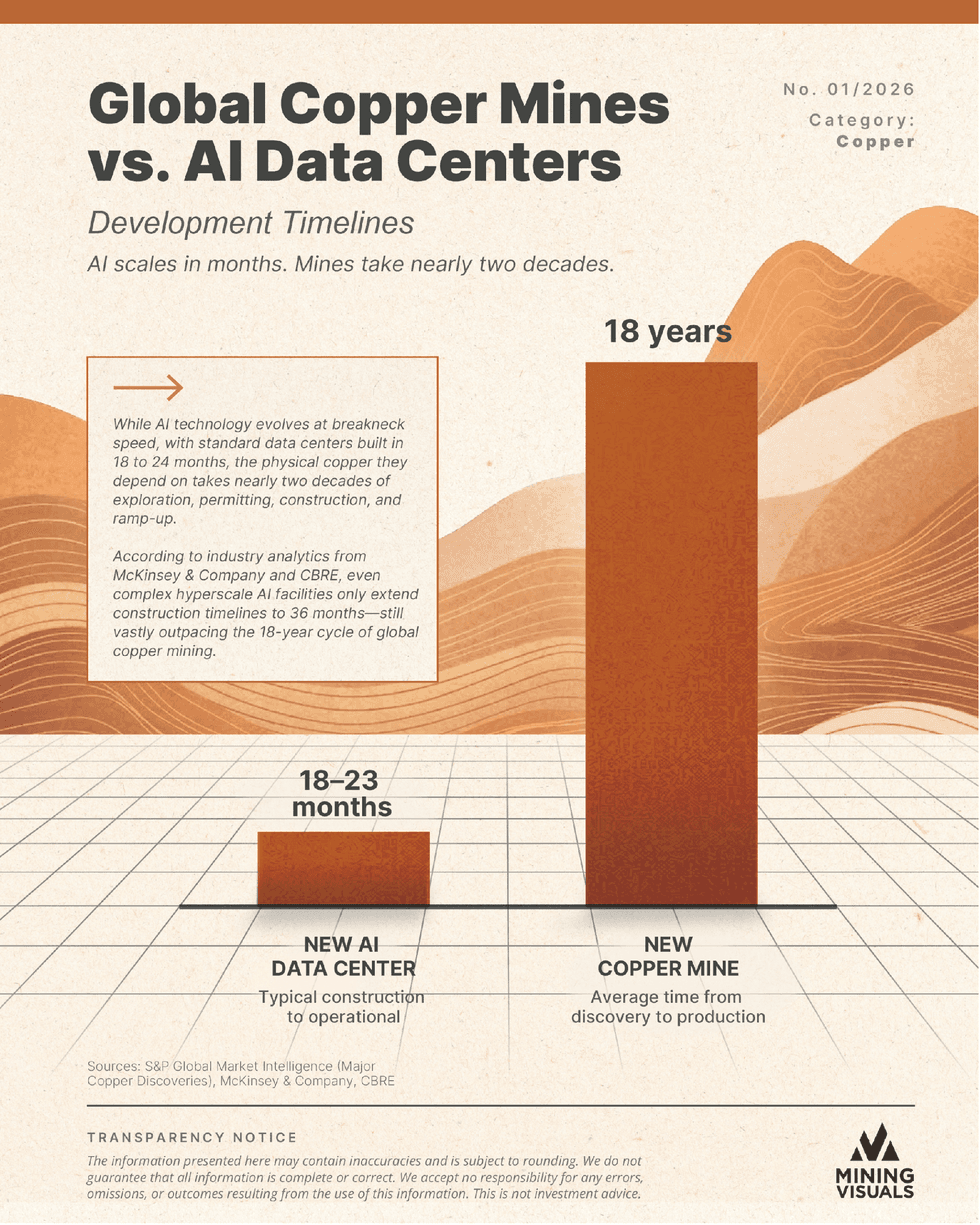
Bar chart compares 18-23 months for AI data centers over 18 years for copper mines; text describes timeline differences.
Graphic by MiningVisuals
The issue is not only speed, but intensity. AI facilities require significantly more copper than earlier generations of data centers, reflecting higher power loads and the adoption of liquid cooling systems.
To illustrate further, a single hyperscale site can consume up to 50,000 tons of copper, compared with 5,000 to 15,000 tons for conventional facilities.
That demand is landing on a market that is already under pressure from electrification. Copper consumption is rising across renewable energy, electric vehicles and grid expansion, tightening supply conditions even before the full impact of AI-related demand is felt.
According to a recent study by S&P Global, total copper demand is projected to reach 42 million tons by 2040, while supply is expected to reach only around 32 million tons. The resulting deficit of 10 million tons has been described as a “systemic risk for global industries, technological advancement and economic growth.”
“Here, in short, is the quandary: copper is the great enabler of electrification, but the accelerating pace of electrification is an increasing challenge for copper,” commented S&P Global Vice Chairman Daniel Yergin.
Even with an expected increase in recycled supply, the gap will require new primary production. Yet timelines for mine development remain long, with permitting and approvals often taking more than a decade, delaying the response of supply to rising demand.
The result is a growing focus on copper availability as a limiting factor in the expansion of AI infrastructure. As demand continues to build across multiple sectors, supply constraints are likely to remain a defining feature of the market.
Don’t forget to follow us @INN_Resource for real-time news updates!
Securities Disclosure: I, Giann Liguid, hold no direct investment interest in any company mentioned in this article.
https://x.com/giannliguid
https://www.linkedin.com/in/giannliguid/