The Conversation (0)
In 2010, global central banks became net buyers of gold, and their gold purchases have ramped up significantly in recent years. Find out what's driving this central bank gold demand and whether high gold prices could impact this trend.
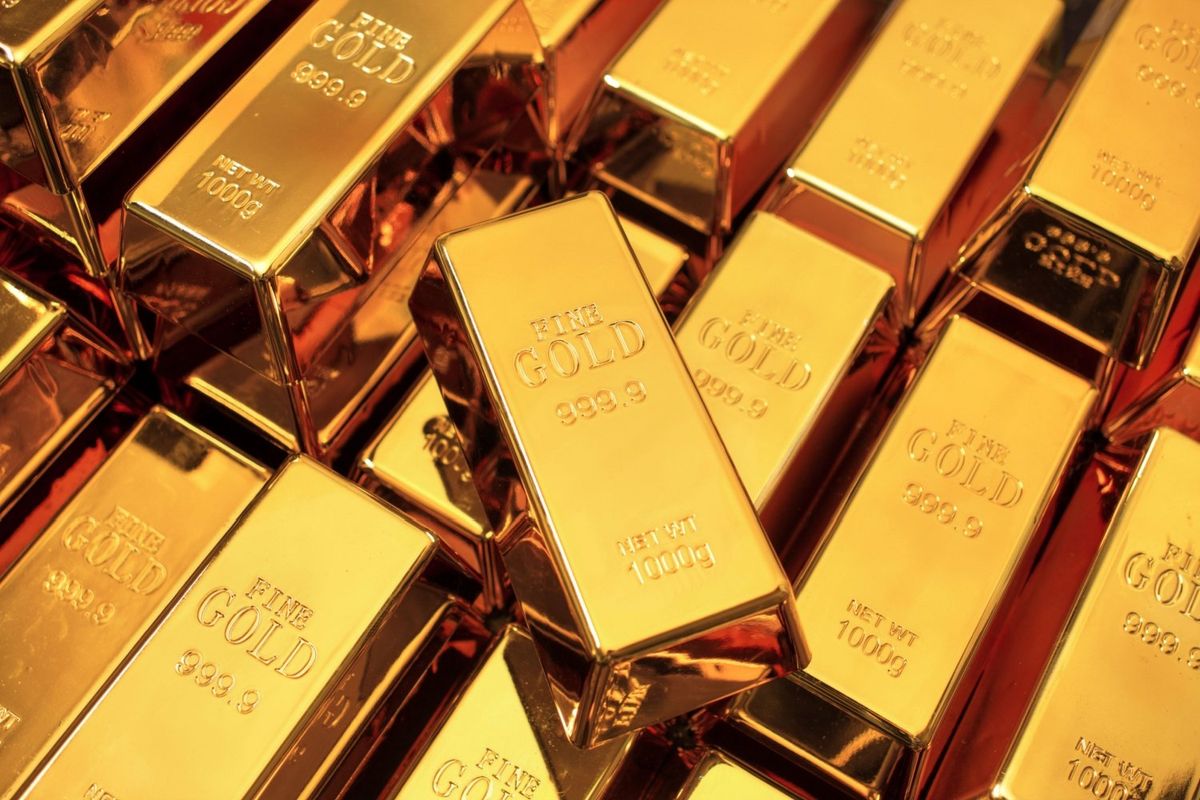
Pics-xl / Shutterstock
Central banks are a key component of gold demand, and in recent years their gold purchases have become a major driver of the gold price's gains.
Global central banks held more than 36,535.4 metric tons (MT) of gold in their reserves as of year-end 2025. Most of that supply has been amassed since 2010, when central bankers commenced a gold-buying spree.
Central banks were net sellers of gold before that time, selling roughly 4,426 MT of gold between 2000 and 2009. But for over a decade and a half now, these banks have been net buyers of the metal.
Keep reading to find out why central banks buy and sell gold, how do they decide when to do so and just how much gold the institutions are buying.
In this article
How much gold are central banks purchasing?
Central bank gold purchases have been significantly elevated in recent years. In 2022, central banks set a 70 year record for gold purchases, snapping up 1,136 metric tons of gold. Buying was slightly lower in 2023 and 2024, clocking in at approximately 1,037 MT and 1,045 MT respectively.
2025 marked the first time in four years that buying fell below 1,000 MT, with central banks adding 863.3 MT of gold during the year. The drop off was attributed to a rapidly rising gold price, which repeatedly broke all-time highs and climbed above US$4,000 per ounce in Q4.
According to a World Gold Council survey of central banks conducted in H1 2025, a record 43 percent of all respondents expected their bank to increase gold reserves over the next 12 months, while 57 percent expected they would hold at current levels. Nearly half of respondents from emerging and developing economies expected to purchase gold.
As for 2026, central banks added just 5 MT of net gold to their coffers in January, well below the 27 MT average through 2025, as the gold price climbed to a peak of US$5,589.38 per ounce by the end of the month. Despite this, new buyers have emerged such as Bank Negara Malaysia, which added 3 MT of gold in its first purchase since 2018.
Why do central banks purchase gold?
Central banks serve a few primary functions, including setting interest rates, regulating monetary policy and controlling the printing and circulation of coins and bills.
However, their most important task is to provide price stability to their national currency while preventing banking system collapse. This is achieved through controlling inflation — although as the present global economic uncertainty has shown, sometimes the fate of a country’s currency may be difficult for a national bank to control.
This risk is part of the reason central bank gold buying has increased since 2010.
As the Dutch central bank notes, “A bar of gold always keeps its value. Crisis or not. That gives a safe feeling. The gold holdings of a central bank are therefore a beacon of confidence.”
Here are three primary uses of gold as the reserve commodity of choice for national banks.
1. To mitigate risk
Gold is a well-known safe-haven investment prone to acting positively in times of uncertainty and market volatility. It is viewed as an asset that holds no liability, adding to its ability to mitigate risk.
American banker and financier JP Morgan is famously quoted as saying, “Gold is money. Everything else is credit,” highlighting another intrinsic benefit of gold, which is its sustained purchasing power.
Central banks look to purchase gold as a hedge against a weakening dollar or any other fiat currency.
Gold’s role as a portfolio or investment diversifier also aids in its ability to mitigate risk.
Central banks have therefore traditionally held large reserves of gold to safeguard their financial systems. In the case of a system collapsing, gold supply provides the means to recover. In this way, gold instills confidence in the strength of the central bank and the financial security of the nation.
2. To hedge against inflation
Hedging against the effects of inflation is another reason why central banks buy gold. In its simplest terms, inflation is the rise in price of a basket of goods.
In order for inflation to not dramatically impact a country’s economy, the nation requires investments that are not tied to the dollar — enter gold and the other precious metals.
Many view gold as a barometer of the value of foreign exchange instruments. Gold’s rising value is viewed as evidence that currencies are becoming devalued.
3. To facilitate stability and growth
The primary function of central banks is to promote stability and foster economic growth. As currencies become increasingly devalued, banks must ensure their respective economies don’t flounder. As such, gold is used to control the size and speed of market growth.
Emerging and developing economies such as China and Russia are especially exposed to free market excesses and the US dollar, and central banks use gold to offset the risk.
"The strong pace of gold accumulation by central bankers since 2022 has been intertwined with how nations position themselves in a shifting world order," the World Gold Council explained.
Many central banks have shown a willingness over the past few years to build on their gold reserves as high interest rates, tariff threats and ongoing wars have caused chaos throughout the world's financial systems.
Are central banks being priced out of the gold market?
Gold's price has increased dramatically since central banks became net buyers of gold in 2010. The price of an ounce of gold started that year around US$1,100, and by July 2020 it had topped US$2,000.
This pace has significantly escalated since 2024, and on January 28, 2026, gold passed US$5,500 to set a new all-time high of US$5,589.38 per ounce.
Higher gold prices haven't stopped the central banks of China, Russia, India or Turkey from growing their gold holdings. In fact, despite the record gains in the gold price in the last few years, these nations' central banks have been some of the world's biggest buyers of the precious metal.
Additionally, in its January 2026 report, the WGC noted that demand for gold has moved beyond these markets.
"The broadening of demand from central bankers might be an emerging key theme in 2026. As we have seen in January, both Malaysian and Korean central banks have resumed interest in increasing gold exposure after prolonged absences," it said.
Other central banks making significant increases to the gold holdings last year include Kazakhstan, picking 57 MT and Brazil which added 43 MT between September and November.
In addition, the National Bank of Poland emerged as 2025's top gold buyer, picking up 102 MT to bring its reserves to 550 MT. Bank Governor Adam Glapiński indicated the central bank wasn't done and expressed his desire to increase reserves to 700 MT for national security reasons.
Looking ahead, the WGC has no doubts that central banks will continue to be net purchasers in 2026, "as persistent economic and geopolitical uncertainty is likely to sustain demand for gold as a reserve asset."
The WCG noted that "geopolitical tensions, which have shown little sign of abating, are likely to keep accumulation going through 2026 and beyond."
Which central banks hold the most gold?
The US Federal Reserve tops the list of central banks by gold reserves by a wide margin with 8,133.46 metric tons of gold. Germany holds the world's second highest reserves, with 3,350.3 MT of the yellow metal.
The central banks of Italy, France and Russia take the third, fourth and fifth spots, holding 2,451.9 MT, 2,437 MT and 2,326.5 MT of gold, respectively.
China and Switzerland are in the sixth and seventh positions with 2,306.3 MT and 1,039.9 MT. Rounding out the top 10 gold reserves are the central banks in India (880.2 MT), Japan (846 MT), and Turkey (613.7 MT).
While it's not a country, the International Monetary Fund holds 2,814 MT in gold reserves, putting it just behind Germany.
Where do central banks store gold?
Most banks store gold in their subterranean vaults, although some keep their physical gold in foreign reserves.
For example, of its 612.45 MT, the Dutch central bank has 200 MT, or 31 percent, of its gold stock on hand. The remainder is split between foreign banks: 31 percent is held in New York’s Federal Reserve bank, and 38 percent is kept in a combination of the Bank of Canada and Bank of England vaults in Ottawa and London, respectively.
What are the Central Bank Gold Agreements?
The Central Bank Gold Agreements were drafted to prevent a single bank from impacting the price of gold with a selloff. The agreement, which was signed in 1999 between major European central banks, caps the amount of gold any one bank can sell in a year.
The first Central Bank Gold Agreement lasted five years and was reaffirmed three times in 2004, 2009 and 2014. However, in 2019, the world’s central banks decided not to renew the agreement as they believed it was no longer necessary due to a maturing market and banks having no plans to sell significant portions of gold.
Today, central banks own more than 16.5 percent of the estimated 219,891 MT of gold ever mined, with combined stores exceeding 36,535 MT as of year-end 2025.
This is an updated version of an article first published by the Investing News Network in 2020.
Don’t forget to follow us @INN_Resource for real-time updates!
Securities Disclosure: I, Melissa Pistilli, hold no direct investment interest in any company mentioned in this article.
Securities Disclosure: I, Dean Belder, hold no direct investment interest in any company mentioned in this article.
From Your Site Articles
- Word Gold Council: Investment Key Driver of Gold Demand in Q3 2025 ›
- The Gold Standard: Facts and History ›
- A Guide to Physical Gold as an Investment ›
- Trump and the Gold Standard ›
Related Articles Around the Web
https://twitter.com/INN_Resource
https://www.linkedin.com/in/deanbelder
dbelder@investingnews.com

Dean has been writing in one form or another since penning stage plays in his youth. He is a graduate of both Emily Carr University and Simon Fraser University, with a BFA in photography and a BA in communications.
As a writer, Dean has traveled throughout BC and the Pacific Northwest covering cultural events, interviewing small business owners and working alongside fellow writers and photographers from publications like Rolling Stone Magazine, Spin and the Georgia Straight.
Dean has a keen interest in investing, and enjoys learning about the mining industry and better understanding the technical aspects of trading. In his spare time, Dean is an avid home chef, ponders the space-time continuum and makes his own cider. On weekends he can be found cycling the Seawall, exploring farmers markets or sampling the city’s local craft breweries.
As a writer, Dean has traveled throughout BC and the Pacific Northwest covering cultural events, interviewing small business owners and working alongside fellow writers and photographers from publications like Rolling Stone Magazine, Spin and the Georgia Straight.
Dean has a keen interest in investing, and enjoys learning about the mining industry and better understanding the technical aspects of trading. In his spare time, Dean is an avid home chef, ponders the space-time continuum and makes his own cider. On weekends he can be found cycling the Seawall, exploring farmers markets or sampling the city’s local craft breweries.
INN Article Notification
Outlook Reports world
Featured Gold Investing Stocks






Browse Companies
MARKETS
COMMODITIES
CURRENCIES
Dean has been writing in one form or another since penning stage plays in his youth. He is a graduate of both Emily Carr University and Simon Fraser University, with a BFA in photography and a BA in communications.
As a writer, Dean has traveled throughout BC and the Pacific Northwest covering cultural events, interviewing small business owners and working alongside fellow writers and photographers from publications like Rolling Stone Magazine, Spin and the Georgia Straight.
Dean has a keen interest in investing, and enjoys learning about the mining industry and better understanding the technical aspects of trading. In his spare time, Dean is an avid home chef, ponders the space-time continuum and makes his own cider. On weekends he can be found cycling the Seawall, exploring farmers markets or sampling the city’s local craft breweries.
Learn about our editorial policies.