
The Conversation (0)
The deal is propelled by both governments’ efforts to diversify away from its reliance on the US exports and accelerate long-term goals to meet net-zero emissions by 2050.
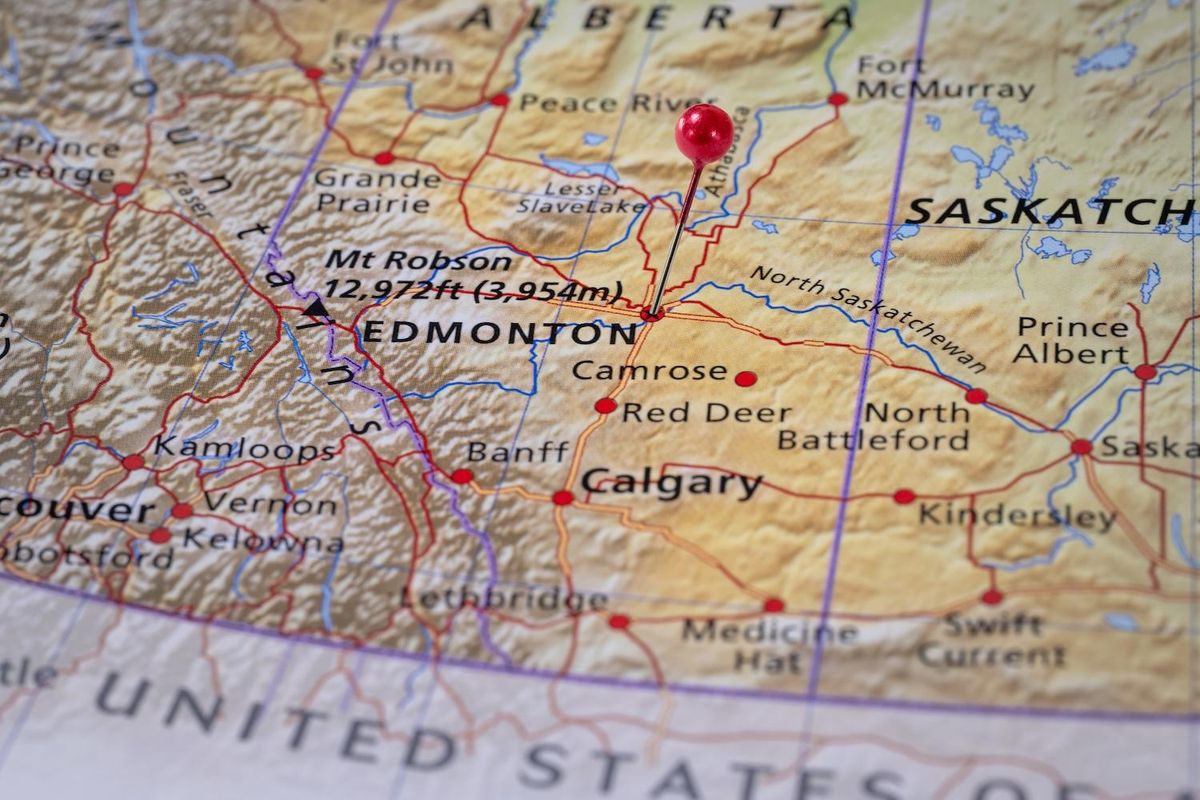
Craig Taylor Photo / Adobe Stock
Canada and Alberta have sealed a wide-ranging deal that links deep emissions cuts with a long-term push to grow oil and gas output through new export pipelines and fast-track clean energy infrastructure.
Prime Minister Mark Carney and Alberta Premier Danielle Smith signed the memorandum of understanding in Calgary on Thursday (November 27). The MOU outlines a package led by Pathways Plus — described as the world’s largest carbon capture, utilization and storage project.
Under the pact, Canada also commits to suspend its Clean Electricity Regulations in Alberta and to refrain from implementing the long-discussed federal emissions cap for oil and gas.
In turn, Alberta agreed to advance a privately financed pipeline capable of transporting at least one million barrels per day of low-emissions bitumen to Asian markets, with Indigenous co-ownership built into the project’s structure.
The MOU states the application for the pipeline must be ready by July 1, 2026. In turn, the federal government will treat it as a project of national interest under the Building Canada Act.
Carney framed the deal as a response to global instability and a pivot toward a more self-reliant economic foundation.
“In the face of global trade shifts and profound uncertainty, Canada and Alberta are striking a new partnership to build a stronger, more sustainable, and more independent Albertan and Canadian economy,” he said in a statement. “We will make Canada an energy superpower, drive down our emissions and diversify our export markets.”
Beyond oil, the arrangement includes extensive commitments to expand nuclear power, strengthen Alberta’s electricity grid, and support thousands of megawatts of new AI-oriented computing capacity, including sovereign cloud infrastructure for Canada and its allies.
Alberta will also pursue major transmission interties with British Columbia and Saskatchewan to move low-carbon electricity across provincial borders, a step both governments say is essential for decarbonizing energy-intensive industries.
The MOU also sets a course for a new industrial carbon pricing agreement, with Alberta’s TIER regime remaining the backbone of provincial regulation. Both governments agreed to a minimum effective credit price of US$130 per metric ton alongside a methane-reduction target of 75 percent by 2035.
“Canada is acting decisively to establish ourselves as a global energy superpower in the face of a changing world,” added Tim Hodgson, Canada’s Minister of Energy and Natural Resources.
“Together, Canada and Alberta will not only export critical energy to our customers, we will also support our allies, create hundreds of thousands of jobs here at home, and show that our energy sector can lead on a global stage.”
A joint implementation committee is slated to finalize these frameworks by April 1, 2026.
Don't forget to follow us @INN_Resource for real-time updates!
Securities Disclosure: I, Giann Liguid, hold no direct investment interest in any company mentioned in this article.
https://x.com/giannliguid
https://www.linkedin.com/in/giannliguid/
Giann Liguid is a graduate of Ateneo De Manila University with an AB in Interdisciplinary Studies. With a diverse writing background, Giann has written content for the security, food and business industries. He also has expertise in both the public and private sectors, having worked in the government specializing in local government units and administrative dynamics.
When he is not chasing the next market headline, Giann can most likely be found thrift shopping for his dogs.
When he is not chasing the next market headline, Giann can most likely be found thrift shopping for his dogs.
INN Article Notification
Latest News
Outlook Reports world
Featured Oil and Gas Investing Stocks




Browse Companies
MARKETS
COMMODITIES
CURRENCIES
Giann Liguid is a graduate of Ateneo De Manila University with an AB in Interdisciplinary Studies. With a diverse writing background, Giann has written content for the security, food and business industries. He also has expertise in both the public and private sectors, having worked in the government specializing in local government units and administrative dynamics.
When he is not chasing the next market headline, Giann can most likely be found thrift shopping for his dogs.
Learn about our editorial policies.