

The Conversation (0)
- WORLD EDITIONAustraliaNorth AmericaWorld
Oct. 22, 2026 06:59AM PST
Benchmark puts the cost at more than US$100 billion before any contribution from recycling, and says sustaining that investment through price cycles is the biggest challenge.
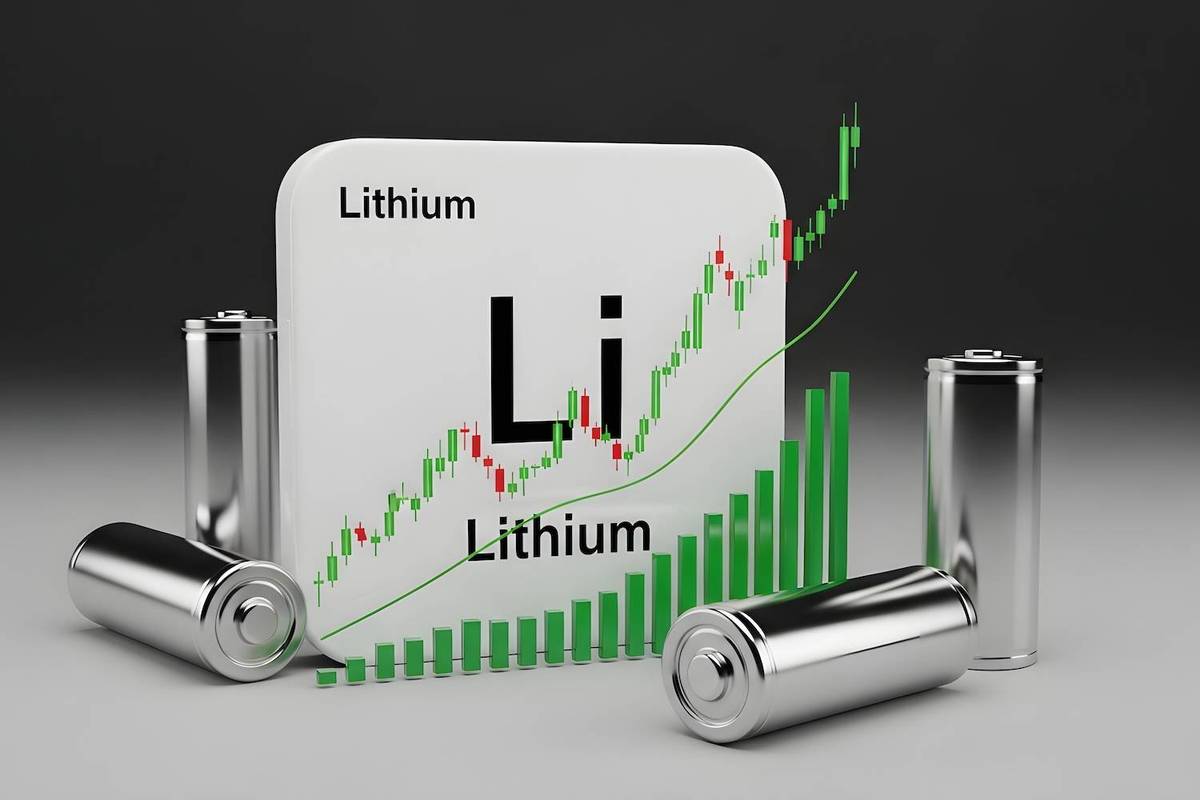
Stock / Adobe Stock
The lithium industry will need to bring the equivalent of a new mine into production roughly every two months for the next 24 years to keep up with demand, according to new data from Benchmark Mineral Intelligence.
Benchmark forecasts global lithium demand will reach about 7 million metric tons of lithium carbonate equivalent (LCE) in 2050, up from 2.11 million metric tons in 2026.
At an average mine size of 36,000 metric tons LCE, that 4.8 million metric ton increase equals the output of 134 new mines. Demand growth between 2040 and 2050 alone accounts for 44 of them.
"Meeting 2050 demand requires the equivalent of 134 new lithium mines, more than US$100 billion of investment before any contribution from recycling, rising to more than 180 mines in our upside scenario," said Cameron Perks, product director for lithium at Benchmark.
Perks identified the harder problem as keeping money committed once prices turn.
"The biggest challenge is sustaining that investment through price cycles, while competing for capital with AI, defence and the wider energy transition," he said.
Lithium prices have already swung sharply in 2026. After a strong first-half rally, battery-grade lithium carbonate ended the third quarter at US$19,025 per metric ton, down 20.8 percent quarter-on-quarter, according to Benchmark data. Spodumene concentrate fell 23.5 percent over the same period to US$1,780 per metric ton.
Benchmark expects lithium demand to more than triple between 2026 and 2050, with batteries behind most of that growth. Batteries account for 92 percent of lithium demand in 2026, up from around 70 percent in 2020.
Electric vehicles (EVs) make up 55 percent of lithium demand today. Benchmark forecasts that share will rise to 76 percent by 2050 as growth in stationary storage cools.
Perks said storage-related lithium demand has grown by more than 60 percent a year over the past two years, but he expects that rate to slow to around 5 percent a year through the end of the decade.
In addition, data centers are also introducing a newer stream of storage demand. In a webinar earlier this year, Benchmark forecast that lithium demand tied to energy storage at artificial intelligence (AI) data centers will rise from roughly 15,000 metric tons in 2025 to nearly 70,000 metric tons by 2035.
Regardless, the firm's analysts said data centers will remain a small share of battery metals demand compared with EVs.
Australia's share to shrink as North America grows
Benchmark highlighted that Australia will be the largest source of mined lithium in 2026 with 29 percent of supply.
The firm expects that share to fall to 20 percent by 2050, even after factoring in large brownfield expansions such as PLS' (ASX:PLS,OTCPL:PILBF) P2000, which it assumes will start around 2030.
"Many of Australia's mines will be depleting by 2050. Price volatility has made financiers hesitant, and the regulatory burden is growing," Perks said. "It's not too late, but if Australia doesn't back growth, other regions will take that share."
China's share of mined supply holds at around 25 percent in Benchmark's forecast, supported by continued investment in domestic resources and an emphasis on battery supply chain dominance.
Its grip is tighter further down the chain: Benchmark estimated earlier this year that China controls roughly 70 percent of refined lithium production.
Meanwhile, North America's share of mined supply is set to rise from 1.7 percent in 2026 to 13 percent by 2050 as the region works to meet its own needs and cut its reliance on China.
The region accounts for 6 percent of lithium demand from cell production today, a figure Benchmark expects to reach 12 percent by 2050.
Europe supplies less than 1 percent of mined lithium but accounts for 7 percent of demand from cell production. By 2050, Benchmark projects the region will produce 5.5 percent of mined supply against 8 percent of demand.
"Europe and North America face their own unique challenges," Perks said. "Many of the largest and most promising projects require novel technology or face environmental and community concerns. These aren't insurmountable, but they create significant delays, and they mean mines built in these regions simply cost more."
Recycling carries much of the base case
The 134-mine figure rests on Benchmark's base case. In its upside scenario, demand climbs to almost 9 million metric tons LCE by 2050, driven largely by EV and energy storage policies around the world.
"In our upside case, the equivalent number of mines rises to around 180, which would require well over US$150 billion," Perks said. "And even the base-case investment could prove conservative, depending on where the mines are built."
Recycling is the biggest factor that could lower the number of new mines required. Benchmark forecasts recycled material will make up almost half of lithium supply by 2050.
Its capital expenditure analysis, which assumes recycling meets a significant share of future demand, puts the investment needed to meet 2040 lithium demand at around US$64 billion.
However, Perks emphasized that assumption also has limits.
"Recycling will grow, but our base case asks a lot of it," he said. "It's limited by how quickly batteries reach end of life, and it still needs to compete with mines on cost. Every tonne that recycling doesn't deliver has to come from a mine."
Don't forget to follow us @INN_Resource for real-time updates!
Securities Disclosure: I, Giann Liguid, hold no direct investment interest in any company mentioned in this article.
https://x.com/giannliguid
https://www.linkedin.com/in/giannliguid/
Giann Liguid is a graduate of Ateneo De Manila University with an AB in Interdisciplinary Studies. With a diverse writing background, Giann has written content for the security, food and business industries. He also has expertise in both the public and private sectors, having worked in the government specializing in local government units and administrative dynamics.
When he is not chasing the next market headline, Giann can most likely be found thrift shopping for his dogs.
When he is not chasing the next market headline, Giann can most likely be found thrift shopping for his dogs.
INN Article Notification
Outlook Reports
Featured Lithium Investing Stocks


Browse Companies
MARKETS
COMMODITIES
CURRENCIES
Giann Liguid is a graduate of Ateneo De Manila University with an AB in Interdisciplinary Studies. With a diverse writing background, Giann has written content for the security, food and business industries. He also has expertise in both the public and private sectors, having worked in the government specializing in local government units and administrative dynamics.
When he is not chasing the next market headline, Giann can most likely be found thrift shopping for his dogs.
Learn about our editorial policies.