The Conversation (0)

Jun. 17, 2026 06:19AM PST
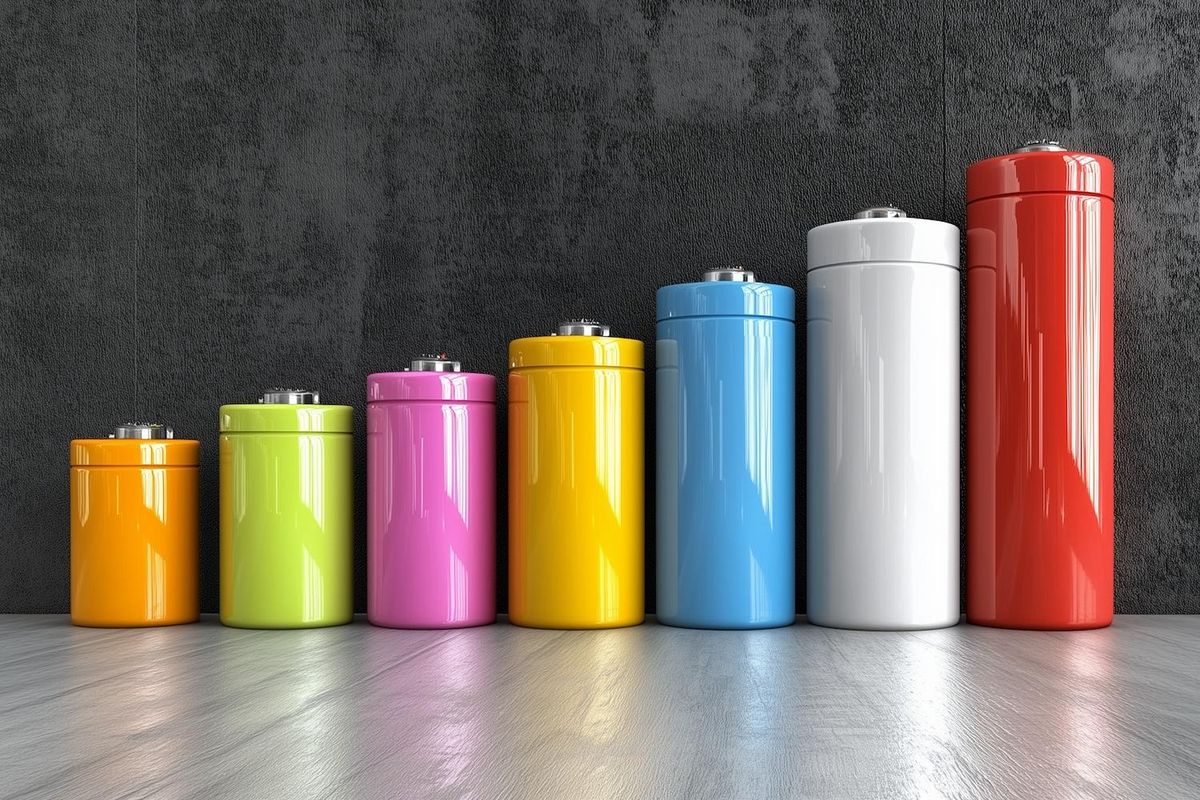
Thananatt / Adobe Stock
Lithium has effectively transformed into a single-use commodity, with rechargeable batteries now consuming 88 percent of the global supply.
According to data from the US Geological Survey (USGS) Mineral Commodity Summaries 2026, the rapid scaling of electric vehicle (EV) manufacturing and energy storage grids has left traditional industrial sectors as minor, single-digit fractions of the market.
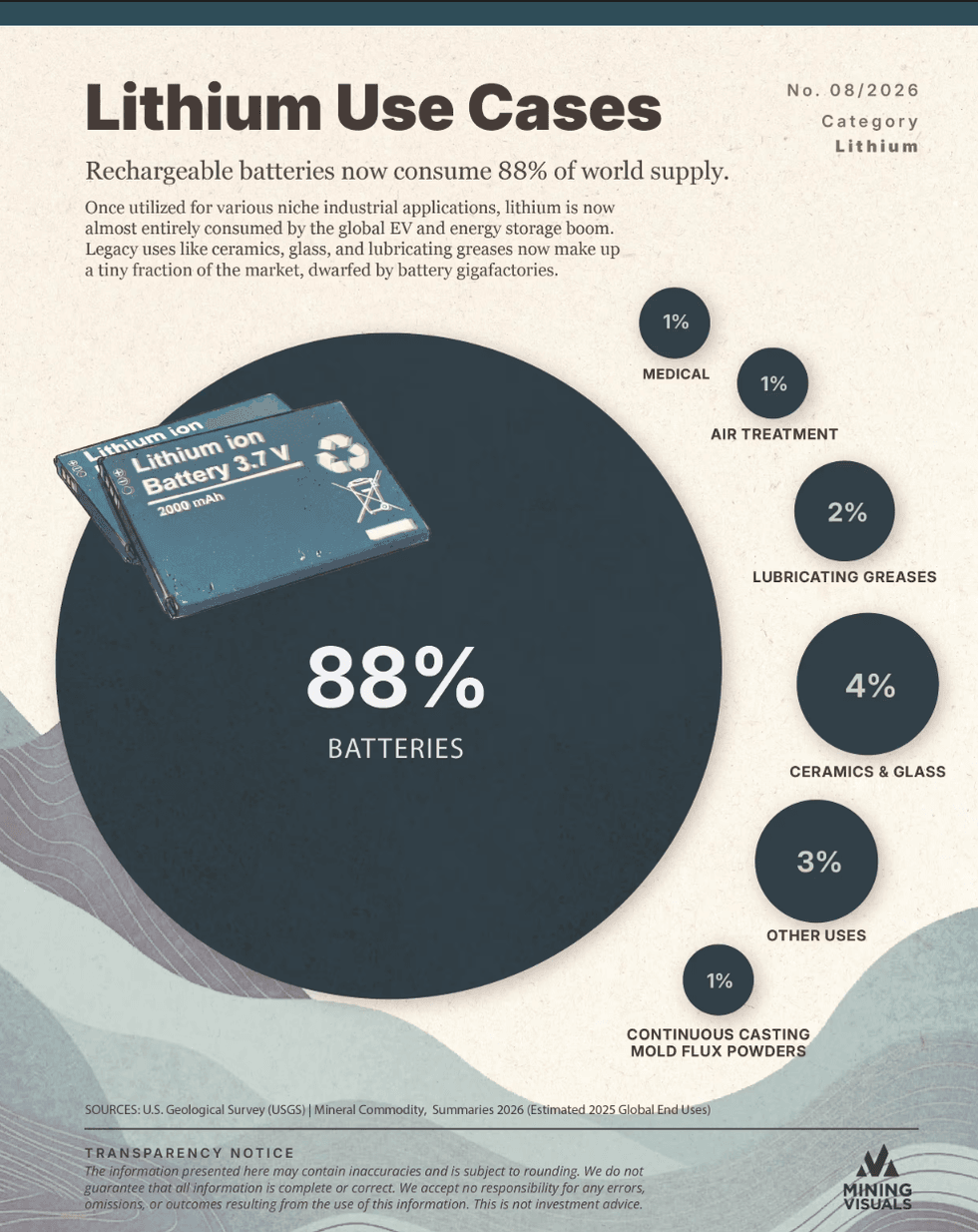
Infographic via MiningVisuals.
Global lithium consumption rose 20 percent in 2025 to approximately 263,000 tons, with the overwhelming majority of volume growth directed into cell manufacturing.
The International Energy Agency (IEA) reports that electric vehicles and stationary storage systems now represent roughly 90 percent of the lithium-ion battery market.
Total sector deployment expanded more than sixfold between 2020 and 2025. In 2025 alone, global EV battery deployment grew by nearly 30 percent to reach 1.2 terawatt-hours, anchored by China, which commanded 60 percent of global automotive battery deployment.
“To all intents and purposes, lithium is basically driven by battery demand only,” Adam Webb, head of battery materials at Benchmark Mineral Intelligence (BMI), stated at a March industry summit in Toronto.
Webb noted that global EV sales expanded 22 percent in 2025, with strong growth continuing across China, Europe, and emerging markets.
However, this lock on supply has exposed the market to extreme volatility. Supply constraints and a swift shift into deficit caused spot battery-grade lithium carbonate prices to surge 95 percent, spiking from US$13,433 per metric ton in early December to US$26,278 by late January.
Upstream raw materials followed, with spodumene concentrate prices rising above US$2,000 per metric ton for the first time since late 2023.
In 2025, global lithium exploration expenditure ranked fourth among major commodities at US$595 million, trailing far behind gold and copper as mining companies pulled back from greenfield risk.
Near-term supply has tightened further following Zimbabwe's February 25 suspension of raw mineral and lithium concentrate exports, an intervention aimed at forcing domestic processing that directly impacts 15 percent of China’s spodumene imports.
The focus on battery application meant the traditional industrial base for lithium has been heavily marginalized.
Ceramics and glass account for 4 percent of demand, where lithium mineral concentrates are added directly to reduce thermal expansion. Lubricating greases represent 2 percent, followed by air treatment at 1 percent and continuous casting mold flux powders at 1 percent.
Medical applications make up the final 1 percent of global supply. While small by volume, healthcare guidelines identify lithium as the most effective long-term treatment for stabilizing bipolar disorder and reducing relapse severity. Recent studies have also linked the metal to a potential early detection system for Alzheimer’s disease.
However, with the IEA projecting that lithium demand will expand fivefold by 2040 under current policy frameworks, the commodity's near commercial outlook remains tightly bound to the economics of the battery cell.
MiningVisuals is your go-to source for mining insights and visuals — transforming complex data into clear graphics that highlight the essential minerals building our future.
Don’t forget to follow us @INN_Resource for real-time news updates!
Securities Disclosure: I, Giann Liguid, hold no direct investment interest in any company mentioned in this article.
https://x.com/giannliguid
https://www.linkedin.com/in/giannliguid/

Featured Lithium Investing Stocks



Learn about our editorial policies.