The Conversation (4)
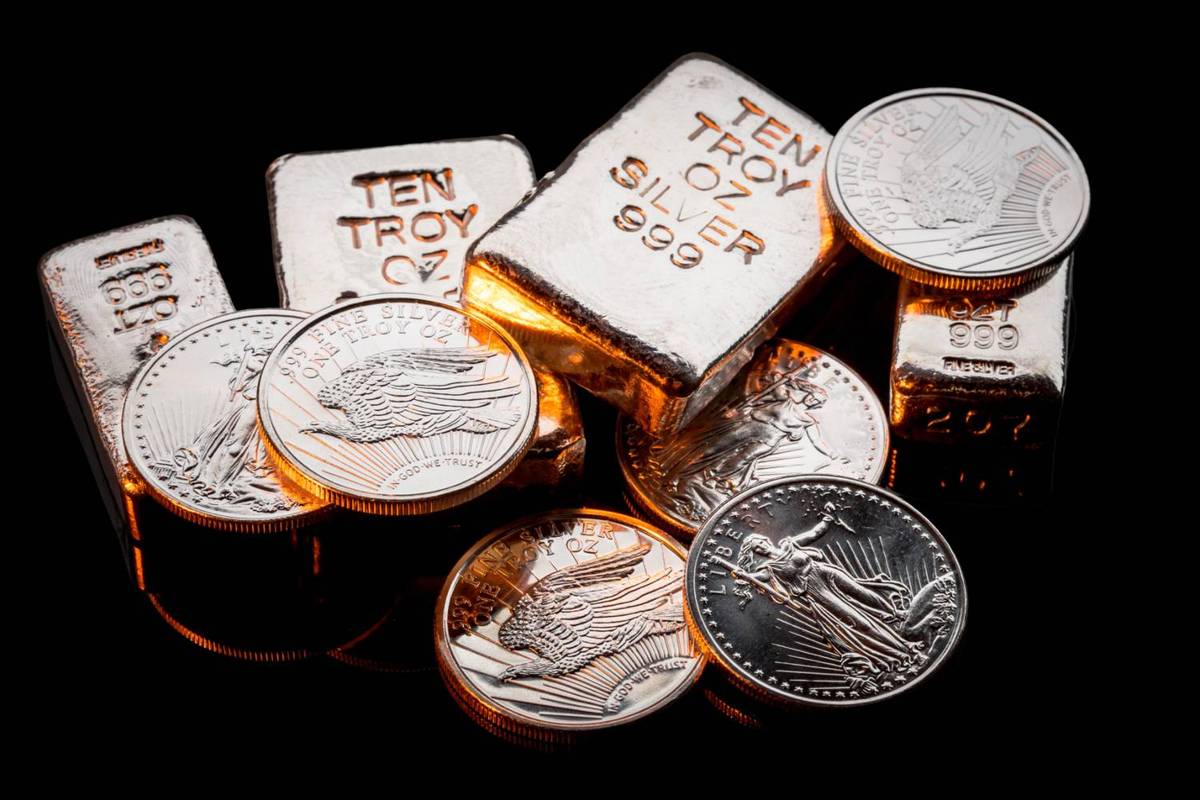
Hamza / Adobe Stock
In the second quarter of 2026, silver retreated significantly from the triple-digit prices reached in January.
The silver market is facing extreme volatility from the geopolitical and economic uncertainty surrounding the Iran war, the inflationary energy shock, a stronger US dollar and shifting US monetary policy.
Are these headwinds strong enough to shake the foundations of the silver market, or is there enough upside to support a bullish outlook for the precious metal?
What happened to the silver price in Q2?
After shattering its long-held record high of US$49.95 per ounce in October 2025, the price of silver continued to soar during the first quarter of 2026 to an all-time high of US$121.62 on January 29. However, for much of Q2, the price of silver has truly lived up to its reputation for volatility, trading in a range of US$57 to US$89.
“Spot silver (XAG/USD) has slightly underperformed spot gold (XAU/USD) in Q2 to date (June 19, 2026), with a loss of 13.3 percent versus gold’s -10.5 percent, primarily driven by a firmer US dollar and higher global sovereign bond yields,” Kelvin Wong, senior market analyst at OANDA, told the Investing News Network (INN).
“Despite silver’s dual drivers of safe-haven demand and industrial usage, spot silver cannot negate its direct correlation with gold, even with high demand in artificial intelligence (AI)-related electronics due to continued high CAPEX spending by AI hyperscalers," the expert added via email correspondence.
Silver started April with a close of US$75.36, and by mid-month had rallied enough on US-Iran peace deal negotiations to briefly close slightly above the US$80 level. Market participants were hoping an earlier end to the war would cool expectations of higher-for-longer interest rates from the US Federal Reserve.
But by the end of the month, those hopes had vanished as the US and Iran appeared to be in a stalemate over the globally critical shipping channel known as the Strait of Hormuz.
The Fed’s decision to hold rates steady also weighed on silver. The metal eventually lost more than it had gained, falling to its lowest close of the month at US$71.86 on April 29.
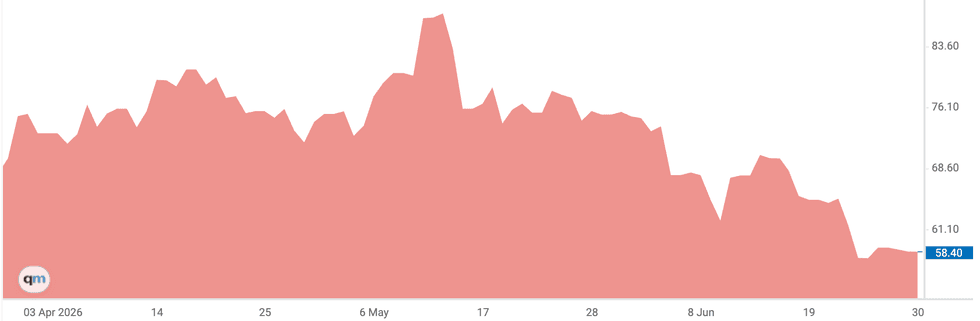
Silver price, Q2 2026.
Chart via the Investing News Network.
Silver rallied more strongly than gold in the first half of May, rising from US$73.88 on May 5 to its peak of the quarter on May 15 at US$89.33. The metal benefited from its industrial side as investors placed bets on growth sectors, including those related to silver-heavy technologies associated with electrification and AI.
However, by May 15, the price of silver had sunk back down to the US$75 level as investors took profits from the earlier rally. The second half of May saw silver in a tug-of-war between US$75 and US$77.
Silver’s dual nature as both a precious metal and an industrial commodity makes it more susceptible to price swings than gold. The white metal’s volatility was on full display in June as it retreated to the US$62 level on June 11 after a series of US economic data points signaled the Fed’s inflation fight might carry into the second half of the year.
Silver continued to tumble in the second half of June, suffering a severe technical breakdown to breach the critical US$60 support floor for the first time since December 2025.
On June 24, the day after tech stocks took a big hit, silver fell to a close of US$57.43. As an industrial metal with high conductivity, silver is widely used in many of today's technologies.
For the rest of the month, silver remained rangebound between US$57 and US$59 as the markets prepared for the possibility that the Fed may raise rates before the year is out.
As of June 30, CME Group's (NASDAQ:CME) FedWatch tool showed analysts factoring in a 67 percent probability that the Fed will raise rates as early as the September 15 to 16 meeting.
The price of silver closed out the quarter at US$58.59, down more than 22 percent from April 1.
Silver’s dual role means double the headwinds
Silver is a notoriously volatile commodity, and that was made very clear to investors this past quarter.
“What stood out most was silver’s volatility. It continued to attract both monetary and industrial demand, but it moved more sharply than gold because it serves two roles: a precious metal and an industrial input,” Joshua Rotbart, founder of global precious metals bullion firm J. Rotbart & Co., told INN in an email.
“Gold benefited more directly from central bank buying, geopolitical uncertainty, exchange-traded fund (ETF) demand and portfolio protection,” said Rotbart. “Silver benefited from precious metals demand as well, but its performance was shaped by industrial uses such as electronics, automotive applications and renewables.”
In a stark contrast to the historic highs achieved at the beginning of the year, silver investment demand faced a sharp reversal in Q2, with significant liquidations in silver ETFs and a cooling of physical bar and coin purchases. The biggest trigger for this was the nomination of hawkish Fed Chair Kevin Warsh.
However, the selloff in silver is viewed more as a market response to a broader macroeconomic environment that includes a surging US dollar and increased pressure on the Fed to raise rates. For that reason, investors have been forced to unwind safe-haven and commodity positions, including ETFs. Regardless, analysts don’t view this reaction to broader macro adjustments as a sign of collapse in silver's fundamental outlook.
“The second quarter correction looks more like a broad macro-driven bias than the start of a secular bear market. Among the four metals, gold and silver remain best positioned if financial conditions become more supportive later in the year,” Eugenia Mykuliak, founder and executive director of B2PRIME Group, told INN via email.
“Silver has followed gold lower, but retains greater upside sensitivity to changes in the monetary rhetoric. If bond yields soften and the dollar weakens, silver could recover faster thanks to its dual role as both a precious and an industrial metal. That said, investors should expect higher volatility in silver compared with gold,” she added.
Despite the sharp pullback in the silver price this quarter, Rotbart described silver investment demand for most of the quarter as “positive, but more selective than gold."
According to the Silver Institute’s latest World Silver Survey, produced alongside London-based consultancy Metals Focus, physical investment in silver bars and coins is forecast to rise by 18 percent in 2026 to its highest level since 2022. A significant portion of that growth will come from a 57 percent rebound in demand from US investors.
Rotbart noted that retail investors are attracted to physical silver’s lower entry price compared to gold, while institutional investors are “more sensitive to market sentiment and industrial growth expectations."
Silver industrial demand outlook mixed
Silver’s unrivaled electrical conductivity makes it ideal for use in the photovoltaic sector.
The metal is also used in the automotive industry for electronic components. The rise of electric vehicles and charging infrastructure has helped to grow this demand segment for silver.
Another growing sector for silver demand is in high-performance computing components, data center switches and semiconductors, all of which are essential for the rapid buildout of AI infrastructure and power grids.
The analysts behind the World Silver Survey forecast that industrial consumption of silver will drop 3 percent in 2026 to 639.6 million ounces. This is mainly attributed to solar panel manufacturers responding to higher silver prices with thrifting and substituting the metal to reduce material costs and protect their margins.
However, even with a mixed demand picture for silver, the metal is still dealing with an entrenched structural supply deficit that is likely to provide a good floor of support for the silver price.
Silver supply deficit adds a layer of support
With an estimated shortfall of 46.3 million ounces, World Silver Survey data indicates that silver is on a path to record a sixth consecutive annual market deficit in 2026.
“The structural case remains supported by tight supply,” said Rotbart.
“Industrial demand remains important, especially from electronics, automotive applications, data centers and AI-related technologies. These same factors will remain relevant in the second half of 2026, and beyond.”
Much of silver’s supply-side problem originates in its geological nature. The metal is rarely found on its own, but rather is mined as a by-product of gold, copper, zinc and lead. To meet demand coming from the solar, AI and automotive industries, silver mine supply will have to pick up pace; however, that’s easier said than done.
“If you take a five year view ... (silver’s) future is bright, but only 21 percent of silver supply is actually price elastic," said Rhona O'Connell, StoneX's head of market analysis, EMEA and Asia, in an INN interview in late June.
"Most of what comes out of the ground — I'm including industrial scrap there — but most mine production is going to be a function of the business models for copper, for lead, for zinc or for gold. It's not silver.”
O’Connell added that unless base metals mining begins to expand rapidly, “there is going to be a substantial shortage of silver, which means you're going to see higher prices in order to rebalance the markets."
Silver price forecast for 2026
Is there a strong floor of support for silver to make another run at US$100 this year?
“No, unlikely. Given the recent bearish breakdown of the key 200 day moving average in spot silver (XAG/USD) (the week of June 19), which suggests the major uptrend phase from April 2025 has been damaged,” said Wong. “The odds are now likely skewed towards a potential multi-month corrective decline towards US$54.50 and US$45.55.”
For his part, Rotbart doesn’t see any hope of silver making its way back to the triple digits in 2026.
“A move back toward US$100 seems unlikely at this point. It would likely require a weaker dollar, sustained physical tightness, stronger investor inflows and renewed geopolitical or inflation pressure,” he said.
Rotbart believes strong support for the metal will come from the entrenched supply deficit, as well as resilient physical and industrial demand; however, he doesn't expect a guaranteed floor for the price given current volatility.
Near the end of the quarter, global bank ING downgraded its silver price forecast significantly, citing “higher yields, a stronger dollar and weaker investor demand are weighing on precious metals more broadly.” The bank now expects silver to average US$68 in Q3 2026 (down from US$79), and US$74 in Q4 2026 (down from US$84).
“Despite the downgrade, we continue to expect silver to modestly outperform gold, supported by ongoing market deficits and broader electrification trends,” states ING London-based commodities strategist Ewa Manthey.
Macquarie has also shifted to a more conservative forecast for silver given the current macro economic environment.
“The higher inflation and bond yields move, the greater the downwards pressure,” said its analysts. “For silver in particular, bullish investor sentiment fueled by tighter supply, low inventories and strong demand has caused prices to outperform gold, making it more vulnerable to a retracement. And historically silver retraces quickly.”
The multinational financial services firm now expects silver to remain rangebound for the rest of 2026 to trade at US$70 in Q4 before trending lower to US$65 by the end of 2027 as possible Fed rate hikes come into play.
Don’t forget to follow us @INN_Resource for real-time updates!
Securities Disclosure: I, Melissa Pistilli, hold no direct investment interest in any company mentioned in this article.
Editorial Disclosure: The Investing News Network does not guarantee the accuracy or thoroughness of the information reported in the interviews it conducts. The opinions expressed in these interviews do not reflect the opinions of the Investing News Network and do not constitute investment advice. All readers are encouraged to perform their own due diligence.
NASDAQ:GROW
https://x.com/INN_Resource
https://www.linkedin.com/in/melissa-pistilli-865271a9/
mpistilli@investingnews.com

Featured Silver Investing Stocks



Learn about our editorial policies.