

The Conversation (1)
Aug. 06, 2026 06:15AM PST
|Fact CheckedThis article has been reviewed and updated according to INN's rigorous fact-checking process. Our staff editors verify all articles against information and data from primary sources, reputable publishers and experts.
The US critical minerals push could face a pivotal test over the next four months as the midterm elections and a planned meeting between Donald Trump and Chinese President Xi Jinping threaten to reshape policy, trade and investment.
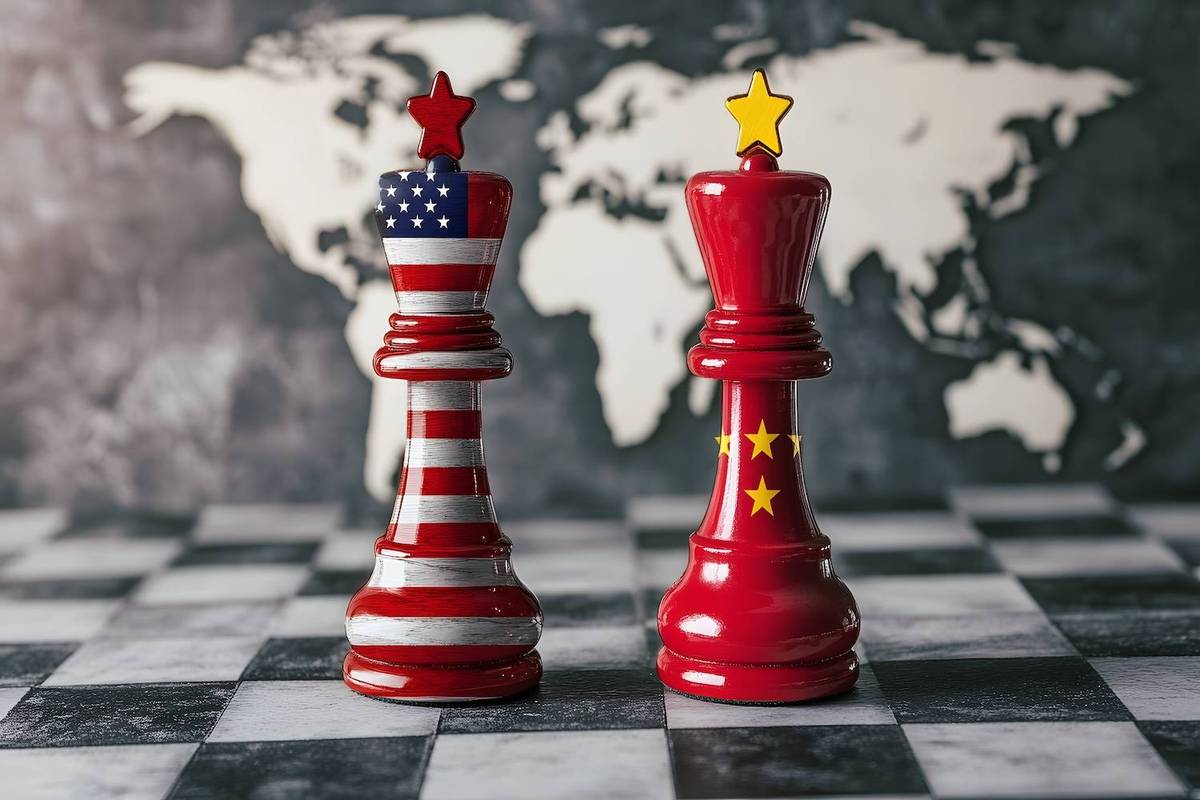
Creative Art 008 / Adobe Stock
At Fastmarkets’ 2026 Battery Raw Materials Conference, a panel of industry veterans laid out just how much is riding on the next four months for the United States' critical minerals buildout, from a looming midterm election to a September visit from Chinese President Xi Jinping that could reshape Washington's leverage over the sector.
Moderator Howard Klein of RK Equity opened the discussion by framing the political backdrop, noting that prediction markets at the time of the conference (late June) put the odds of a Democratic House takeover at 83 percent, with the Senate a closer call.
"If the Democrats win the House, there's going to be a lot of hearings and oversight into many of the critical minerals deals that the Trump administration has done," Klein told the panel, before asking each speaker what they were watching most closely heading into the vote.
For Ken Hoffman, founder and CEO of Traubenbach Associates, the common ground between the parties is bigger than the rhetoric suggests.
"Both sides understand that in the face of AI, particularly what's causing a huge issue in terms of electricity — how does the US prepare for that?" he said.
Hoffman explained the real fight isn't over goals but mechanics: permitting timelines, price floors, and whether Washington can offer companies "some sort of stability and consistency in policy" instead of a strategy that resets with every administration.
Gary Stanley, managing director of Global Mineral Strategies and a 41 year veteran of the US Department of Commerce, where he last led the Office of Critical Minerals and Metals, pointed to Xi's September visit as the pivotal near-term event.
"There is an incredible interdependency between China and the United States, and in many ways Xi has used what he believes in the area of commerce and trade as its strongest play, and that's the critical minerals area," Stanley said, adding the irony that China's own economic dependence on those same sectors creates risk on both sides of the table.
"That conversation coming up in September is going to set the stage," he said, for how the relationship — and the minerals leverage embedded in it — evolves into next year.
Jesse Edmondson, the CEO of US Critical Minerals, agreed the China meeting will draw intense scrutiny, but pushed back gently on the idea that rare earths fatigue inside the administration automatically translates into bipartisan momentum for battery materials.
He pointed to roughly US$20 billion in battery and energy-storage projects — many sited in red states like Arkansas, Alabama, Georgia and the Carolinas — that stalled over the past year amid policy uncertainty.
"With a little certainty, with a little cooperation from the bipartisan side," he said, that money could start moving again.
Klein pressed the panel on whether that optimism was realistic, noting that rare earths dealmaking has hardly slowed, citing a recent US$1.9 billion acquisition by Energy Fuels (TSX:EFR,NYSEAMERICAN:UUUU). He also pointed out that continued Department of Energy lending activity for nuclear.
Stanley, drawing on his Biden-era experience with EV and storage tax credits, predicted that expiring credits will become a genuine point of leverage regardless of who controls Congress.
He said he would be shocked if there weren't a serious push to extend them, calling the issue "one of the strongest points of negotiation" available to Democrats after any midterm gains.
Much of the discussion returned to a theme all three speakers described as non-negotiable: electricity demand from artificial intelligence.
Hoffman cited a Chevron (NYSE:CVX) plan to build a power plant for an AI data center capable of powering 530,000 homes, and estimated the US now hosts roughly 4,000 data centers, with thousands more being planned.
"There's no way we can build power plants for all of this," he said. "The only way realistically to do it is ... (with) massive battery backup."
National security framing widens beyond rare earths
The discussion comes as critical minerals have moved firmly into the national security debate, with the US seeking to reduce its reliance on China across materials used in defense, energy and advanced technologies.
Stanley said the Trump administration's focus is likely to expand beyond headline materials such as rare earths toward less-discussed minerals where China has an especially strong position.
"I think that's precisely where we go," he said, pointing to materials where US reliance sits above 90 percent or China is effectively the exclusive supplier, highlighting gallium, uranium, germanium, antimony and arsenic as likely to draw greater attention over the next 12 to 24 months.
Listen to an exclusive interview with Klein about the battery metals market and the strategic critical minerals stockpile in the United States.
Processing, not mining, is the bottleneck
For Hoffman, the biggest weakness isn't access to mineral deposits but the ability to process them economically.
"I think the most important part is, can we find ways to refine these things," he said.
Hoffman went on to point out that the US needs technologies that shorten supply chains and create smaller-scale processing capacity, potentially allowing companies to move directly from ore to refined product rather than shipping material through multiple stages of a global chain.
Stanley added that many critical minerals can already be recovered as byproducts of existing copper and other mining operations but remain economically stranded without investment in processing, an opportunity to grow supply without permitting a single new mine.
The panel agreed that mining domestically while still sending material to China for refining doesn't amount to a secure supply chain.
The equity-stake debate
The panel also waded into the politically charged question of government equity stakes in private companies, a practice Klein likened to "capitalism with Chinese characteristics."
Stanley, a self-described free trader, said he isn't personally comfortable with the approach but sees little alternative given Beijing's willingness to ignore trade, labor and environmental rules.
"Business as usual got us to where we are," said Stanley.
Hoffman was more direct, noting the government has effectively bailed out or backstopped industries, from Tesla (NASDAQ:TSLA) to banking to autos, for decades regardless of which party held power.
"We've done this for a long time," he said. "I think it's been necessary."
Batteries as a strategic priority
The panel argued batteries deserve a larger role in US critical minerals strategy even as rare earths dominate the headlines.
Edmondson said policy stability matters as much as new incentives: "It's key that those contracts that are negotiated and finalized are honored."
The US should lean harder on demand-side tools, strengthening the Section 45X production tax credit and domestic-sourcing requirements, rather than upstream permitting alone, an approach he said could draw bipartisan support given batteries' applications across defense, AI and broader electrification.
He also pointed to the potential for deeper cooperation with allies like South Korea and Japan, which already have expertise across the battery supply chain.
Leapfrogging, not copying, China
Rather than recreating China's existing supply chain from scratch, the panel argued the US and its allies need to combine proven technology with next-generation innovation.
"If we're just going to play 25 years of catch up, guess what? The Chinese are also going to be advancing for 25 years," Hoffman said. "This is a game you can't play catch-up in. You have to go ahead of them significantly."
Stanley suggested public-private partnerships offer the fastest way to close that gap, pairing government support with private-sector innovation.
The broader message from the panelists was that the critical minerals race is no longer simply about who has the resources in the ground.
The strategic advantage will increasingly belong to countries capable of turning those resources into commercially viable materials, technologies and end products, while building supply chains that can compete with China on cost and scale.
Don’t forget to follow us @INN_Resource for real-time updates!
Securities Disclosure: I, Georgia Williams, hold no direct investment interest in any company mentioned in this article.
Editorial Disclosure: The Investing News Network does not guarantee the accuracy or thoroughness of the information reported in the interviews it conducts. The opinions expressed in these interviews do not reflect the opinions of the Investing News Network and do not constitute investment advice. All readers are encouraged to perform their own due diligence.
From Your Site Articles
https://x.com/INN_Resource
https://www.linkedin.com/in/georgia-williams-15845447/
gwilliams@investingnews.com
Originally from Calgary, Georgia has been right at home in Toronto for more than two decades. Graduating from the University of Toronto with an honors BA in journalism, she is passionate about writing on diverse topics, including resources, arts, politics and social issues.
At INN Georgia covers a wide range of topics, including energy, battery and critical metals and diamonds. In her spare time, Georgia enjoys watching documentaries and experiencing Toronto's vibrant food, arts and cultural scene.
At INN Georgia covers a wide range of topics, including energy, battery and critical metals and diamonds. In her spare time, Georgia enjoys watching documentaries and experiencing Toronto's vibrant food, arts and cultural scene.
INN Article Notification
Latest News
Outlook Reports world
Featured Critical Minerals Investing Stocks

Browse Companies
MARKETS
COMMODITIES
CURRENCIES
Originally from Calgary, Georgia has been right at home in Toronto for more than two decades. Graduating from the University of Toronto with an honors BA in journalism, she is passionate about writing on diverse topics, including resources, arts, politics and social issues.
At INN Georgia covers a wide range of topics, including energy, battery and critical metals and diamonds. In her spare time, Georgia enjoys watching documentaries and experiencing Toronto's vibrant food, arts and cultural scene.
Learn about our editorial policies.