
The Conversation (0)
The military escalation threatens to worsen an already severe energy crisis centered around the blocked Strait of Hormuz.
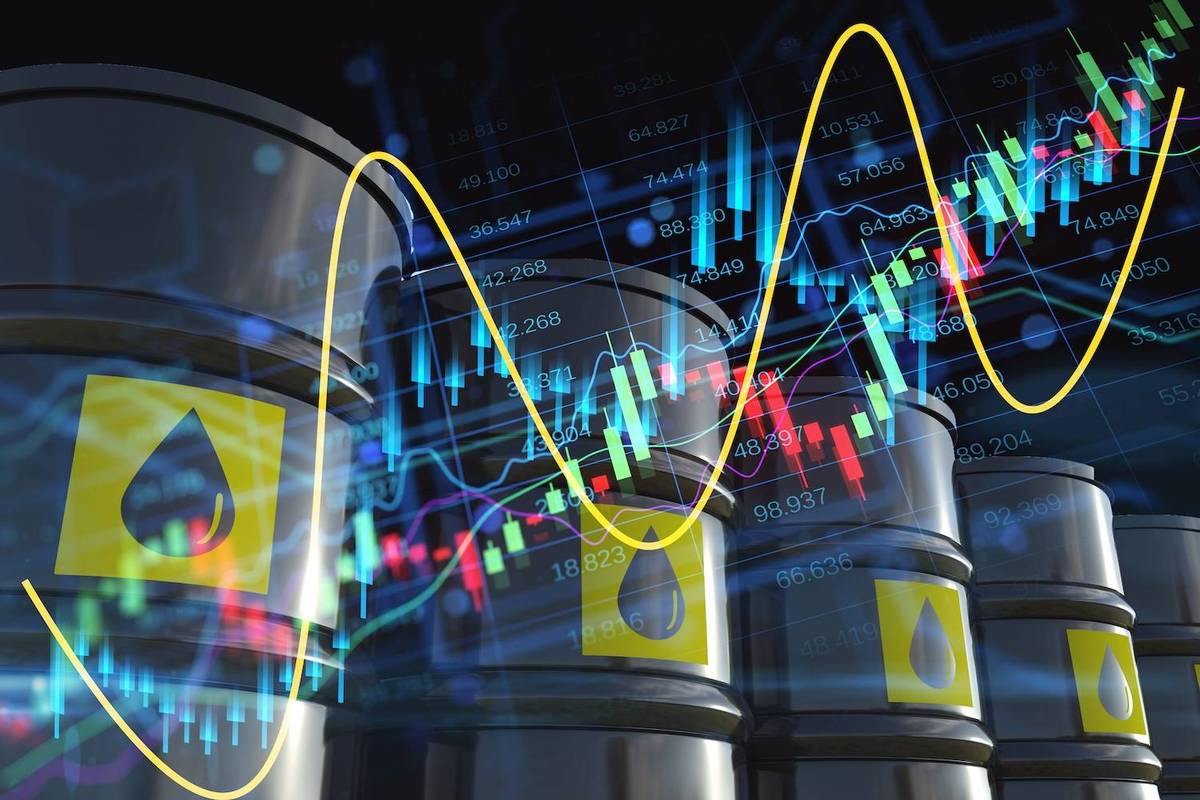
DiBook design / Adobe Stock
Oil prices shot past US$100 a barrel on Monday (April 13) after US President Donald Trump ordered a naval blockade of Iranian ports following the collapse of peace talks in Pakistan.
Brent crude, the global benchmark, jumped more than 7 percent to US$102.02 a barrel, while US West Texas Intermediate (WTI) rose 7.5 percent to $103.78.
The sudden spike erases the relief-driven drop from last Wednesday (April 8), when prices fell below US$100 on the announcement of a conditional two-week ceasefire.
The renewed standoff was triggered by the failure of diplomatic talks over the weekend. Following the deadlock in Islamabad, President Trump announced late Sunday (April 12) that the US Navy would physically stop shipping in the Gulf.
"Effective immediately, the United States Navy, the Finest in the World, will begin the process of BLOCKADING any and all Ships trying to enter, or leave, the Strait of Hormuz," Trump said on Truth Social.
He added that the Navy has been ordered to find and stop any ship in international waters that has paid Iran a toll to use the strait.
US Central Command (CENTCOM) confirmed the order, stating the blockade on all maritime traffic entering and exiting Iranian ports began at 10:00 a.m. ET Monday.
CENTCOM clarified the US will not stop vessels traveling to and from non-Iranian ports.
Tehran immediately pushed back. On Monday, the Unified Command of Iranian Armed Forces called the US restrictions "illegal and constitutes piracy," warning that Iran will implement a "permanent mechanism to control the Strait of Hormuz following US threats."
The diplomatic talks fell apart over Tehran's nuclear program. US Vice President JD Vance, who led the American delegation, told reporters on Sunday: “The simple question is, do we see a fundamental commitment of will for the Iranians not to develop a nuclear weapon? We have not seen that yet; we hope that we will.”
Conversely, Iranian parliamentary speaker Mohammad-Bagher Ghalibaf stated the US “failed to gain the trust of the Iranian delegation in this round of negotiations.”
The breakdown leaves the Strait of Hormuz, which normally handles roughly a fifth of the world's oil supply, nearly frozen.
While three supertankers passed through on Saturday (April 11) during the brief ceasefire, traffic is nowhere near the pre-war level of more than 100 daily ships.
Despite the blockade, Iran is still moving its own crude. Since March 1, more than 58 million barrels of oil have left Iran's Kharg Island, with over 90 percent heading to China.
Currently, the global economy faces a daily shortfall of about 8 million barrels. However, the crisis goes beyond energy, as the strait also handles massive amounts of other commodities such as aluminum, helium, and fertilizers.
Don’t forget to follow us @INN_Resource for real-time news updates!
Securities Disclosure: I, Giann Liguid, hold no direct investment interest in any company mentioned in this article.
https://x.com/giannliguid
https://www.linkedin.com/in/giannliguid/
Giann Liguid is a graduate of Ateneo De Manila University with an AB in Interdisciplinary Studies. With a diverse writing background, Giann has written content for the security, food and business industries. He also has expertise in both the public and private sectors, having worked in the government specializing in local government units and administrative dynamics.
When he is not chasing the next market headline, Giann can most likely be found thrift shopping for his dogs.
When he is not chasing the next market headline, Giann can most likely be found thrift shopping for his dogs.
INN Article Notification
Latest News
Outlook Reports world
Featured Oil and Gas Investing Stocks




Browse Companies
MARKETS
COMMODITIES
CURRENCIES
Giann Liguid is a graduate of Ateneo De Manila University with an AB in Interdisciplinary Studies. With a diverse writing background, Giann has written content for the security, food and business industries. He also has expertise in both the public and private sectors, having worked in the government specializing in local government units and administrative dynamics.
When he is not chasing the next market headline, Giann can most likely be found thrift shopping for his dogs.
Learn about our editorial policies.