• Connect with us
    • Information
      • About Us
      • Contact Us
      • Careers
      • Partnerships
      • Advertise With Us
      • Authors
      • Browse Topics
      • Events
      • Disclaimer
      • Privacy Policy
    • Australia
      North America
      World
    Login
    Investing News NetworkYour trusted source for investing success
    • North America
      Australia
      World
    • My INN
    Videos
    Companies
    Press Releases
    Private Placements
    SUBSCRIBE
    • Reports & Guides
      • Market Outlook Reports
      • Investing Guides
    • Button
    Resource
    • Precious Metals
    • Battery Metals
    • Base Metals
    • Energy
    • Critical Minerals
    Tech
    Life Science
    Energy Market
    Energy News
    Energy Stocks
    • Energy Market
    • Energy News
    • Energy Stocks
    oil and gas investing

    The Hottest North American Shale Plays: Josh Young

    Written by Investing News Network
    |
    May. 16, 2013 03:07PM PST

    Not all the shale plays are created equal, and one in particular is bucking the trend with robust economics and company share prices that show it. But is it too late to buy in? Fund Manager Josh Young doesn’t think so, and he sat down with The Energy Report to discuss the hottest (and coldest) North American shale plays. Read on to find out where he’s finding bargains that could pay off handsomely.

    Source: Alec Gimurtu of The Energy Report (5/16/13)

    Not all the shale plays are created equal, and one in particular is bucking the trend with robust economics and company share prices that show it. But is it too late to buy in? Fund Manager Josh Young doesn’t think so, and he sat down with The Energy Report to discuss the hottest (and coldest) North American shale plays. Read on to find out where he’s finding bargains that could pay off handsomely.

    The Energy Report: Last week in The Energy Report, Bill Powers, author of “Cold, Hungry and in the Dark,” argued that energy reserves from U.S. shale deposits are far smaller than the U.S. Energy Information Administration (EIA) estimates. The difference is significant—approximately seven years compared to 100. Where do you come in on this debate? Is the production growth rate from non-conventional shale plays sustainable?

    Josh Young: Making really broad predictions like this is challenging, but I can address a shorter time horizon. It looks to me like there is quite a bit of supply available to come onto the market, with a year or more lead time. Outside the most mature shale plays like the Barnett, there appears to be significant inventory available. In the current market conditions, the Marcellus has lots of inventory, but infrastructure is constrained. At higher price points, much more incremental supply is available from the Haynesville, the Woodford, the Eagle Ford and other plays. In aggregate, there is probably more than five to seven years of incremental inventory. One point that “Cold, Hungry and in the Dark” has right is that higher gas prices are needed to make much of that inventory economic. That is one of the reasons I am bullish on gas prices. I was early, but prices are now rising. Gas prices have some upside bias here, partly driven by shale economics.

    TER: What sustained pricing is needed to stimulate investment in the marginal projects?

    JY: I had a long conversation with senior management at Chesapeake Energy Corp. (CHK:NYSE) about this a few months ago, around the time Encana Corp. (ECA:TSX; ECA:NYSE) restarted its drill program in the Haynesville. From Chesapeake’s perspective, a reasonable rate of return for these projects is 20%. To get that rate of return in the Haynesville requires a natural gas price of approximately $4.75 per thousand cubic feet ($4.75/Mcf). It looks like the Haynesville will probably be the tipping point—the marginal producing play that’s able to balance gas demand and supply. It has a large inventory that can be delivered to the market when the project economics support it. In the medium term, the market price for natural gas may exceed the $4.75/Mcf because there is an upside bias due to rising service costs and project risk over time. From a medium-term price perspective, I’d expect a reasonable balancing point in the $5–6/Mcf price range.

    TER: With $5/Mcf required to bring on marginal deposits, what shale plays would be solidly profitable at that price?

    JY: The northeastern core of the Marcellus. Potentially even more economic is the southwestern core of the Marcellus, which is liquids rich. I think that might be one of the most economic places to drill. If you look at the different charts that investment banks put out showing the different economics for shale plays [see below], particularly for the shale gas plays, they typically show the southwestern core of the Marcellus as the most economical of the gas shale plays.

    TER: As far as non-conventional fields in North America go, is the Marcellus fairly mature? Is there a long enough track record to have a comfort level with the decline rate and the sustainability of the production?

    JY: In “Cold, Hungry and in the Dark,” Bill Powers cites Geologist Art Berman, who listed the Marcellus as one of the exceptions to his view that shale gas production was falling short of expectations. Berman noted that the Marcellus had less steep declines than the Barnett, Haynesville and Fayetteville wells, with quicker production leveling off sooner. Compared to other non-conventional plays, the Marcellus seems to have a longer economic life with higher recoverable reserves.

    TER: Some of the companies within a given play are more successful than the others for a variety of reasons. What’s your take on success factors for companies in the Marcellus?

    JY: Considering that the most economic area is in the southwestern core, from both a geologic perspective and a political risk and regulatory perspective, West Virginia seems like the place to be. West Virginia is friendly to natural resources companies. It has a long history of natural resource extraction. It is conservative and pro-business. If you had the same rock in West Virginia versus Pennsylvania, Ohio or New York, you would prefer to be drilling in West Virginia just purely because of the political, tax and regulatory environment.

    Given all that, it makes sense to focus on companies with more West Virginia exposure. Of those companies, I find Gastar Exploration Ltd. (GST:NYSE) the most interesting. It stands out because of its leverage to the Marcellus as well as its superb economics. Gastar’s valuation on per-share production, reserves and acreage push it to the top of the list. High rates of return on capital expenditures and liquids-rich incremental production are added benefits.

    Other companies active in the sweet spot in northwestern West Virginia include Magnum Hunter Resources Corp. (MHR:NYSE.MKT), Chesapeake, and EQT Corp. (EQT:NYSE). Magnum Hunter has drilled a number of excellent wells, but is challenged right now with deleveraging. While Magnum Hunter has had great results in the Marcellus, the company is not a pure play in that area, and has had mixed results in its Bakken area. Chesapeake has a position in West Virginia as does EQT and a few other majors.

    TER: You mentioned Gastar during your last interview. At that time, the stock was choppy and trending down. Since then, it has shifted into overdrive. What accounts for the turnaround?

    JY: Gastar’s turnaround is driven in large part by its exposure to the Marcellus. It’s not contrarian for me to say that the Marcellus is an interesting place to invest. Most of the stocks of the Marcellus-focused companies have skyrocketed in the last two years. Range Resources Corp. (RRC:NYSE), Rex Energy Corp. (REXX:NASDAQ), EQT and Cabot Oil & Gas Corp. (COG:NYSE)—these companies have significant exposure to the Marcellus and are up at least 50% in the last two years. Cabot is up 150%. Gastar, which is still down 40%, has a lot of catching up to do. However, when we last spoke, Gastar was trading at approximately a third of its current price.

    As a value investor, I’m interested in buying the best companies, assets and management teams—but price is the most important factor. The price is what seals the deal. As an example, let’s compare Rex Energy and Gastar. These are similar companies with excellent management, excellent assets and growing production. Note that Rex trades at more than twice the valuation based on earnings, reserves or production. So buying Rex at $16.50 is the equivalent of buying Gastar for $9/share, roughly three times the current price on a relative estimated value/earnings before interest, tax, depreciation and amortization deductions (EV/EBITDA) basis. So, while I like Rex and think Rex is doing an excellent job developing its assets, the value investor in me would love to buy Rex at a lower valuation. If Rex were at $8 and Gastar were at $3, it would be a much more difficult decision, but at current prices, it’s a lot easier to identify the value play.

    TER: Gastar is in the midst of a large transaction with Chesapeake. Can you explain the dynamic in the industry behind it?

    JY: Chesapeake has activist shareholders and they have been pushing for leadership changes for several years. They eventually succeeded in bringing on a new CEO, a new board and a new strategy. Chesapeake’s strategy had been to aggregate land, delineate it through exploratory drilling and then resell a portion and get development capital from joint venture partners. Profit expectations didn’t match results, partly due to low natural gas prices, and shareholders demanded change.

    Chesapeake is now in the process of unwinding the former corporate strategy. Chesapeake used to accumulate speculative land with the hope of being able to resell it into a joint venture. Without former CEO Aubrey McClendon—a brilliant salesperson—leading the process, finding joint venture partners has been more difficult, and deal prices have been less favorable for Chesapeake. One example of the deleveraging is a deal Chesapeake did with Sinopec Shanghai Petrochemical Company Ltd. (SHI:NYSE) in the Mississippi Lime. That deal should have been a high-priced joint venture but it ended up looking more like a liquidation sale. Since that deal, Chesapeake has sold a number of other assets in deals where the previous strategy and management would likely have yielded higher land prices. Rather than spend the capital to drill in order to get high land prices, the company chose to exit the positions and refocus capital on its core areas. The new strategy makes sense, but it is a big change. Chesapeake has a lot of off-balance sheet obligations because of its joint ventures, drilling trusts, midstream agreements and service agreements, so it has a lot of obligations to meet and needs cash and a streamlined asset base to meet those obligations. I understand the strategy, but it has created a buyer’s market for Chesapeake’s assets, and buyers of Chesapeake’s assets like Gastar have benefitted tremendously from that.

    TER: This transaction allows Chesapeake to refocus on its core. Is that an industry theme?

    JY: Yes, it is. For example, Gastar announced that it is selling its East Texas field for $46 million ($46M) in order to redeploy the cash into its core areas. Management had previously estimated that it was generating about $4M/year in cash flow from the asset. Call that about 10 times cash flow. The company right now is trading for about 6.5x EV/EBITDA, so it’s an accretive sale. In the same way that Gastar is buying this acreage from Chesapeake that’s highly prospective for Hunton Lime, the people that are buying Gastar’s acreage in East Texas are buying it in part because they want to have exposure to this Eagle Ford/Woodbine oil play, which Gastar has unsuccessfully tried to develop. It’s unclear whether that’s a geologic, engineering or a drilling issue. Regardless, successful companies focus on what they do best, and refocusing on core assets is an industry trend.

    TER: Are there any other less mature, emerging plays that an investor might want to take a look at? How about the Mississippi Lime?

    JY: There’s one that I’m in with a client called Petro River Oil Corp. (PTRC:OTCBB). It built up a 100,000-acre position in the Mississippi Lime in Kansas along the Nemaha Uplift. It has a tremendous amount of acreage relative to the size of the company. It looks likely that it will bring in either a joint venture partner at a high value per acre or that it will get some other kind of deal so it can get some drilling done on its land. It just did a reverse merger, and that closed relatively recently. Because of that, the stock is not very widely traded. The potential to go from very small to large is there. Petro River is earlier on in its path but with a large land position in a very promising area, it looks like a good opportunity. And Petro River is one of the highest-performing energy stocks in the past 12 months, going from less than $0.03/share to a recent $0.33/share.

    TER: Are there any factors you look for besides the geography and geology as key differentiators for an investment decision?

    JY: As a value investor, price is very important to me, so price relative to resource in the ground and price relative to cash flow. Management is very important, too. I don’t necessarily need to invest with the next Warren Buffett or the next rock star CEO; I just need to invest with competent management that’s aligned with my interests. I look for management that is going to take the steps that are necessary to create value for the company in the near to medium term. That’s important. The lower the cash flow multiple I’m paying, the less I’m dependent on future growth of the company in order to justify the value of the shares that I’m buying.

    TER: You’ve identified the Marcellus as the hottest shale play. Do you have other companies in the area that you think are noteworthy?

    JY: Yes, Gale Force Petroleum Inc. (GFP:CVE). It is active in the liquids-rich Marcellus, right next to Gastar. It is a very small company that appears to potentially be an acquisition candidate rather than an organic growth story given its small size and limited exposure to different large resource plays. But it does have a nice position in the Marcellus, which has increased substantially in value since it got involved.

    TER: The stock price has trended sideways since we talked last—very little seems to be happening. Is there any news coming from the company?

    JY: It is an unusual situation. The largest shareholder wrote a public letter to the board of the company, saying the stock is undervalued. The letter goes on to question the leadership of the company. As a response, the company put out a letter, also highlighting how undervalued the company is and clarified the value in the company. Generally speaking, when an activist shareholder gets involved in a company, the stock does something, and there’s some amount of volume. This hasn’t been the case with Gale Force. There’s been no volume, and apparently no one seems to care, or perhaps, few investors are following the stock.

    The activist shareholders and the company both point to a value of more than $60M in proved and probable reserves. The last reserve report of the company showed over $40M Proved reserves. This compares to an enterprise value of around $20M. Between the liquids-rich Marcellus assets and the oil production in Texas, there is embedded value, but what is unclear is exactly what it will take for the market to realize it. It surprises me that nobody seems to notice or care.

    TER: Let’s summarize the hottest shale play out there in North America.

    JY: The hottest place to be in shale development right now is in the Marcellus. The best area is the liquids-rich spot, particularly in West Virginia given some of the political developments in Pennsylvania. There are lots of choices for investment, but a value investing approach will lead an investor to Gastar and Gale Force. Taken as a whole, shale plays may disappoint investors, with the exception of a few key plays like the Marcellus, the Eagle Ford and a few others. Rates of return may not meet expectations and some companies are going to struggle to recycle capital because of challenging deposit economics. Compared to the other shale plays, the Marcellus is a standout. Last, it’s beneficial to have exposure to commodities like natural gas that are currently trading at a discount to replacement cost. That provides a tailwind that could potentially help over time in increasing intrinsic value.

    TER: As always, it has been great to talk to you.

    JY: Likewise; thanks for having me.

    Josh Young is the founder and portfolio manager of Young Capital Management, LLC. He is also a board member of Lucas Energy Inc. He previously served as an analyst at a multibillion-dollar single-family office in Los Angeles. Prior to that, he was an investment analyst at Triton Pacific Capital Partners. He was also a corporate strategy consultant at Mercer Management Consulting and DiamondCluster. He holds a Bachelor of Arts in economics from the University of Chicago.

    DISCLOSURE:
    1) Alec Gimurtu conducted this interview for The Energy Report and provides services to The Energy Report as an independent contractor. He or his family own shares of the following companies mentioned in this interview: None.

    2) The following companies mentioned in the interview are sponsors of The Energy Report: Chesapeake Energy Corp. Streetwise Reports does not accept stock in exchange for its services or as sponsorship payment.

    3) Josh Young: I or my family own shares of the following companies mentioned in this interview: GST, Gale Force Petroleum Inc. and Petro River Oil Corp. I personally am or my family is paid by the following companies mentioned in this interview: None. My company has a financial relationship with the following companies mentioned in this interview: None. I was not paid by Streetwise Reports for participating in this interview. Comments and opinions expressed are my own comments and opinions. I had the opportunity to review the interview for accuracy as of the date of the interview and am responsible for the content of the interview.

    4) Interviews are edited for clarity. Streetwise Reports does not make editorial comments or change experts’ statements without their consent.

    5) The interview does not constitute investment advice. Each reader is encouraged to consult with his or her individual financial professional and any action a reader takes as a result of information presented here is his or her own responsibility. By opening this page, each reader accepts and agrees to Streetwise Reports’ terms of use and full legal disclaimer.

    6) From time to time, Streetwise Reports LLC and its directors, officers, employees or members of their families, as well as persons interviewed for articles and interviews on the site, may have a long or short position in securities mentioned and may make purchases and/or sales of those securities in the open market or otherwise.

    Streetwise – The Energy Report is Copyright © 2013 by Streetwise Reports LLC. All rights are reserved. Streetwise Reports LLC hereby grants an unrestricted license to use or disseminate this copyrighted material (i) only in whole (and always including this disclaimer), but (ii) never in part.

    Streetwise Reports LLC does not guarantee the accuracy or thoroughness of the information reported.

    Streetwise Reports LLC receives a fee from companies that are listed on the home page in the In This Issue section. Their sponsor pages may be considered advertising for the purposes of 18 U.S.C. 1734.

    Participating companies provide the logos used in The Energy Report. These logos are trademarks and are the property of the individual companies.

    joint venturesencana corp.bill powersoil and gas investingjoint venturegas demand
    The Conversation (0)

    Go Deeper

    AI Powered
    Blue oil barrels and pumpjacks over a digital world map with financial graph lines in the background.

    Oil and Gas Price Trends: Q3 2026 Review and Forecast

    Silhouette of drilling rigs and oil derricks with Canadian flag in background.

    5 Best-performing Canadian Oil and Gas Stocks in 2026

    Latest News

    Oil & Gas Virtual Investor Conference Agenda Announced for November 5th

    Aetherion to Issue Q3 2026 Financial Results on November 12, 2026

    Alvopetro Announces Timing of Q3 2026 Results and Earnings Call

    Metals.io Launches Copper, Unlocking Access to the Critical Metal at the Heart of Electrification

    SAGA Metals Positions Wolverine Heavy REE Project Alongside Strange Lake and Tanbreez in Geological Peer Comparison

    More News

    Outlook Reports world

    Resource
    • Precious Metals
      • Gold
      • Silver
    • Battery Metals
      • Lithium
      • Cobalt
      • Graphite
    • Energy
      • Uranium
      • Oil and Gas
    • Base Metals
      • Copper
      • Nickel
      • Zinc
    • Critical Metals
      • Rare Earths
    • Industrial Metals
    • Agriculture
    Tech
      • Artificial Intelligence
      • Cybersecurity
      • Gaming
      • Cleantech
      • Emerging Tech
    Life Science
      • Biotech
      • Cannabis
      • Psychedelics
      • Pharmaceuticals

    Featured Energy Investing Stocks

    Coelacanth Energy

    Coelacanth Energy (CEI:CC)
    CEI:CC

    Investor Insight

    Coelacanth Energy is a pure-play Montney oil and natural gas company advancing one of the largest contiguous land positions in the Montney light oil window of northeastern British Columbia. Supported by a substantial discovered and undiscovered hydrocarbon resource base, growing production, established infrastructure and a management team that has built and sold six successful energy companies, Coelacanth is executing a strategy focused on increasing both near-term cash flow and long-term resource value.

    - YouTube

    Enjoy the videos and music you love, upload original content, and share it all with friends, family, and the world on YouTube.

    Overview

    Coelacanth Energy (TSXV:CEI) is a Canadian oil and natural gas exploration and development company focused on the Montney Formation in northeastern British Columbia. The company controls over 150 contiguous sections in the Two Rivers region, a strategically positioned acreage block within the Montney light oil window. As one of the largest landholders in this highly prospective area, Coelacanth has assembled a large-scale resource platform with significant development potential.
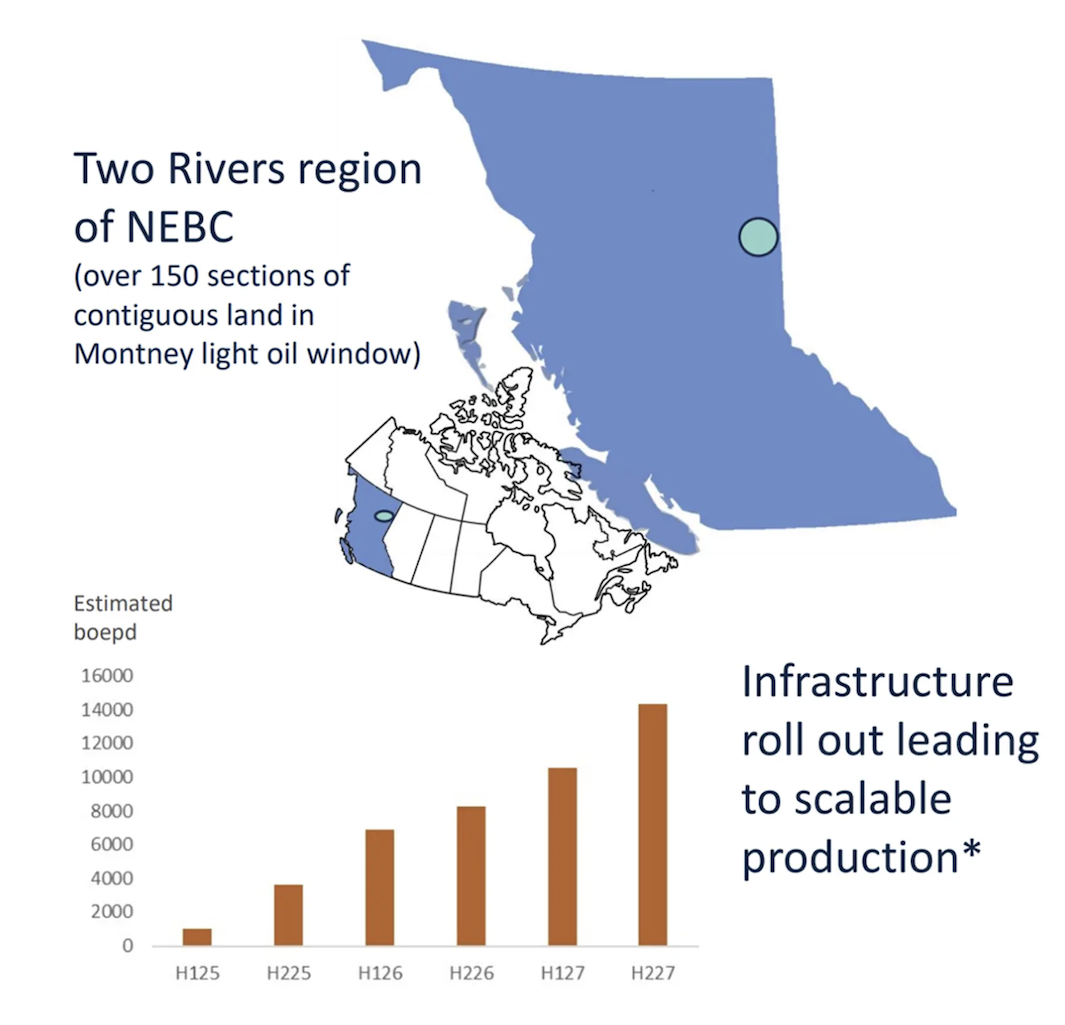
    Map of NEBC with two graphs and text detailing Coelacanth Energy's oil production projections and infrastructure.

    The company’s asset base is supported by substantial petroleum initially-in-place estimates prepared by GLJ. These include 6.9 billion barrels of discovered oil PIIP and 8.3 billion barrels of undiscovered oil PIIP, alongside 5.9 Tcf of discovered gas PIIP and 7.1 Tcf of undiscovered gas PIIP. The resource spans multiple Montney intervals, including the Upper, Lower, Basal and Middle Montney, providing extensive opportunities for future development and delineation.

    Coelacanth’s strategy combines near-term production growth with long-term resource value creation. The company has secured critical infrastructure, contracted gas takeaway and processing capacity, and advanced development activities across its Two Rivers assets. Average production reached 7,632 boe/d in Q2 2026, reflecting continued progress in transitioning from delineation and infrastructure buildout toward scalable production growth.
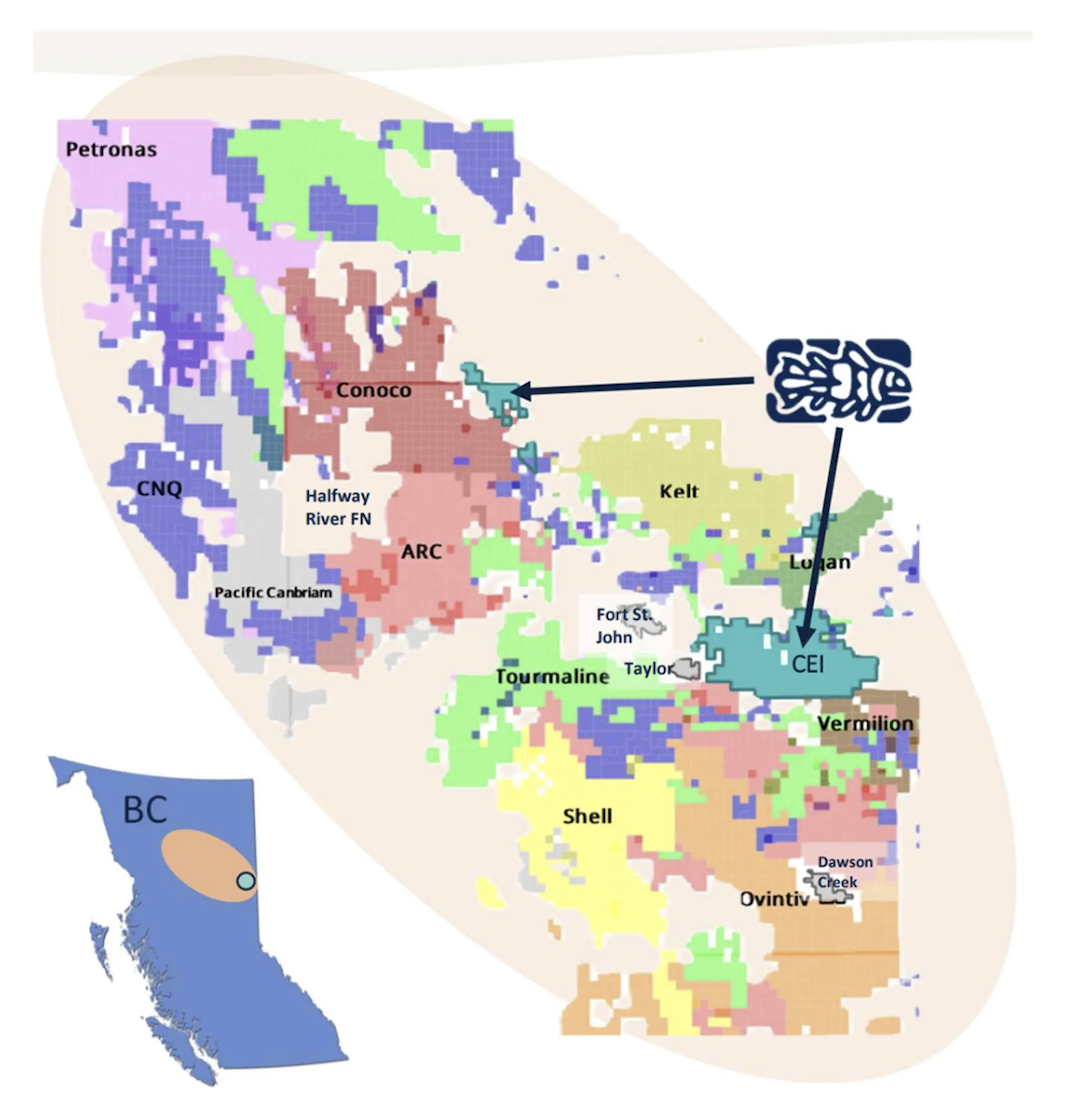
    Colorful regional map of British Columbia with Coelacanth Energy's projects

    A key differentiator for Coelacanth is its leadership team. Management has successfully built and sold six previous public energy companies and has demonstrated an ability to create value through multiple commodity cycles. Supported by deep operational, geological and financial expertise, the team is focused on disciplined execution of the company’s Montney growth strategy.

    Company Highlights

    • Premier Montney land position: Controls over 150 contiguous sections in the Two Rivers region of northeastern British Columbia, making Coelacanth the largest landholder in the Montney light oil window.
    • Substantial hydrocarbons in place: GLJ estimates 6.9 billion barrels of discovered oil PIIP, 8.3 billion barrels of undiscovered oil PIIP, 5.9 Tcf of discovered gas PIIP, and 7.1 Tcf of undiscovered gas PIIP across the company’s Montney acreage.
    • Infrastructure-led growth strategy: Key infrastructure, including facilities, pipelines, processing agreements and gas takeaway capacity, has been secured to support scalable production growth.
    • Growing production base: Average production reached 7,632 boe/d in Q2 2026, supported by ongoing development at the Two Rivers project.
    • Multiple productive Montney horizons: The asset base includes the Upper, Lower, Basal and Middle Montney intervals, providing extensive development opportunities across multiple zones.
    • Strong market access: Secured 100 mmcf/d of gas takeaway capacity and up to 60 mmcf/d of processing capacity, with access to major pipeline networks and potential LNG Canada connectivity through Coastal GasLink.
    • Proven value-creation team: Management has built and sold six successful energy companies and brings extensive operational, technical and financial expertise to Coelacanth’s development strategy.

    Key Project

    Two Rivers Montney Development
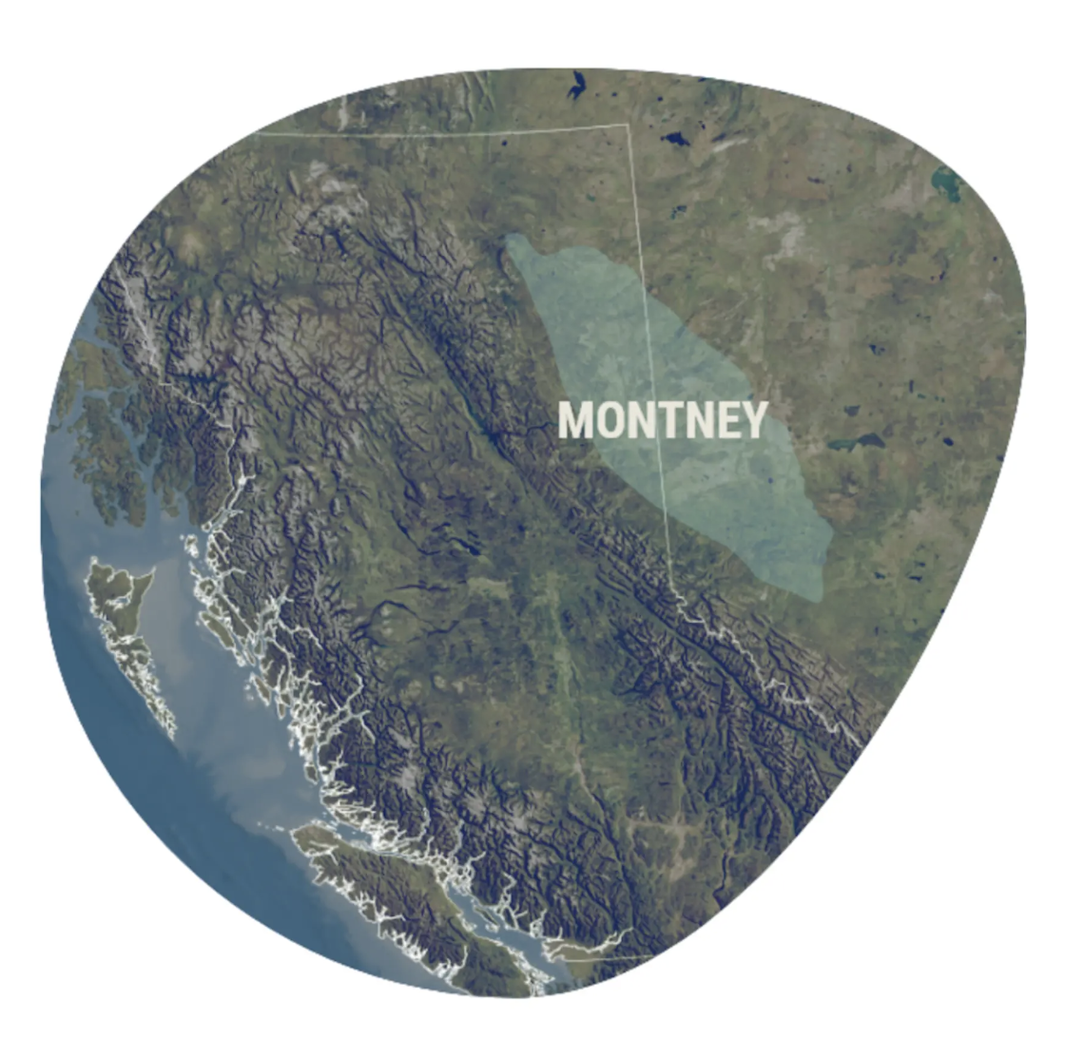
    Aerial view of North America's landscape highlighting Coelacanth Energy's Two Rivers Montney development

    The Two Rivers project forms the cornerstone of Coelacanth’s growth strategy and encompasses the company’s extensive Montney land position in northeastern British Columbia. The project hosts multiple productive horizons, including the Upper, Lower, Basal and Middle Montney intervals, supporting a multi-zone development approach across the acreage. Geological delineation has been completed, providing a strong technical foundation for future drilling and development.

    The project has demonstrated commercial productivity through successful drilling and testing programs. Coelacanth established proof of commerciality at both Two Rivers East and Two Rivers West, while development at the 5-19 and 10-08 pads confirmed productivity across multiple Montney benches. All 12 wells on the 5-19 pad were onstream by April 1, 2026, marking a significant milestone in the project’s progression.
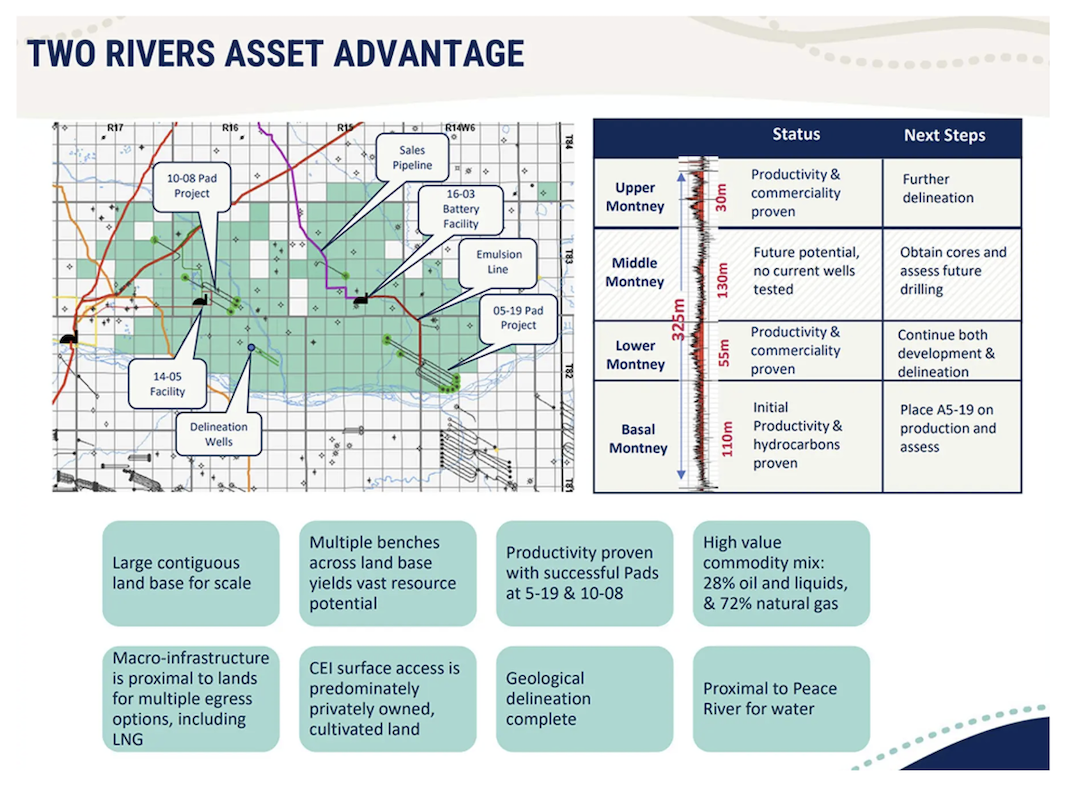
    Map with labeled facilities showing Coelacanth Energy Two Rivers asset advantage

    Infrastructure development has been a major focus of the company’s execution strategy. Coelacanth has secured infrastructure financing, completed key facility and pipeline construction, contracted up to 100 mmcf/d of gas takeaway capacity and secured processing capacity of up to 60 mmcf/d. These initiatives establish the infrastructure foundation required to support future production growth.

    The Two Rivers asset also benefits from strong market access. The company’s production can access major regional pipeline systems, including NGTL, Westcoast and Alliance, while its acreage is directly connected to LNG Canada through the Coastal GasLink system for potential future delivery. Coelacanth Energy said the long-term view for LNG expansion in British Columbia is very positive for its land, believing that lands with scale and direct access as such will trade at a premium once they are delineated and the resource is proven for development.

    Combined with a commodity mix of approximately 31 percent oil and liquids and 72 percent natural gas, the project offers exposure to multiple energy markets.

    Management Team

    Rob Zakresky – President, CEO and Director

    Rob Zakresky is a veteran energy executive who previously served as president and CEO of Leucrotta Exploration, Crocotta Energy, Chamaelo Exploration, Chamaelo Energy, Viracocha Energy and Bellator Exploration. He has a proven track record of building and monetizing public energy companies and leads Coelacanth’s strategic growth and value creation initiatives.

    Nolan Chicoine – Vice President of Finance and CFO

    Nolan Chicoine previously served as CFO and vice-president finance at Leucrotta Exploration, Crocotta Energy and Chamaelo Exploration, and was controller at Chamaelo Energy and Viracocha Energy. He is responsible for financial strategy, reporting and capital management.

    Jody Denis – Vice President of Operations

    Jody Denis is a former drilling, engineering and operations engineer at Leucrotta Exploration. His previous experience also includes senior operational and drilling leadership roles with Black Swan Energy, ARC Resources and Birchcliff Energy. He formerly led Coelacanth Energy’s drilling and completions activities.

    John Fur – Vice President of Geosciences

    John Fur previously served as manager of exploration at Leucrotta Exploration and held senior geophysical positions with Crocotta Energy, Chamaelo Energy, Viracocha Energy, Canadian Natural Resources, Post Energy, Amber Energy and Husky Oil. He oversees geological evaluation and resource delineation across the company’s Montney assets.

    Jonathon Hanson — Vice President of Engineering

    Jonathon Hanson has 20 years of industry experience. He previously served as manager for exploitation at Spartan Dela Corp, and was a senior exploitation engineer for companies Vermilion Energy, Lynx Energy and Saguaro Resources. He will focus on exploitation and reservoir management for Coelacanth Energy.
    Kinetiko Energy

    Kinetiko Energy (KKO:AU)
    KKO:AU

    Syntholene Energy

    Syntholene Energy (ESAF:CC)
    ESAF:CC

    Investor Insight

    Syntholene Energy is advancing a proprietary synthetic fuel production platform designed to produce high-performance, low-cost synthetic hydrocarbons using renewable electricity, geothermal heat and captured carbon. Following successful prototype-scale validation in 2022, the company is now operating its Iceland demonstration facility as it plans commercial-scale production capable of serving aviation, transportation, industrial energy and other hard-to-abate fuel markets.

    Overview

    Syntholene Energy ((TSXV:ESAF,FSE:3DD0, OTC:SYNTF) is a synthetic fuel production company company focused on developing high-performance, low-cost synthetic liquid fuels. The company is commercializing its proprietary Hybrid Thermal Production System, which combines renewable electricity, geothermal heat, water and captured carbon to produce synthetic hydrocarbons that can serve as direct replacements for conventional petroleum-derived fuels.
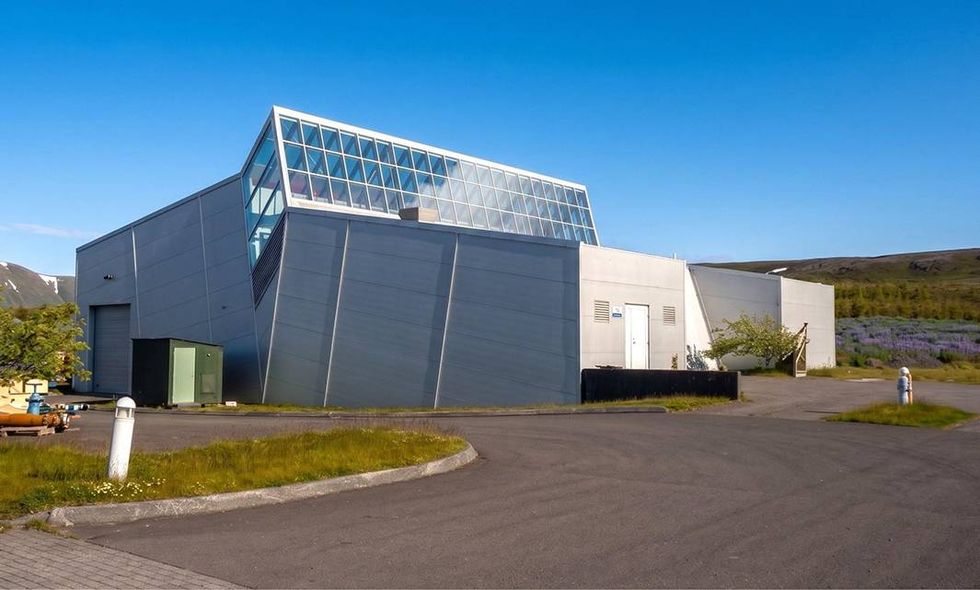
    Syntholene's \u200bH\u00fasav\u00edk Power Station

    Unlike many alternative energy solutions that require extensive changes to existing infrastructure, synthetic fuels can be transported, stored and utilized through today’s fuel supply chains. The resulting fuels are molecularly pure, free from many contaminants associated with conventional fuels and compatible with existing engines, turbines, storage systems and transportation infrastructure. Produced using renewable electricity, hydrogen and captured carbon, the fuels can deliver over 90 percent lower lifecycle emissions while maintaining the energy density and performance characteristics required across multiple industries.

    At the core of the company’s platform is its Hybrid Thermal Production System, which combines high-temperature solid oxide electrolysis with industrially proven fuel synthesis reactors. By incorporating low-cost thermal energy into critical production stages, Syntholene seeks to reduce electricity consumption, the largest cost component for most eFuel producers. This approach underpins the company’s targeted 70 percent cost advantage relative to competing technologies and supports its objective of producing cost-competitive synthetic fuels at commercial scale.
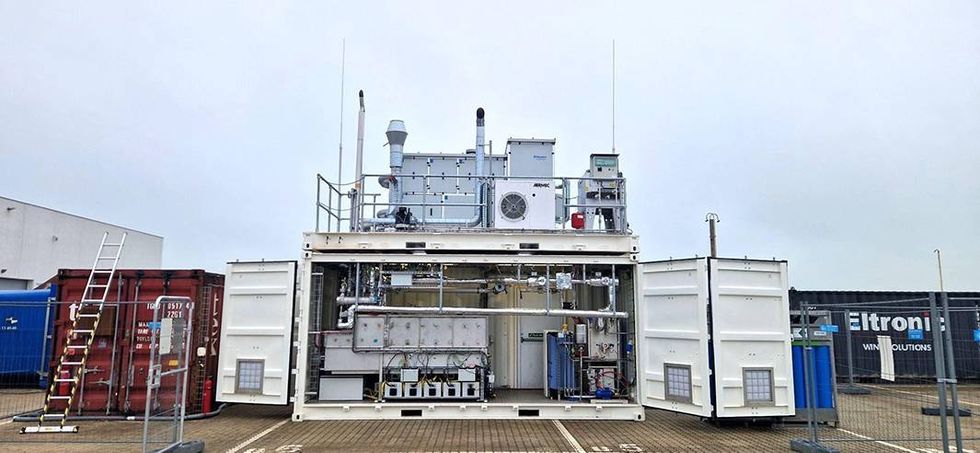
    Syntholene Hybrid Thermal Production System

    The technology builds upon advancements in high-temperature electrolysis, including work undertaken at Idaho National Laboratory. Following successful prototype-scale validation in 2022, Syntholene is progressing toward field-scale demonstration in Iceland. The company believes a successful demonstration will support future commercial deployment across a range of synthetic fuel applications.

    Market demand for low-emission liquid fuels continues to expand across multiple sectors. Sustainable aviation fuel represents Syntholene’s initial commercial focus, supported by increasing airline decarbonization commitments, regulatory mandates, and fuel-blending requirements. Beyond aviation, the broader global eFuel market is projected to grow from US$8.89 billion in 2024 to more than US$215 billion by 2032, creating opportunities across transportation, shipping, industrial energy, and other sectors that depend on liquid hydrocarbon fuels.

    Syntholene’s leadership team combines expertise across climate technology, synthetic fuels, industrial engineering, energy infrastructure, project development and resource industries. Recent additions to the advisory board, including former Shell and Suncor executive Marc Mageau and energy industry veteran HY Lee, further strengthen the company’s capabilities as it advances toward commercialization.

    Company Highlights

    • Addressing a multi-layered growth opportunity: The company is initially targeting sustainable aviation fuel while developing a technology platform capable of serving a substantially larger global liquid fuels market spanning transportation, industrial energy and other hard-to-electrify sectors.
    • Proprietary hybrid thermal production system: Syntholene’s technology integrates high-temperature solid oxide electrolysis with industrially proven fuel synthesis reactors, utilizing both electricity and thermal energy to improve efficiency and reduce production costs.
    • Targeting a 70 percent cost advantage: By introducing low-cost thermal energy into critical stages of production, the company aims to produce synthetic fuels at 70 percent lower cost than competing eFuel technologies.
    • Pathway to cost-competitive synthetic fuels: The company believes its technology provides a credible pathway toward producing synthetic fuels that can compete economically with conventional petroleum-derived fuels at scale.
    • High-performance fuel characteristics: Synthetic fuels are molecularly pure and free from many contaminants associated with conventional fuels, including sulfur, nitrogen and heavy metals, while remaining compatible with existing infrastructure.
    • Over 90 percent lower lifecycle emissions: Synthetic fuels produced from renewable electricity, hydrogen and captured carbon can deliver over 90 percent lower lifecycle emissions than conventional alternatives.
    • Prototype validation completed: The company’s production process was successfully demonstrated at prototype scale in 2022 and is now operating a world-first geothermally-integrated demonstration facility in Husavik, Iceland.
    • Demonstration facility advancing ahead of schedule: The Húsavík, Iceland facility is now operating, with efficiency and technoeconomic results expected in Q4 2026.
    • Strategic geothermal platform: The Iceland project benefits from low-cost geothermal electricity, thermal energy, industrial infrastructure, deep-water port access and an existing 200 MW+ regional grid expansion permitting framework.
    • Scalable commercial development strategy: Following demonstration, the company intends to advance a 20,000-tonne-per-year commercial facility design and subsequently scale production through facilities ranging from tens to hundreds of megawatts.

    Flagship Project

    Húsavík Demonstration Facility, Iceland
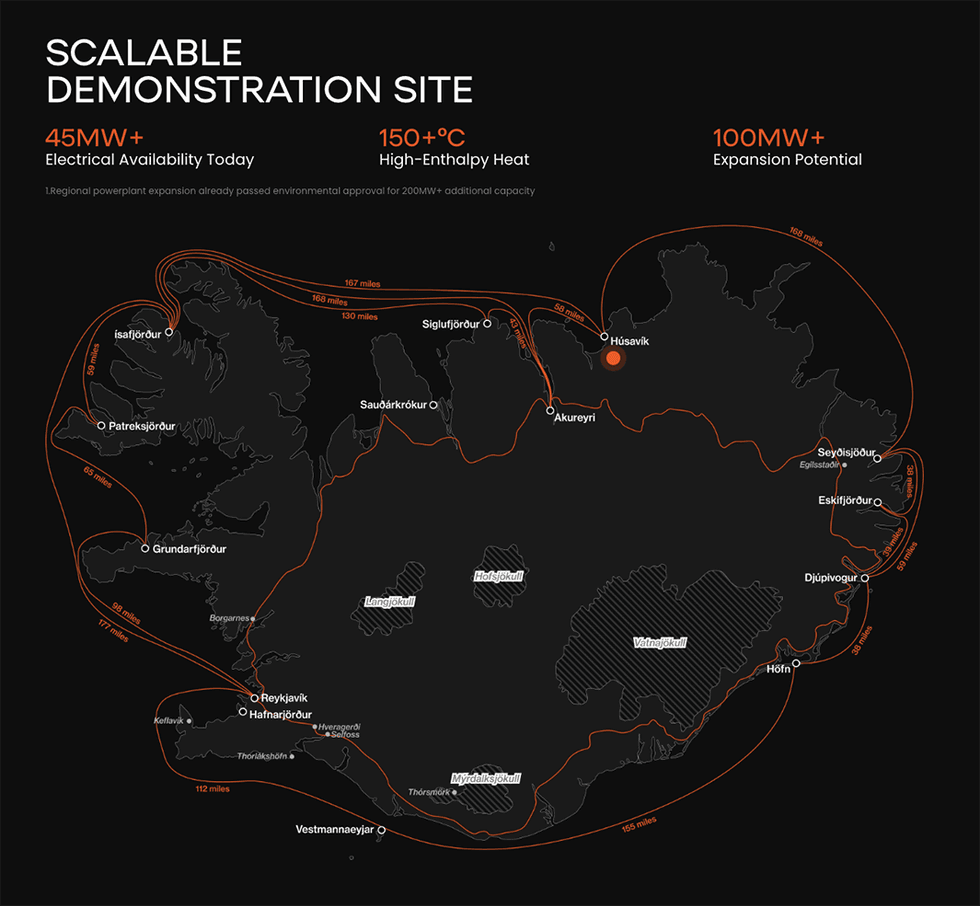
    Syntholene \u200bH\u00fasav\u00edk Demonstration Facility, Iceland

    Syntholene’s flagship project is its geothermal-integrated demonstration facility located in Húsavík, northern Iceland. The facility is designed to validate the integration of geothermal heat, high-temperature solid oxide electrolysis and synthetic fuel production technologies under real-world operating conditions. Construction has advanced six months ahead of schedule, with first operations initiated on June 22nd 20266 and efficiency and technoeconomic results expected in Q4 2026.

    The project leverages northern Iceland’s abundant geothermal resources, providing access to both low-cost electricity and high-temperature steam. Unlike intermittent renewable energy sources, geothermal energy offers reliable baseload power and thermal energy that can be utilized continuously throughout the fuel production process. The location also benefits from established industrial infrastructure, a skilled workforce, proximity to a deep-water port and a favorable regulatory environment.

    Syntholene Demo Footprint

    A key objective of the demonstration facility is to validate the company’s thermal integration strategy and confirm that efficiencies achieved during laboratory and prototype testing can be replicated under commercial operating conditions. The facility incorporates Syntholene’s proprietary Thermal Coupling technology, which converts geothermal steam into high-purity industrial steam suitable for use throughout the fuel production process. Management believes this technology is central to achieving the targeted 70 percent cost advantage relative to competing synthetic fuel pathways.

    The project also benefits from significant expansion potential. Iceland has completed environmental permitting associated with a 200 MW regional grid expansion, supporting future industrial development in the region. Following a successful demonstration, Syntholene intends to advance a 20,000-tonne-per-year commercial facility design and subsequently scale production through facilities ranging from tens to hundreds of megawatts. Management believes the Húsavík location alone has the potential to support development capable of generating approximately US$500 million in annual revenue.

    Management Team

    Dan Sutton – Chief Executive Officer

    Dan Sutton has spent the last 15 years founding and leading sustainable infrastructure businesses. As founder and CEO of Tantalus Labs, he designed, built and operated SUNLAB, scaled the company to 150 employees and grew annual revenue to approximately US$20 million. His expertise spans infrastructure deployment, project development, government relations, public markets and executive leadership.

    Steve Oldham – Director

    Steve Oldham is a globally recognized leader in carbon management and climate technology commercialization. As former CEO of Carbon Engineering, he helped establish direct air capture as a commercial industry and led the company through its acquisition by Occidental Petroleum at a US$1.6 billion valuation. He currently serves as CEO of Captura.

    Canon Bryan – Director

    Canon Bryan is a founder and company builder with more than 25 years of experience across advanced energy and resource development. He co-founded Terrestrial Energy, Uranium Energy and NioCorp and brings expertise in finance, corporate development, economic modelling and strategic planning.

    John Kutsch – Chief Engineer

    John Kutsch leads the integration and optimization of Syntholene’s fuel production platform. He brings more than 30 years of experience across industrial systems design, chemical processing, advanced energy technologies and reactor development, including work supporting high-temperature synthetic fuel systems.

    Jack Williams – Head Engineer

    Jack Williams specializes in high-temperature and high-pressure reactor systems and synthetic fuel technologies. His research at the University of Cambridge focused on electrolysis systems, catalytic reactor design, CO₂ capture and synthetic fuel production processes.

    Grant Tanaka – Chief Financial Officer

    Grant Tanaka has more than 15 years of senior financial leadership experience across the global natural resources sector. His background includes senior finance roles at Teck Resources, New Gold and Copper Mountain Mining, combining financial discipline with operational performance management. He was also appointed Corporate Secretary in May 2026.

    Anna Pagliaro – Director

    Anna Pagliaro is a senior commercial and risk management executive with extensive experience across the energy and mining sectors. Her career includes leadership positions at Vizsla Silver, Ausenco, NexGen Energy and Integra Gold, where she focused on governance, commercial strategy, negotiations and risk management.

    Marc Mageau – Advisory Board Member

    Marc Mageau joined the Advisory Board in June 2026. He brings more than three decades of operational leadership experience from Shell and Suncor, including expertise in refining, oil sands operations, logistics, infrastructure development and industrial asset management.

    HY Lee – Advisory Board Member

    HY Lee joined the Advisory Board in May 2026, adding further industrial, operational and strategic expertise as Syntholene advances toward commercial deployment of its synthetic fuel platform.
    Quebec Innovative Materials

    QIMC:CC

    Alvopetro Energy

    Alvopetro Energy (ALV:CC)
    ALV:CC

    Valeura Energy

    Valeura Energy (VLE:CC)
    VLE:CC
    More featured stocks

    Browse Companies

    Resource
    • Precious Metals
    • Battery Metals
    • Energy
    • Base Metals
    • Critical Metals
    Tech
    Life Science
    MARKETS
    COMMODITIES
    CURRENCIES