
The Conversation (0)
- WORLD EDITIONAustraliaNorth AmericaWorld
Fertilizer prices were elevated but steady in early 2026; however, war in the Middle East is threatening to send phosphate and potash higher.
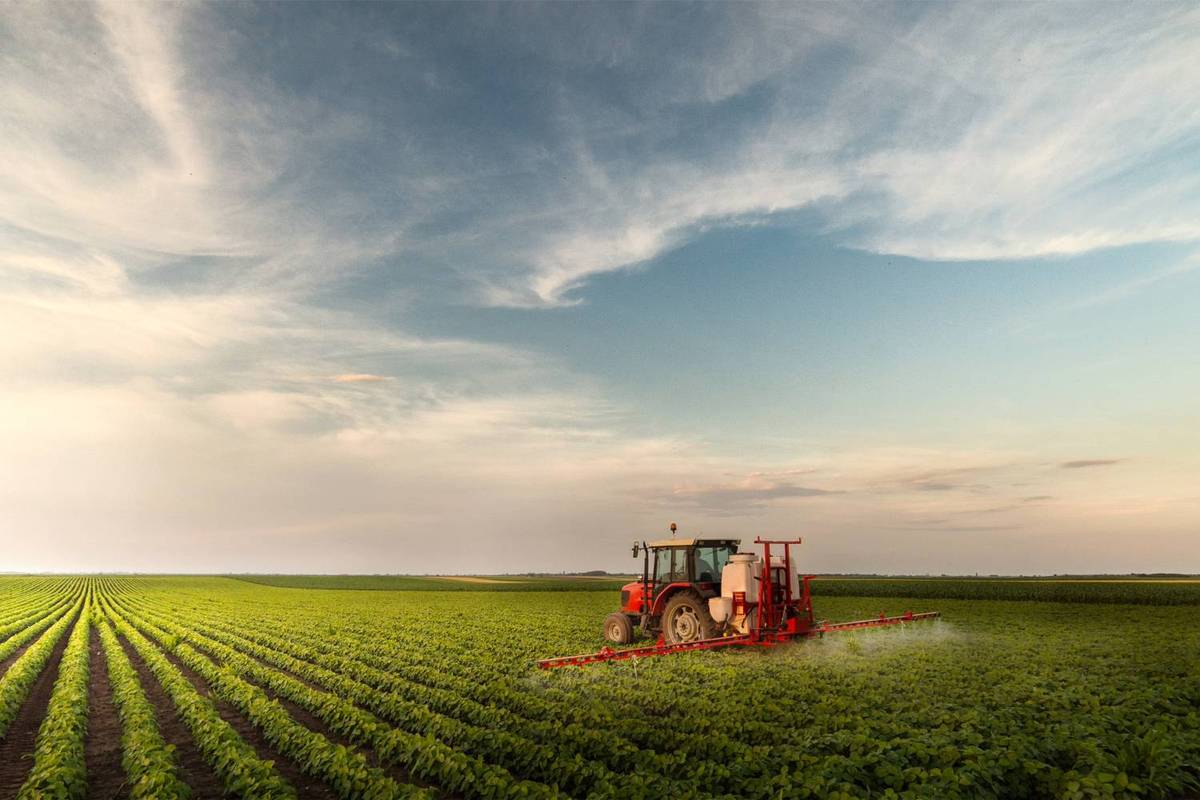
Dusan Kostic / Adobe Stock
Phosphate and potash prices were relatively stable through the end of 2025 and the first two months of 2026.
However, a burgeoning war between the US and Iran, along with strict export restrictions from China, the world’s top phosphate exporter, are threatening to push phosphate prices higher in the rest of the year.
And while the potash market hasn't been as directly affected by geopolitics, these events are still impacting prices.
Read on to learn more about phosphate and potash during Q1 and what experts see coming.
What happened to phosphate and potash prices in Q1?
According to data from the World Bank, the first months of the year saw diammonium phosphate (DAP) prices fall slightly to US$619.20 per metric ton (MT) in January; they then increased to US$626.60 in February.
Although the World's Bank's March data had not been released at the time this writing, Trading Economics shows the price of DAP rising to US$692.50 on March 27. Meanwhile, the price of monoammonium phosphate (MAP) has climbed even higher, reaching US$770 per MT in the US and US$990 in Europe.
On the potash side, the World Bank data shows prices starting the year in January at US$358.30 per MT, then climbing to US$366 in February. Prices have also surged in March, trading at US$488, their highest since February 2023.
What factors impacted phosphate in Q1?
The big story of the quarter was the outbreak of war between the US and Iran, which began on February 28.
The military action plunged the region into chaos and led Iran to force the closure of the Strait of Hormuz, a key shipping route in and out of the region. While rising oil and gas prices have garnered most of the headlines, the conflict also crippled shipments of phosphate from Saudi Arabia, the world’s third largest supplier.
Josh Linville, vice president of fertilizer at StoneX, explained how the war is impacting the market.
“The loss of Saudi Arabia’s phosphate exports, as well as ammonia exports from Saudi Arabia, Qatar and Iran, is having big impacts on global markets,” he told the Investing News Network via email.
“Saudi Arabia is the third largest exporter of DAP/MAP, and they remain 'stuck' behind the strait. With so much NH3 and sulfur also stuck behind the strait, that is having an adverse/bullish impact as both are the biggest variable rate inputs for phosphate production," he added. This has exacerbated an already tight supply/demand situation following the imposition of export restrictions several years ago by China, the world's top phosphate supplier.
The restrictions were put in place to prioritize domestic demand, but caused significant difficulties for foreign importers, which had to compete for a limited supply, ultimately pushing prices higher. The hope coming into the year was that China would ease some export restrictions; however, it has gone the other direction.
“To start the year, the government said it would not allow urea or DAP/MAP exports until August. They have taken it a step further and have banned any type of fertilizer from being exported,” Linville said.
India was a key demand driver last year as it sought to increase stockpiles that had become depleted over the course of previous years. By October, the country was continuing to build stockpiles as farmers began seeking alternatives due to difficulties in procuring phosphate for their fields.
Despite the clampdown on Chinese exports and supply disruptions due to the war in the Middle East, the Indian government said it is well positioned with adequate stockpiles.
S&P Global reported on March 9 that India has increased its fertilizer stockpiles by more than a third over the past year, including the addition of 2.51 million MT of phosphates. The government also stated that it was “benefiting from a lean consumption phase and aggressive advance stocking strategy.”
Consumers elsewhere may not be so fortunate, and may have to deal with a surge in prices as much of the northern hemisphere enters the spring growing season. At this point it’s unclear how it will affect farmers.
“Some believe the higher price is causing farmers to run away from heavy input crops like corn. Others are saying that demand will be there, but it is waiting until the absolute last minute to buy. So far, we have not seen signs of a major demand cut, but there is still time for that to happen,” Linville said.
He added that while some farmers were able to lock in their orders before the war broke out, others who weren’t so lucky will likely wait until the last minute. These delays have affected retailers, which are waiting for orders before committing to higher phosphate prices should demand not materialize.
“The entire system has been dragging behind, and with spring nearly here, just-in-time demand is about to meet very expensive just-in-time logistics,” Linville said.
What factors impacted potash in Q1?
Potash has been steady, with the market being well balanced.
“Steady is the key trend," Linville explained, adding, "Global values continue to remain very stagnant and for the most part well priced vs. current grain values. (It's) hard to see the market breaking hard to the higher or lower range near term without some new major global event happening."
While tariffs have been a concern since US President Donald Trump took office in January 2025, they’ve already been priced in. Additionally, although there has been concern about new tariffs since the US Supreme Court overturned “Liberation Day” tariffs, so far Canadian potash has not been affected.
The majority of potash exports to the US are covered under the Canada-US-Mexico Agreement, which Trump signed into law during his first term. Potash flowing south from Canada represents 90 percent of US imports.
Potash and phosphate price forecast for 2026
The war is already affecting phosphate prices, and a protracted engagement will likely provide significant tailwinds.
The downstream effects — such as higher food prices and greater inflation — may lead to a reduction in interest rate cuts from central banks, and could mean that economically the situation gets worse before it gets better.
In an interview with CBS on March 31, JPMorgan Chase (NYSE:JPM) CEO Jamie Dimon suggested that the war with Iran could be the event that pushes the economy into a recession.
The war has already led to higher prices for key inflationary inputs like gasoline, which has surged to over US$4 per gallon in recent days, the highest average since 2022. While it may take time for fertilizer price increases to reach grocery store shelves, they will also act to drive inflation.
Don't forget to follow us @INN_Resource for real-time updates!
Securities Disclosure: I, Dean Belder, hold no direct investment interest in any company mentioned in this article.
Editorial Disclosure: The Investing News Network does not guarantee the accuracy or thoroughness of the information reported in the interviews it conducts. The opinions expressed in these interviews do not reflect the opinions of the Investing News Network and do not constitute investment advice. All readers are encouraged to perform their own due diligence.
https://x.com/INN_Resource
https://www.linkedin.com/in/deanbelder
dbelder@investingnews.com
Dean has been writing in one form or another since penning stage plays in his youth. He is a graduate of both Emily Carr University and Simon Fraser University, with a BFA in photography and a BA in communications.
As a writer, Dean has traveled throughout BC and the Pacific Northwest covering cultural events, interviewing small business owners and working alongside fellow writers and photographers from publications like Rolling Stone Magazine, Spin and the Georgia Straight.
Dean has a keen interest in investing, and enjoys learning about the mining industry and better understanding the technical aspects of trading. In his spare time, Dean is an avid home chef, ponders the space-time continuum and makes his own cider. On weekends he can be found cycling the Seawall, exploring farmers markets or sampling the city’s local craft breweries.
As a writer, Dean has traveled throughout BC and the Pacific Northwest covering cultural events, interviewing small business owners and working alongside fellow writers and photographers from publications like Rolling Stone Magazine, Spin and the Georgia Straight.
Dean has a keen interest in investing, and enjoys learning about the mining industry and better understanding the technical aspects of trading. In his spare time, Dean is an avid home chef, ponders the space-time continuum and makes his own cider. On weekends he can be found cycling the Seawall, exploring farmers markets or sampling the city’s local craft breweries.
INN Article Notification
Latest News
Outlook Reports
Featured Agriculture Investing Stocks
Browse Companies
MARKETS
COMMODITIES
CURRENCIES
Dean has been writing in one form or another since penning stage plays in his youth. He is a graduate of both Emily Carr University and Simon Fraser University, with a BFA in photography and a BA in communications.
As a writer, Dean has traveled throughout BC and the Pacific Northwest covering cultural events, interviewing small business owners and working alongside fellow writers and photographers from publications like Rolling Stone Magazine, Spin and the Georgia Straight.
Dean has a keen interest in investing, and enjoys learning about the mining industry and better understanding the technical aspects of trading. In his spare time, Dean is an avid home chef, ponders the space-time continuum and makes his own cider. On weekends he can be found cycling the Seawall, exploring farmers markets or sampling the city’s local craft breweries.
Learn about our editorial policies.