

The Conversation (0)
Nov. 19, 2026 09:29AM PST
Molten will open sampling of its MG Series battery-anode graphite on December 1.
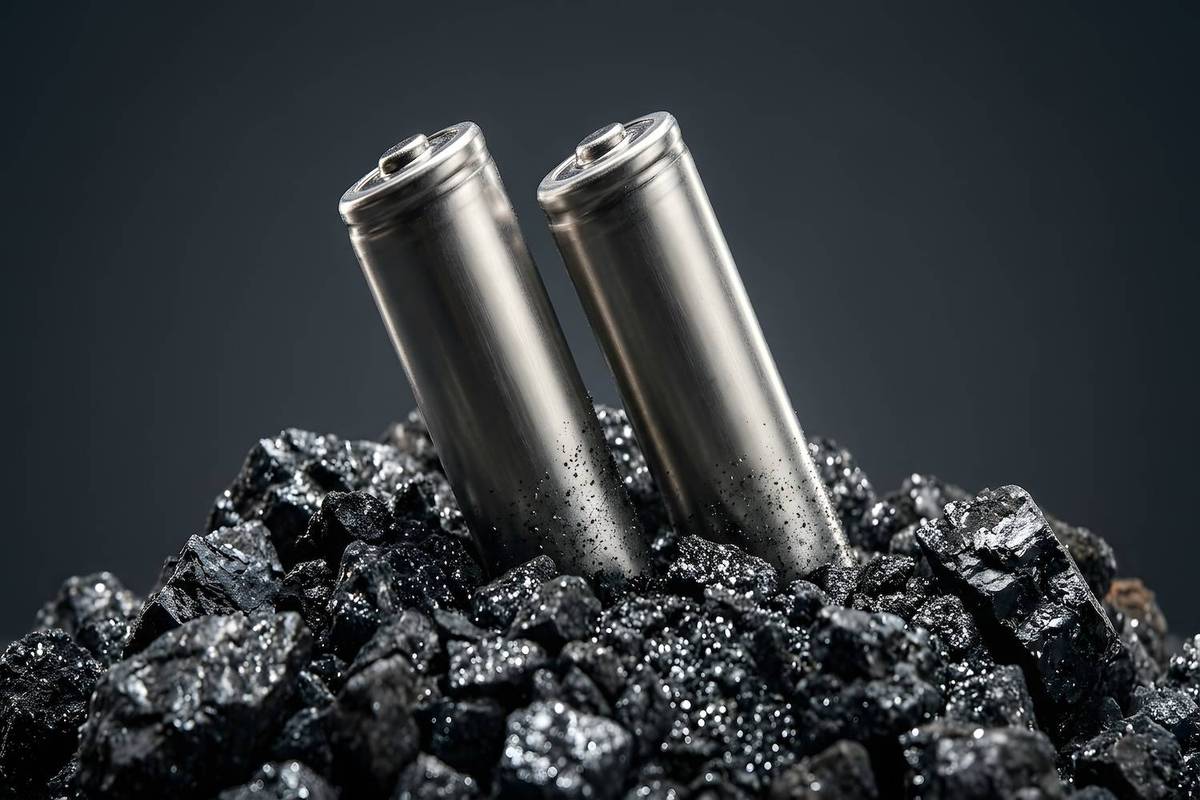
horizon / Adobe Stock
Molten Industries has commissioned a demonstration plant in Oakland, California, that converts natural gas into battery-grade graphite, and says its output will reach cost parity with Chinese supply once US tariffs are applied.
The company announced the start of operations on Wednesday (November 18) and described the facility as the world’s first of its kind.
A single modular reactor provides an annual capacity of 300 metric tons of graphite anode material, with natural gas-to-graphite yields above 95 percent, according to Molten.
That volume is sufficient for 300 megawatt hours of batteries, or about 4,300 electric vehicles.
“The new plant will be producing graphite that’s at cost parity with China plus tariffs,” Caleb Boyd, Molten’s co-founder and chief technology officer, told TechCrunch. He said future plants should achieve parity with Chinese costs even without tariffs.
Molten has not yet announced its next facility, which Boyd said will replicate the Oakland design several times over.
Chinese companies control about three-quarters of the graphite anode supply chain and 97 percent of synthetic graphite anode production, according to Benchmark Mineral Intelligence. Molten says the US relies entirely on foreign sources for battery-grade graphite.
“We think it’s very hard to compete with China if you’re just copying their processes and trying to compete on cost,” said Kevin Bush, Molten’s CEO.
Molten’s reactor uses electrical resistive heating to split methane into carbon and hydrogen without oxygen or combustion. Against conventional synthetic graphite production, the company says its process relies on feedstock that is four times cheaper, consumes three times less electricity, eliminates the graphitization furnace and generates no process emissions.
Bush and Boyd, both Stanford materials scientists, founded Molten in 2021 to produce low-cost clean hydrogen. Their work to prevent carbon from fouling the reactor ultimately yielded high-quality graphite, a development Boyd said “changed the entire economics of what we were doing.”
However, the anode market carries its own risks. BloombergNEF reported in 2024 that silicon, lithium, and hard carbon could begin to challenge graphite’s position as the default anode material, potentially halving demand by 2035.
Most of the Oakland plant’s output will go to undisclosed customers testing the material in their battery cells.
Don't forget to follow us @INN_Resource for real-time updates!
Securities Disclosure: I, Giann Liguid, hold no direct investment interest in any company mentioned in this article.
https://x.com/giannliguid
https://www.linkedin.com/in/giannliguid/
Giann Liguid is a graduate of Ateneo De Manila University with an AB in Interdisciplinary Studies. With a diverse writing background, Giann has written content for the security, food and business industries. He also has expertise in both the public and private sectors, having worked in the government specializing in local government units and administrative dynamics.
When he is not chasing the next market headline, Giann can most likely be found thrift shopping for his dogs.
When he is not chasing the next market headline, Giann can most likely be found thrift shopping for his dogs.
INN Article Notification
Outlook Reports world
Featured Graphite Investing Stocks
Browse Companies
MARKETS
COMMODITIES
CURRENCIES
Giann Liguid is a graduate of Ateneo De Manila University with an AB in Interdisciplinary Studies. With a diverse writing background, Giann has written content for the security, food and business industries. He also has expertise in both the public and private sectors, having worked in the government specializing in local government units and administrative dynamics.
When he is not chasing the next market headline, Giann can most likely be found thrift shopping for his dogs.
Learn about our editorial policies.