

The Conversation (0)
Sep. 07, 2026 02:00PM PST
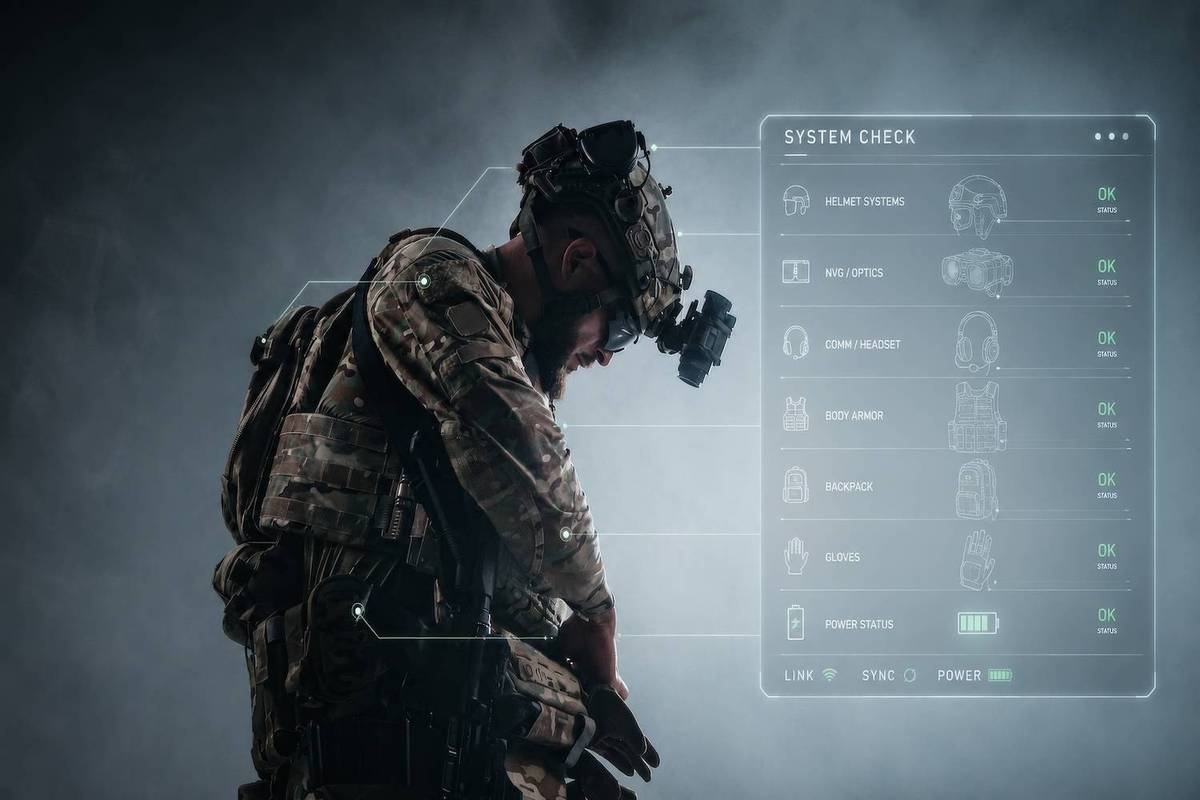
The battlefield is becoming a proving ground for a new generation of battery technologies, with military applications exposing both the opportunities and vulnerabilities in western critical mineral supply chains.
Валерия Стоганенко / Adobe Stock
The race to secure critical minerals supply chains is increasingly moving beyond electric vehicles (EVs) and grid storage, with defense emerging as a smaller but potentially lucrative market for advanced battery tech.
That was a key takeaway from an SC Insights webinar examining critical minerals, battery supply chains and the growing use of batteries across defense applications. Speakers Andy Leyland and Jose Hofer explained that while defense alone is unlikely to justify the construction of massive battery or mineral-processing facilities, sector demand could accelerate commercialization of higher-performance technologies such as solid-state and lithium sulfur batteries.
The distinction is important.
Defense represents a relatively small market compared to transportation and energy storage, but it can place a much higher value on energy density, weight, reliability and performance.
“The defense industry itself is typically pretty small compared to the total industrial base,” Leyland said, noting that the key to resilience is maintaining an industrial base that can be rapidly expanded when required.
Defense demand small, but growing
SC Insights groups defense, drones, robotics, aviation and personal mobility within the broader “high tech” battery industry. Hofer said the segment could see annual growth of around 20 percent over the next five years, with the possibility that actual growth could rise as high as 30 or 40 percent.
While the sector currently represents only a fraction of global battery demand, Hofer expects high-tech applications to become increasingly significant over the next decade.
That growth is being driven in part by lessons from recent conflicts, particularly the war in Ukraine, where drones have become an increasingly important military capability.
The scale of drone deployment illustrates the potential.
Ukraine is targeting production of between 5 million and 7 million drones this year, according to Leyland, compared with US production measured in the tens of thousands per month.
The comparison also highlights a broader issue facing western defense supply chains: the ability to move rapidly from peacetime production to wartime scale.
“Being able to go from one to the other comes down to having a strong industrial base,” Leyland said.
That industrial depth extends well beyond defense contractors. Batteries, critical minerals, processing capacity, equipment, skilled labor and financing all need to be available before a crisis emerges.
The battery technology gap
For many current defense applications, cutting-edge battery chemistry is not yet necessary.
Leyland noted that batteries deployed in the Russia-Ukraine conflict have largely been conventional lithium iron phosphate (LFP) or nickel-manganese-cobalt (NCM) cells readily available from commercial markets.
That could change as military platforms become smaller, lighter and more sophisticated. Battery requirements vary significantly, from first-person-view drones to unmanned ground vehicles, armored vehicles and aircraft. While some platforms can tolerate the weight and lower energy density of LFP, others require substantially higher performance.
Aviation is particularly compelling for advanced battery developers because every kilogram matters.
“That's where we're looking at more of the commercialization of your lithium sulfurs, your semi-solid-state and solid-state battery types as well,” Leyland said.
Hofer similarly identified solid-state, lithium sulfur and higher-nickel NCM chemistries as technologies with potential in high-performance applications.
The economics are also different from the mass-market EV industry. Automakers are focused heavily on minimizing battery costs, while defense and aviation customers may be willing to pay a premium for greater range, lower weight or higher energy density. Leyland expects solid-state batteries to remain more expensive than conventional LFP and NCM, but said defense and aviation could be among the sectors willing to absorb the additional cost.
Still, SC Insights' core message was one of scale mismatch. According to Hofer, the military and high-tech sectors — including drones, robotics, aviation and humanoid machines — may expand 20 to 40 percent annually over the next decade, though they will remain small relative to transportation and grid storage.
“You're not going to put up a 50 gigawatt-hour factory purely for defense batteries,” Leyland said. The roughly 400 gigawatt-hours of battery demand from these emerging applications is dwarfed by approximately 7,000 gigawatt-hours across transportation and grid storage combined.
The most immediate bottleneck identified in the session was not a raw materials shortage, but anode active material capacity. China controls roughly 91 percent of production, even though natural and synthetic graphite are relatively abundant. Cathode capacity, by contrast, is already expanding in Europe and North America, with Leyland expecting additional funding and legislation over the next six to 12 months.
Leyland's advice to governments and investors was therefore to avoid reflexive stockpiling or attempts to build entirely separate domestic supply chains for defense.
“Defense (is) rarely enough of a market to warrant its own raw material ... processing facility,” he said.
Instead, he argued, the priority should be maintaining broad industrial depth — from skilled labor and research capacity to reliable international alliances — that can pivot toward defense requirements during a genuine supply shock, rather than trying to secure any single mineral in isolation.
Critical minerals are only part of the problem
The webinar also challenged the assumption that every mineral classified as “critical” represents an immediate supply shortage. Leyland argued that many materials on government critical minerals lists are either abundant, produced in multiple jurisdictions or consumed in relatively small quantities that can be stockpiled.
"There's this assumption in the market that a critical mineral is in some way supply constrained, or that you're going to have trouble accessing that material in a conflict scenario, and that's not really the case with these expanded lists," Leyland said, pointing to silver and aluminum as examples. Both metals have been flagged as critical despite deep aboveground stockpiles and broad, geographically diverse production.
Leyland grouped the real risk into narrower bands: very small markets (often under 1,000 metric tons a year) such as indium and platinum-group metals, which can be stockpiled or sourced from otherwise uneconomic processes, and a handful of small but highly concentrated markets.
The materials that matter most, he said, are the ones moving in the tens or hundreds of thousands of metric tons — including cobalt, copper, lithium, tungsten and iron ore — because that volume depends almost entirely on ocean shipping.
Don’t forget to follow us @INN_Resource for real-time updates!
Securities Disclosure: I, Georgia Williams, hold no direct investment interest in any company mentioned in this article.
https://x.com/INN_Resource
https://www.linkedin.com/in/georgia-williams-15845447/
gwilliams@investingnews.com
Originally from Calgary, Georgia has been right at home in Toronto for more than two decades. Graduating from the University of Toronto with an honors BA in journalism, she is passionate about writing on diverse topics, including resources, arts, politics and social issues.
At INN Georgia covers a wide range of topics, including energy, battery and critical metals and diamonds. In her spare time, Georgia enjoys watching documentaries and experiencing Toronto's vibrant food, arts and cultural scene.
At INN Georgia covers a wide range of topics, including energy, battery and critical metals and diamonds. In her spare time, Georgia enjoys watching documentaries and experiencing Toronto's vibrant food, arts and cultural scene.
INN Article Notification
Latest News
Outlook Reports world
Featured Defense And Security Investing Stocks

Browse Companies
MARKETS
COMMODITIES
CURRENCIES
Originally from Calgary, Georgia has been right at home in Toronto for more than two decades. Graduating from the University of Toronto with an honors BA in journalism, she is passionate about writing on diverse topics, including resources, arts, politics and social issues.
At INN Georgia covers a wide range of topics, including energy, battery and critical metals and diamonds. In her spare time, Georgia enjoys watching documentaries and experiencing Toronto's vibrant food, arts and cultural scene.
Learn about our editorial policies.