

The Conversation (0)
May. 25, 2026 01:55PM PST
“The market continues to be undersupplied, and, despite geopolitical headwinds in the Middle East, platinum demand is well insulated,” said Trevor Raymond of the WPIC.
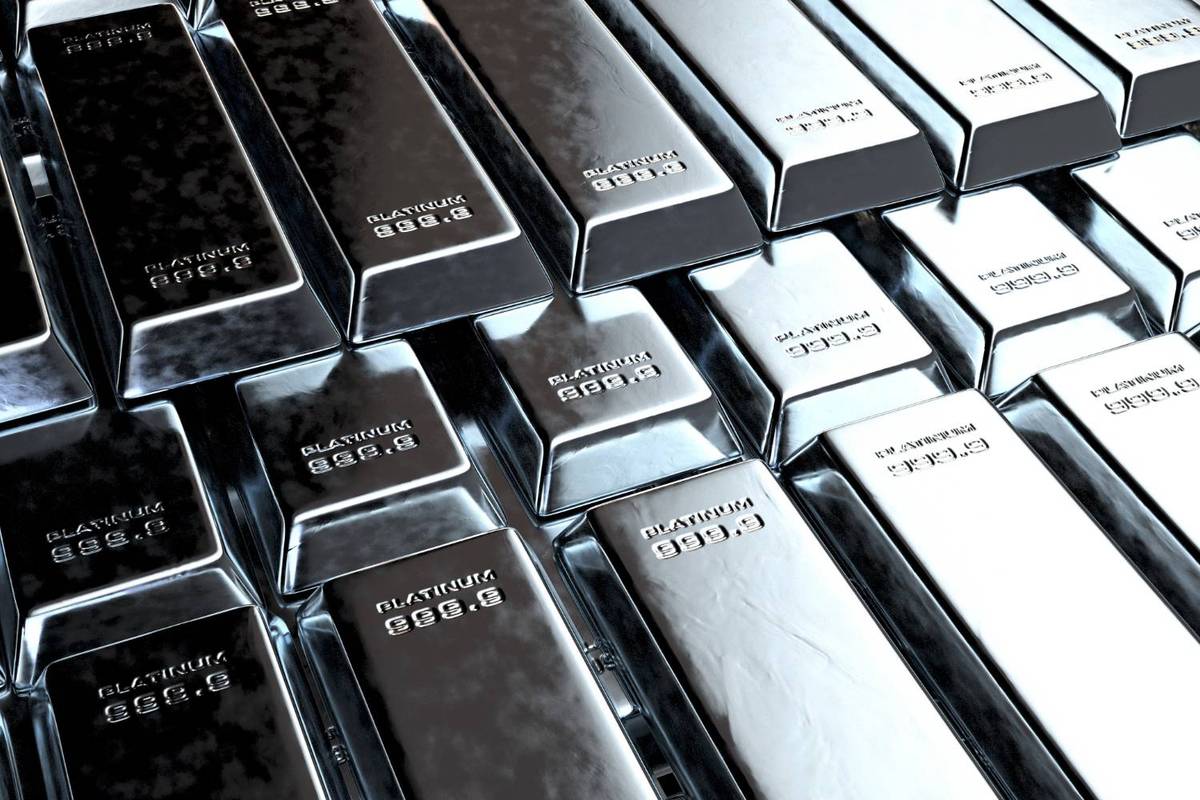
alswart / Adobe Stock
After an active first quarter, the global platinum market remains on track to record its fourth consecutive annual deficit as supply concerns bump up against resilient demand.
The World Platinum Investment Council (WPIC) published its latest Platinum Quarterly report on May 18, providing a look back at Q1, as well as a revised full-year 2026 outlook for the platinum market.
Platinum supply increased by 18 percent year-on-year in Q1, placing the market in a surplus of 268,000 ounces; looking forward, total platinum supply for 2026 is forecast to grow by 2 percent. On the demand side, the WPIC reported a 31 percent drop year-on-year for the quarter, but only expects a 9 percent reduction in total demand for the year.
Despite the Q1 surplus and lower projected demand, platinum is expected to remain in deficit for the fourth year in a row, with the trends impacting the market at the start of the year seen reversing course in the coming quarters.
“The market continues to be undersupplied, and, despite geopolitical headwinds in the Middle East, platinum demand is well insulated,” stated Trevor Raymond, CEO of the WPIC.
Let’s take a closer look at the supply and demand trends shaping the platinum market so far in 2026.
Platinum demand brights spots: Industrial, bars and coins
Platinum demand for the first quarter fell by 31 percent year-on-year. The WPIC credits exchange-traded fund (ETF) and exchange stock outflows as “the single largest factor” in reduced consumption of the metal.
The firm is forecasting a 9 percent decline in total platinum demand for 2026, down to 7.674 million ounces. The industrial sector, along with bars and coins, represents the best growth story for platinum demand this year.
Automotive demand
At 36 percent, the automotive industry is by far the largest demand segment for platinum as it is used in catalytic converters to reduce emissions from internal combustion engine (ICE) vehicles.
The increased uptake in electric vehicles is reducing demand for platinum, contributing to a 6 percent year-on-year drop in automotive demand for the metal in the first quarter of the year.
For the full year, that decline is expected to come in at 2 percent, moderated by supportive emissions regulations that require increased use of platinum; these are set to take hold in China, the US and Europe. Another factor contributing to a resilient demand picture in the automotive sector is the trend toward hybrid vehicles over pure electric and increased uptake in ICE heavy-duty vehicles in major markets such as the US and India.
Jewelry demand
The jewelry industry is the second largest demand segment for platinum at 26 percent.
This sector is extremely price sensitive, and the soaring platinum price — coupled with the rising cost of living over the past year — has taken a toll. In Q1, demand for platinum jewelry dropped by 13 percent year-on-year.
“The decline was driven by numerous factors working in tandem: higher platinum prices, weaker consumer sentiment, continued destocking across the jewellery supply chain and a shift from large, quasi-investment pieces to investment bars,” notes the WPIC in a press release accompanying its report.
China saw this biggest decline, with demand in that region falling 42 percent for the period.
One catalyst for this decline is the government’s removal of a 13 percent value-added tax rebate for platinum delivered via the Shanghai Gold Exchange; that was enacted at the start of November 2025.
In comparison, the European platinum jewelry market is on track for another record high in demand for 2026, while India should see growth of 5 percent. However, that won't be enough to counteract declines in other major markets, including the US, Japan and China. Overall, analysts are projecting a 12 percent decline in jewelry demand in 2026.
Industrial demand
The industrial sector is set to overtake jewelry in 2026 as demand for platinum grows in the glass, medical, electrical and hydrogen segments. In Q1, industrial demand jumped by 41 percent year-on-year.
The biggest driver of this growth was a rebound in the glass segment, which experienced a significant drop in demand in the same quarter last year on the closure of several manufacturing plants.
Platinum is not used in glass itself, but its exceptional resistance to extreme heat, oxidation and chemical corrosion makes it ideal for use in the lining of equipment required to manufacture fiberglass, optical glass, substrates used in artificial intelligence technology components and flat panel display glass.
The weak spots for industrial platinum demand in Q1 came from the chemical segment, which dropped by 4 percent, and the petroleum segment, which lost 28 percent year-on-year.
The WPIC projects that overall in 2026, industrial demand for platinum will grow by 9 percent as glass demand is forecast to jump by 83 percent for the year. On the other hand, the petroleum segment is expected to drop by 28 percent for the year as the Iran war has caused serious supply disruptions for the oil sector.
Investment demand
Investment demand for platinum products, whether physical bars and coins or ETFs, represents about 13 percent of total demand for the metal in 2025. Investors flocked to platinum last year as a more affordable safe-haven investment option than gold, resulting in massive inflows in ETFs and record platinum prices.
However, Q1 brought a strong reversal to that trend following the breakout of the Iran war, with fears of rising inflation and higher interest rates beginning to set in. Investors took profits and offloaded ETF holdings totaling 374,000 ounces for a net disinvestment of 225,000 ounces of platinum. These ETF outflows, says the WPIC, were a key driver of the platinum market surplus of 268,000 ounces recorded in the first quarter of this year.
That doesn’t mean investors have given up on platinum in 2026. The WPIC’s data shows that demand for platinum bars and coins in Q1 jumped by 42 percent year-on-year, led by Asian markets.
“Platinum’s price performance in 2025 and robust levels in 2026 have significantly increased global attention on its investment potential,” the WPIC's Raymond explained. “A far wider cohort of investors is now actively considering platinum’s precious attributes together with its compelling supply and demand fundamentals, as ETF demand in 2025 and this year’s expected bar and coin strength highlight.”
For the full 2026 year, the WPIC is projecting a 27 percent boost to total platinum bar and coin investment to 718,000 ounces, with growth expected across all regions. If realized, this would represent a six year high for the segment.
However, the firm is still forecasting a 54 percent decline in total investment demand for platinum as the market adjusts its expectations for non-yield generating assets and demand for ETFs is expected to unwind further.
Platinum market remains undersupplied
With the first surplus recorded in six quarters and a projected 2026 deficit that is about 75 percent less than the year prior, platinum’s supply-side fundamentals may look to be drastically improving. However, the WPIC notes that “the cumulative impact of four consecutive annual shortfalls has left the physical platinum market tight. Indeed, a series of material market surpluses would be needed to rebuild above ground stocks to sustainable levels.”
Given the forecast deficit for 2026, the platinum market is looking at a reduction of aboveground stocks by the end of this year to 1.747 million ounces of the metal, or just under three months worth of global demand.
Mine supply
Like other precious metals, the platinum price reached record highs in January, with the average price for the metal up by about 100 percent in Q1 compared to the first quarter of 2025. However, this impressive price performance is not yet expected to translate into increased production from the world’s platinum mines.
“In South Africa, Ivanhoe Mines' (TSX:IVN,OTCQX:IVPAF) Platreef mine represents the first greenfield project to be commissioned since Styldrift in 2019, highlighting the challenges miners face in quickly responding to prices,” states the WPIC in its report. Platinum mine supply did improve by 22 percent year-on-year for the first quarter of the year, but analysts are projecting that mine supply will remain flat for the year as a whole at 5.551 million ounces.
Most of the major platinum-production regions, such as Zimbabwe and Russia, experienced declines in the first quarter. South Africa was the only shining light on refined output, which was up 41 percent year-on-year.
This boost is mainly attributed to Valterra Platinum's (LSE:VALT,JSE:VAL,OTCPL:AGPPF) return to normal production following flooding disruptions in 2025, and to the company’s decision to shift its planned maintenance downtime from the usual time in the first quarter to later in the year.
Recycling supply
Recycling is expected to be a major driver of the projected 2 percent increase in total platinum supply for 2026.
This segment of the market benefited greatly from elevated prices and favorable government policies in the first quarter of the year, particularly in western regions. All said, supply from this segment grew by 7 percent year-on-year to 416,000 ounces. Analysts expect this trend to continue, with recycling to see 9 percent in growth for 2026 to 1.826 million ounces as higher prices for platinum encourage the processing of used autocatalysts and jewelry scrap.
However, there are reports that scrapyards are recycling lower-grade catalysts sitting in the inventories that were previously uneconomical to recycle at lower prices.
“If true, and the recycling supply chain is drawing on inventory and still failing to meet recycling supply expectations, it raises questions about whether the robust three to five-year outlook for recycling supply growth may in fact not quite live up to expectations,” the WPIC states in its report.
Investor takeaway
The investment case for platinum as both a precious metal and industrial metal is strong in 2026. Despite a first quarter surplus, the platinum market is still heading for its fourth consecutive annual deficit, which is expected to reduce aboveground stocks to less than three months' worth of global demand by the end of 2026.
The WPIC emphasizes that a series of large surpluses would be required to return physical stocks to sustainable levels, maintaining a tight market picture that could translate into stronger prices for the metal.
Don't forget to follow us @INN_Resource for real-time updates!
Securities Disclosure: I, Melissa Pistilli, hold no direct investment interest in any company mentioned in this article.
From Your Site Articles
- Metals Focus: Bullish on Platinum, Bearish on Palladium in 2026 ›
- Platinum Price Forecast: Top Trends for Platinum in 2026 ›
- Palladium Price Forecast: Top Trends for Palladium in 2026 ›
Related Articles Around the Web
https://x.com/INN_Resource
https://www.linkedin.com/in/melissa-pistilli-865271a9/
mpistilli@investingnews.com
Melissa Pistilli has been reporting on the markets and educating investors since 2006. She has covered a wide variety of industries in the investment space including mining, cannabis, tech and pharmaceuticals. She helps to educate investors about opportunities in a variety of growth markets. Melissa holds a bachelor's degree in English education as well as a master's degree in the teaching of writing, both from Humboldt State University, California.
INN Article Notification
Latest News
Outlook Reports world
Featured Platinum Investing Stocks
Browse Companies
MARKETS
COMMODITIES
CURRENCIES
Melissa Pistilli has been reporting on the markets and educating investors since 2006. She has covered a wide variety of industries in the investment space including mining, cannabis, tech and pharmaceuticals. She helps to educate investors about opportunities in a variety of growth markets. Melissa holds a bachelor's degree in English education as well as a master's degree in the teaching of writing, both from Humboldt State University, California.
Learn about our editorial policies.