

The Conversation (0)
Nov. 03, 2026 10:34AM PST
Concern a Democratic win could delay crucial digital asset legislation, is stirring market uncertainties. Yet, the deeper forces shaping Bitcoin remain strong.
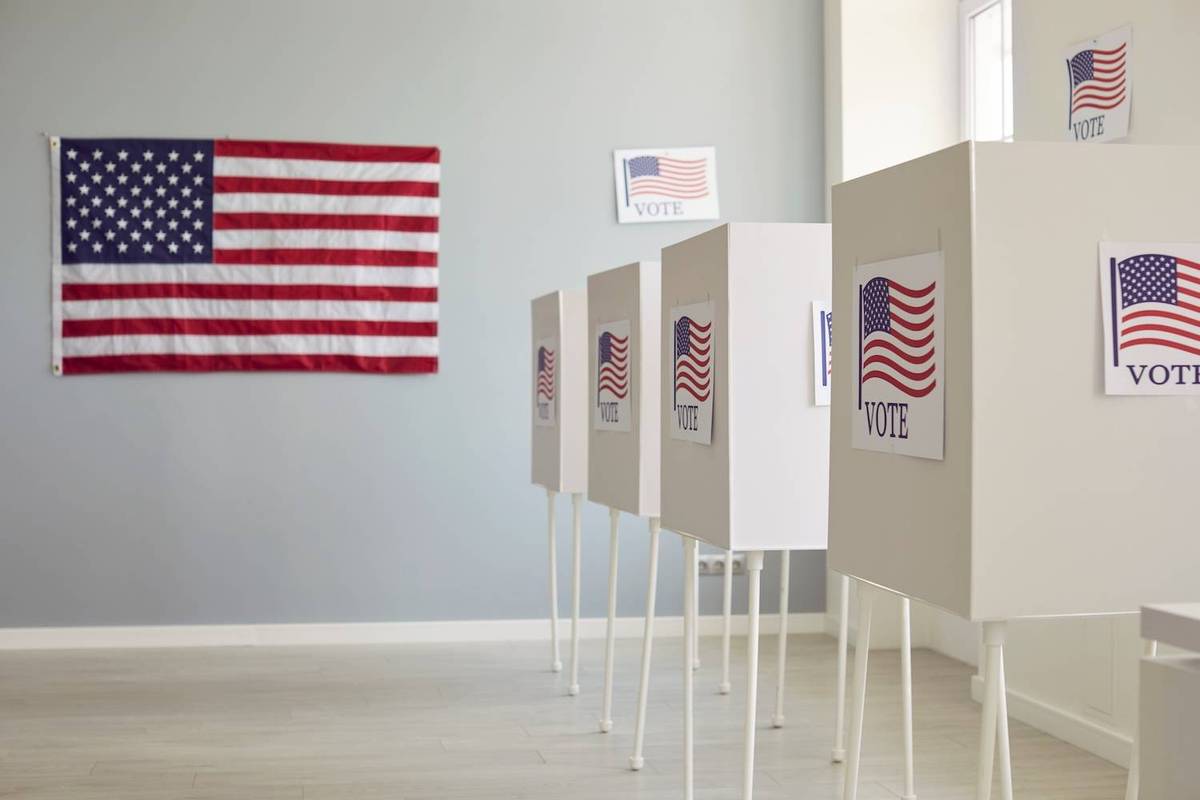
Studio Romantic / Adobe Stock
Americans are voting today (November 3) in midterm elections that will decide which party controls Congress, and crypto investors are watching closely.
Republicans currently hold both the House and the Senate, but their House majority is narrow. A change in control of either chamber could affect how lawmakers handle the rules for digital assets, including a market structure bill that has stalled this year.
The vote comes at a challenging time for Bitcoin.
The cryptocurrency is currently trading at around US$77,000, roughly 11 percent lower than its October high of US$87,146.35, and is coming off its fourth consecutive weekly loss.
Part of that slide came after the world’s largest crypto exchange, Binance, was hacked, allegedly by the North Korean state-backed hacking group, TraderTraitor.
On October 29, attackers drained about US$6.3 billion in digital assets from Binance’s wallets by hacking into a laptop belonging to one of the exchange’s technical staff.
Binance’s early findings say attackers gained access to an internal system through a months-long campaign that targeted several of its engineers. The hack is now the largest crypto theft on record. In the days that followed, Bitcoin fell to a six-week low, slipping below what on-chain data firm Glassnode calls the True Market Mean, which it put at about US$78,000 in late October.
That’s Glassnode’s estimate of the average price active investors paid for their coins, which means the average active investor is now holding Bitcoin at a loss.
Investors also pulled money out of Bitcoin funds, with US$233.7 million leaving the BlackRock iShares Bitcoin Trust on Friday (October 30), when Bitcoin funds overall saw their biggest daily outflow since late June.
On Monday (November 2), the fund saw another US$405.3 million in outflows.
As voting begins, Bitcoin is currently trading around US$77,000.
Utkarsh Ahuja, founder and managing partner of Moon Pursuit Capital, and Ryan Kirkley, co-founder and CEO of Global Settlement Network, shared their views with the Investing News Network (INN) on what a Democrat-controlled Congress could mean for crypto prices, the crypto bills still before lawmakers and the funds and banks investing in the sector.
A short-term reaction, not a long-term shift
According to Ahuja, a Democratic win could weigh on prices at first.
“A Democratic takeover of Congress could create near-term headwinds for cryptocurrency markets, particularly if it leads to further delays in regulatory legislation,” he said. “Investors have been anticipating a more predictable regulatory environment, and a shift in congressional leadership could introduce uncertainty around that timeline, potentially triggering short-term selling pressure.”
However, Ahuja doesn’t think that reaction would last.
“Bitcoin’s longer-term performance is increasingly driven by institutional adoption, global liquidity and macroeconomic conditions rather than any single political outcome. My broader outlook remains bullish, and I believe Bitcoin has moved beyond its cyclical bottom.
“Political uncertainty could temporarily interrupt the recovery, but unless it materially changes liquidity conditions or institutional demand, I would expect the market to regain its footing.”
Kirkley took a similar stance, saying investors should look at the politics and the business of crypto separately. “A change in Congress could certainly affect how quickly certain legislation moves forward, but it doesn't suddenly make stablecoins less useful or blockchain settlement less efficient,” he said. “Those are technologies solving problems that existed long before crypto became a political issue.”
He also cautioned against reading too much into the first market move.
“Markets are reasonably good at anticipating an event, but they’re much worse at understanding what that event will actually change,” Kirkley said. “A shift in Congress could produce an immediate price reaction, but the real implications for crypto regulation might take another year to become clear.”
Kirkley added that a Republican win wouldn’t necessarily lift prices for long either.
“A Republican majority could certainly produce an initial rally, particularly if investors interpret the result as improving the prospects for crypto legislation. The question is how much of that optimism survives once markets start looking at the actual legislative calendar,” said Kirkley.
He continued: “I'd be careful about assuming that a Republican Congress automatically translates into higher crypto prices. There's a difference between a government being supportive of an industry and that industry delivering sustainable economic value.”
Both experts also agreed that Bitcoin is better situated than smaller altcoins to navigate political uncertainty.
“It has an established institutional market and a fairly straightforward investment proposition. The assets most exposed to political outcomes are those whose future utility still depends on regulatory permission,” Kirkley said, adding that the same split applies to crypto companies.
“Companies that depend on favorable legislation to make their business models viable could face some pressure, while businesses already generating demand from financial institutions are in a different position,” he added. “To me, that's a sign of a healthier market. Investors are having to distinguish between companies building something economically useful and those whose valuations depend on Washington delivering the right outcome.”
The divide also shows up in how large investors are likely to respond. Ahuja doesn’t expect them to leave crypto under a split government, but said it “could make them more selective about capital allocation.”
“Bitcoin already benefits from established investment vehicles, significant liquidity and growing institutional participation,” he said. “Banks developing tokenization, digital asset custody and other blockchain-based services face greater regulatory uncertainty and may delay investment decisions until the framework becomes clearer.”
Kirkley drew a sharper line between funds and banks.
“A fund can buy Bitcoin on Monday and reduce its position on Friday. A bank building a settlement network is making a decision that could shape how it moves billions of dollars for the next decade,” he said.
“A divided Congress could make those decisions more complicated, but it won't change the economics. Moving money through traditional financial infrastructure is still expensive, fragmented and unnecessarily slow in many cases,” Kirkley added. “If institutions can reduce those costs and release liquidity tied up in settlement, the incentive to modernize remains extremely strong. They'll simply be more deliberate about how they get there.”
What happens next for crypto legislation
For both experts, the bigger question after the vote is what happens to the crypto bills still in front of Congress.
The biggest question mark is the CLARITY Act, which would set out which regulators oversee crypto markets. It passed the House last year, but failed a procedural vote in the Senate in September and hasn’t been brought back for another vote.
Ahuja called a change in control one of the more meaningful risks investors should be watching.
“A Democratic victory, particularly if it results in divided government, could complicate negotiations surrounding the CLARITY Act and other pending legislation,” he said. “Additional debate around investor protections, regulatory oversight and market structure could extend the timeline for an agreement.”
Still, he expects a deal eventually.
“I remain confident that the CLARITY Act, or some version of comprehensive crypto market-structure legislation, will eventually move forward. Regulatory clarity benefits both traditional financial institutions and digital asset companies, regardless of political affiliation,” Ahuja said. “From an investment standpoint, the bigger issue is timing. Prolonged uncertainty can slow capital deployment into emerging areas of the industry, but I believe the broader direction of regulatory progress remains intact.”
He pointed to the GENIUS Act, the stablecoin law signed last year, as a sign that progress is possible.
“There is growing recognition across both parties that the United States needs a comprehensive regulatory framework, even if they differ on the specifics.”
Kirkley said the cost of delay is more practical than many people realize.
“When legislation gets delayed, banks don't necessarily abandon their digital asset plans. They narrow the scope, spend more on legal and compliance work, and avoid committing to infrastructure they might have to redesign later. That's a real cost to the industry,” he said.
In his view, lawmakers already know what needs to be settled: who is allowed to hold crypto on customers’ behalf, when a transaction counts as final, how each type of digital asset is classified and who is responsible when something goes wrong. “The debate is over how those responsibilities should be allocated,” Kirkley said.
Like Ahuja, he sees room for both parties to agree.
“I actually think there's room for meaningful bipartisan agreement because a functioning regulatory framework benefits financial institutions, consumers and the broader economy. The challenge is getting there without turning every technical question into a political negotiation.”
If Republicans keep control of both chambers, Kirkley sees a chance for those bills to move faster.
“I think there's a genuine opportunity to make 2027 a defining year for US digital asset regulation,” he said. “A Republican majority would likely improve the prospects for advancing legislation such as the CLARITY Act, particularly if congressional leadership treats it as a priority.”
Even so, he said the details matter most. Banks and other financial firms need to know whether the Securities and Exchange Commission or the Commodity Futures Trading Commission oversees each type of digital asset, how those assets can be held and moved and what legal protections apply when a transaction is settled on a blockchain.
“These are fundamental questions for anyone trying to build a serious financial business in this space,” Kirkley said.
He also pointed to pressure from outside the US.
“Other jurisdictions are already establishing frameworks that give financial institutions a clearer basis for operating. Every year Washington spends debating the same questions is another year that capital, talent and infrastructure investment can move elsewhere,” he said. “A Republican majority could help break that deadlock, but the real achievement would be passing legislation that institutions can confidently build around for the next decade.”
What to watch after the vote
Both experts said the first price move after the results may say little about where crypto goes from here.
“I wouldn't mistake the first market reaction for the long-term outcome,” Kirkley said. “The real measure of progress is whether digital assets are becoming easier, cheaper and safer to use within the financial system.”
He said Bitcoin’s case no longer rests on politics alone. In his view, the election matters more for businesses whose products depend directly on the rules, such as stablecoins, digital versions of stocks and bonds and the networks banks use to settle payments.
“While Bitcoin might capture the immediate market reaction, the more consequential repricing could happen over the following year as investors begin identifying which businesses stand to benefit from greater regulatory certainty,” Kirkley said.
Ahuja is focused on developments surrounding the CLARITY Act and other pending legislation, institutional capital flows and broader liquidity conditions.
He said money moving in and out of Bitcoin funds will show whether investors are cutting back or treating an election-driven dip as a chance to buy, while the gap between Bitcoin and smaller coins could show whether investors are simply becoming more careful about risk. Federal Reserve policy, he added, will matter regardless of which party controls Congress.
Kirkley said investors should look past campaign promises to what Congress and regulators actually do.
“Who ends up leading the relevant congressional committees? Which pieces of legislation actually get scheduled for debate? Are regulators giving institutions clearer guidance on what they can do today?” he said. “Those details matter far more than a politician saying they're pro-crypto.”
He also suggested watching where banks, payment companies and asset managers put their own money. “Announcing a blockchain pilot is easy. Committing capital, moving transaction volumes and integrating the technology into existing financial operations tells you something much more meaningful,” Kirkley said.
That matters most for banks, which move more slowly than funds.
“Investment funds may respond to the election by increasing exposure to digital assets, but I'd be watching the banks. When they start committing serious capital and transaction volumes, that's when you know the industry has entered a different phase,” he said.
Whichever party wins, Kirkley sees a bigger prize if Washington gets the rules right.
“The biggest opportunity here is for the US to establish itself as the leading market for regulated digital asset infrastructure. If Washington delivers a framework that gives institutions the confidence to deploy capital at scale, the benefits could extend well beyond crypto investors.”
Don’t forget to follow us @INN_Technology for real-time news updates!
Securities Disclosure: I, Meagen Seatter, hold no direct investment interest in any company mentioned in this article.
Editorial Disclosure: The Investing News Network does not guarantee the accuracy or thoroughness of the information reported in the interviews it conducts. The opinions expressed in these interviews do not reflect the opinions of the Investing News Network and do not constitute investment advice. All readers are encouraged to perform their own due diligence.
https://x.com/INN_Technology
https://www.linkedin.com/in/meagen-seatter-23675b193/
mseatter@investingnews.com
Meagen moved to Vancouver in 2019 after splitting her time between Australia and Southeast Asia for three years. She worked simultaneously as a freelancer and childcare provider before landing her role as an Investment Market Content Specialist at the Investing News Network.
Meagen has studied marketing, developmental and cognitive psychology and anthropology, and honed her craft of writing at Langara College. She is currently pursuing a degree in psychology and linguistics. Meagen loves writing about the life science, cannabis, tech and psychedelics markets. In her free time, she enjoys gardening, cooking, traveling, doing anything outdoors and reading.
Meagen has studied marketing, developmental and cognitive psychology and anthropology, and honed her craft of writing at Langara College. She is currently pursuing a degree in psychology and linguistics. Meagen loves writing about the life science, cannabis, tech and psychedelics markets. In her free time, she enjoys gardening, cooking, traveling, doing anything outdoors and reading.
INN Article Notification
Outlook Reports world
Featured Blockchain Investing Stocks






Browse Companies
MARKETS
COMMODITIES
CURRENCIES
Meagen moved to Vancouver in 2019 after splitting her time between Australia and Southeast Asia for three years. She worked simultaneously as a freelancer and childcare provider before landing her role as an Investment Market Content Specialist at the Investing News Network.
Meagen has studied marketing, developmental and cognitive psychology and anthropology, and honed her craft of writing at Langara College. She is currently pursuing a degree in psychology and linguistics. Meagen loves writing about the life science, cannabis, tech and psychedelics markets. In her free time, she enjoys gardening, cooking, traveling, doing anything outdoors and reading.
Learn about our editorial policies.