

The Conversation (0)
Sep. 03, 2026 05:50AM PST
So far potash has largely been exempted from US tariffs, could it be part of ongoing trade negotiations in the future?
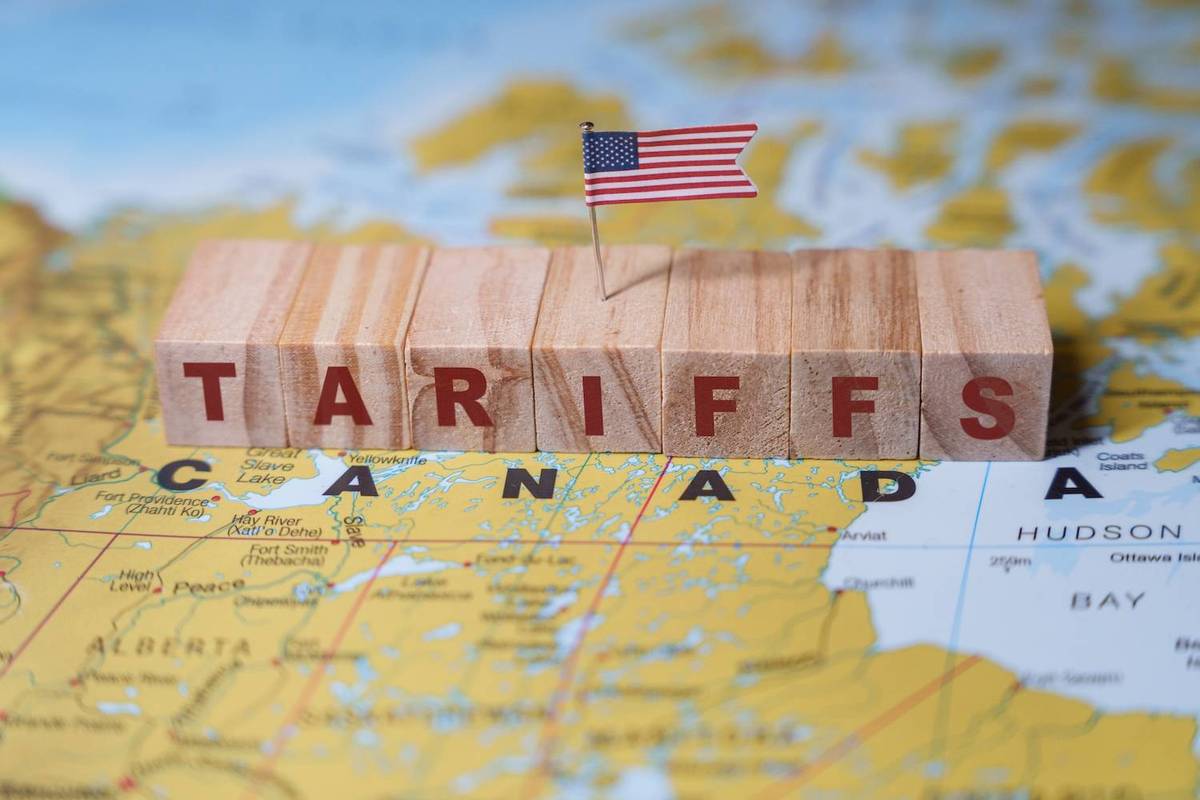
Could Potash Become Part of Canada-US Negotiations?
Rokas / Adobe Stock
Canada-US trade tensions have reached a new flashpoint, with Washington imposing a 50 percent tariff on C$28 billion in Canadian goods after trade talks collapsed on August 21.
Ottawa is set to respond with matching tariffs on US imports September 8, raising a bigger question for one of Canada’s most important commodity exports: how long can potash remain off the tariff list?
So far, potash and energy have largely escaped the escalating trade measures. That matters particularly for potash, given Canada supplies roughly 80 percent of US imports and the fertilizer is critical to American agriculture.
With the US midterm elections roughly nine weeks away, however, the current exemption offers little certainty. As trade tensions intensify, both countries face difficult choices over how far they are willing to push without disrupting industries that depend heavily on cross-border supply.
As the situation between the two countries seems to be deteriorating, the question is, are any industries safe from an aggressive US trade policy?
So far, two key areas have largely been unaffected, energy and potash, with non-CUSMA-compliant imports levied at a 10 percent rate in March 2025. Even with the increase to other goods announced on July 20, 2026, energy and potash have remained unaffected.
Potash, in particular, is a critical fertilizer for the US agricultural sector and is broadly applied in spring and autumn. In terms of trade, Canada is the United States most important supplier of potash, representing roughly 80 percent of the country’s total imports.
When the Investing News Network asked about the potential for tariffs on potash, Josh Linville, Vice President of Fertilizers at StoneX, was hopeful they would remain excluded but uncertain.
“If a trade agreement comes together, I would have to think that fertilizers of all types are included. Simply too important for both sides of the border… but I’m not confident it gets that far,” he said.
In his last market update on August 12, Linville noted that the potash market was relatively quiet, with freight costs as the biggest price factor. He also expressed concern that lower phosphate supplies could trigger a potash demand run as farmers look for alternatives.
Phosphate supply is currently constrained by several factors: Chinese exports have fallen to 186,000 metric tons in the first seven months of the year, down from 10 million metric tons in 2021, and the US-Iran war is blocking shipments from Saudi Arabia due to the closure of the Strait of Hormuz. In all, two-thirds of the world's phosphate supply is currently unavailable to the broader market.
Under the current market conditions, Linville suggests it's not a matter of if but of when potash prices begin to gather momentum.
Currently, the price of NOLA potash is US$335 to US$345 per metric ton, below the global benchmark of US$395.50 per metric ton and well below the five-year average of US$490 per metric ton. Meanwhile, key crop prices are above their historic averages, with corn trading 6 percent higher, soybeans 9 percent higher, and wheat 12 percent higher than the five-year average.
“In fact, between the higher grain prices making current potash values look very attractive and trade talks not going well, I have almost dropped to begging our clients to lock in their potash,” Linville said.
Even though potash hasn’t faced tariffs yet, that doesn’t mean it won’t become part of the discussion down the line.
In Canada, some politicians have suggested that exports of potash, energy and critical minerals could be used as leverage in negotiations with the United States. At a rally in Vaughan on August 26, Ontario Premier Doug Ford said, “If we ever cut out that potash, their agricultural sector would be dead.”
Without Canada, the US has few other suppliers to turn to, as Belarusian and Russian supply has been cut off due to sanctions following Russia’s invasion of Ukraine in 2022.
However, it’s likely to turn into more than a threat, as Canadian producers are also reliant on US customers; it’s also a politically charged idea in Canada.
In May, Prime Minister Carney nixed the idea, suggesting that Canada wouldn’t use energy or critical minerals as part of the negotiating strategy with the United States. More recently, Saskatchewan Premier Scott Moe said that while it would tariff US alcohol at 50 percent, the province would not back actions on potash or oil, citing the risks to jobs and farmers.
Given the current state of affairs with the trade negotiations, it's unlikely that potash could be used as a leverage tactic, but it's also not necessarily zero.
With roughly nine weeks left until the US mid-term elections, Canada’s strategy may just be to take a wait-and-see approach, in the hopes that a more favorable partner emerges at the end of the year.
Don't forget to follow us @INN_Resource for real-time updates!
Securities Disclosure: I, Dean Belder, hold no direct investment interest in any company mentioned in this article.
https://x.com/INN_Resource
https://www.linkedin.com/in/deanbelder
dbelder@investingnews.com
Dean has been writing in one form or another since penning stage plays in his youth. He is a graduate of both Emily Carr University and Simon Fraser University, with a BFA in photography and a BA in communications.
As a writer, Dean has traveled throughout BC and the Pacific Northwest covering cultural events, interviewing small business owners and working alongside fellow writers and photographers from publications like Rolling Stone Magazine, Spin and the Georgia Straight.
Dean has a keen interest in investing, and enjoys learning about the mining industry and better understanding the technical aspects of trading. In his spare time, Dean is an avid home chef, ponders the space-time continuum and makes his own cider. On weekends he can be found cycling the Seawall, exploring farmers markets or sampling the city’s local craft breweries.
As a writer, Dean has traveled throughout BC and the Pacific Northwest covering cultural events, interviewing small business owners and working alongside fellow writers and photographers from publications like Rolling Stone Magazine, Spin and the Georgia Straight.
Dean has a keen interest in investing, and enjoys learning about the mining industry and better understanding the technical aspects of trading. In his spare time, Dean is an avid home chef, ponders the space-time continuum and makes his own cider. On weekends he can be found cycling the Seawall, exploring farmers markets or sampling the city’s local craft breweries.
INN Article Notification
Latest News
Outlook Reports world
Featured Potash Investing Stocks
Browse Companies
MARKETS
COMMODITIES
CURRENCIES
Dean has been writing in one form or another since penning stage plays in his youth. He is a graduate of both Emily Carr University and Simon Fraser University, with a BFA in photography and a BA in communications.
As a writer, Dean has traveled throughout BC and the Pacific Northwest covering cultural events, interviewing small business owners and working alongside fellow writers and photographers from publications like Rolling Stone Magazine, Spin and the Georgia Straight.
Dean has a keen interest in investing, and enjoys learning about the mining industry and better understanding the technical aspects of trading. In his spare time, Dean is an avid home chef, ponders the space-time continuum and makes his own cider. On weekends he can be found cycling the Seawall, exploring farmers markets or sampling the city’s local craft breweries.
Learn about our editorial policies.