The Conversation (0)
ZETHA_WORK / Adobe Stock
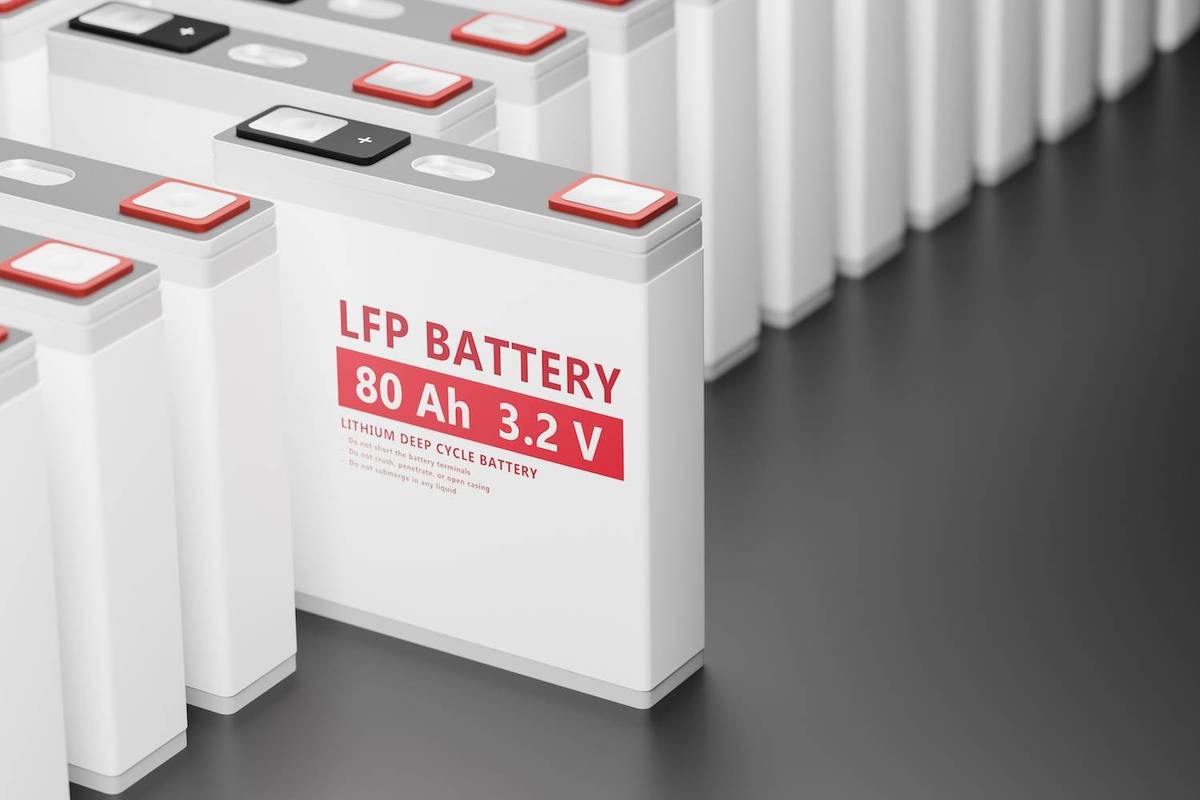
The rise of lithium-iron-phosphate (LFP) batteries was a popular theme at the Benchmark Week Summit in Toronto, where industry executives said the chemistry’s combination of safety, versatility and lower costs is driving explosive growth across electric vehicles and grid storage.
According to Adam Webb Head of Energy Raw Materials at Benchmark Mineral Intelligence, LFP batteries accounted for just 20 percent of global lithium-ion production in 2020. At the time, nickel-rich chemistries such as nickel-manganese-cobalt (NCM) were widely viewed as the industry’s future.
That outlook has shifted dramatically.
“Now we’re seeing LFP at about 61 percent of global lithium-ion batteries compared to around 32 percent for NCM,” Webb said, noting that forecasts suggest LFP could approach 70 percent of the global market in the coming years.
Much of that growth has been driven by China, where the chemistry dominates production.
A battery invented in North America, but scaled in China
John Passalacqua, CEO of First Phosphate (CSE:PHOS,OTCQB:FRSPF), said LFP technology has been evolving for more than two decades and continues to gain ground.
Although the chemistry was developed in North America through research at the University of Texas with collaboration from Hydro‑Québec and the Université de Montréal, most commercial production migrated to China in the early 2000s.
“LFP has been with us for about 25 years, and over those 25 years it has only gotten stronger,” Passalacqua said.
He added that the technology’s versatility has helped drive adoption across a wide range of sectors beyond electric vehicles, including telecom systems, industrial automation and grid-scale energy storage.
“Only about five to 10 percent of LFP demand today is actually electric vehicles,” he said.
Supply chains become the next battleground
As demand accelerates, industry leaders say the real challenge is building supply chains capable of supporting LFP production outside China.
Bill McLean of Liberty Stream Infrastructure Partners said geopolitical tensions and national security concerns are forcing Western economies to rethink where critical battery materials are sourced.
“The real question is how fast we can move supply chains out of China,” McLean said.
His company is pursuing a direct lithium extraction strategy that recovers lithium from wastewater produced by oil and gas operations in the Permian Basin.
By tapping existing infrastructure, the company hopes to bring small modular lithium production units online more quickly than traditional mining projects.
The overlooked ingredient: Phosphate
While lithium often dominates headlines, Passalacqua said the battery sector may soon face a shortage of another critical component: phosphate.
Lithium represents only a small portion of an LFP battery’s cathode chemistry, he noted, while phosphate accounts for roughly 60 percent.
Phosphate used in fertilizers and batteries differs significantly in purity and processing requirements. Fertilizer-grade phosphate is typically derived from sedimentary deposits and processed to produce phosphoric acid suitable for agricultural nutrients, where ultra-high purity is not required.
Battery-grade phosphate, by contrast, must be refined to much higher purity standards to meet the stringent performance requirements of LFP batteries
“People have been chasing lithium, cobalt, nickel and graphite,” Passalacqua said. “But if the world is moving to lithium iron phosphate batteries, the big question becomes: where will the phosphate come from?”
His company is developing high-purity igneous phosphate deposits in Saguenay–Lac‑Saint‑Jean in Quebec, aiming to produce battery-grade phosphoric acid without relying on fertilizer-grade sedimentary phosphate.
Building the battery industry from the ground up
All the panelists emphasized that building a competitive North American battery sector will require focusing first on raw materials rather than gigafactories.
Passalacqua argued that many early battery ventures failed because they attempted to build manufacturing capacity before securing reliable sources of critical minerals.
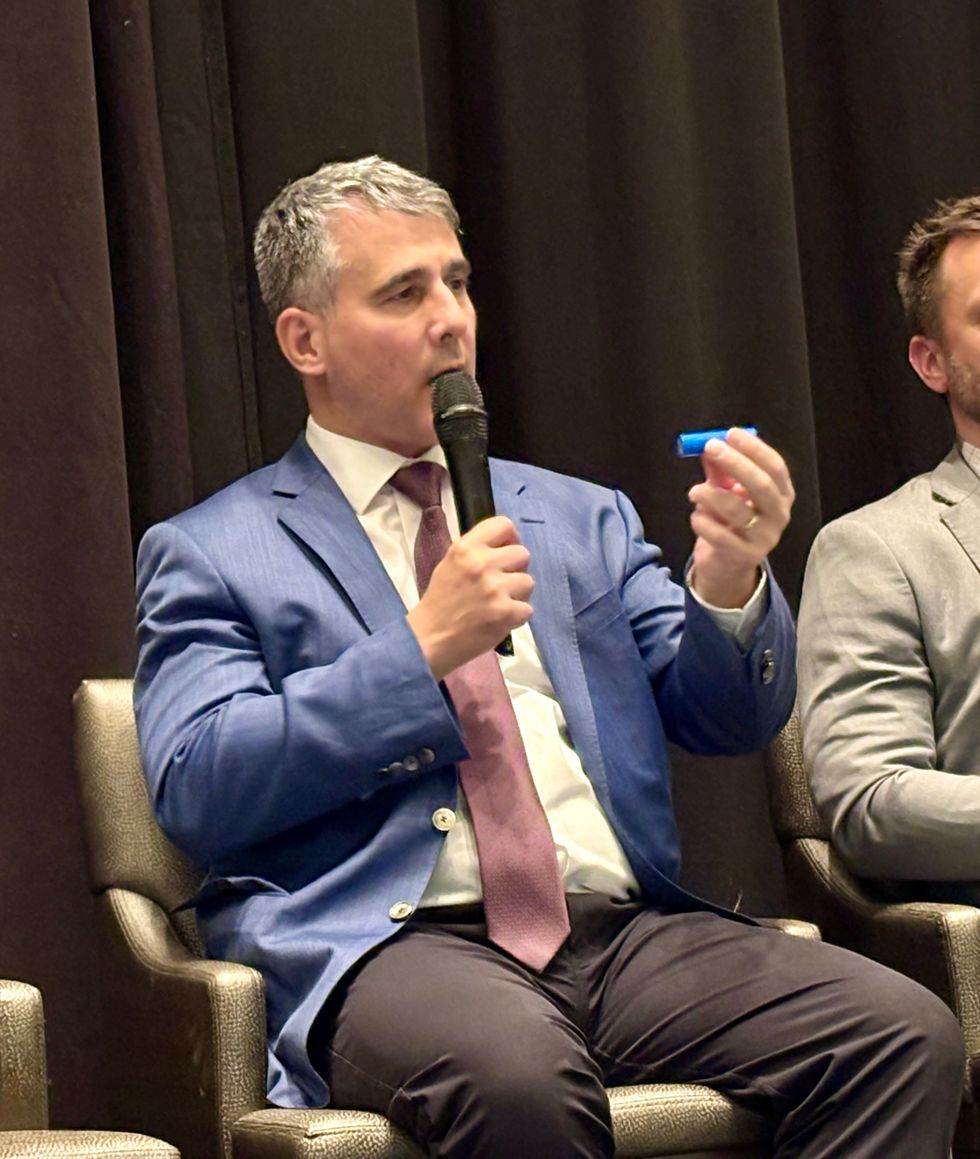
John Passalacqua, CEO and director of First Phosphate, shows the audience a LFP battery made from only North America-sourced materials.
Photo via Georgia Williams.
“You cannot build a building starting with the 30th floor and put the foundation in later,” he said. “Supply chains have to be built from the bottom up.”
Governments are increasingly recognizing that reality, he added, pointing to new critical mineral incentives and funding programs aimed at developing upstream resources.
As energy storage demand continues to surge, fueled by electrification, artificial intelligence and renewable power, industry experts say the race to secure those resources is only just beginning.
Don't forget to follow us @INN_Resource for real-time updates!
Securities Disclosure: I, Georgia Williams, hold no direct investment interest in any company mentioned in this article.
https://twitter.com/INN_Resource
https://www.linkedin.com/in/georgia-williams-15845447/
gwilliams@investingnews.com