
The Conversation (0)
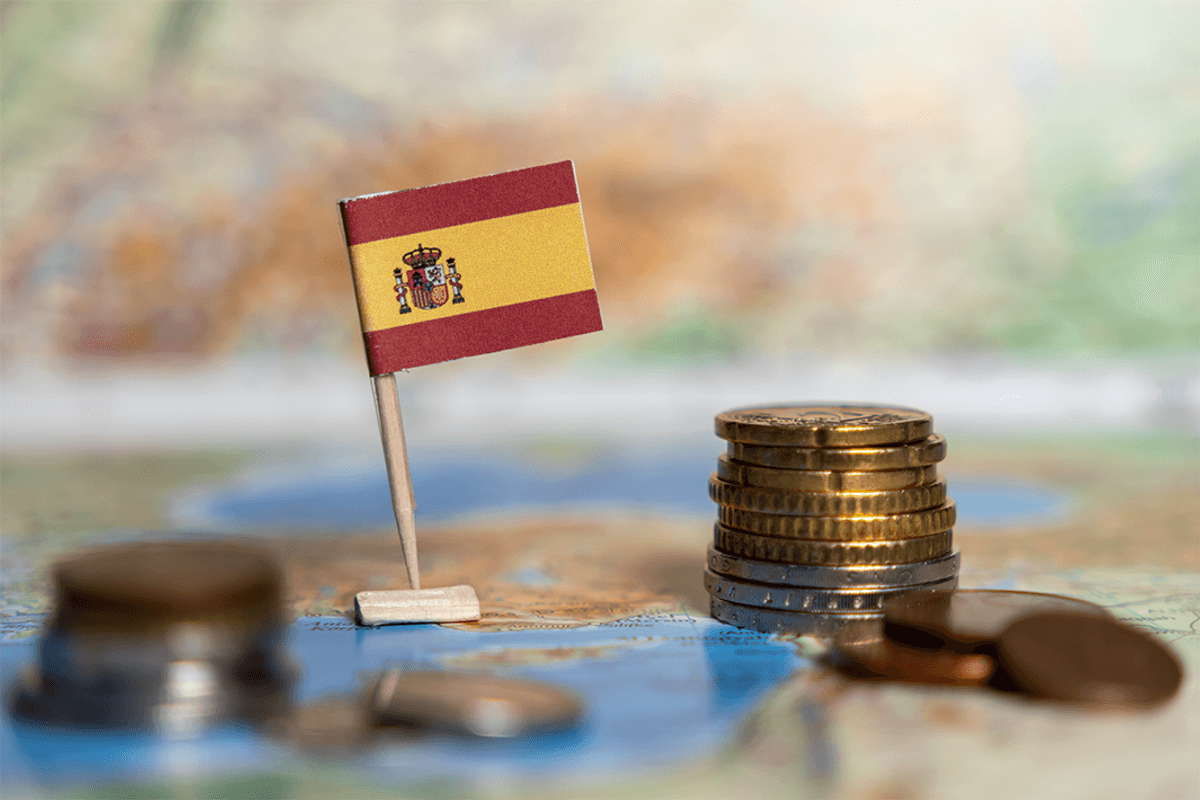
Adobe Stock / Alina
European gold production is among the smallest in the world, adding weight to emerging dedicated gold projects that could aid supply.
Gold remains abundant in Europe; what is currently scarce is gold-producing mines on the continent.
Data from the World Gold Council reveals that Europe contributes only a small fraction to the overall global supply. 2025 production in the region was led by Finland with 8.7 tonnes, Bulgaria with 8.1 tonnes and Sweden with 5.9 tonnes. Spain, despite its rich gold past, currently has only one primary gold mine and mainly extracts gold as a byproduct from copper and polymetallic operations.
This brings emerging projects where gold has been found to the fore, such as Pan Global Resources' (TSXV:PGZ,OTCQB:PGZFF,FRA:2EU) Cármenes Project in northern Spain, home to historical mines Profunda and Providencia. Providencia has no record of gold production, and the company recently identified potentially significant gold mineralization at the mine. This marks the most significant gold discovery in Spain in over 30 years, a sign of improved exploration and increasing opportunities within a traditional mining jurisdiction.
Past to present production
Gold mining in Europe is historically traced back to the Neolithic period. The first production is attributed to the Roman Empire and primarily to the Iberian Peninsula, which is occupied by Spain and Portugal. The London Bullion Market Association (LBMA) shared that the Romans were experts in hydraulic mining, exposing and releasing gold deposits from the earth using hydraulic pressure. The largest open-pit gold mine in the Roman Empire was the Las Médulas in what is now northern Spain.
The hydraulic method and concentration at Las Médulas left an eroded landscape and exhausted the accessible gold deposits and in modern times has become a tourist attraction. Later, modern processes were proposed at other projects, such as EMC Gold’s (ASX:EM3) Salave project in Asturias, one of the largest undeveloped gold deposits in Western Europe. Salave hosts a JORC total resource of 17.1 million tonnes at a grade of 2.85 grams per tonne gold, for a total of 1.56 million ounces contained gold, and faced years of permitting issues and local opposition. Recent updates reported a suspension of its environmental impact assessment in 2025 and the rejection of its proposed amendment to the municipal urban plan in 2026.
Another case is Edgewater Exploration’s, which advanced its Corcoesto project to a resource of more than a million ounces before a 2013 dispute over project financing froze its permits. The project has been dormant since. From environmental scars to inaccessible areas and stalled processes, things eventually led to little to no progress, which explains the current gap in Spain and Europe in general.
A gold report from Spanien Press highlighted that Spain currently has only one active gold mine, the El Valle-Boinás in Asturias in northern Spain. El Valle-Boinás is operated by Orovalle Minerals, a subsidiary of Canadian company Orvana Minerals (TSX:ORV, OTCQX:ORVMF). It produced 29,276 ounces of gold approximately 2 percent below the revised guidance range of 30,000 to 31,000 ounces and attributed primarily to stope ore extraction in the latter half of September in the same year. It is located approximately 70km west of Pan Global’s Cármenes Project.
The Iberian Pyrite Belt in southern Spain also hosts several long-running copper, zinc and lead operations. These include Atalaya Mining's (LSE:ATYM) Riotinto mine and the Sandfire MATSA (ASX:SFR) joint venture's Aguas Teñidas mine in Huelva. While not primarily gold deposits, these assets are known to recover small amounts of gold and silver as by-products from polymetallic ore and contribute to the country’s gold total outside of El Valle-Boinás.
Why addressing the low production matters
Data show that Europe holds a significant amount of gold reserves, tying to the narrative that the production gap is rooted not in geology but from the accumulation of financing, permitting and modern methodologies that have changed the system for gold projects globally over the years.
Still, Europe’s production is largely concentrated in a single mine in a single country, Agnico Eagle’s Kittilä in Finland. The project holds proven and probable gold mineral reserves of 3.3 million gold ounces and measured and indicated resources of 2 million gold ounces. It also boasts a record production of 217,379 ounces in 2025 and has been producing since 2009, highlighting how it largely makes up the region's domestic gold supply.
Global demand also remains at a peak, from actual physical gold bars and coins to retail. Earlier in 2026, the National Bank of Poland was recorded to have approximately 550 tonnes and gained approval to add roughly 150 tonnes. The country was followed by Kazakhstan, China and Brazil and India accumulating more gold for Central Bank holdings.
Certain countries such as India also have culture and tradition to thank, as its gold demand is tied to gifting gold during weddings. The World Gold Council said that this practice accounts for approximately 50 percent of annual gold demand in the country.
Besides Central Bank and retail demand that has long kept gold’s shine as an investment, news on Tether, the stablecoin issuer emerged as a massive non-state buyer, announcing its acquisition of over 100 tonnes of gold over the course of 2025 as the primary physical asset backing the stablecoin.
The need to address this low production and growing demand is not only about boosting domestic production. Europe’s dependence on a single asset’s mine life and a single company's development pipeline is not exactly a smart move if it aims to improve its overall gold environment in the long term. It is also indicative of how permitting environments within the region need changing, given that only a single jurisdiction has permitted a gold mine recently.
A new discovery in an old gold country
The looming gap makes emerging projects worth watching, arguably even the projects mining gold as a byproduct.
Located about 55 kilometers north of León on the southeastern extension of the Rio Narcea Gold Belt is Pan Global Resources’ 100%-owned Cármenes Project, a significant 5,653-hectare exploration project. Cármenes centers on the historical Profunda and Providencia mines, which previously produced copper, nickel and cobalt concentrates. Both mines ceased operations in the 1930s.
In 2024, Pan Global changed the game by launching the first systematic exploration program at the site in approximately two decades, one that intersected gold mineralization at Providencia in 2025 that the historical workings never recorded[JM1] .
While a resource estimate has not been defined yet, Pan Global’s identification of over two dozen exploration targets across the broader Cármenes land package demonstrates the project’s promising exploration and overall potential.
Pan Global’s position as a company with a new discovery and a growing land position in Spain is not simply about meeting numbers and potentially aiding in the tight supply. It represents an opportunity to explore whether a second country such as Spain, beyond the model that the likes of Finland demonstrate, can pave the way for improved overall mining processes in Europe and lead to actually getting a gold project through to production.
Investor takeaway
It is ironic how Europe is a continent that anchors much of the world's gold trade and storage but produces almost none of the metal itself. Add to that Spain's single largest gold producing mine is in byproduct only and is a small part of an even smaller total in Europe.
Pan Global Resources is writing a new chapter on historical ground with its Cármenes Project and the strategic security of a larger land position in Europe. Despite the project being in the early stages, its rare and focused gold exploration opens possibilities for a jurisdiction that has largely remained untested for the past few decades. It is not a single answer, but it breathes life into the potential revival of Europe’s once golden past.
This INNspired article is sponsored by Pan Global Resources (TSXV:PGZ; OTCQB:PGZFF; FRA:2EU). This INNspired article provides information which was sourced by the Investing News Network (INN) and approved by Pan Global Resources in order to help investors learn more about the company. Pan Global Resources is a client of INN. The company’s campaign fees pay for INN to create and update this INNspired article.
This INNspired article was written according to INN editorial standards to educate investors.
INN does not provide investment advice and the information on this profile should not be considered a recommendation to buy or sell any security. INN does not endorse or recommend the business, products, services or securities of any company profiled.
This INNspired article contains forward-looking information, including statements regarding planned activities, timelines, business objectives, and market conditions. Forward-looking information is based on assumptions and is subject to known and unknown risks and uncertainties that may cause actual results to differ materially from those anticipated. Readers should not place undue reliance on forward-looking information, which reflects the views of the profiled company as of the date of this profile and is not updated by INN.
The information contained here is for information purposes only and is not to be construed as an offer or solicitation for the sale or purchase of securities. Readers should conduct their own research for all information publicly available concerning the company. Prior to making any investment decision, it is recommended that readers consult directly with Pan Global Resources and seek advice from a qualified investment advisor.
PGZ:CC
Alert Options
No alert set
INN Article Notification
Alert Option
You will be notified when this event occurs. No additional settings needed.
Latest News
Outlook Reports world
Featured Gold Investing Stocks

Browse Companies
MARKETS
COMMODITIES
CURRENCIES