

The Conversation (0)
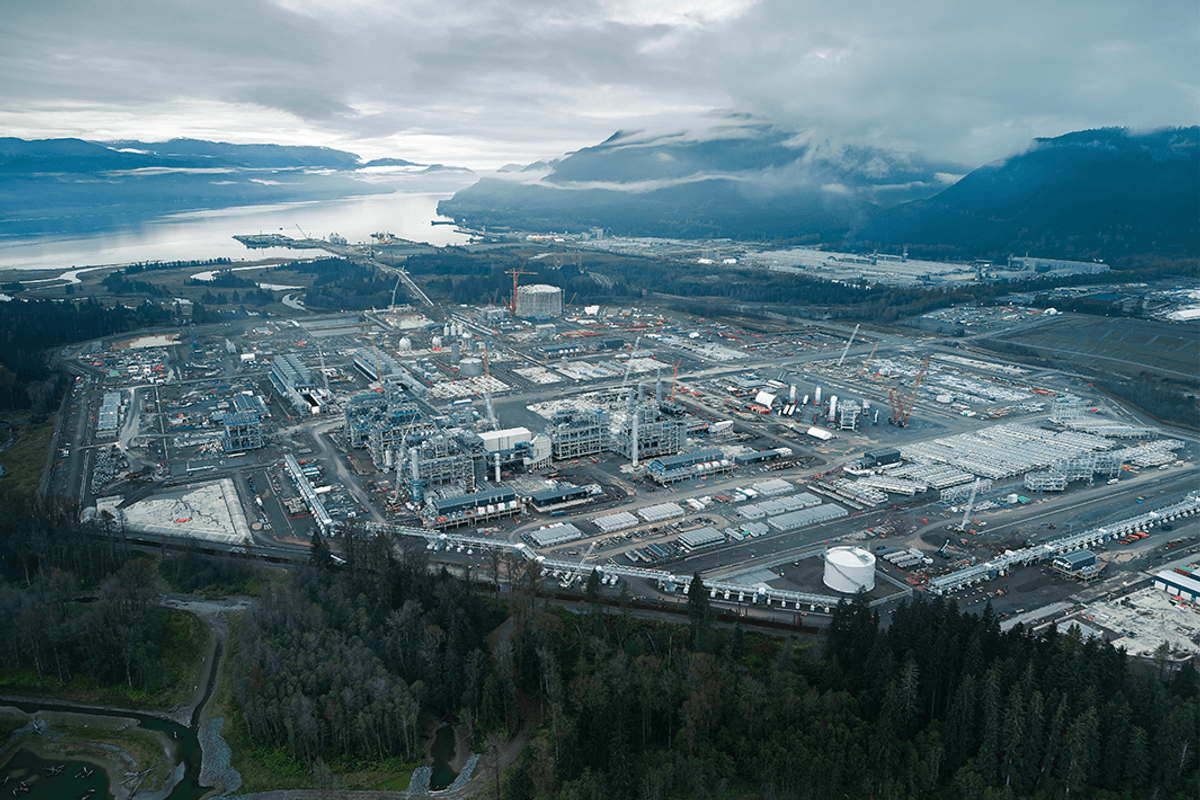
scottshoots / Adobe Stock
Canada is working to secure its energy future, and British Columbia’s coastline and gas reserves are vital to this effort.
British Columbia is an emerging hub in Canada’s drive for energy market diversity and secure supply.
The federal government cited British Columbia as “a natural partner” in lifting its gas exports to markets outside the US. Its strengths, from its abundant energy resources to being the only province with a direct Pacific Ocean coastline, can aid in the goal of reaching approximately 55 percent more non-US exports by the early to mid-2030s. It is home to the western half of the Montney, one of North America's most productive gas basins. LNG Canada, the country’s first large-scale liquefied natural gas (LNG) export terminal, can also be found in British Columbia.
Coelacanth Energy (TSXV:CEI) controls over 150 contiguous sections in the Two Rivers region of northeastern British Columbia, positioning it as a capable contributor to securing Canada’s energy future.
Why energy market diversity is now a priority
Natural Resources Canada reported that less than 0.01 percent of Canadian natural gas exports went to markets outside the US in 2024.
Fraser Institute commentary states that Canada is seeking to diversify its energy markets, and further develop its infrastructure to connect Canada’s energy to global markets. A simplified regulatory system would also attract larger domestic and foreign capital.
Much of the work now is seen in British Columbia. Its direct access to the Pacific Ocean provides new routes to overseas buyers. Production in the province’s Montney has also been seeing gains given technology advancements, coupled with its growing pipeline and operating LNG terminals.
LNG demand is another factor. The International Energy Agency (IEA) places global demand growth at roughly 9 percent and supply expansion by around 250 billion cubic metres by 2030. Recent supply shocks, such as the 96 percent drop in Qatar’s exports, showed the market’s small flexibility and pushed importers to diversify.
Global demand for lower-carbon energy is also shaping where energy is going. IEA found that natural gas resulted in 50 percent fewer emissions than coal per unit of electricity generated. The agency specified that LNG exported to China from Canada would have lower emissions than pipeline gas, making a case for Asian buyers looking to move away from coal.
British Columbia as a Canadian gas engine
British Columbia is Canada's second-largest gas producer, having an output of roughly 7 billion cubic feet per day (Bcf/d) in 2024. Its direct access to the Pacific Ocean plays a huge part, with recent analysis noting that shipping times from Western Canada to Asia are 50 percent shorter compared to those from the US Gulf Coast. Asia, together with the Middle East, largely accounts for growing LNG demand.
The Montney Formation straddles northeastern British Columbia and Northwestern Alberta. The Canada Energy Regulator says Montney gas made up 45 percent of Canadian production in 2024, a jump from 2015’s 22 percent record. The model suggests it could reach 63 percent by 2035.
Gas from the Montney moves through networks including the Westcoast system, connecting to Coastal GasLink, operated and 35 percent owned by TC Energy (TSX:TRP). The 670-kilometre pipeline from the Dawson Creek area to the LNG Canada terminal in Kitimat transports about 2.1 Bcf/d as of writing.
LNG efforts
The Canadian Government is boosting its energy sector. Recent policy and partnership developments include:
- Major Projects Office (MPO): launched in August 2025 to coordinate and fast-track projects of national interest.
- LNG Canada Phase 2: A priority project under MPO, the expansion would add 14 million metric tons of LNG per annum. Emissions are projected to be 35 percent below the world’s best-performing LNG facilities and 60 percent below the global average. A final investment decision was made in late September 2026.
- Canada-British Columbia Cooperative Prosperity Agreement: Signed in July 2026, this accelerates energy and trade corridors such as LNG Canada Phase 2.
- Ksi Lisims: Covered by the prosperity agreement, this Nisga’a Nation-led floating facility on Pearse Island is positioned as Canada’s second largest LNG facility. It is designed for up to 12 million metric tons per year and expected to add over C$15 billion to Canadian GDP over 30 years. FID is expected by late 2026.
- Coastal GasLink Phase 2: TC Energy confirmed in September 2026 that Coastal GasLink will expand, nearly doubling capacity.
- European offtake deals: In May 2026, Securing Energy for Europe (SEFE) agreed to a 20-year deal for 1 million metric tons per annum. In July, Ksi Lisims signed a binding deal with German energy giant Uniper for 2 million metric tons per year.
- Ksi Lisims deal with Santos: Ksi Lisims signed a 1 million metric tons per annum heads of agreement with Australian energy company Santos in September 2026, adding to earlier agreements with TotalEnergies and Shell.
Coelacanth Energy: Strategic Montney focus and growing production
With an undeveloped resource of 5.9 Trillion cubic feet of total Montney Discovered Gas PIIP (excluding oil and natural gas liquids), spanning over 150 sections in the Montney, and takeaway capacity of up to 100 million cubic feet per day (cu ft/d), Coelacanth Energy is among the notable companies in Canada’s road to energy market diversity.
It has an up to 60 million cu ft/d processing capacity and a Q2 2026 production of 7,632 barrels of oil equivalent per days (boe/d). This represents a 531 percent increase from Q2 2025. A production above 9,000 boe/d is targeted by late 2026, with four new wells anticipated to come on-stream in November.
The company’s gas also flows into the Westcoast pipeline, connecting directly to LNG Canada via Coastal GasLink.
“We believe lands that have scale and direct access such as Coelacanth’s will trade at a premium once they are delineated and the resource is proven for development,” Coelacanth Energy said, adding that new LNG projects could draw LNG owners into the upstream market, increasing competition for a Montney land base that is mainly held by large companies.
Investor takeaway
Canada is moving more gas to tidewater, and British Columbia, particularly Montney, is where that infrastructure is being built. With growing projects and improved government processes, long-term demand for Canadian gas is taking shape.
For producers like Coelacanth Energy, the relevance is a clear route to export. Its acreage, production capacity and connection to the Westcoast pipeline illustrate how a British Columbia-focused company fits into Canada’s expanding energy export capacity and infrastructure.
This INNspired article is sponsored by Coelacanth Energy (TSXV:CEI). This INNspired article provides information which was sourced by the Investing News Network (INN) and approved by Coelacanth Energy in order to help investors learn more about the company. Coelacanth Energy is a client of INN. The company’s campaign fees pay for INN to create and update this INNspired article.
This INNspired article was written according to INN editorial standards to educate investors.
INN does not provide investment advice and the information on this profile should not be considered a recommendation to buy or sell any security. INN does not endorse or recommend the business, products, services or securities of any company profiled.
This INNspired article contains forward-looking information, including statements regarding planned activities, timelines, business objectives, and market conditions. Forward-looking information is based on assumptions and is subject to known and unknown risks and uncertainties that may cause actual results to differ materially from those anticipated. Readers should not place undue reliance on forward-looking information, which reflects the views of the profiled company as of the date of this profile and is not updated by INN.
The information contained here is for information purposes only and is not to be construed as an offer or solicitation for the sale or purchase of securities. Readers should conduct their own research for all information publicly available concerning the company. Prior to making any investment decision, it is recommended that readers consult directly with Coelacanth Energy and seek advice from a qualified investment advisor.
CEI:CC
Alert Options
No alert set
INN Article Notification
Alert Option
You will be notified when this event occurs. No additional settings needed.
Latest News
Outlook Reports world
Featured Oil and Gas Investing Stocks

Browse Companies
MARKETS
COMMODITIES
CURRENCIES