The Conversation (0)

Valor Resources Limited (Valor) or (the Company) (ASX:VAL) is pleased to announce the commencement of an airborne gravity gradiometry (AGG) survey at the Hook Lake and Hidden Bay Uranium Project (the Project) in the easternAthabasca Basin.
HIGHLIGHTS
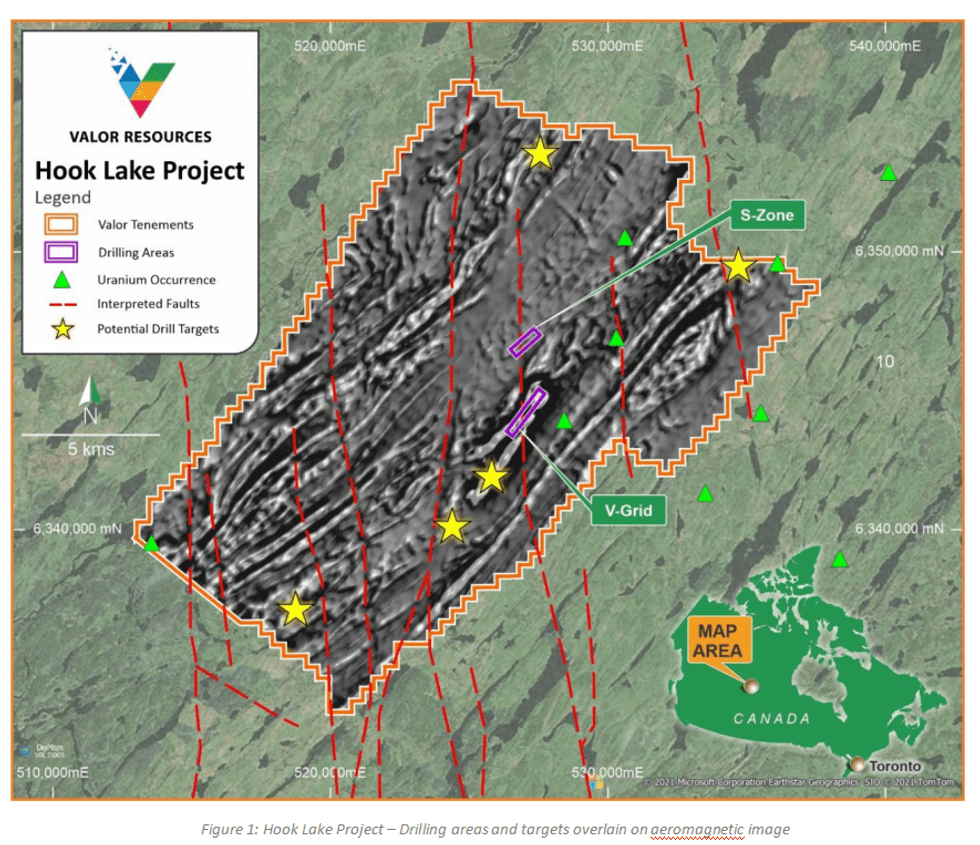
Executive Chairman George Bauk comments “This airborne gravity gradiometry survey is an important next step in the development of the Hook Lake Uranium Project. Following our maiden drilling program completed in the March Quarter this year, we will be using this survey and further on-ground exploration to assist us with the development of further targets for the next drill program at the Project”.
“We are expecting assay results in June from our drilling program and the interpretation of the gravity survey data around the end of June. A modern airborne gravity survey has never been completed over the Hook Lake and Hidden Bay Project area and this will provide the third dimension (depth) to the existing geological data sets to assist with identifying and prioritising drill targets.”
In addition to Hook Lake, the gravity survey will also include the Hidden Bay Uranium Project, which is located approximately 95km northeast of Hook Lake (see Figure 2 below). The Hidden Bay Project covers an area of 31.9km2 and is prospective for basement-hosted uranium mineralisation. Historical exploration data from the Hidden Bay Project area has been compiled and based on the preliminary results of this review indicates that Hidden Bay should be immediately prioritised for AGG.
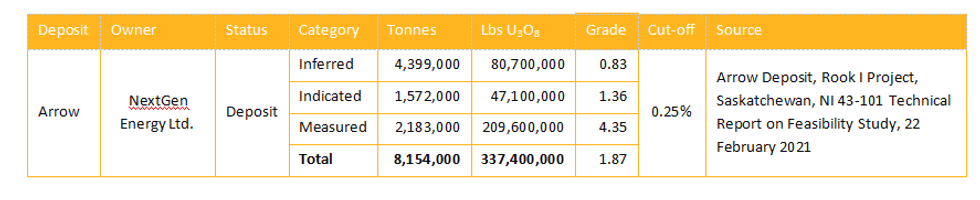
The AGG data will help delineate geology and structure that are important in the formation of a uranium deposit. Gravity anomalies provide direct detection of the hydrothermal alteration associated with a uranium deposit. Hydrothermally altered (de-silicified) rocks have a lower density then the unaltered host rocks and can therefore be identified as gravity lows. An example of this is the basement-hosted Arrow Uranium Deposit, which has a Total Mineral Resource of 337.4 million pounds U3O8 at a grade of 1.8%, which was discovered in 2014 by NexGen Energy Ltd. The discovery of the Arrow Deposit was, in part, the result of drill testing a circular gravity low with a diameter of around 1km. (sourced from Arrow Deposit, Rook I Project, Saskatchewan, NI 43-101 Technical Report on Feasibility Study)
Click here for the full ASX Release
This article includes content from Valor Resources Limited , licensed for the purpose of publishing on Investing News Australia. This article does not constitute financial product advice. It is your responsibility to perform proper due diligence before acting upon any information provided here. Please refer to our full disclaimer here.