The Conversation (0)
Apr. 20, 2026 01:55PM PST
|Fact CheckedThis article has been reviewed and updated according to INN's rigorous fact-checking process. Our staff editors verify all articles against information and data from primary sources, reputable publishers and experts.
Learn about the Australian uranium stocks performing the best on the ASX this year, including their portfolios and their biggest news.
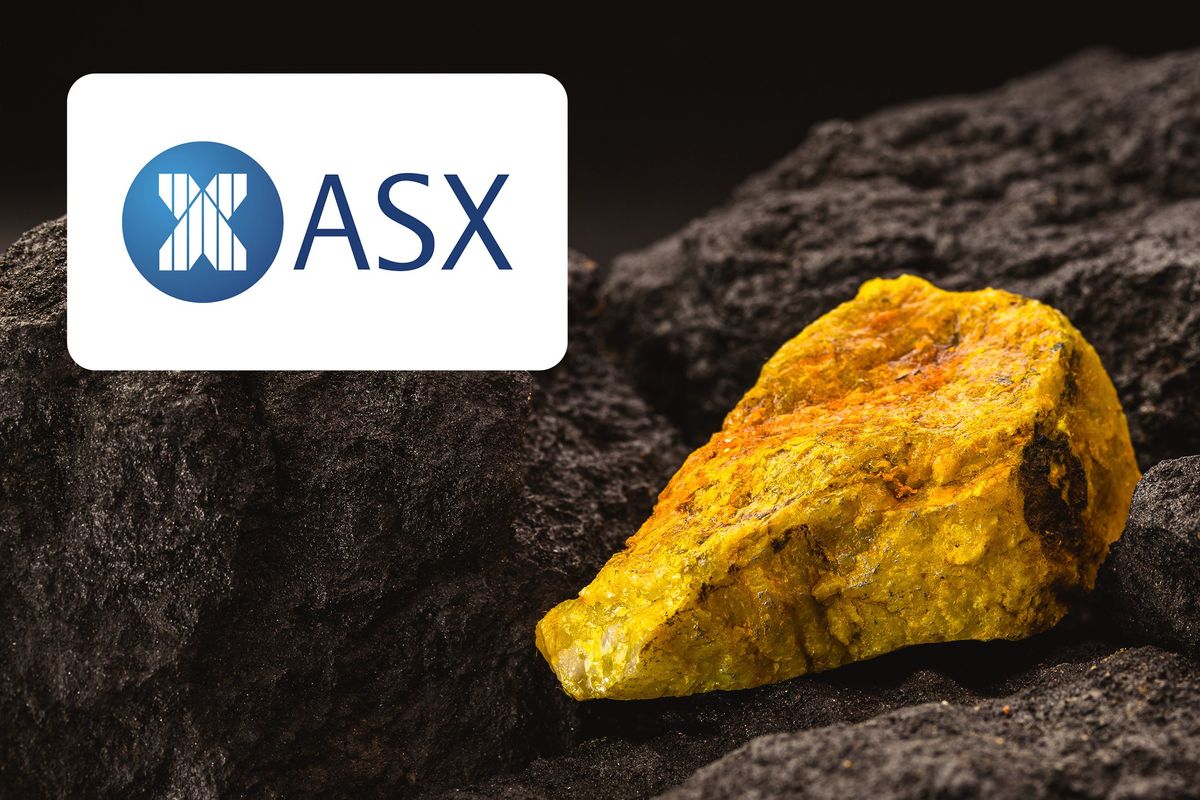
RHJPhtotos / Shutterstock
Driven by projections of rising nuclear energy demand, the spot uranium price began 2026 above US$80 per pound before reaching a year-to-date high of US$101.41 on January 29.
Geopolitical instability, however, pushed the price down to US$85.50 by February 5, a nearly 16 percent weekly drop. Continued pressure from the war in Iran, which disrupted shipments through the Strait of Hormuz, kept U3O8 volatile in February and March. Uranium ultimately ended the quarter at US$83.90.
Beyond this short-term volatility, industry analysts point to a demand landscape poised for significant expansion.
Speaking at the Prospectors & Developers Association of Canada convention in March, Nick Carter of UxC projected that global nuclear capacity will increase by roughly 47 percent by 2040, led by new construction in Asia.
At the same time, supply remains constrained. Carter noted a 2025 production deficit of about 31 million pounds, and warned of a widening uranium supply gap beginning around 2030. Challenges such as capital costs, geopolitical risks and regulatory delays, he said, will make closing that gap “quite challenging.”
Against this backdrop, uranium equities — particularly in Australia and Canada — are once again in the spotlight.
Below the Investing News Network has profiled the top-performing uranium shares on the ASX by year-to-date gains. Market data was gathered April 16, 2026, using TradingView's stock screener.
Only Australian uranium companies with market caps above AU$10 million at the time were considered.
Read on to learn more about these top Australian uranium stocks and their activities so far this year.
1. Paladin Energy (ASX:PDN)
Year-to-date gain: 46.94 percent
Market cap: AU$6.2 billion
Share price: AU$14.15
Based out of Western Australia, Paladin Energy is a uranium mining and development company that operates its 75 percent owned Langer Heinrich uranium mine in Namibia through a joint venture with China National Nuclear.
The company also has an exploration portfolio that spans both Canada and Australia, including the Patterson Lake South (PLS) project, home to the Triple R uranium deposit, in Canada's Athabasca Basin.
It added the Athabasca Basin projects to its portfolio as part of its 2024 acquisition of Fission Uranium, and is advancing PLS towards a final investment decision. After pausing operations at Langer Heinrich in 2018, Paladin began the restart process in 2022 and resumed commercial production from stockpiled ore at the mine in early 2024.
Paladin re-commenced open pit mining last April, and is currently in the process of ramping up mined production at Langer Heinrich to guidance capacity, which it expects to achieve by the close of its fiscal year 2026 ended June 30.
For its second fiscal quarter of 2026, Paladin reported quarterly uranium production of 1.23 million pounds, a 16 percent increase from the previous quarter, driven by higher average grades of ore feed from higher proportions of mined ore. Sales volumes totaled 1.43 million pounds at an average realised price of US$71.80 per pound.
The company expects full-year production to reach the upper end of its 4 million to 4.4 million pound guidance.
Additionally, Paladin began its winter drilling program at the PLS project. In mid-February, Paladin received approval for its environmental impact statement for the PLS project from the Saskatchewan Minister of the Environment. The approval is a key regulatory milestone required before permits for construction and operation can be issued.
However, at the end of March, the Métis Nation-Saskatchewan applied for a judicial review of the decision alleging inadequate consultation before the approval. The nation seeks to overturn the decision, and requested an interim injunction preventing Paladin from acting on the approval pending the court’s ruling of the application's merits.
Paladin stated it denies the claims and plans to defend its position.
Shares of Paladin hit a year-to-date high of AU$14.14 on January 29, when spot U3O8 briefly passed US$100.
2. Bannerman Energy (ASX:BMN)
Year-to-date gain: 31.83 percent
Market cap: AU$878.71 million
Share price: AU$4.39
Bannerman Energy is a uranium development company headquartered in Perth. Its primary focus is its Etango uranium project in Namibia, in which its UK-based subsidiary holds a 95 percent interest.
Etango is located on one of the world’s largest untapped uranium resources within Namibia’s established uranium-mining district. Bannerman has developed a base-case development plan for the project using an 8 million tonne per year throughput rate, which it has dubbed Etango-8. The Etango-8 mine life would be 15 years.
In a Q4 2025 update, Bannerman said early construction at Etango was on budget and on schedule; work related to detailed design, procurement, long-term infrastructure and utilities supply were all making progress as well.
The company provided a detailed breakdown of progress, including the news that 370 personnel were on site, bulk earthworks were 51 percent complete, detailed design for the dry plant was 92 percent finished and Phase 1 of its permanent water supply pipeline installation was 16 percent done.
As of quarter end, Bannerman had a cash balance of AU$89.3 million and liquid assets totalling AU$12.7 million.
On February 19, Bannerman signed binding investment and joint venture agreements with CNNC Overseas, which is a subsidiary of China National Uranium (SZSE:001280) and part of China National Nuclear.
The deals would see CNNC Overseas invest up to US$321.5 million for a 45 percent stake in a joint venture that will fund, develop and operate Etango. The company also agreed to purchase 60 percent of the mine's production.
At the end of March, Bannerman released a project update for Etango noting it remains on budget and schedule.
Additionally, the site workforce had grown to over 560 personnel, with bulk earthworks about 66.5 percent complete, dry plant design 93 percent finished and the permanent water supply pipeline installation 70 percent done.
Shares of Bannerman rose to a year-to-date high of AU$4.90 on March 2.
3. Laramide Resources (ASX:LAM)
Year-to-date gain: 19.12 percent
Market cap: AU$221.63 million
Share price: AU$0.81
Laramide Resources is a uranium exploration and development company focused on assets in the US and Australia, including the Crownpoint-Churchrock and La Jara Mesa projects in New Mexico, US, and the Westmoreland project in Queensland, Australia. The company is advancing Crownpoint-Churchrock towards production as an in-situ recovery operation, while La Jara Mesa is being planned as an underground mine.
In June 2025, both Crownpoint-Churchrock and La Jara Mesa received FAST-41 Covered Project designation from the US Federal Permitting Improvement Steering Council, which should provide permitting transparency and efficiency.
The company also holds the La Sal project, a conventional hard-rock asset in Utah, located just under 100 kilometres from Energy Fuels' (TSX:EFR,NYSEAMERICAN:UUUU) White Mesa mill.
Laramide previously held an option agreement with Aral Resources for the Chu-Sarysu Basin uranium project in Kazakhstan, but terminated it in late January of this year.
It made the decision after the country's government formalised amendments to subsoil use that would in part see state company Kazatomprom have an increased minimum ownership in new uranium discoveries.
According to Laramide, it "believes an economic case for foreign direct investment in uranium exploration no longer exists in Kazakhstan." Its planned 15,000 metre drill program in Kazakhstan, scheduled for late 2025, had already been pushed back due to delays in receiving work permits from the regional government.
On February 20, Laramide announced plans to update the preliminary economic assessment for Westmoreland. The study, expected to be completed in H1, will reflect higher long-term uranium prices and an expanded resource base.
As spot U3O8 rallied in late January, Laramide shares surged to a year-to-date high of AU$0.92 on January 28.
4. Boss Energy (ASX:BOE)
Year-to-date gain: 11.6 percent
Market cap: AU$649.67 million
Share price: AU$1.63
Boss Energy is ramping up production at both its Honeymoon and Alta Mesa uranium assets.
The Honeymoon mine, located in South Australia, is licenced and permitted for the production, storage and export of uranium. With a strategically designed processing plant, the property has a small footprint and upholds the Heritage and native title mining agreements on the land. Since it acquired Honeymoon in December 2015, Boss has developed the project's JORC resource from 16.6 million pounds to 71.6 million pounds.
In Southern Texas, the company holds a 30 percent stake in the Alta Mesa project, with the remaining 70 percent of the uranium asset owned by Encore Energy (TSXV:EU,NASDAQ:EU).
In its second fiscal quarter results, released on January 28, Boss reported record production from Honeymoon, with 456,000 pounds of drummed U3O8, an 18 percent increase from Q1.
At the Alta Mesa project, drummed production decreased 31 percent to 143,000 pounds on a 100 percent basis, and Boss received 68,000 pounds. The average realised sales price was US$74 per pound.
Additionally, the company initiated a new feasibility study for Honeymoon following a project review, with potential wellfield design changes aimed at lowering costs and improving efficiency.
Boss hit a year-to-date high of AU$2.05 on January 29, coinciding with its Q2 results and broader market positivity.
A month later, Boss released its H1 results, with net cash from operating activities totalling AU$36.2 million. The company ended the period with AU$208 million in cash and liquid assets. It added 206,000 pounds of uranium to its inventory during the period, bring its uranium inventory to 1.615 million pounds.
On March 5, Boss temporarily suspended production at Honeymoon due to intense rains, but maintained its 2026 production guidance of 1.6 million pounds of drummed U3O8 with the expectation that operations would resume by March 14. However, in mid-April, the company announced that the restart was delayed longer than expected due to further heavy rain, leading it to reduce full year guidance to between 1.4 million and 1.45 million pounds.
Also in March, Boss updated the indicated and inferred resource estimates for its Gould’s Dam and Jason’s Deposit satellite uranium deposits, located about 80 kilometres west and 13 kilometres north of Honeymoon, respectively. Gould’s Dam now has a total resource of 38.7 million tonnes of ore at 388 parts per million (ppm) U3O8, containing 33.1 million pounds of uranium, while Jason’s Deposit holds 13.3 million tonnes at 410 ppm U3O8 for 12 million pounds.
5. Deep Yellow (ASX:DYL)
Year-to-date gain: 10.33 percent
Market cap: AU$1.94 billion
Share price: AU$2.03
Deep Yellow is advancing its flagship Tumas and Mulga Rock projects located in the top uranium-producing countries of Namibia and Australia, respectively. Its uranium portfolio also includes the Omahola project and the Nova and Yellow Dune joint ventures, all in Namibia, and the Alligator River project in Australia.
Deep Yellow started 2026 by releasing an exploration overview followed by a December quarter update, both of which detailed work at its portfolio. The company said its work during the period focused on readying Tumas to "reach a final investment decision when the uranium market supports development of a greenfield project like Tumas."
It also detailed its progress at Tumas, with detailed engineering more than 60 percent complete, bulk earthworks 24 percent finished and a power supply agreement executed.
Additionally, Deep Yellow provided updates on its other projects. In Namibia, a drill program at the Tinkas prospect identified uranium mineralisation up to 11 metres thick from surface. At the Mulga Rock project in Australia, it completed ground gravity and seismic surveys and began trade-off studies for the definitive feasibility study.
The company also completed diamond and reverse-circulation drilling at the Alligator River project, identifying an extensive hydrothermal alteration system.
The widespread uptick in the uranium market in late January also benefited Deep Yellow stock, with shares reaching a year-to-date high of AU$2.91 on January 29.
Don’t forget to follow us @INN_Australia for real-time updates!
Securities Disclosure: I, Georgia Williams, hold no direct investment interest in any company mentioned in this article.
https://x.com/INN_Resource
https://www.linkedin.com/in/georgia-williams-15845447/
gwilliams@investingnews.com

Originally from Calgary, Georgia has been right at home in Toronto for more than two decades. Graduating from the University of Toronto with an honors BA in journalism, she is passionate about writing on diverse topics, including resources, arts, politics and social issues.
At INN Georgia covers a wide range of topics, including energy, battery and critical metals and diamonds. In her spare time, Georgia enjoys watching documentaries and experiencing Toronto's vibrant food, arts and cultural scene.
At INN Georgia covers a wide range of topics, including energy, battery and critical metals and diamonds. In her spare time, Georgia enjoys watching documentaries and experiencing Toronto's vibrant food, arts and cultural scene.
INN Article Notification
Latest News
Outlook Reports world
Featured Uranium Investing Stocks
Browse Companies
MARKETS
COMMODITIES
CURRENCIES
Originally from Calgary, Georgia has been right at home in Toronto for more than two decades. Graduating from the University of Toronto with an honors BA in journalism, she is passionate about writing on diverse topics, including resources, arts, politics and social issues.
At INN Georgia covers a wide range of topics, including energy, battery and critical metals and diamonds. In her spare time, Georgia enjoys watching documentaries and experiencing Toronto's vibrant food, arts and cultural scene.
Learn about our editorial policies.