

The Conversation (0)
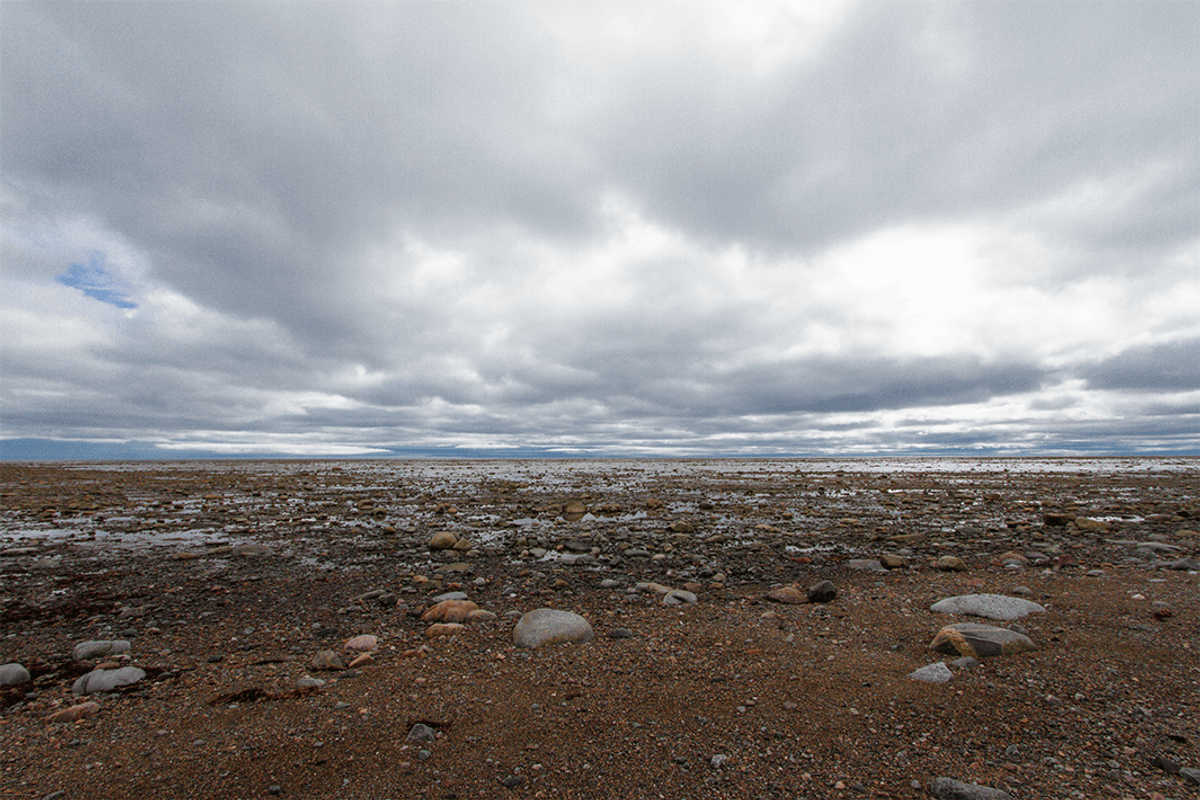
Sophia / Adobe Stock
Nunavut’s Kivalliq region combines historical exploration with untested ground, and uranium’s market momentum is drawing explorers back.
Nunavut’s Kivalliq region is experiencing a uranium exploration resurgence, driven by recent discoveries, advanced techniques, uranium’s price backdrop and growing demand for critical minerals.
The World Nuclear Association states that uranium activity in Kivalliq is picking up, from feasibility studies to resource definition at earlier-stage projects. The region hosts the Angikuni Basin, which is often geologically compared to Saskatchewan’s Athabasca Basin and is currently home to several active exploration assets.
Generation Uranium (CSE:GEN,OTCQB:GENRF) offers an early stage position in the heart of growing Kivalliq activity. The company’s Yath Project is surrounded by ATHA Energy’s (TSXV:SASK,OTCQX:SASKF,FWB:X5U) Angilak project, a high-grade uranium asset with significant potential.
Exploration in Nunavut
Nunavut is regarded as Canada’s last frontier for mineral exploration, among the country’s remote territories with untapped mining wealth.
The trade-off is infrastructure, as the territory lacks road access. It is also worth noting that Nunavut comes with challenging weather conditions, confining early stage fieldwork to a short summer window. Remote sites typically depend on helicopter support.
Still, explorers come because of what the ground may hold. The Lac 50 deposit in ATHA Energy’s Angikuni Basin, for example, reported a 2013 historical estimate of 43.3 million pounds of U3O8 at 0.69 percent triuranium octoxide (U3O8). ATHA noted that it does not treat that estimate as current, and its 2024 exploration target of 60.8 million to 98.2 million pounds is conceptual.
Nunavut follows a careful exploration process. Projects are required to go through a conformity review by the Nunavut Planning Commission, which confirms a proposal fits the regional land use plan. A screening by the Nunavut Impact Review Board determines whether it needs a full impact review.
The Canadian Critical Mineral Exploration Tax Credit also benefits uranium explorers. It gives eligible flow-through investors a credit worth 30 percent of the qualifying exploration expenses a company renounces to them, which can make it easier for juniors to raise exploration funding. The credit applies to flow-through agreements signed on or before March 31, 2027.
Generation Uranium in the Kivalliq Region
Kivalliq’s early exploration dates to the uranium boom of the late 1970s and early 1980s, when surface sampling and prospecting were the main tools. Those methods only revealed part of the picture, since glacial overburden or the loose cover of the bedrock hid much of what is beneath.
Today, geophysics such as mobile magnetotellurics (MMT) allows explorers to see through that cover.
Generation Uranium is applying MMT to its 100 percent owned Yath project, coupled with historical geophysical datasets, structural analysis and emerging discovery models.
Comprising over 17,500 hectares of land in the Angikuni Basin, Yath includes 1981 sampling that returned up to 9.81 percent U3O8 in the BOG-Embryo Creek area, a 3 kilometer radioactive corridor largely hidden by overburden.
Yath is surrounded by ATHA Energy’s Angilak project and lies on trend with Lac 50. The company said that the recent Lac 50 North West extension discovery demonstrates continued mineralized nature, an associated geophysical conductor that “can be seen to cross into the Yath project.”
“Every discovery drill hole that ATHA reports refines our exploration model and will improve our success rate as we move to get drills turning on the Yath Uranium project,” said CEO Michael Collins.
The company said adequate diamond drilling was never completed after uranium prices fell following the 2011 Fukushima accident.
Regional momentum builds around Yath
Generation Uranium is not the only company pairing legacy data with modern geophysics in Kivalliq.
Across the region, explorers are working to turn historical estimates and exploration targets into defined resources while expanding the footprint of known uranium mineralization.
ATHA Energy is also using MMT in its largest program to date at Angilak, fully funded with a recently closed C$63 million financing. The company added that resulting survey data will be used to create a 3D inversion model of the Angikuni Basin to point toward strong drill targets.
Geiger Energy (TSXV:BEEP,OTCQB:BSENF) has made several new uranium discoveries during it’s summer 2026 exploration program at the Fox and Apollo targets on the Aberdeen project in the South East corner of the Thelon Basin.
Bayridge Resources (CSE:BYRG,OTCQB:BYRRF) is advancing a phased 2026 exploration program for its Baker Basin project, a 619-square-kilometer property that lies about 65 kilometers southeast of Baker Lake. Contingent drilling planning depends on permitting and community engagement outcomes.
Several new entrants to uranium exploration in Kivalliq such as EAU Lithium (ASX:EAU), PTX Metals (TSXV:PTX,OTCQB:PANXF) and Guardian Exploration (TSXV:GX), were recorded in 2025, highlighting the region’s mineral potential.
Generation Uranium notes that exploration success at an adjacent project is “not necessarily” indicative of Yath’s potential, but that ATHA’s successes validate its targets as it ranks drill priorities and accelerates exploration.
Investor takeaway
Kivalliq’s old high-grade showings are drawing explorers back with new tools. A firm uranium-price backdrop and a run of nearby discoveries strengthen the case for expanding exploration.
With its Yath uranium project, Generation Uranium is tapping into this opportunity. The project offers a view of how modern geophysics can sharpen the case for historically explored properties and is surrounded by promising activity attracting industry attention.
This INNspired article is sponsored by Generation Uranium (CSE:GEN,OTCQB:GENR,FWB:W85). This INNspired article provides information which was sourced by the Investing News Network (INN) and approved by Generation Uranium in order to help investors learn more about the company. Generation Uranium is a client of INN. The company’s campaign fees pay for INN to create and update this INNspired article.
This INNspired article was written according to INN editorial standards to educate investors.
INN does not provide investment advice and the information on this profile should not be considered a recommendation to buy or sell any security. INN does not endorse or recommend the business, products, services or securities of any company profiled.
This INNspired article contains forward-looking information, including statements regarding planned activities, timelines, business objectives, and market conditions. Forward-looking information is based on assumptions and is subject to known and unknown risks and uncertainties that may cause actual results to differ materially from those anticipated. Readers should not place undue reliance on forward-looking information, which reflects the views of the profiled company as of the date of this profile and is not updated by INN.
The information contained here is for information purposes only and is not to be construed as an offer or solicitation for the sale or purchase of securities. Readers should conduct their own research for all information publicly available concerning the company. Prior to making any investment decision, it is recommended that readers consult directly with Generation Uranium and seek advice from a qualified investment advisor.
GEN:CC
Alert Options
No alert set
INN Article Notification
Alert Option
You will be notified when this event occurs. No additional settings needed.
Latest News
Outlook Reports world
Featured Uranium Investing Stocks
Browse Companies
MARKETS
COMMODITIES
CURRENCIES