The Conversation (0)
AMEC Proposes Rare Earths Production Scheme for Australia
Jan. 13, 2026 07:30AM PST
Prioritising rare earths is in line with Australia's strong resource endowment in the area and rare earths' overall role in defence and clean energy technologies, the association said.
Anastasiia / Adobe Stock
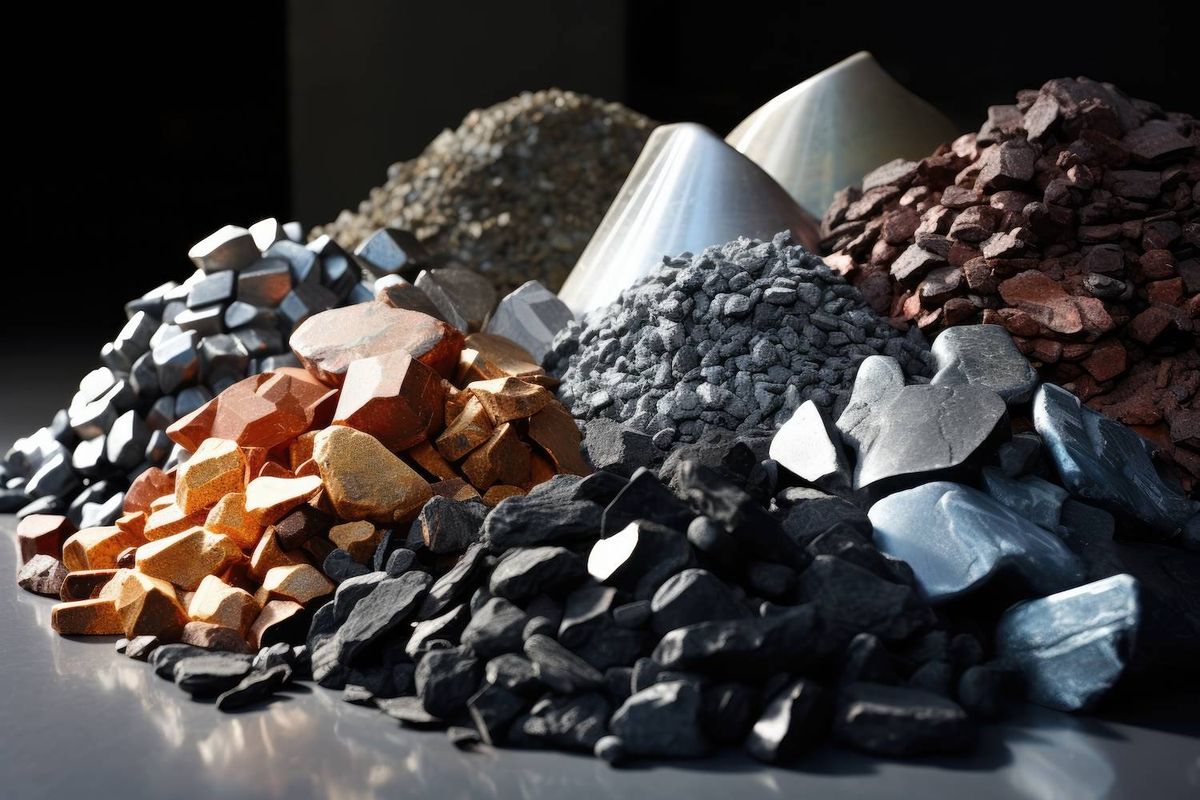
The Association of Mining and Exploration Companies (AMEC) has published its Design Paper for Australia's Critical Minerals Strategic Reserve (CSMR), asking Australia to sharpen its focus on rare earths.
Prepared by Mandala and in collaboration with rare earth developers and industry experts, the paper is a direct response to the Australian Government's election commitment to develop the country's CMSR.
In the paper, the recommended model, called the Rare Earths Production Scheme (REPS), outlines a practical, fiscally responsible process to support commercial investment, minimise taxpayer risk and align with the Future Made in Australia objectives.
How will the scheme work?
Under the REPS, rare earths producers and the Australian government will enter a Contract for Difference with a price collar.
This means that the government will cover anything needed once the spot price drops below agreement, while the government will receive a negotiated amount of revenue once the spot price rises above the agreed ceiling.
"The referenced spot price may be the higher of the market price on either the Shanghai Metals Market (SMM) or an ex-China index (if operational)," the paper highlighted. Volume eligible for the scheme will be allocated through a tender process, and prices will be set via a reverse auction.
Rare earths will be purchased as concentrate, mixed rare earth products downstream to oxides, with all projects based in Australia deemed eligible.
A time horizon of five to 10 years is specified in the scheme for ample project support, commercial bankability and less long-term risk for budget.
Why rare earths?
Data from the report found that Australia remains one of the largest holders of rare earths globally, placing fourth overall.
The country is home to approximately 5.7 million tonnes (Mt) of rare earth elements. It is behind China, Brazil and India, who host 44 Mt, 21 Mt and 6.9 Mt respectively.
In terms of production, Australia also ranks fourth globally.
From 2028 onwards, projects such as Yangibana under the Wyloo and Hastings Technology Metals Limited (ASX:HAS,OTCPL:HSRMF) joint venture, Arafura Rare Earths' (ASX:ARU,OTCPL:ARAFF) Nolans and Northern Minerals' Limited (AU:NTU,OTCPL:NOURF) Browns Range will transition into operation and drive the country’s production capacity further.
Both Browns Range and Yangibana are located in Western Australia, while Nolans can be found in the Northern Territory.
Other projects consulted with to develop the REPS include Australian Strategic Materials' (ASX:ASM,OTC Pink:ASMMF,OTCPL:ASMMF)’ Dubbo project in New South Wales, which is currently in the funding and construction stage.
In a 2025 resource review for Australia, critical minerals projects, including rare earths, remain vital to the country’s economic development.
A total of 130 projects were on Australia's critical minerals major projects list in 2025, including some of the abovementioned.
Dominating the list are early stage projects, accounting for 70 percent of the total count.
For the REPS, AMEC recommends that neodymium, praseodymium, dyprosium and terbium projects be included. These elements are specifically essential to the creation of permanent magnets.
Magnet rare earths make up over 80 percent of the value of rare earths globally.
Rare earths in Australia
Data from the US Geological Survey shows about 390,000 tonnes of rare earths were produced globally in 2024.
China remains the major producer at 270,000 tonnes, accounting for almost 70 percent of the global production rate. Australia produced 13,000 tonnes, which is 3,000 tonnes lower than its production in 2023.
Partnerships have also been pursued by Australia, including a memorandum of understanding regarding a bilateral partnership with Europe to cooperate on the supply of sustainable critical and strategic minerals.
Signed in May 2024, a release on the partnership noted that Australian products, which have high ESG standards, are ideal to supply the EU market.
On February 2025, Australia passed the Critical Minerals Production Tax Incentive, which will provide a refundable tax credit on 10 percent of eligible costs associated with the production of critical minerals and rare earths.
“The incentives are valued at AU$7 billion over the decade,” said Federal Resources Minister Madeleine King.
“The passing of this legislation is a historic moment for the resources industry and a big deal for resource states like Western Australia and Queensland,” she added. “By processing more of these minerals here in Australia we will create jobs and diversify global supply chains.”
What's next?
There is, however, a need for the CMSR to be “quickly implemented” to maintain the rare earths momentum.
Identifying an entity to properly govern the CMSR is recommended as the first step towards implementing the strategy. This comes with establishing frameworks, legislations and funding arrangements for the reserve.
AMEC also says that there is a need to finalise the design of the CMSR. Defining processes and outlining timelines can be detrimental to the success of the scheme.
Lastly, it boils down to implementing the CMSR “through its first tender.”
The association also mentioned that the proposed REPS would limit the fiscal exposure, while other options could exceed AU$15 billion in costs over a 1-0-year horizon.
Implementing the REPS under the CMSR could mean the development of Australian rare earths through government interventions in strategically important markets and projects.
“(Australia) needs to quickly implement the CMSR to provide certainty and support for the rare earths sector as global supply chain risks continue to evolve.”
Don’t forget to follow us @INN_Australia for real-time news updates!
Securities Disclosure: I, Gabrielle de la Cruz, hold no direct investment interest in any company mentioned in this article.
https://x.com/biewritesnews
https://www.linkedin.com/in/gabrielle-de-la-cruz-8582ba1bb/
gdelacruz@investingnews.com