The Conversation (0)
The new Apple Watch lineup marks major progress toward ambitious Apple 2030 climate goal
Apple® today announced its first-ever carbon neutral products in the all-new Apple Watch® lineup. Innovations in design and clean energy have driven dramatic reductions in product emissions of over 75 percent for each carbon neutral Apple Watch. 1 This milestone marks a major step in the company's journey toward its ambitious Apple 2030 goal to make every product carbon neutral by the end of the decade, including the entire global supply chain and the lifetime use of every device Apple makes.
This press release features multimedia. View the full release here: https://www.businesswire.com/news/home/20230912287638/en/
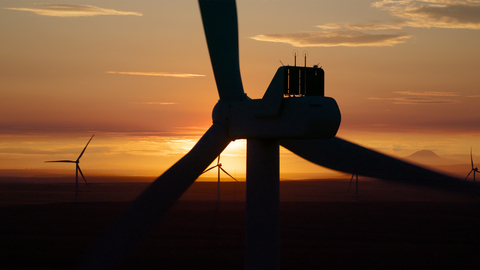
Apple's first carbon neutral products are the result of years of significant work and innovation across the company and its global supply chain, including the use of wind and solar. (Photo: Business Wire)
As part of Apple 2030 and the company's broader environmental efforts, Apple has also ended the use of leather across all of its product lines, announced its first entirely fiber-based packaging for the new Apple Watch lineup, 2 and continued to expand the use of recycled materials in iPhone®. The company also introduced a new tool in the Home app called Grid Forecast, 3 which helps inform users when their power grid has cleaner energy available, so they can decide when to use electricity.
"At Apple, we have a longstanding and proven commitment to leading the fight against climate change. Our focus on renewable energy and low-carbon design has already driven industry-leading emissions reductions, and we're not slowing down," said Lisa Jackson, Apple's vice president of Environment, Policy, and Social Initiatives. "We've achieved an important milestone in making the world's most popular watch carbon neutral — and we will keep innovating to meet the urgency of the moment."
Every Product Carbon Neutral by 2030
Apple has adopted a clear and rigorous approach to product decarbonization that prioritizes reducing greenhouse gas emissions from the three biggest sources across the product life cycle: electricity, materials, and transportation. Only after Apple steeply cuts product emissions, will the company apply high-quality carbon credits from nature-based projects for emissions that cannot yet be avoided or reduced with existing solutions.
Each carbon neutral Apple Watch model meets the following strict criteria: 100 percent clean electricity for manufacturing and product use, 30 percent recycled or renewable material by weight, and 50 percent of shipping without the use of air transportation. 4 These combined efforts result in at least a 75 percent reduction in product emissions for each model. The company will use high-quality carbon credits to address the small amount of remaining emissions, resulting in a carbon neutral product footprint. Every carbon neutral Apple Watch — which includes any aluminum Series 9 and SE models when paired with a new Sport Loop, and Apple Watch Ultra™ 2 when paired with a new Trail Loop or Alpine Loop — is certified by SCS Global Services, a leader in environmental standards and certification.
The Path to 2030
Apple's first carbon neutral products are the result of years of significant work and innovation across the company and its global supply chain. They also represent the latest step on a journey that began over a decade ago.
In 2020, Apple achieved carbon neutrality for its global corporate operations and announced Apple 2030: a bold strategy to be carbon neutral across its entire value chain by 2030. Apple's plan centers on an aggressive 75 percent reduction in overall carbon emissions from 2015 levels. By avoiding activities that generate carbon, significantly expanding renewable energy across the company's corporate operations and supply chain, and designing with recycled and renewable materials, Apple has so far reduced total emissions by over 45 percent since 2015, while still growing revenue by over 65 percent in the same period.
As Apple accelerates efforts to decarbonize its value chain, every product represents an opportunity to reduce emissions — from the electricity used for manufacturing and charging devices, to materials and shipping.
Spurring Progress in Clean Electricity
All manufacturing for the carbon neutral Apple Watch models is powered by 100 percent clean electricity through investments and sourcing by Apple and its suppliers. Additionally, every supplier that manufactures parts and components for these models has committed to 100 percent renewable electricity for all of their Apple production by the end of the decade. Apple also works with manufacturing partners around the world to advocate for policies that support wider deployment of clean energy solutions.
Apple began building and investing in large-scale solar and wind farms to power its data centers and offices over a decade ago. In 2015, the company started working with its manufacturing partners to help them create and invest in their own solar and wind projects, and source renewable energy for all Apple production. Since 2018, all of Apple's corporate offices, data centers, and retail stores worldwide have been powered by renewable electricity.
Thanks to these combined efforts, Apple and its global suppliers support more than 15 gigawatts of clean energy around the world today — enough to power over 5 million American homes. Across all product lines, more than 300 global suppliers — representing over 90 percent of Apple's direct manufacturing spend — have now joined Apple's Supplier Clean Energy Program, committing to 100 percent renewable electricity for all Apple production by the end of this decade.
Electricity for manufacturing and charging devices represents the largest source of Apple's emissions across all product lines. To address the latter, Apple has committed to invest in large-scale solar and wind projects around the world. For the carbon neutral Apple Watch models, the company will match 100 percent of customers' expected electricity use for charging.
Innovating in Low-Carbon Design
Apple has pioneered the use of many key recycled materials in its products through world-class product engineering, extensive design qualification, and supply chain expertise. The new products announced today build on these achievements.
To further reduce impact on the planet, Apple is ending the use of leather across all of its product lines, including iPhone accessories and Apple Watch bands. The company will replace leather with a new textile called FineWoven, an elegant and durable twill made from 68 percent post-consumer recycled content. FineWoven offers a subtle luster and a soft, suedelike feel, and is available on iPhone MagSafe® cases and wallets as well as the Magnetic Link and Modern Buckle Apple Watch bands.
As recycled and renewable materials often have a lower carbon footprint than primary materials, Apple's industry-leading progress in the use of recycled content also advances the company's Apple 2030 goal. The new FineWoven material has significantly lower emissions compared to the more carbon-intensive leather, and both the new iPhone 15 and the Apple Watch lineups advance progress toward the company's 2025 targets for the use of 100 percent recycled metals in key components. This includes 100 percent recycled rare earth magnets and the company's first use of 100 percent recycled cobalt in the battery of iPhone 15, Apple Watch Series 9, and Apple Watch Ultra 2. 5 Additionally, the popular Sport Loop has been redesigned with 82 percent recycled yarn, which includes material from discarded fishing nets. Customers looking to upgrade to the new carbon neutral Apple Watch models can take advantage of Apple Trade In, and Apple will refurbish the device for a new owner, or recycle it for free.
Apple is also accelerating progress toward plastic-free packaging by 2025. In addition to achieving the first 100 percent fiber-based packaging for the new Apple Watch and band lineup, the packaging for every iPhone 15 model is over 99 percent fiber-based.
Reducing Transportation Emissions
Transporting products around the world makes up about 9 percent of Apple's comprehensive carbon footprint. The company is shifting more product volume to shipping modes that are less carbon-intensive than air transport, such as ocean or rail. Apple's carbon footprint methodology shows that shipping the same product by ocean emits 95 percent fewer emissions than by air.
For the carbon neutral Apple Watch models, including watches and bands, the company will ship at least 50 percent of the combined weight using non-air modes, cutting total transportation emissions nearly in half. Additionally, the packaging of all Apple Watch Series 9 and SE models has been redesigned for compactness, with a new, smaller shape that allows for 25 percent more devices per shipment.
At the same time, Apple is committed to supporting broader efforts to decarbonize shipping industries, such as by being a member of the First Movers Coalition, and by supporting analysis to identify pathways for developing sustainable aviation fuels. The company also seeks out technical innovations — including the use of alternative fuels and electric vehicles — and selects vendors that offer low-carbon options to help further drive decarbonization in the industry.
Investing in High-Quality Carbon Removal
After achieving steep reductions in product emissions, Apple plans to cover residual emissions with high-quality carbon credits primarily from nature-based projects that remove carbon from the atmosphere, like restoring grasslands, wetlands, and forests. Carbon removal is critical to addressing climate change and achieving global climate goals, as leading scientific bodies like the United Nations Intergovernmental Panel on Climate Change have emphasized.
Apple defines high-quality credits as those from projects that are real, additional, measurable, and quantified, with systems in place to avoid double-counting, and that ensure permanence. Apple has helped advance natural carbon-removal solutions that meet this definition by creating the innovative Restore Fund , which currently supports projects in Latin America. The company uses credits from projects that are certified to international standards such as Verra; the Climate, Community & Biodiversity Standards; and the Forest Stewardship Council.
For the carbon neutral Apple Watch models, the high-quality carbon credits used to compensate for the remaining emissions will come from projects like the Restore Fund's investments with Arbaro Advisors and BTG Pactual Timberland Investment Group, which are helping to restore and protect high-quality working forests and native ecosystems in Paraguay and Brazil.
Introducing Grid Forecast
As Apple decarbonizes its value chain, the company is also committed to engaging with customers and creating technology that helps them understand and address their environmental impact.
Grid Forecast is a new tool in the Home app on Apple devices that shows when a user's electrical grid has relatively cleaner or less clean energy sources available. For example, there are times when wind and solar projects produce more energy than the grid can use, leading to some of it being wasted. There are also times when electricity is being generated with lower emissions. By using electricity during these cleaner times, customers may lower the climate impact of the electricity they use at home.
Apple uses data that combines grid, emissions, and weather information into one, easy-to-follow signal. This can help people make decisions about the best time to run large appliances and charge electric vehicles or devices throughout the day. In the contiguous United States, Grid Forecast is available in the Home app on iPhone, iPad®, Mac®, and Apple Watch, and can be added as an iOS widget or a watch face complication. As additional data becomes available through ongoing industry collaboration, Apple will continue refining Grid Forecast to maximize impact.
Beyond its 2030 goal, Apple is also working toward a 90 percent reduction in emissions by 2050 — which requires advocating for collective action from governments, businesses, and individuals to accelerate global progress in the fight against climate change.
For more information on Apple's 2030 climate goal and the environmental impact of Apple products, visit apple.com/2030 .
Footnotes
1 Carbon reductions are calculated against a baseline scenario: No use of clean electricity for manufacturing or product use, beyond what is already available on the grid; Apple's carbon intensity of key materials as of 2015; and Apple's average mix of transportation modes by product line across three years.
2 The breakdown of U.S. retail packaging is by weight. Adhesives, inks, and coatings are excluded from calculations of plastic content and packaging weight.
3 Grid Forecast will be available in the contiguous United States.
4 50 percent or more of all carbon neutral products by total weight are planned, as of product launch, to be shipped using non-air modes of transportation — like ocean freight — from the factory to their next destination over the lifetime of the products.
5 All cobalt content claims are based on a mass balance allocation.
NOTE TO EDITORS: For additional information visit Apple Newsroom ( www.apple.com/newsroom ), or email Apple's Media Helpline at media.help@apple.com .
© 2023 Apple Inc. All rights reserved. Apple, the Apple logo, Apple Watch, iPhone, Apple Watch Ultra, MagSafe, iPad, and Mac are trademarks of Apple. Other company and product names may be trademarks of their respective owners.
View source version on businesswire.com: https://www.businesswire.com/news/home/20230912287638/en/
Sean Redding
Apple
s_redding@apple.com