The Conversation (0)
Why Québec’s La Grande and Opinaca Subprovinces are Gaining Attention from Gold Explorers
Feb. 17, 2026 01:00PM PST
Gold Investing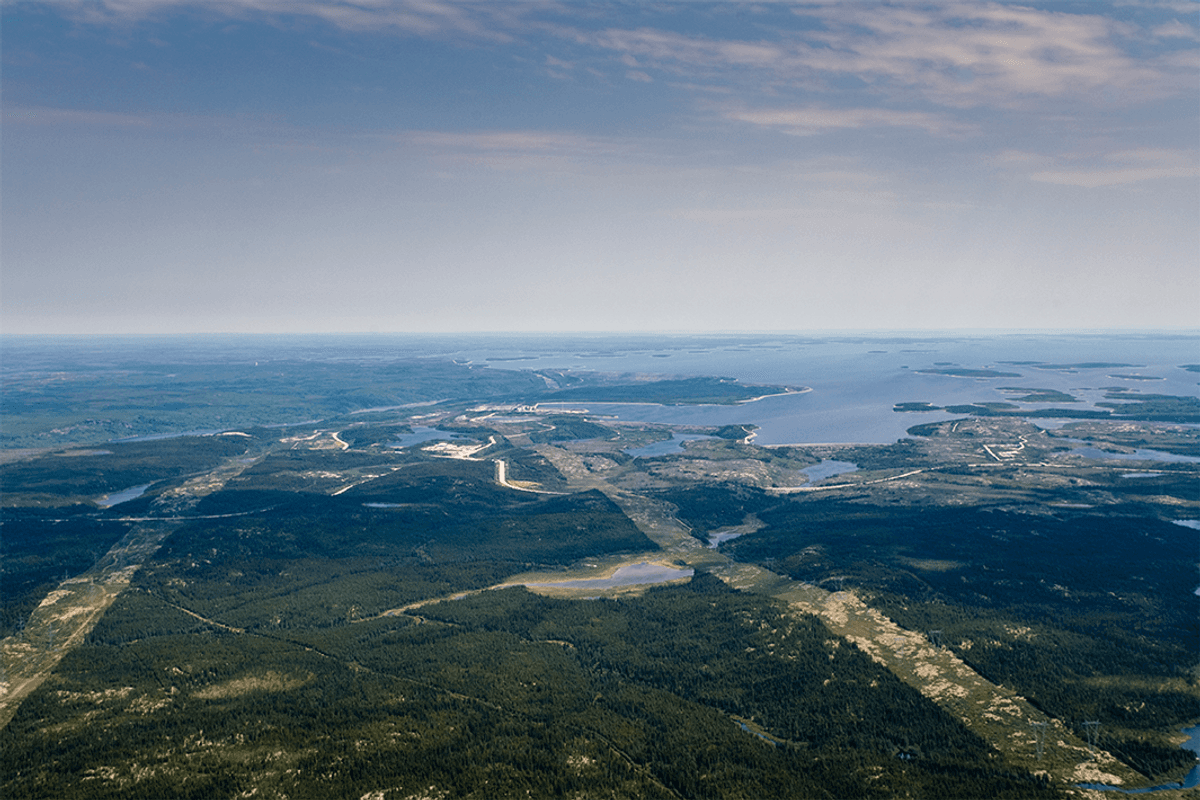
Overflightstock / Adobe Stock
The James Bay region in Québec, rich in Archean geology, is drawing renewed exploration interest for gold, notably in the La Grande and Opinaca subprovinces.
The James Bay region of Northern Québec sits within the Superior Province, one of the world’s oldest and most metal-endowed Archean crustal blocks.
While iconic gold districts like the Abitibi have seen generations of exploration and mine development, other Archean terrains in Québec — notably the La Grande and Opinaca subprovinces — remain relatively underexplored.
These geological domains host greenstone belts, intrusive bodies and regional structures that are increasingly recognized as favorable for orogenic gold mineralization, drawing renewed exploration — and investor — interest.
La Grande and Opinaca: Geological overview
The James Bay region lies within the Superior Province, which is subdivided into several geological subprovinces characterized by distinct rock types and tectonic histories. Among them, the La Grande Subprovince comprises mainly volcano-plutonic rocks, while the Opinaca Subprovince is dominated by metasedimentary assemblages reaching higher metamorphic grades. These subprovinces sit adjacent to each other in Central Québec and are transected by major structural corridors that are often significant for gold mineral deposition.
The contact zone between the La Grande and Opinaca subprovinces is of particular interest because deposits and prospects — including Éléonore, Cheechoo, La Pointe, Orfée and Corvet — are clustered near or along this boundary, suggesting structural and lithological controls on mineralization.
Studies indicate that gold deposits like Éléonore and Cheechoo tend to form near major geological boundaries, helping explain why similar areas in the James Bay region are attracting renewed exploration interest.
Exploration and discovery history
Although James Bay has fewer historical discoveries than more mature domains like the Abitibi, it boasts a significant number of gold and copper showings that reflect real mineral potential.
According to the Québec Ministry of Natural Resources, nearly 950 gold and/or copper occurrences and deposits have been identified in the broader James Bay region since 1935, spanning the La Grande, Opinaca and neighboring Opatica subprovinces, and several of these occurrences host substantial mineralization.
Major discoveries such as the Éléonore gold mine, which Newmont (NYSE:NEM,ASX:NEM) sold to Dhilmar in 2024 for $795 million, highlight the potential of this region and have catalyzed renewed exploration interest.
These historical and recent findings have encouraged more focused geophysical surveys, geochemical sampling and diamond drilling across the James Bay belt, bringing new targets into play for both junior and senior exploration companies.
Comparison to established Canadian gold camps
While districts like the Abitibi Greenstone Belt have a long history of production and exploration, the La Grande and Opinaca subprovinces share several geological fundamentals that make them attractive for gold exploration:
- Archean age and structure: Both subprovinces are part of the Archean Superior Province, encompassing volcano-plutonic and sedimentary assemblages deformed and metamorphosed over billions of years — similar in age to major greenstone belts globally.
- Structural complexity: Contacts between plutonic, volcanic and sedimentary domains, regional shear zones and metamorphic gradients provide pathways and traps for orogenic gold fluids, much like structural settings in established districts.
- Documented mineral occurrences: Deposits such as Éléonore, Cheechoo and other showings demonstrate that significant gold mineralization exists outside the more mature camps.
However, unlike the well-drilled and well-studied Abitibi region, the James Bay subprovinces have fewer deep drilling campaigns and modern exploration datasets, meaning many targets remain underexplored by today’s standards.
Infrastructure, jurisdiction and mining advantages
Québec is widely recognized as one of North America’s most favorable mining jurisdictions, with competitive taxation regimes, robust legal frameworks and active government support for exploration. Infrastructure in the James Bay region — including all-season roads, airports and hydroelectric networks — reduces logistical barriers that often constrain northern exploration. Government programs, such as funding for access road improvements, further enhance the viability of resource projects in the area by improving connectivity and reducing costs.
Cheechoo: A case study in emerging belt potential
Sirios Resources' (TSXV:SOI,OTCQB:SIREF) Cheechoo gold property is one of the most advanced and strategically located projects in Québec’s James Bay region, offering investors exposure to scale and growth potential within an emerging Archean gold district.
The project is located in Eeyou Istchee James Bay, less than 15 kilometers from the producing Éléonore gold mine, and lies along a regional geological trend that confirms potential for major discoveries. Cheechoo hosts near-surface gold mineralization with both open-pit and underground potential, providing flexibility as the project advances.
In 2025, Sirios reported an updated NI 43-101 compliant mineral resource estimate for Cheechoo, outlining around 3 million ounces of gold across the indicated and inferred categories, including a higher-grade underground component. The company has also identified a sizable exploration target surrounding the current resource, highlighting potential for continued growth through step-out and deeper drilling. Combined with favorable characteristics such as a low strip ratio, strong gold recoveries and access to existing infrastructure, Cheechoo stands out as a large, scalable gold asset in Québec.
Beyond geology and scale, Sirios’ Cheechoo project benefits from strong, longstanding positive relationships with local and Indigenous communities, particularly the Cree Nation of Wemindji, including the tallyman and his family. Sustained engagement and collaboration in Eeyou Istchee James Bay have supported social acceptability and responsible exploration for decades — an increasingly important factor for advancing projects in Northern Québec.
These elements position Cheechoo as a compelling example of how underexplored Archean terrains can generate discovery-driven value in an emerging gold district.
This INNspired article is sponsored by Sirios Resources (TSXV:SOI,OTCQB:SIREF). This INNspired article provides information which was sourced by the Investing News Network (INN) and approved by Sirios Resources in order to help investors learn more about the company. Sirios Resources is a client of INN. The company’s campaign fees pay for INN to create and update this INNspired article.
This INNspired article was written according to INN editorial standards to educate investors.
INN does not provide investment advice and the information on this profile should not be considered a recommendation to buy or sell any security. INN does not endorse or recommend the business, products, services or securities of any company profiled.
The information contained here is for information purposes only and is not to be construed as an offer or solicitation for the sale or purchase of securities. Readers should conduct their own research for all information publicly available concerning the company. Prior to making any investment decision, it is recommended that readers consult directly with Sirios Resources and seek advice from a qualified investment advisor.
SOI:CC