

The Conversation (0)
- WORLD EDITIONAustraliaNorth AmericaWorld
Aug. 24, 2026 02:00PM PST
|Fact CheckedThis article has been reviewed and updated according to INN's rigorous fact-checking process. Our staff editors verify all articles against information and data from primary sources, reputable publishers and experts.
Negotiations broke down between Canadian and US representatives on August 21, triggering 50 percent tariffs on exports from Canada to the US.
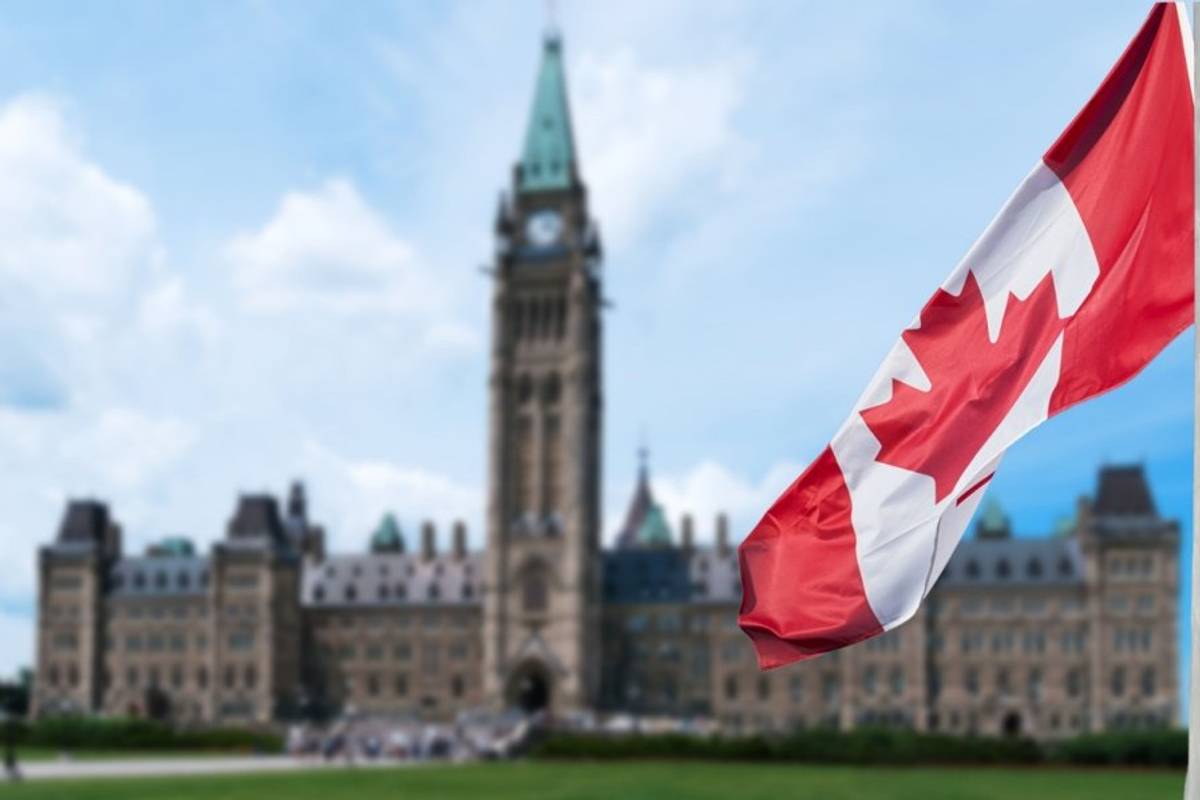
DD Images / Shutterstock
The Canada-US relationship suffered another setback as trade negotiations broke down on August 21.
Earlier in the week, talks appeared to be going smoothly, with US President Donald Trump acknowledging progress and extending his own August 19 deadline for new 50 percent tariffs on C$28 billion in goods originating in Canada.
Talks began in earnest after the president announced tariffs on July 20 for a selection of previously CUSMA-compliant goods, including wine, hockey sticks and cement.
Both negotiating teams worked until the final moments, before Prime Minister Mark Carney recalled Canadian representatives after the US side inserted language into the deal that was unfavorable to Canada.
Carney suggested at the time that one of the most contentious provisions was the US' ability to control which other countries Canada could negotiate new trade deals with.
“The US introduced in the last hours efforts to restrict our ability to have other trade deals … What we’ve accomplished in the last year, 20 new deals, economic and security partnerships, the prospect of doubling our market access because we believe in free trade," the prime minister said during remarks made on August 22. "We’re the partner of choice for many countries around the world, and the Americans wanted to restrict that; unacceptable."
The other key sticking points raised by the prime minister were a refusal by US negotiators to extend tariff relief on automobiles beyond light-duty vehicles. That would exclude Ford Motor's (NASDAQ:F) F250 and F350 lineups, built in Oakville, Ontario, and the Chevrolet Silverado HD, built at General Motors' (NYSE:GM) plant in Oshawa, Ontario.
Additionally, there was pushback against French language requirements and Québec cultural safeguards. The US administration has long viewed these laws as trade barriers.
Mining sector in limbo after talks break down
Apart from the key issues that ultimately fractured negotiations, Carney suggested that the deal was “a fair deal, a good deal for Canadians, not perfect, but a good deal became a deal we could not accept.”
Various elements related to Canada's resource sector were under discussion, including the reduction of tariffs on steel and aluminum to 25 percent from 50 percent rate. Tariffs on autos would have fallen to 12.5 percent from 25 percent.
Also discussed as part of the negotiations was US access to Canadian critical minerals, and reports that US representatives were seeking right of first refusal to all critical minerals mined in Canada.
In an article published on August 18, S&P Global explores what right of first refusal would mean for Canada's mining sector, noting that it would put miners and producers in a tough spot and questioning whether it would be legal.
Both countries have been placing increasing importance on critical minerals.
Earlier in the year, the US administration’s lead negotiator and Trade Czar Jamieson Greer said that the US didn’t want to disrupt the Canada-US relationship on energy and critical minerals, but added that Canada should not attempt to use those resources as leverage in negotiations.
With the negotiations breaking down, US tariffs are now in effect; however, for the time being, key exports of oil and gas, potash and critical minerals have been excluded.
Ford calls for critical minerals cutoff
Ontario Premier Doug Ford suggested nothing should be off the table when it comes to dealing with the US, including cutting off exports of electricity and critical minerals.
Trump responded by calling Ford a "flunky" and saying that he should "fall in line."
For his part, Carney has vowed to keep fighting, although he has implied that trade talks with the US have been challenging at times, saying that in some cases the deals are "written in pencil."
He also said that Canada is ready to return to the table when the US shows the "right attitude."
Additionally, Carney noted that Canada will impose reciprocal, dollar-for-dollar tariffs.
Those tariffs are not set to take effect until September 8, which may itself be an olive branch to get the negotiations back on track. Trump has already pushed back, posting on his Truth Social account that he plans to increase tariffs on all automobiles to 50 percent starting on January 1, 2027.
The president is using much of the same rhetoric he has employed since his first term in office, noting a US$60 billion trade deficit between the two countries. While the statement is accurate, it lacks nuance regarding the difference in size between the two countries and the relative sizes of their economies.
In terms of trade between the two, Canada outspends the US on a per capita basis by a considerable margin.
In 2025, the value of exports from Canada to the US was US$454 billion, while imports came in at US$426 billion. On a per capita basis, the US spent US$1,247, while Canada spent US$10,291.
Don't forget to follow us @INN_Resource for real-time updates!
Securities Disclosure: I, Dean Belder, hold no direct investment interest in any company mentioned in this article.
From Your Site Articles
https://x.com/INN_Resource
https://www.linkedin.com/in/deanbelder
dbelder@investingnews.com
Dean has been writing in one form or another since penning stage plays in his youth. He is a graduate of both Emily Carr University and Simon Fraser University, with a BFA in photography and a BA in communications.
As a writer, Dean has traveled throughout BC and the Pacific Northwest covering cultural events, interviewing small business owners and working alongside fellow writers and photographers from publications like Rolling Stone Magazine, Spin and the Georgia Straight.
Dean has a keen interest in investing, and enjoys learning about the mining industry and better understanding the technical aspects of trading. In his spare time, Dean is an avid home chef, ponders the space-time continuum and makes his own cider. On weekends he can be found cycling the Seawall, exploring farmers markets or sampling the city’s local craft breweries.
As a writer, Dean has traveled throughout BC and the Pacific Northwest covering cultural events, interviewing small business owners and working alongside fellow writers and photographers from publications like Rolling Stone Magazine, Spin and the Georgia Straight.
Dean has a keen interest in investing, and enjoys learning about the mining industry and better understanding the technical aspects of trading. In his spare time, Dean is an avid home chef, ponders the space-time continuum and makes his own cider. On weekends he can be found cycling the Seawall, exploring farmers markets or sampling the city’s local craft breweries.
INN Article Notification
Latest News
Outlook Reports
Featured Critical Minerals Investing Stocks
Browse Companies
MARKETS
COMMODITIES
CURRENCIES
Dean has been writing in one form or another since penning stage plays in his youth. He is a graduate of both Emily Carr University and Simon Fraser University, with a BFA in photography and a BA in communications.
As a writer, Dean has traveled throughout BC and the Pacific Northwest covering cultural events, interviewing small business owners and working alongside fellow writers and photographers from publications like Rolling Stone Magazine, Spin and the Georgia Straight.
Dean has a keen interest in investing, and enjoys learning about the mining industry and better understanding the technical aspects of trading. In his spare time, Dean is an avid home chef, ponders the space-time continuum and makes his own cider. On weekends he can be found cycling the Seawall, exploring farmers markets or sampling the city’s local craft breweries.
Learn about our editorial policies.