The Conversation (0)
More Patients in Canada Are Now Candidates for a Leadless Pacing Option
Medtronic Canada ULC, a subsidiary of Medtronic plc (NYSE: MDT) announced today that it has received a Health Canada licence for Micra™ AV, the world's smallest pacemaker with atrioventricular (AV) synchrony. Micra AV is indicated for the treatment of patients with AV block, a condition in which the electrical connection between the chambers of the heart (the atria and the ventricle) is impaired. Medtronic's groundbreaking technology is the first and currently the only Health Canada-licensed leadless pacemaker portfolio, now expanding the range of eligible Canadian patients that can be implanted.
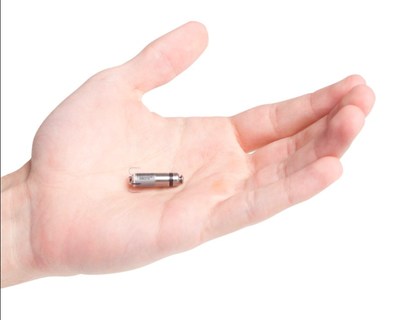
Historically, patients with AV block had traditional dual-chamber pacemakers implanted in the upper chest, below the collar bone, and connected to the heart using thin wires called "leads." Identical in size and shape to the original leadless Micra Transcatheter Pacing System (TPS), Micra AV has several additional features, including internal atrial sensing algorithms which detect cardiac movement, allowing the device to adjust pacing in the ventricle to coordinate with the atrium, providing "AV synchronous" pacing therapy to patients with AV block.
"With the licensing of Micra AV, more patients will benefit from a new way to implant pacemakers," say Dr. Blandine Mondésert, cardiac electrophysiologist at the Montreal Heart Institute, and associate professor at Université de Montréal. "The advantages of leadless pacing include a better quality of pacing, fewer complications related to the leads and pacemaker pocket, cosmetic implantation, and atrioventricular synchronization in patients in sinus rhythm. Real-world use of Micra has shown a 63% reduction in major complications compared to traditional transvenous pacemakers i . Especially in older patients, but also in younger ones, it is a game-changer."
The MARVEL 2 (Micra Atrial Tracking Using A Ventricular accELerometer) study, published in JACC: Clinical Electrophysiology , evaluated the safety and effectiveness of accelerometer-based atrial sensing algorithms. The study assessed the ability of the Micra's internal sensor to monitor and detect atrial contractions and enable coordinated pacing between the atrium and ventricle, thereby providing AV synchrony. Results from the study, presented at the American Heart Association 2019 Scientific Sessions, showed the primary efficacy objective was met, with a significantly greater percentage of complete heart block patients with normal sinus rhythm having > 70% AV synchrony during algorithm-mediated AV synchronous pacing (38 of 40 patients, 95%) than VVI pacing (0 patients, P > 70% synchrony). The study's primary safety objective was also met, with no pauses or episodes of pacing-induced tachycardia reported during algorithm mediated AV synchronous pacing.
"Medtronic remarkably changed healthcare 63 years ago with the first battery powered pacemakers, and we are proud to continue pioneering in the field of pacing by offering the first miniaturized, leadless pacing portfolio," said Mitch Leschuk , senior director of the Cardiovascular portfolio at Medtronic Canada. "Micra AV reinvents our own innovation, expanding the benefits of leadless pacemakers to more patients."
About the Micra Transcatheter Pacing System (TPS)
Licensed by Health Canada in 2016, the Micra TPS is a leadless pacemaker option for patients who only require pacing in the right ventricle. Comparable in size to a large vitamin capsule, Micra is less than one-tenth the size of traditional pacemakers yet delivers advanced pacing technology to patients via a minimally invasive approach. During the implant procedure, the device is attached to the heart with small tines and delivers electrical impulses that pace the heart through an electrode at the end of the device.
Unlike traditional pacemakers, Micra does not require leads or a surgical "pocket" under the skin, so potential sources of complications related to leads and pockets are eliminated - as are any visible signs of the device.
About Medtronic Canada ULC
Proudly serving Canadian healthcare for over 50 years, Medtronic Canada ULC ( www.medtronic.ca ), is a subsidiary of Medtronic plc, the world's largest medical technology, services, and solutions companies — alleviating pain, restoring health, and extending life for millions of people around the world. Serving physicians, hospitals, and patients across the country, Medtronic Canada ULC is headquartered in Brampton, Ontario , with regional offices in Montreal and Vancouver , and a Medtronic Resource Centre in Surrey, BC . The company is focused on collaborating with stakeholders around the world to take healthcare Further, Together.
Any forward-looking statements are subject to risks and uncertainties such as those described in Medtronic's periodic reports on file with the U.S. Securities and Exchange Commission. Actual results may differ materially from anticipated results.
| _________________________ |
| i El-Chami et al Micra Updated Real-World Performance DOI: https://doi.org/10.1016/j.hrthm.2018.08.005 |

SOURCE Medtronic Canada ULC

 View original content to download multimedia: https://www.newswire.ca/en/releases/archive/December2020/21/c5414.html