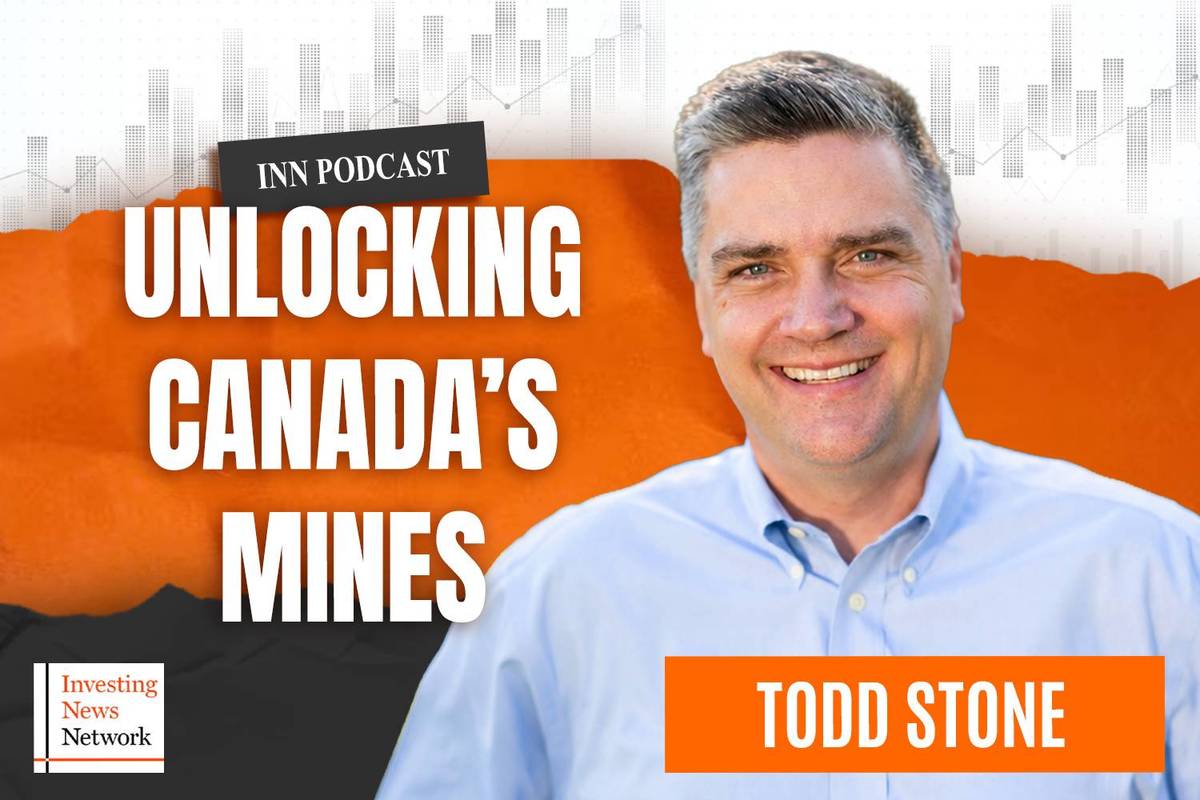
Todd Stone: Canada Must Close Critical Minerals’ “Valley of Death”

At INN Georgia covers a wide range of topics, including energy, battery and critical metals and diamonds. In her spare time, Georgia enjoys watching documentaries and experiencing Toronto's vibrant food, arts and cultural scene.
As governments race to secure supply chains, the Association for Mineral Exploration is urging Ottawa to expand tax incentives to help junior miners bridge the “Valley of Death” and move promising projects toward development.
Canada is moving aggressively to secure critical mineral supply chains, but the country risks focusing too heavily on projects already nearing development while a funding gap continues to hold back the next generation of mines.
That is the message from Todd Stone, president and CEO of the Association for Mineral Exploration (AME), which is calling on Ottawa to expand the Canadian Exploration Expense tax credit to include technical feasibility, engineering and related costs.
In an interview with Investing News Network, Stone said the change could help accelerate a pipeline of 171 advanced critical mineral projects across Canada that are progressing slowly but have not necessarily stalled.
The issue, he said, is the “Valley of Death” — the period when exploration companies must raise significant amounts of capital to advance a discovery toward economic viability, even though the projects remain high-risk investments.
“The capital is largely front-loaded,” Stone said, pointing to the substantial spending required to prove that a deposit could ultimately support a mine. Expanding CEE eligibility would increase the expenses investors can claim through flow-through financing, helping to further de-risk projects and potentially attract more capital.
AME’s campaign has gained support from dozens of companies and organizations, with Stone saying the number of signatories had grown from more than 65 to roughly 85 or 90 during the campaign. Several provinces have also backed the push.
Stone believes the measure could deliver a 10-20x return for Ottawa through the economic activity, employment and tax revenue generated by mines that ultimately reach production.
The need to build that pipeline is becoming increasingly urgent as major miners look for new projects and governments compete for critical minerals investment. Stone pointed to Canada’s existing advantages, including its mining expertise, financing ecosystem, geology and tax incentives, but said the country must continue improving permitting, infrastructure and access to skilled workers.
He also emphasized that the CEE expansion would not solve every challenge facing Canada’s mining sector.
Permitting remains an important issue, while infrastructure and workforce shortages could become increasingly significant as more projects advance. Still, Stone sees CEE reform as one of the most immediate policy measures Ottawa could take to help move projects forward.
For Canada to become a critical minerals “superpower” for decades rather than just the next five or 10 years, Stone argues that policymakers need to look beyond the projects currently in development and ensure the next wave is being funded today.
Listen to the full interview above to hear more from Stone about Canada's robust mineral potential and how the AME is supporting exploration across the country.
Don’t forget to follow us @INN_Resource for real-time updates!
Securities Disclosure: I, Georgia Williams, hold no direct investment interest in any company mentioned in this article.
Editorial Disclosure: The Investing News Network does not guarantee the accuracy or thoroughness of the information reported in the interviews it conducts. The opinions expressed in these interviews do not reflect the opinions of the Investing News Network and do not constitute investment advice. All readers are encouraged to perform their own due diligence.