Industrial Metals Investing
![Charlotte McLeod]() Jun 24, 2026 09:00PM
Jun 24, 2026 09:00PM

"Supply security is the big new investment theme over the last year and a half that's only strengthened with what we've seen so far in 2026," said Jim Wiederhold of Bloomberg.
With an eye for detail and over a decade of experience covering the mining and metals sector, Charlotte is passionate about bringing investors accurate and insightful information that can help them make informed decisions.
She leads the Investing News Network's video and event coverage, and guides a team of writers reporting on niche investment markets.
"Supply security is the big new investment theme over the last year and a half that's only strengthened with what we've seen so far in 2026," said Jim Wiederhold of Bloomberg.
Jim Wiederhold, commodity indices product manager at Bloomberg, breaks down the commodities sector's performance in 2026, saying institutional investors are becoming increasingly interested in the industry as resource security concerns ramp up.
"Commodities have definitely re-emerged as a strategic asset allocation," he said.
Don't forget to follow us @INN_Resource for real-time updates!
Securities Disclosure: I, Charlotte McLeod, hold no direct investment interest in any company mentioned in this article.
With an eye for detail and over a decade of experience covering the mining and metals sector, Charlotte is passionate about bringing investors accurate and insightful information that can help them make informed decisions.
She leads the Investing News Network's video and event coverage, and guides a team of writers reporting on niche investment markets.
The gold price dropped and then bounced back this week, sinking to around US$4,080 per ounce midway through the period before recovering.
Silver put on a similar performance, sinking below US$56 per ounce.
We'll get into what caused those declines in a moment, but before we do, I want to flag that silver price level. I heard this week from Dr. Mark Thornton of the Mises Institute, who said that from a technical standpoint the white metal could be forming a double bottom.
"If you look at it at US$55, it could be the beginning of a double bottom in the price of silver, because we had silver at US$55 back in July, and then we got a recovery up to about the US$70 level and now it's come all the way back down to US$55.
"So it's potentially a double bottom, which the technicians tell me is a very powerful formation of the chart pointing in the direction of much higher silver prices. Maybe silver is also just, you know, following the elusive nature of these technical charts, but it certainly looks like that's where it is today."
Steve Barton of In It To Win It made a similar comment when we spoke last week, identifying US$54 as a key silver price level to watch. Here's what he said:
"After US$58, then we're going to have the long-term trend line that we've drawn ad nauseam on this show, and that is basically hitting around US$54, connecting the high from 1980, the high from 2011 and then this little double top right here. And if we just string that out, that's going to be around US$54 right there.
"I think that's a pretty heavy line in the sand. (But) if I'm wrong, and gold actually breaks that previous low of US$3,950, then I don't think that this US$54 level here holds. If I'm right, and it does hit the US$4,000, US$3,950 level and bounces, then I think worst-case scenario here on silver, we basically do that."
Going back to what caused this week's precious metals price declines, the key culprit was the latest US consumer price index (CPI) data, which came in hotter than anticipated.
CPI rose 0.6 percent on a monthly basis in September and 3.7 percent year-on-year, above analysts' expectations of 3.6 percent. Core CPI, which excludes the food and energy categories, increased 0.3 percent from the previous month and 2.6 percent from a year ago.
Market watchers are pointing to energy prices, which continue to be impacted by the Iran war, as a key driver of September's inflation numbers, although that's not the only area that saw acceleration — vehicle, apparel and shelter costs were an issue too.
US producer price index (PPI) data came through this week as well, and also surpassed forecasts, rising 6.3 percent annually and 1.3 percent month-on-month.
Those are the biggest gains since December and March 2022, respectively.
Together, the reports have boosted expectations for another US Federal Reserve interest rate hike in 2026 — most likely at the central bank's December meeting.
As inflation concerns continue to mount, Brent crude traded above US$105 per barrel again this week, spurred higher by increasing tensions in the Middle East.
The situation remains complex, but recent developments include reports that Iran has attacked ships in the Strait of Hormuz, as well as a clash between the Houthis and Saudi Arabia.
While President Donald Trump has said the US will not restart strikes against Iran before midterm elections, concerns about a prolonged conflict are growing.
On the energy side, I also want to briefly mention uranium.
I spoke this week with Justin Huhn of Uranium Insider, and he reiterated an idea that I've been hearing over the past couple of months, saying now could be a good entry point.
Here's how he explained it:
"We built a decent cash position in both of our portfolios between December and let's say March, April, and we started to deploy that cash in June very slowly. We deployed significantly more in July and early August, and then we've been continuing to add in September and even as soon as last week. And we're actually considering adding adding a bit more with our remaining cash position today (October 14) or perhaps tomorrow (October 15). So a lot of signals are lining right now that lead me to believe that if the bottom isn't perfectly in right now, we are very, very close."
Want more YouTube content? Check out our expert market commentary playlist, which features interviews with key figures in the resource space. If there's someone you'd like to see us interview, please send an email to cmcleod@investingnews.com.
And don't forget to follow us @INN_Resource for real-time updates!
Securities Disclosure: I, Charlotte McLeod, hold no direct investment interest in any company mentioned in this article.
Editorial Disclosure: The Investing News Network does not guarantee the accuracy or thoroughness of the information reported in the interviews it conducts. The opinions expressed in these interviews do not reflect the opinions of the Investing News Network and do not constitute investment advice. All readers are encouraged to perform their own due diligence.
With an eye for detail and over a decade of experience covering the mining and metals sector, Charlotte is passionate about bringing investors accurate and insightful information that can help them make informed decisions.
She leads the Investing News Network's video and event coverage, and guides a team of writers reporting on niche investment markets.
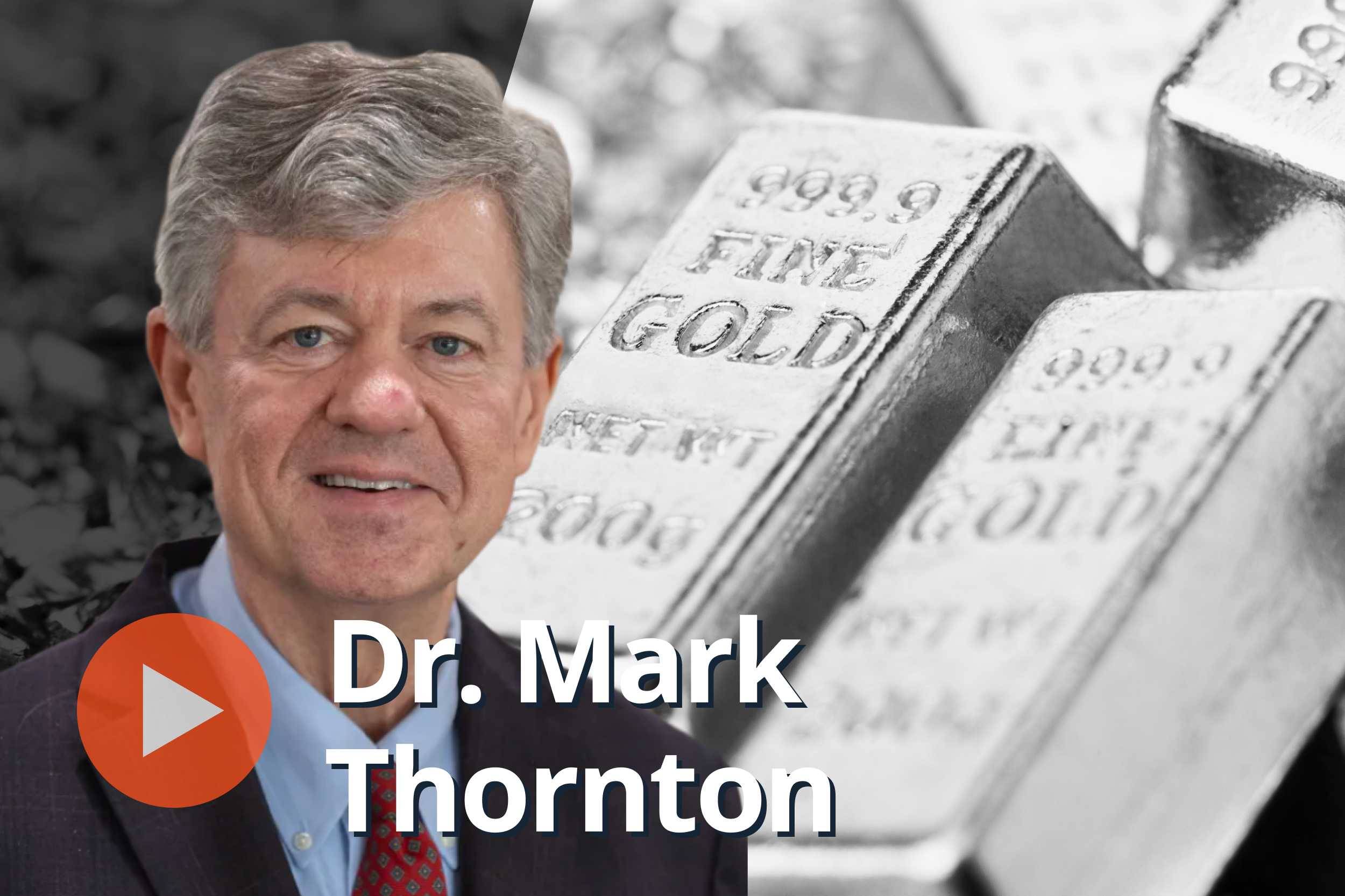
Dr. Mark Thornton, senior fellow at the Mises Institute, shares his outlook for gold and silver, laying out the factors that have been weighing on prices and commenting on what may kick off their next leg higher — in his view, the return of speculators could provide a boost.
"Speculators we found out last year are a main engine to the prices of gold and silver," he said.
Don’t forget to follow us @INN_Resource for real-time updates!
Securities Disclosure: I, Charlotte McLeod, hold no direct investment interest in any company mentioned in this article.
With an eye for detail and over a decade of experience covering the mining and metals sector, Charlotte is passionate about bringing investors accurate and insightful information that can help them make informed decisions.
She leads the Investing News Network's video and event coverage, and guides a team of writers reporting on niche investment markets.
The gold price fell below the US$4,100 per ounce level midway through the week, but recovered quickly to close Friday (October 9) near US$4,200.
Silver followed a similar trajectory, sinking as low as US$58.75 per ounce on Thursday (October 8) before bouncing back to finish the period just under US$61.
The US Federal Reserve's September meeting minutes, released on Wednesday (October 7), appear to be behind the temporary precious metals pullback.
The document shows Fed officials expect to raise interest rates again before the end of the year, although it doesn't indicate whether they see an October or December hike as more likely — as usual, participants said they will focus on responding to "incoming information."
The minutes also reveal that the full slate of 19 officials supported last month's decision to increase rates, noting that it will help support the central bank's 2 percent inflation target.
However, they were divided on other fronts, with some seeing the hike as a way to manage inflation risks, and others viewing it as necessary based on their economic outlook.
It's worth noting that the experts I've been speaking with continue to emphasize that the Fed is between a rock and a hard place when it comes to rates — in other words, cutting rates or leaving rates unchanged will cause problems, as will raising rates.
Don Durrett of GoldStockData.com describes the situation as a "doom loop," and in his view it could get out of hand faster than many expect. Here's how he explained it:
"A doom loop means that there's nothing the Fed can do. That no matter what the Fed does, it just gets worse. So if they fight inflation, the economy gets bad. If they support the economy, inflation gets bad. And then the average person starts to see there's no way out. That's what recognition of the doom loop is — there's no way out.
"Now, we've said there's no way out for the last 10 years as far as paying off the debt, but what we haven't said yet — and I'm still in the minority here — is that this is going to spiral out of control soon. There's nothing they can do."
Durrett's interview also covers how he's preparing his portfolio for this scenario, so I definitely recommend checking out the full video if you haven't already.
And as a final note on the Fed, CME Group's (NASDAQ:CME) FedWatch tool now places the odds of an October rate rise at less than 20 percent, down from just under 30 percent this time last week.
The likelihood increases substantially for the December Fed meeting.
Gold may be down from the record price levels seen earlier this year, but underlying trends continue to suggest the long-term story remains strong.
New data from the World Gold Council shows that US$10 billion flowed into global gold exchange-traded funds (ETFs) in September, taking the Q3 number to a record US$31 billion.
While all regions recorded inflows last month, Europe and North America took the lead. Notably, the WGC states that UK-listed funds saw inflows in 12 of the 13 weeks through September 25, marking the most consistent run since 2022 and pointing to sustained interest.
In terms of North America, the WGC suggests that concerns surrounding inflation, stock valuations and bond market volatility may be driving gold's appeal.
On a similar note, the People's Bank of China continued its gold-buying streak in September, snapping up 740,000 ounces to mark its 23rd straight month of purchases.
The buy is reportedly the country's largest accumulation since September 2023, and may be a sign that the Asian nation is taking advantage of today's lower prices.
Interestingly, a CNBC article posted this week states that Hong Kong imported a record 112.7 metric tons of Russian gold in the first seven months of 2026 — that's up from just 3.3 metric tons in 2021, before the west imposed sanctions following Russia's invasion of Ukraine.
Although now there are more diverse pathways into China, Hong Kong has traditionally been the "main gateway" for the country's gold imports, and it's seen as a natural alternative for Russia's exports of the precious metal under today's circumstances.
“We do know that whether it’s the PBOC or if it’s the Chinese consumers, they’ve all been buying quite a bit of gold," Charles Chang of S&P Global Ratings told CNBC.
Want more YouTube content? Check out our expert market commentary playlist, which features interviews with key figures in the resource space. If there's someone you'd like to see us interview, please send an email to cmcleod@investingnews.com.
And don't forget to follow us @INN_Resource for real-time updates!
Securities Disclosure: I, Charlotte McLeod, hold no direct investment interest in any company mentioned in this article.
Editorial Disclosure: The Investing News Network does not guarantee the accuracy or thoroughness of the information reported in the interviews it conducts. The opinions expressed in these interviews do not reflect the opinions of the Investing News Network and do not constitute investment advice. All readers are encouraged to perform their own due diligence.
With an eye for detail and over a decade of experience covering the mining and metals sector, Charlotte is passionate about bringing investors accurate and insightful information that can help them make informed decisions.
She leads the Investing News Network's video and event coverage, and guides a team of writers reporting on niche investment markets.
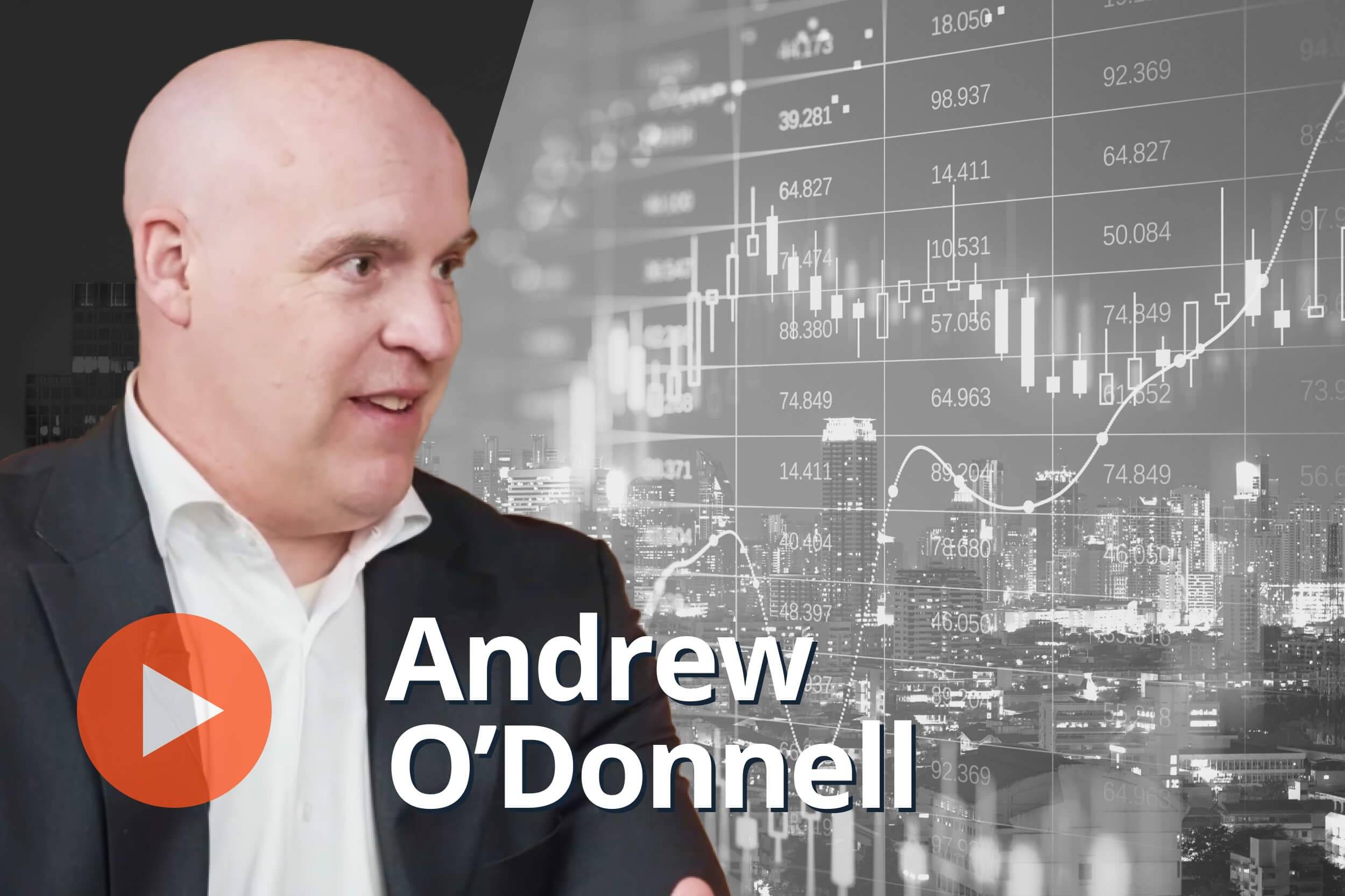
Andrew O'Donnell of the Market Mindset explains how he's using artificial intelligence tools to unearth overlooked opportunities in the junior mining space, emphasizing the importance of tracking companies that follow through on their plans.
"I've got a long-term horizon, and that I think is the biggest key," he said.
Don't forget to follow us @INN_Resource for real-time updates!
Securities Disclosure: I, Charlotte McLeod, hold no direct investment interest in any company mentioned in this article.
With an eye for detail and over a decade of experience covering the mining and metals sector, Charlotte is passionate about bringing investors accurate and insightful information that can help them make informed decisions.
She leads the Investing News Network's video and event coverage, and guides a team of writers reporting on niche investment markets.
Steve Barton, host of In It To Win It, weighs in on the recent price declines in gold and silver, outlining the odds for their next moves. He also discusses uranium, saying that current levels represent a strong entry point for investors.
"I think this bet is a slam dunk. I think this is a really, really good bet," he said.
Don't forget to follow us @INN_Resource for real-time updates!
Securities Disclosure: I, Charlotte McLeod, hold no direct investment interest in any company mentioned in this article.
With an eye for detail and over a decade of experience covering the mining and metals sector, Charlotte is passionate about bringing investors accurate and insightful information that can help them make informed decisions.
She leads the Investing News Network's video and event coverage, and guides a team of writers reporting on niche investment markets.